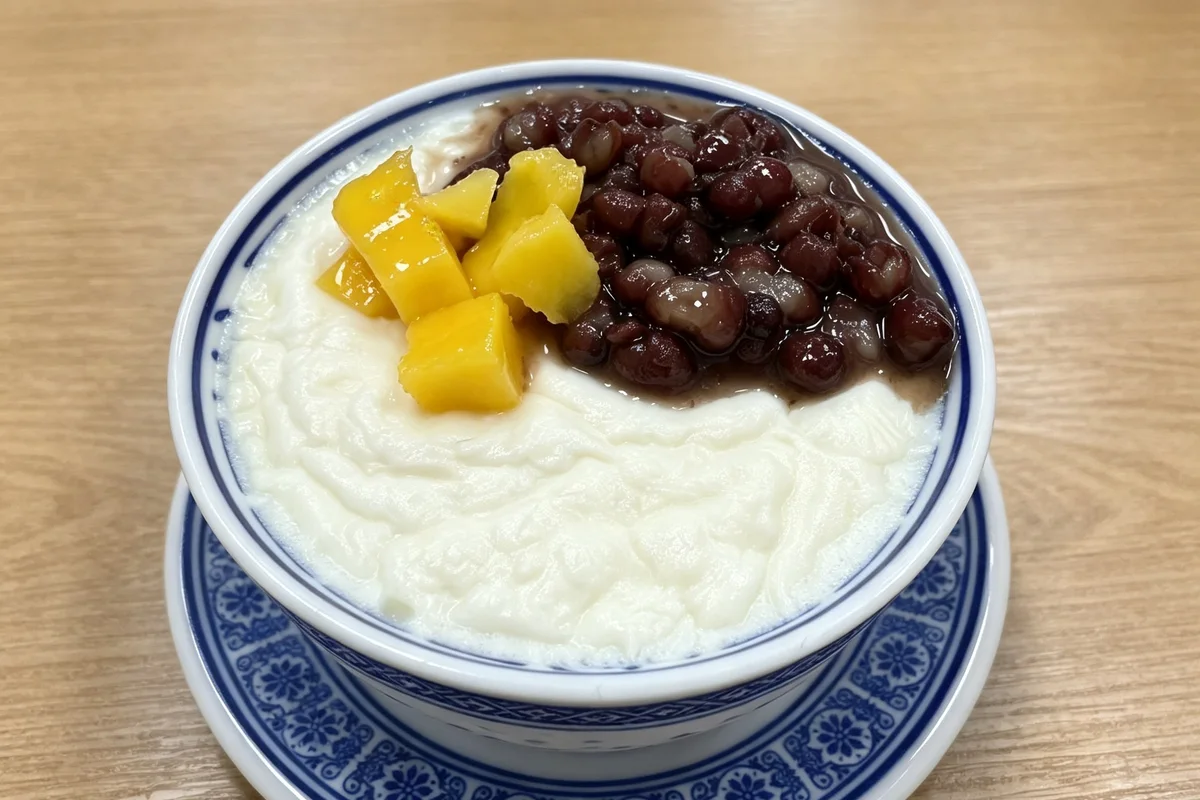
It is not ordinary milk pudding under a Chinese name
Double-skin milk is a Shunde dessert that turns milk, egg white and sugar into a delicate steamed custard. In the traditional process, heated milk cools and forms a surface skin; the milk beneath is poured out, mixed with egg white and sugar, and returned carefully. Steaming sets the custard while preserving one skin and creating the idea of a second.
Common ingredientsRich milk—historically Shunde buffalo milk—egg white and sugar, with red bean, lotus seed, ginger, fruit or tea as optional additions.
01
Choose warm or chilled before adding toppings
How to order it
Try the plain version before adding red beans, fruit, ginger, tea or other toppings. Choose warm service to emphasize milk aroma or chilled service for a firmer, refreshing texture. The surface may wrinkle or move when spooned; that delicate skin is intentional rather than a packaging film to remove. Ask whether the shop uses buffalo or cow’s milk if the distinction interests you, but do not infer the milk source from richness alone. The dessert contains milk and egg white. Confirm nuts, soy, fruit and shared utensils when allergies or dietary restrictions matter.
How to eat and pair it
Shunde has an important southern Chinese dairy tradition that also includes ginger milk curd and Daliang-style preserved milk. Specialist dessert shops serve double-skin milk in small ceramic bowls, often plain and sometimes with red bean, lotus seed or fruit. Diners break the fine surface with a spoon and take the custard beneath in soft scoops. Buffalo milk is historically central because of its richness, while full-fat cow’s milk is common in contemporary shops. The best bowls taste of fresh milk first, not vanilla, heavy caramel or topping syrup.
Easy mix-ups
Misconception: The “two skins” are two pieces of pastry or gelatin. In practice: They refer to delicate films associated with cooling and steaming the milk mixture. Misconception: Dairy is absent from Chinese culinary history. In practice: Regional Chinese dairy traditions exist, and Shunde is especially known for buffalo-milk sweets and cheeses.
02
Judge the skin, wobble, milk aroma and sweetness
A slight wrinkle can be evidence of a tender skin
The surface does not need to look like industrial plastic. A fine skin may move or crease with the bowl, while a thick leathery cap points to harsh heating or long exposed holding.
Plain service is the clearest milk test
Red bean, mango and tea versions can be enjoyable, but the original bowl shows whether dairy aroma leads, egg stays quiet and sweetness leaves a clean finish.
Milk
Rich local buffalo milk is historically associated with Shunde dairy sweets. Full-fat cow’s milk is now common but produces a somewhat different richness.
Egg white
It sets the milk into a tender custard without adding the yolk flavor or yellow color of many Western custards.
Sugar
Traditional versions are gently sweet, allowing dairy flavor and the surface skin to remain noticeable.
Milk skins
The fragile surface is not a decorative garnish; it gives the dessert its name and is part of the desired texture.
Warm plain double-skin milk
Fresh from the steamer, it is especially aromatic and soft, with the dairy flavor at its clearest.
Chilled dessert-shop version
Cooling produces a slightly firmer custard and makes the dish refreshing in Guangdong’s warm climate.
Red bean and modern toppings
Sweetened red bean, mango, ginger or tea flavors are common additions. They broaden the category but can obscure the original milk character.
- A thin, intact or naturally wrinkled surface skin joined to the custard
- Custard that trembles and yields rather than bouncing or cutting like gelatin
- A smooth interior without large bubbles, watery separation or curdled graininess
03
How two surface films form one milk custard
Heated milk rests in the serving bowl until a fine skin forms. Most milk is poured from beneath it, mixed gently with egg white and sugar, returned under the skin and steamed at restrained heat until just set without bubbles, curdling or watery separation.
Low, steady heat matters more than one universal steaming time
Bowl size, milk composition and steamer strength change the schedule. The cook stops when the custard has a soft set; chasing a fixed time can leave a liquid center or rubberize the edge.
Two skins mean two surface-setting moments
The first forms as heated milk cools; the second develops after the milk-and-egg-white mixture is returned and gently steamed. They are delicate interfaces, not two thick sheets inserted into the bowl.
04
A Shunde dessert rooted in buffalo-milk culture
Double-skin milk is closely associated with Shunde in Foshan, whose historic buffalo-milk cookery supplied the richness needed for a pronounced milk film. Modern shops also make credible versions with rich cow’s milk, so buffalo milk is important context rather than a universal present-day guarantee.
The name refers to stages of milk-film formation as heated milk cools, is poured out from beneath the film, mixed with egg white and sugar, returned and gently steamed. It is a trembling custard—not gelatin and not a pastry with two peelable skins—and may be served warm or chilled with restrained toppings. Both dairy and egg are inherent allergens.
05
How to say Double-Skin Milk—and what the name tells you
Pronounced shuāng pí nǎi. Menus may call it Shunde milk custard, Cantonese milk pudding, shuangpi nai, shuāngpí nǎi.
The skin is the delicate film formed when heated milk cools, not animal skin, pastry or a sheet of gelatin. Traditional preparation preserves that first film while the milk is poured out, mixed and returned for steaming.
The name links the first cooled skin with the second setting or surface formed through the return-and-steam process. A finished bowl normally looks like one fine top skin over soft custard rather than two thick layers that can be peeled apart.
Buffalo milk is historically important but not the only modern milk used
Its fat and protein support a rich skin in Shunde traditions. Contemporary shops may use cow’s milk or adjusted mixtures and should be judged honestly by milk flavor and custard technique.
Chinese dairy traditions are broader than one famous pudding
Double-skin milk sits beside ginger milk curd, Daliang milk tablets and other regional dairy foods. It should not be framed as proof that milk was otherwise absent from Chinese food.
How to place it among Shunde milk desserts
Double-skin milk belongs to a wider Shunde dairy tradition rather than to the modern family of gelatin puddings. Its nearest famous relative is ginger milk curd, where hot milk sets through the enzymes in fresh ginger juice and therefore tastes warmer and more pungent. Double-skin milk uses egg white and gentle steaming, producing a calmer dairy flavor and a spoonable custard. Daliang milk tablets are another branch altogether: concentrated salty-sweet pieces traditionally made from buffalo milk.
The comparison helps when reading a Cantonese dessert menu. Choose double-skin milk when you want the milk itself to lead and a cool or warm custard texture; choose ginger milk curd for a softer set with obvious ginger heat. Toppings such as red bean, mango and tea can be enjoyable flavor choices, but they do not make a bowl more elaborate or more traditional.
- A fine surface skin may wrinkle when the bowl moves; that is normal and different from a thick rubbery layer.
- Warm service makes dairy aroma more obvious, while chilled service firms the custard. Neither temperature alone determines quality.
- Fresh milk flavor, restrained sweetness and a clean egg-white set matter more than a perfectly unbroken top.
FAQ
Quick answers to common searches
What is double-skin milk?
Double-skin milk is a Shunde steamed custard made from milk, egg white and sugar. It should be softly set, smooth and milk-forward, and it may be served warm or chilled.
Why is it called double-skin milk?
Traditional preparation forms a milk film as heated milk cools, then forms another surface film after the milk is mixed with egg white and sugar, returned to the bowl and gently steamed. The name describes two stages of film formation.
Must double-skin milk use buffalo milk?
Shunde tradition is closely connected to rich local buffalo milk, but many modern shops use suitable full-fat cow's milk. Buffalo milk is important context rather than a universal requirement for every present-day bowl.
Is double-skin milk served hot or cold?
Both are established. A warm custard feels softer and more aromatic, while chilling makes the set firmer and the sweetness seem more restrained. Fresh milk flavor and a fine texture matter more than temperature.
Sources