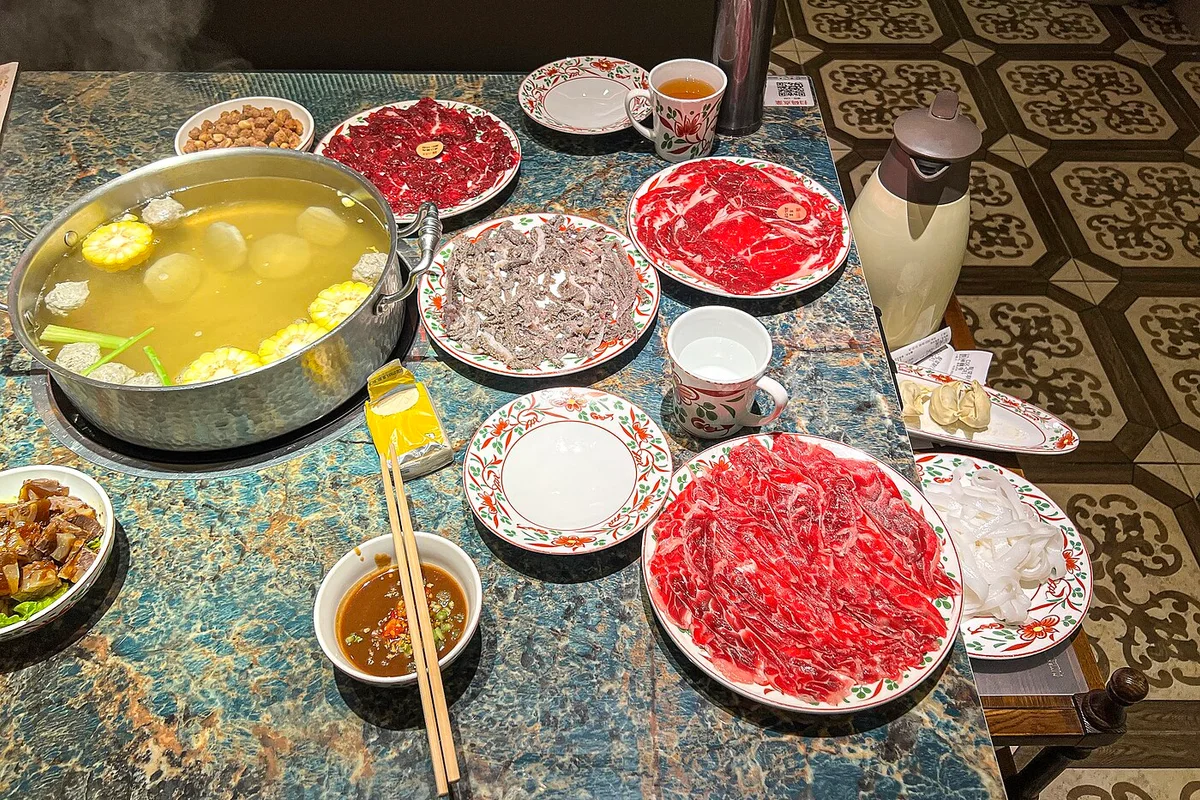
Think of it as a lesson in beef cuts—not mild mala hot pot
Chaoshan beef hot pot is a clear-broth meal organized around fresh beef, specialist knife work and cut-specific cooking times. Instead of hiding the meat beneath heavy spice, restaurants identify cuts by texture—tender, springy, fatty or crisp—and let diners swish them briefly before dipping them in shacha sauce.
Common ingredientsFresh beef cuts, beef balls, clear broth, greens, rice noodles and shacha dipping sauce.
01
Choose cuts first, then cook small batches from lean to rich
How to order it
Ask the server to explain the day’s cuts and recommend a sequence from lean and delicate to richer pieces. Cook only a few slices at a time so the broth keeps simmering and the meat remains easy to retrieve. Follow the shop’s timing advice; thin slices may need seconds while meatballs and fatty cuts take minutes. Mention peanut, seafood and sesame allergies before using house shacha sauce.
How to eat and pair it
The meal rewards attention. Diners use a wire skimmer or chopsticks to move a small portion through the broth, then eat it immediately with shacha or a lighter chilli sauce. Delicate cuts usually go first, followed by fattier slices, balls, vegetables and noodles. A well-run restaurant may label the plates or give explicit cooking times. This is not ceremony for its own sake: a few extra seconds can turn a tender cut firm, while a meatball must be heated through.
Easy mix-ups
Misconception: Chaoshan beef hot pot is simply a non-spicy version of Sichuan hot pot. In practice: It has its own system of butchery, timing, clear broth and shacha dipping sauce; fresh beef texture is the central subject. Misconception: All thin beef slices should cook for the same number of seconds. In practice: Thickness, fat and connective tissue differ by cut. Specialist restaurants time and sequence them separately.
Start lean and delicate before moving toward fat and tendon
The sequence protects subtle cuts from a broth already enriched by fatty beef. Meatballs, vegetables and noodles belong later because their longer cooking and starch change the pot more strongly.
02
Fresh beef, clear broth, timing and shacha make the meal
Cut differences matter more than a simple tenderness ranking
Some plates are prized for clean tenderness, others for fat fragrance, tendon snap or a springier chew. The menu is a map of muscles, not a ladder on which the most expensive cut automatically wins.
Shacha is a dip, not the broth’s missing flavor
A small amount can add seafood, nutty and aromatic depth depending on the house recipe. Flooding every slice makes carefully separated cuts taste the same and obscures the clear-broth logic.
Fresh sliced beef
Specialist shops break the animal into named cuts and slice across the grain. Availability changes because each cut represents a limited part of the animal.
Clear broth
Beef bones and restrained aromatics create a mild cooking medium that supports rather than masks the meat.
Handmade beef balls
Pounded beef balls provide a bouncy contrast to the sliced cuts and need much longer in the pot.
Shacha sauce
The savory, gently sweet and aromatic condiment is a classic Chaoshan partner. Recipes differ and may contain seafood or peanuts, so allergy questions matter.
Cut-focused tasting
Several small plates showcase named cuts such as diaolong, tender meat, brisket-related pieces and fattier chest meat.
Beef-ball and vegetable pot
A more economical meal combines handmade beef balls with greens, tofu and rice noodles while preserving the clear-broth format.
Shop-specific broth and sauces
Some kitchens use a nearly plain beef-bone broth; others add radish, corn or herbs. Shacha formulas also vary.
- Beef sliced evenly across the grain
- Cuts kept separate and identified rather than piled together
- A clear, gently seasoned broth
03
Time control runs from butchery to the table
Thin slices of beef are swished briefly in a mild broth, with timing adjusted for each cut.
Cutting and refrigeration set the upper limit before the pot is lit
Specialists receive, chill, divide and slice beef quickly enough to keep muscle-specific texture legible. Even slices also make the restaurant’s cooking guidance meaningful.
The pot must recover between small batches
Crowding drops the temperature and turns a short swish into uneven poaching. Add only a few slices, wait for the broth to return to the restaurant’s intended heat and use separate utensils for raw and cooked meat.
Safe cooking time depends on the cut, thickness and condition of the beef. Follow the restaurant’s cut-by-cut guidance instead of applying one countdown to every plate.
04
Why Chaoshan built a system around beef cuts and shacha
This clear-broth beef hot pot is associated with the Chaoshan area of eastern Guangdong and became widely popular outside the region in the twenty-first century.
Freshness, precise cutting and very short cooking times matter more than a heavily seasoned broth. Different cuts are named and timed separately, often with shacha sauce for dipping.
05
How to say Chaoshan Beef Hot Pot—and what the name tells you
Pronounced cháo shàn niú ròu huǒ guō. Menus may call it Chaoshan beef hotpot, Chaozhou beef hot pot, Shantou beef hot pot, cháoshàn niúròu huǒguō.
Cuts, sequence and broth all change during the meal
A specialist menu divides the animal into named cuts because fat, connective tissue and grain produce different textures. Lean, tender slices are usually cooked briefly while cuts with more tendon or fat can tolerate a little longer. Names such as diaolong, chibing and wuhuazhi are useful signals of a serious cutting program, but terminology and exact anatomy vary among shops. Follow the kitchen’s plate-by-plate guidance instead of memorizing one universal number of seconds.
The order of cooking protects those distinctions. Begin with cleaner lean cuts while the broth is still mild, continue with fattier or chewier slices, then add beef balls, tofu, vegetables and rice noodles. Throwing every plate into the pot at once drops the temperature, overcooks delicate beef and turns a clear broth cloudy before you have tasted the cuts. Handmade beef balls offer a separate springy texture; they are not evidence that sliced beef may be less fresh.
Shacha is a dip, not the soup base
Chaoshan shacha sauce is savory, aromatic and often contains seafood or peanut-related ingredients depending on the formula. Use a little first and confirm allergens.
Freshness is visible in turnover
Look for busy cut-to-order service, clearly separated plates and clean refrigeration rather than relying on bright-red color alone.
The final broth is part of the meal
Vegetables and noodles can close the table after beef has enriched the broth, but it should still taste clean rather than greasy or aggressively spiced.
FAQ
Quick answers to common searches
What is Chaoshan beef hot pot?
Chaoshan beef hot pot is a clear-broth hot-pot tradition from eastern Guangdong built around very fresh beef, specialist cuts, brief cut-specific cooking and shacha dipping sauce.
What should a first-time group order?
Begin with two or three contrasting beef cuts rather than the whole menu, then add beef balls, vegetables and rice noodles. Starting with leaner, delicate cuts makes their differences easier to taste while the broth is still clear.
How long should the beef cook?
There is no safe universal countdown. Cooking time changes with the cut, thickness, temperature and restaurant preparation, so follow the shop's guidance for each plate and request fully cooked beef when needed.
Is Chaoshan beef hot pot spicy?
The broth is normally mild and clear rather than chilli-heavy. Stronger seasoning usually comes from the diner's shacha sauce or optional chilli, allowing the beef cuts to remain the focus.
Sources
Sources and further reading
- Chaoshan beef hot-pot group standard and cut-specific cooking guidanceOverseas Chinese Affairs Office of Guangdong Province ↗
- Guangdong food-safety standard for Shantou beef and beef-tendon ballsHealth Commission of Guangdong Province ↗
- Chaoshan hand-pounded beef balls in contemporary Guangdong food cultureDepartment of Transport of Guangdong Province ↗