This is not Sichuan hot pot with a clear broth
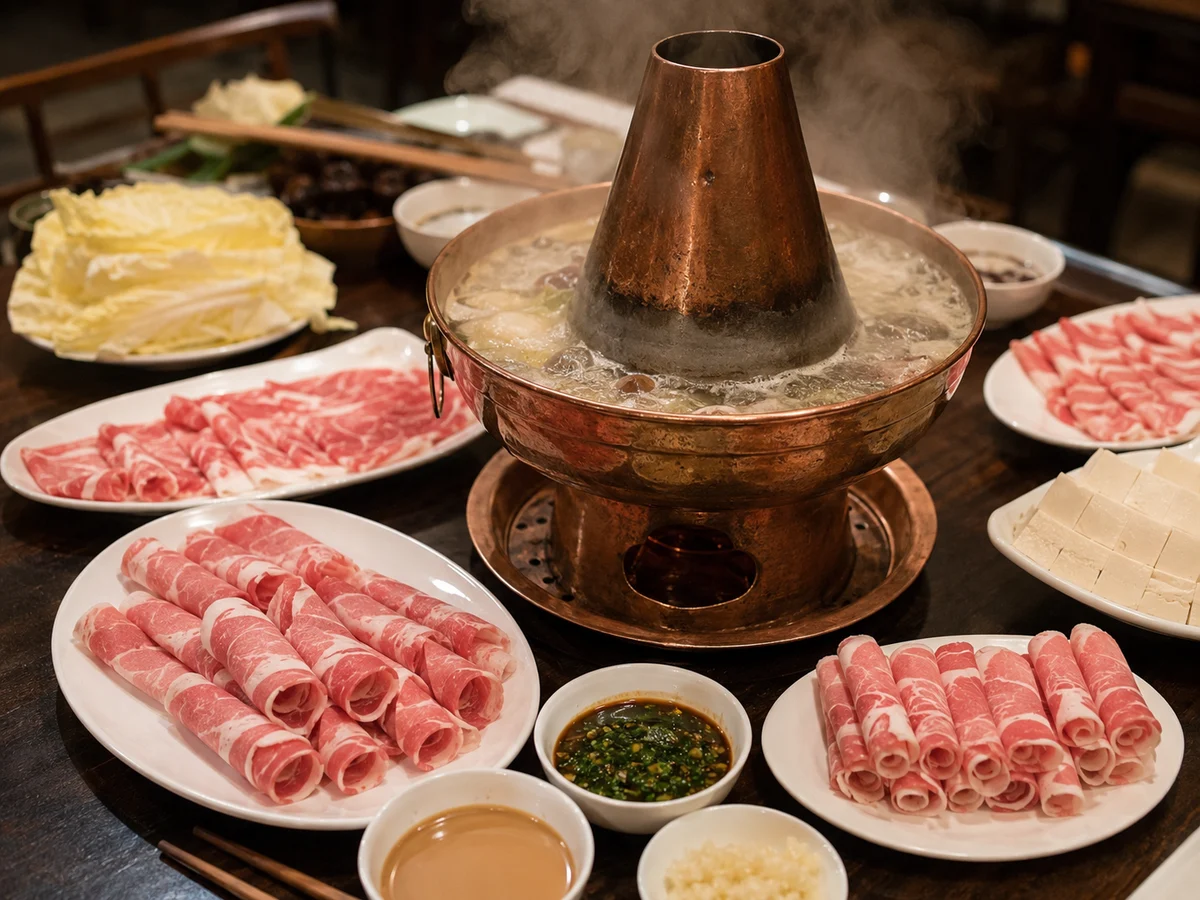
Beijing copper-pot mutton is the old-capital style of shuàn yángròu: thin slices of sheep meat are cooked briefly in the ring of simmering liquid around a charcoal-fired copper chimney. The pot is the traditional service vessel, while shuanyangrou is the dish and technique. Unlike chilli-oil hot pot, the base is intentionally clear and restrained so the quality of each cut remains visible; richness comes from the mutton and an individual sesame-paste dip seasoned with fermented tofu and chive-flower sauce.
Common ingredientsHand- or machine-cut sheep-meat sections, clear water with scallion and ginger, sesame paste, fermented tofu and chive-flower sauce, plus napa cabbage, frozen tofu, vermicelli, sesame shaobing and pickled garlic.
01
Start with two mutton cuts for contrast
How to order it
Ask for a mixed plate or two contrasting cuts instead of ordering only generic “mutton rolls.” Begin with cleaner, leaner cuts while the broth is still neutral, then move toward fattier meat. Cook only a few slices at a time so the pot keeps simmering and the meat does not become lost or overcooked. Keep utensils that touch raw meat separate, and cook slices until they have lost raw color. Add cabbage, tofu and vermicelli after the main rounds of mutton; they absorb the now-richer broth. Order sesame shaobing and sweet pickled garlic for the classic wheat-and-pickle contrast.
How to eat and pair it
Beijing’s old-style meal is a sequence and a social pace. Meat leads, vegetables follow and the same clear pot gradually gains depth. Donglaishun, founded in 1903, did not invent every northern form of boiled mutton, but its documented knife work, cut selection, copper-pot service and seasonings became an influential Beijing standard; the craft entered the national intangible-cultural-heritage list in 2008. Its Hui Muslim history also matters: “Beijing hot pot” should not erase the city’s halal culinary tradition. Outside Beijing, red broth, seafood balls and a large mixed buffet are often sold under the same English label; enjoyable as they may be, they represent a broader hot-pot format rather than the focused old-Beijing meal.
Easy mix-ups
Misconception: Authentic Beijing hot pot needs a spicy red broth. In practice: Traditional shuanyangrou uses a clear base so mutton and sesame dip remain central. Misconception: The copper pot itself proves the restaurant is traditional. In practice: The vessel is only one clue. Meat selection, slicing, clear broth, dip and the order of eating matter more than decorative copper.
02
Slicing, mutton flavor, the copper pot and sesame sauce all matter
Selected mutton cuts
Traditional specialists distinguish cuts such as shangnao, sancha, modang and huangguatiao, each with a different balance of tenderness, chew and fat.
Clear broth
Water with scallion and ginger is common. A crowded spice bag or red-oil base belongs to another hot-pot logic.
Copper chimney pot and charcoal
The central flue draws heat through the pot. Modern restaurants may use electric or gas heat for safety and regulation, which changes the vessel more than the basic eating method.
Sesame-paste dip
Sesame paste is loosened and seasoned with fermented tofu, chive-flower sauce and optional aromatics; it should coat rather than bury the meat.
Hand-cut fresh mutton
Slightly thicker, irregular slices make cut and knife skill easier to taste. Good pieces have a clean bite and do not collapse into mush.
Machine-sliced mutton
Uniformly thin chilled or frozen rolls are common and cook very quickly. Quality depends on the underlying meat, not the curl alone.
Copper pot with modern heat
Some restaurants preserve the chimney-pot shape while using electric or gas heat. Charcoal is historically characteristic, but safe, legal operation is more important than theatre.
- Slices show recognizable lean and fat structure instead of a processed uniform block
- The meat smells clean and tastes sweet-savory without being masked by broth
- The pot holds a steady simmer, not a violent boil that toughens meat
03
Knife work, heat control and dipping sauce are specialist skills
A copper chimney pot is kept at a steady simmer while diners cook only a few meat slices at a time with separate raw-meat utensils. Leaner and fattier cuts lead the meal; vegetables and vermicelli follow after the broth has gained depth.
04
A Beijing winter table shaped by Hui Muslim food traditions
Instant-boiled sheep meat has broad northern and Muslim culinary roots and became an old-Beijing winter institution. Time-honored restaurants such as Donglaishun shaped an influential cut vocabulary and service standard, but did not invent every northern form of boiled mutton.
The clear base lets diners compare meat sections before seasoning each cooked slice in sesame paste, fermented tofu and chive-flower sauce. Meat comes first, vegetables and vermicelli later. Charcoal and the copper chimney are historically characteristic, but safe ventilation, legal fuel and careful raw-meat handling take priority over theatre.
05
How to say Beijing Copper-Pot Mutton—and what the name tells you
Pronounced tóng guō shuàn yáng ròu.
Shuan describes moving thin pieces through simmering liquid until cooked. “Instant-boiled mutton” is an established translation, but the meat should still reach safe doneness; the word instant describes speed, not raw service.
Chinese yangrou means sheep meat without encoding the English age distinction between lamb and mutton. A translated menu cannot by itself tell you the animal’s age, breed or cut, so ask the restaurant when those details matter.
Two contrasting cuts make a better first order than a tower of anonymous frozen rolls
Ask for one leaner cut and one with visible fat, or choose a house platter that names its sections. Hand-cut fresh slices are often slightly thicker and more irregular than machine-cut frozen curls; they reward attention to grain, fat and cooking time. Machine slicing is not automatically poor, but meat should still have a clear origin, clean aroma and intact structure. Bright neon color, excessive purge or slices that disintegrate before reaching the pot deserve questions.
Estimate portions as part of a whole meal, not by appetite for meat alone. Sesame bread, vegetables, tofu, noodles and dipping sauce add substantial weight. Ordering every premium cut at once can leave expensive meat warming on the table. Start with enough for the first rounds and add more if the restaurant supports it. Confirm whether the menu uses lamb, older mutton or a broad Chinese category translated loosely as “mutton,” since age and cut affect aroma and tenderness.
A clear pot makes table technique visible because there is no heavy broth to hide it
Wait for a steady boil, add only a few slices and move them through the water so they separate. When the surface loses raw color and the cut reaches safe doneness, remove it promptly. Filling the pot with a whole plate drops the temperature, creates a foam raft and causes diners to lose track of individual pieces. Use dedicated utensils for raw meat, and never place cooked slices back on a plate that held raw lamb. Skim excessive foam and ask staff to manage the heat rather than stirring it into the broth.
Meat generally comes before strongly flavored vegetables so the first rounds reveal its natural sweetness. Tofu, cabbage and mushrooms can follow; noodles or vermicelli finish after the broth has accumulated flavor. This order is a useful default, not a race. Keep the chimney clear, do not lean over it and follow staff instructions for charcoal ventilation. A copper pot can be heated electrically or by gas in modern dining rooms; the metal vessel matters less than safe, stable heat and attentive service.
Build the dip in stages so fermented condiments support rather than erase the lamb
Begin with loosened sesame paste and taste the house base before adding fermented tofu, chive-flower sauce, soy, chilli oil, scallion or coriander. Each addition raises a different note, and several are salty. Dip only part of a cooked slice; good lamb should remain identifiable. Sugar garlic and sesame shaobing work alongside the meal: garlic provides sweet acidity, while the bread gives toasted dryness. Crumbling the entire bread into the pot clouds a broth designed to stay relatively clear.
Sesame, peanut, soy, wheat and fermented products may all occur at the sauce bar, often with shared spoons. Diners with allergies need staff guidance and a clean separate portion, not a self-service workaround. A plain soy or vinegar dip is not necessarily safer if cross-contact is uncontrolled. For lower sodium, use less sauce on each bite and rely on scallion or coriander for lift rather than diluting a communal container.
Sources
Sources and further reading
- Shuanyangrou: a representative Beijing dishBeijing Municipal Culture and Tourism Bureau ↗
- Old Beijing mutton hot pot: ingredients, sesame dip and food-safety guidanceBeijing Administration for Market Regulation ↗
- Donglaishun: history and instant-boiled mutton craftChina Time-honored Brands Digital Museum, Ministry of Commerce ↗