Meet Beijing’s soft soybean-dusted rice roll
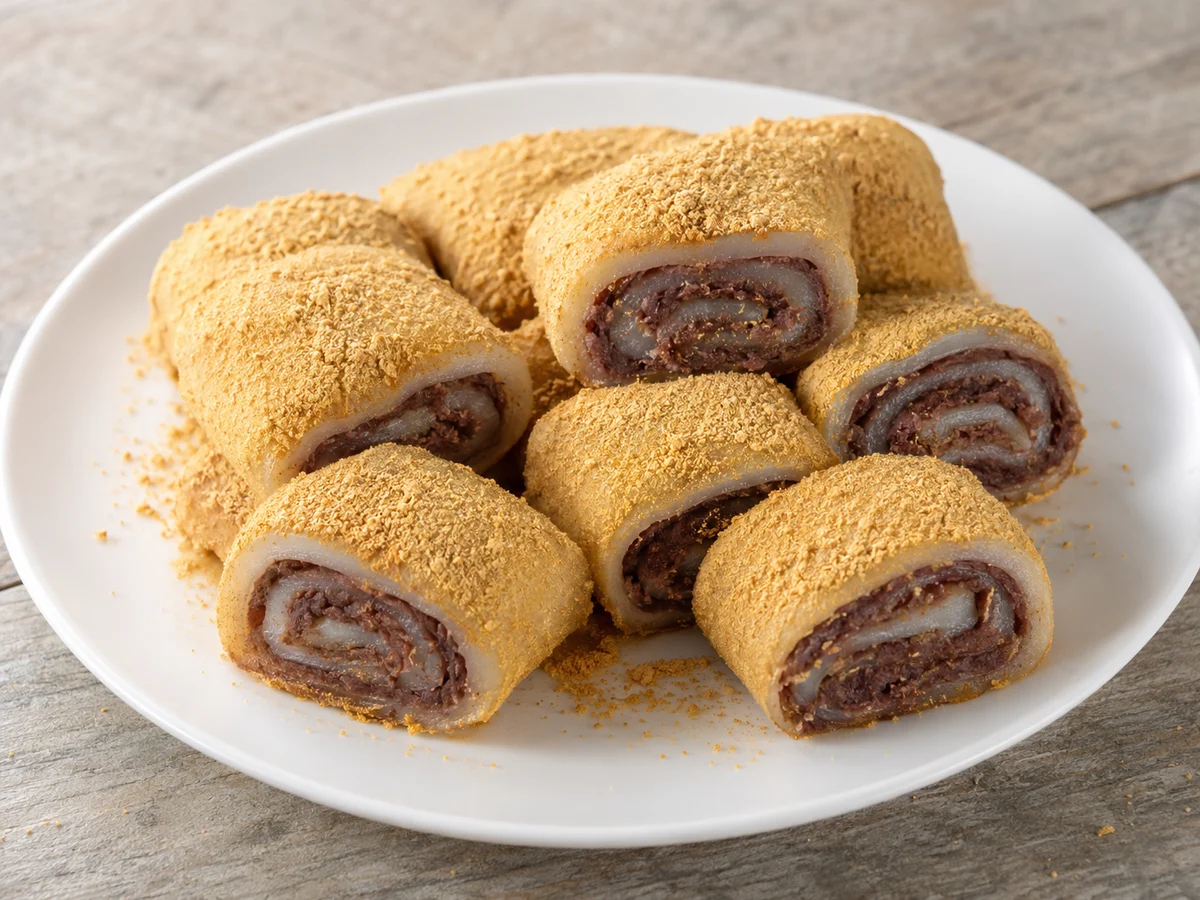
Ludagun rolls a soft glutinous grain dough around sweet red-bean paste, then coats it generously in roasted soybean flour. Sliced spirals show the filling while the powder supplies a dry, nutty perfume that balances the sticky dough.
Common ingredientsGlutinous rice flour, sweet red bean paste, roasted soybean flour and sugar.
01
Buy a small fresh portion and start with red-bean filling
How to order it
Buy a small freshly cut portion. Eat it the same day before the dough firms and soybean flour absorbs moisture. Mention soy allergy: the outer powder is soybean. Expect loose flour and hold the slice over its tray or wrapper. Choose plain red-bean filling first before modern fruit, cream or flavored variations.
How to eat and pair it
Ludagun sits within Beijing’s traditional gaodian and snack-shop culture, while Beijing tourism material also links older yellow-millet forms with northern and Manchu grain traditions. The humorous name makes a modest grain-and-bean sweet memorable: the roll resembles a donkey coating itself in yellow dust. That image is an explanation of the modern name, not proof of one exact inventor. Freshness is the practical quality test because exposed glutinous dough firms quickly. Historical millet and widespread modern glutinous-rice versions can both be discussed without pretending that color alone proves the grain. At the counter, look instead for a clear spiral, dry fragrant soybean flour and red-bean filling that tastes of beans rather than only sugar.
Easy mix-ups
Misconception: The snack contains donkey meat. In practice: The name means “donkey rolling” and refers to the roll tumbling through dusty-looking soybean flour. Misconception: It has always been made only from glutinous rice. In practice: Modern rice-flour versions are common, while older descriptions also identify yellow millet.
Choose the grain and filling deliberately instead of assuming every yellow roll is identical
Many Beijing shops use glutinous rice for the wrapper, while accounts of the snack also preserve yellow-millet versions. Modern counters may offer purple rice, black sesame, jujube or sweetened cream fillings. These can be enjoyable, but they move attention away from the classic conversation between mild sticky grain, red bean and roasted soybean. For a first tasting, ask for the standard red-bean roll before trying flavored variants. If two versions are available, compare them side by side while fresh; grain fragrance and elasticity are easier to understand than they are from a menu label. Do not identify ludagun by yellow powder alone. Some pastries use peanut, sesame, milk powder or decorative crumbs, and soybean flour itself is a major allergen. Ask specifically about the outer flour, filling, shared work surface and any dairy added to make the paste richer. Glutinous rice contains no gluten by nature, but a shop environment may handle wheat pastries and sauces. “Rice-based” is therefore not a complete medical assurance. The sticky texture is also a reason to offer small pieces to children and older diners and to chew slowly rather than swallowing a dense bite whole.
Treat ludagun as a fresh tea sweet, not a long-keeping packaged cake
One or two slices are usually enough after a savory meal because glutinous grain and bean paste are filling. Unsweetened jasmine, green or black tea clears the powdery finish and makes it easier to notice roasted-bean aroma; a second rich dessert often creates repetition rather than contrast. At a Beijing snack counter, ludagun can join a small sampler with aiwowo or wandouhuang, but identify each item before eating because several pale or flour-coated sweets can look similar. Share with clean utensils so the remaining pieces stay dry.
03
Good ludagun is soft, moist and dryly fragrant at once
Fresh ludagun is soft and elastic, with flour that smells roasted rather than dusty
The best first bite separates three textures. The glutinous layer is tender enough to compress without sticking permanently to the teeth, the red-bean filling is smooth but not watery, and the soybean flour remains loose on the surface. A clearly visible spiral shows that the sheet was rolled evenly, yet visual neatness matters less than balance: an oversized dough layer becomes gummy, while too much filling squeezes out and erases the toasted-bean finish. The yellow coating should smell nutty as soon as the box opens. Raw, chalky or stale-oil aromas are warning signs, not part of an “old Beijing” taste. Time changes the sweet rapidly. Exposed edges dry and split; sealed boxes trap moisture until the flour turns pasty; refrigeration firms the glutinous starch. This is why a busy counter cutting rolls to order is more useful than a beautiful stack that has sat all day. Ask when the roll was made, buy a small portion and notice whether the knife leaves clean rings. A fresh piece can feel pleasantly substantial without requiring an aggressive chew, and the bean paste should support the grain aromas rather than deliver only undifferentiated sugar.
Glutinous dough
Modern shops commonly use glutinous rice flour; older northern descriptions and some shops use yellow millet.
Red-bean paste
The smooth filling should be sweet but not obscure the grain.
Roasted soybean flour
The powder prevents sticking and provides the signature aroma; it is an important soy allergen.
Sugar
Used in the filling or as a finish, it should not bury the toasted grain and bean flavors.
Glutinous-rice version
The most common modern form, pale and elastic.
Yellow-millet version
A more visibly golden preparation connected with older northern grain traditions.
Red sugar filling
Some older or regional forms use brown or red sugar instead of smooth bean paste.
- Neat spiral slices
- Dough soft rather than cracked
- Filling spread evenly
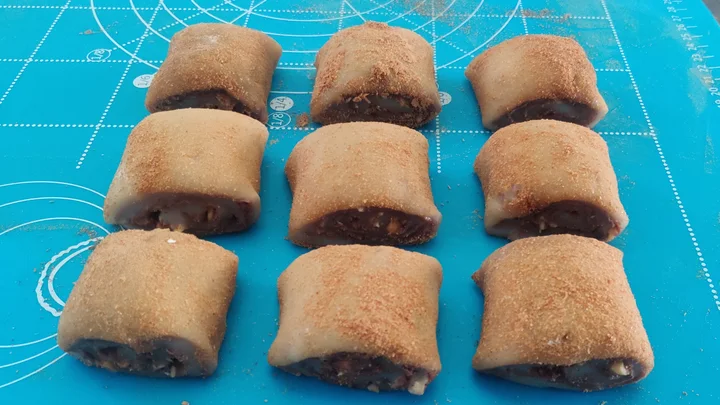
A homemade batch before plating
Ludagun can also be made at home: steamed glutinous-rice dough is rolled out, spread with red-bean paste, rolled into a log and cut into short pieces before roasted soybean flour is dusted over the surface. Freshly made pieces remain soft and elastic; the dough gradually firms as it sits.
04
Moisture, filling consistency and rolling pressure control the shape
Steamed rice dough is rolled thin, spread with bean paste, coiled and dusted until it resembles a roll in yellow earth.
Steam, rolling temperature and soybean-flour handling explain most successes and failures
The grain must absorb enough water and cook completely before it becomes a workable sheet. Underhydrated dough stays hard in the center; excessive water produces a weak layer that cannot hold the spiral. Cooks spread or roll the warm mass while it is pliable, dusting the work surface so it does not weld itself down. Red-bean paste needs a similar consistency: too stiff and it tears the sheet, too loose and it leaks. Rolling with steady pressure creates the recognizable rings without squeezing all the filling toward one end. Roasted soybean flour performs several jobs at once. It prevents sticking, adds a dry contrast to the moist roll and supplies the “dusty” look behind the name’s image of a donkey rolling on the ground. Roasting must go far enough to remove raw-bean harshness but stop before bitterness or rancid notes appear. Flour scattered hours in advance loses aroma and absorbs humidity, so specialist vendors often refresh the coating during cutting. More flour is not automatically better: a thick dry layer can make diners cough and overwhelm the gentle bean filling.
05
From northern millet and bean sweets to today’s Beijing snack shops
Ludagun, literally “donkey rolling,” is a classic Beijing-Tianjin sweet made from glutinous millet or rice dough, sweet red-bean paste and roasted soybean flour. The playful name describes the powder-coated roll, not an animal ingredient.
It is sold in traditional snack shops as soft slices with a nutty fragrance. Freshness matters because the glutinous dough firms as it sits.
06
How to say Ludagun—and what the name tells you
Pronounced lǘ dǎ gǔn. Menus may call it lv da gun, donkey rolling sweet, lǘdǎgǔn, Beijing soybean flour roll.
Sources