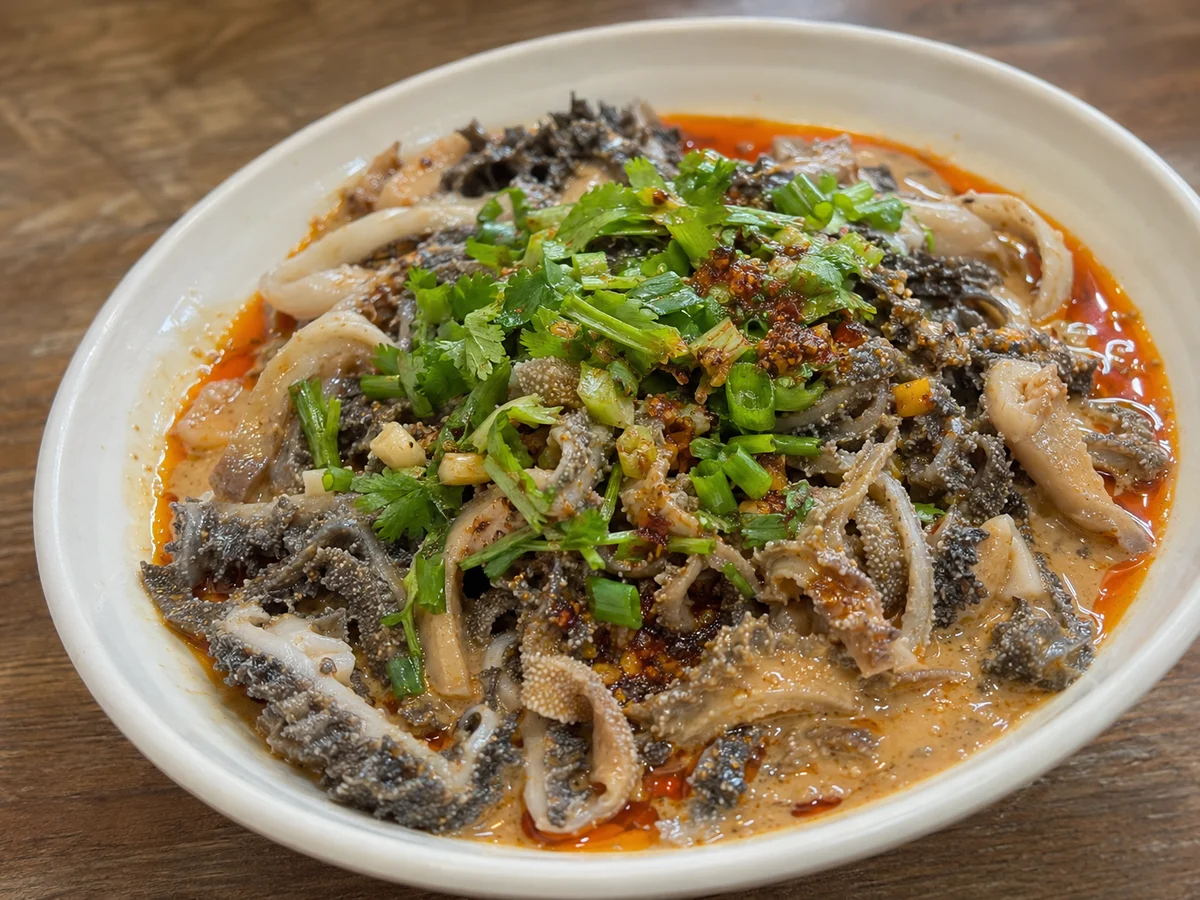
“Quick-blanched” means seconds in hot water—not deep-fried crisp
Baodu is the precision snack of quick-blanching specific cuts of lamb or beef stomach, then dipping them in a thick sesame sauce. Each cut has a different grain and ideal cooking time; the target is a crisp, lively snap rather than long-braised softness.
Common ingredientsCarefully cleaned beef or lamb stomach sections, boiling water, sesame paste, fermented tofu, chive-flower sauce, vinegar, soy, scallion, cilantro and optional chilli.
01
Choose beef or lamb tripe, then one or two cuts
How to order it
Ask which animal and stomach cut is being served instead of ordering only “tripe.” Start with one or two cuts so the texture difference remains clear. Eat immediately; tripe toughens as it cools. Choose a reputable specialist with careful cleaning and fast turnover. Dip briefly rather than burying every piece in sesame sauce. If you have sesame, peanut or fermented-soy allergies, discuss the dip before ordering.
How to eat and pair it
Old Beijing specialists may call cuts by names unfamiliar even to Chinese visitors. Beijing tourism sources place the snack strongly within Hui Muslim businesses and describe seasonal specialist shops with named baodu lineages. The skill is not disguise: clean preparation, cut-specific knife work and seconds of blanching create crisp textures that long braising would erase. Ordering two cuts side by side makes the differences legible. Because timing varies with thickness and equipment, a visitor should follow the specialist rather than copying one universal number of seconds.
Easy mix-ups
Misconception: Baodu is a long-cooked tripe stew. In practice: Its defining technique is explosive, very brief blanching; overcooking ruins the intended texture. Misconception: All tripe should be blanched for the same number of seconds. In practice: Thickness and stomach section differ. Specialists adjust timing rather than relying on one universal countdown.
02
Clean preparation, precise cutting, spring and sauce define good baodu
Tripe cuts
Beef and lamb stomach sections differ in thickness, ridges and tenderness. Specialist menus may name omasum, rumen or local cut terms separately.
Boiling water
The blanch may last only seconds and demands experienced timing, but food safety still requires complete cooking.
Sesame sauce
Fermented tofu, chive-flower sauce, vinegar, soy and chilli customize the dip.
Scallion and coriander
Fresh aromatics lighten the rich sesame seasoning and should be added to preference.
Lamb tripe selections
Often especially delicate and prized for varied crisp textures.
Beef omasum
Leaf-like pages cook extremely quickly and hold sesame sauce well.
Mixed-cut tasting plate
Several stomach sections let diners compare thickness, ridges and resilience.
- No unpleasant raw odor
- Pieces cut evenly for their section
- Pieces curled and crisp, not rubbery
03
Different stomach cuts need different cooking times
Each stomach section is cleaned, separated and cut for its grain and thickness. Small batches enter fully boiling water for cut-specific timing, are drained immediately and served before cooling turns the intended snap rubbery.
Quick blanching describes the final cooking step, not casual handling. Order tripe from a kitchen with good turnover and follow the recommended timing for each cut.
04
A specialist craft from Beijing’s Hui Muslim snack tradition
Baodu is a traditional Beijing Hui Muslim snack built around carefully cleaned lamb or beef stomach sections. Specialist shops preserve named cuts, cut-specific knife work and individual timing rather than treating every tripe texture as interchangeable.
Speed is the craft, but complete safe cooking remains non-negotiable. Even cutting and a stable boil make the brief blanch possible; the tripe is drained and eaten immediately with sesame, fermented tofu and chive-flower dip. That crisp target differs from long-braised offal.
05
How to say Beijing Quick-Blanched Tripe—and what the name tells you
Pronounced bào dǔ. Menus may call it Beijing baodu, quick-blanched tripe, Beijing tripe, bàodǔ.
Bao signals very rapid cooking. In the best-known Beijing method the tripe is blanched in boiling water, not exploded and not deep-fried; du refers to stomach sections rather than ordinary belly meat.
Specialist menus distinguish lamb and beef stomach sections instead of treating every cut as “honeycomb tripe.” Their structure determines the knife work, blanching time and intended snap.
Ordering by cut is the shortest route from “tripe” to a texture you actually enjoy
Bao du is a method and a specialist category, not one anatomical item. Beef omasum, often called niu baiye, opens into many thin leaves and gives a light crisp snap. Lamb stomach offers several sections with different ridges, thicknesses and fat, and shops may use local trade names that do not translate neatly. Ask what animal and cut are available that day, which is crispest, and which is most forgiving for a beginner. A two-cut plate teaches more than a large unidentified mixture because the cook can blanch each batch for its own timing.
Menus may price cuts differently, and popular lamb sections can sell out. Confirm whether a listed portion is one cut, a mixed plate or enough for sharing. If texture is your priority, say “crisp” or “slightly more tender” rather than asking for “well done”; prolonged cooking does not improve safety once the correct temperature is reached, but it can turn delicate leaves rubbery. Diners who dislike organ meat should choose another sesame-dressed dish instead of ordering tripe and leaving it untouched.
The famous seconds in boiling water only work after careful cleaning, cutting and sorting
Cooks clean each stomach section repeatedly, trim unwanted fat and membrane, and cut along a direction suited to its fibers. Pieces within one batch must be close in width or thin ends overcook while thick centers stay tough. The brief blanch then tightens proteins and creates the prized crisp-tender resistance. “Only a few seconds” is not permission to serve raw offal; it describes a controlled final step after correct preparation, with timing adjusted for cut, thickness, batch size and water temperature.
The pot must return to a vigorous, stable heat between batches. Crowding drops the temperature and lengthens the cook unpredictably. After lifting, the cook drains quickly because hot trapped water continues cooking the tripe. A plate should arrive without a warm puddle beneath it. At home, guessing by a viral stopwatch is unreliable when the cut and preprocessing differ. Follow a trusted recipe and food-safety guidance for the exact ingredient rather than copying a restaurant time divorced from its supply chain.
Sesame sauce should season the ridges while leaving the tripe audible and springy
A Beijing-style dip commonly starts with sesame paste loosened to a flowing consistency, then gains salt and aroma from fermented tofu, chive-flower sauce, soy or other house seasonings. Garlic, coriander and scallion may appear. Recipes vary, so judge function: the sauce should enter folds in a thin coat, not form a cold clay mask. Dip one edge first. If every piece is submerged, the expensive differences among cuts disappear under the same sesame weight.
Sesame is a major allergen; some shops may also use peanut paste, soy sauce containing wheat or shared utensils. Ask explicitly rather than assuming a brown dipping bowl has a single ingredient. For lower sodium, request an unseasoned or lightly seasoned portion of sesame paste if possible, but remember that fermented accents are part of the traditional balance. Chilli oil can be added, yet heavy heat is not needed to make properly cleaned tripe interesting.
Bao du has one of the shortest quality windows on the Beijing snack table
Eat as soon as each plate lands, even if another table dish is still coming. Cooling firms the proteins, residual moisture softens the initial snap and sesame sauce thickens. Specialist meals may send cuts in separate rounds for exactly this reason. Use clean serving chopsticks, take a small amount, dip and chew before the next batch arrives. A good piece smells clean and meaty, breaks with a crisp first resistance and finishes tender enough to swallow comfortably.
Takeaway is a poor introduction because the cut keeps changing inside a steamy box. Packing tripe and sauce separately slows the change, but reheating usually overshoots the narrow texture window and should not be called representative of fresh baodu.
Small rounds protect both temperature and attention
Two diners learn more from two small single-cut plates than one oversized mixed plate. Order the second only after tasting the first, note how the ridges hold sauce, and stop before palate fatigue turns every texture into generic chew. This pacing also lets the kitchen blanch each order close to service instead of leaving a large plate to cool.
Sources