
01
Baozi, mantou, jiaozi and bao
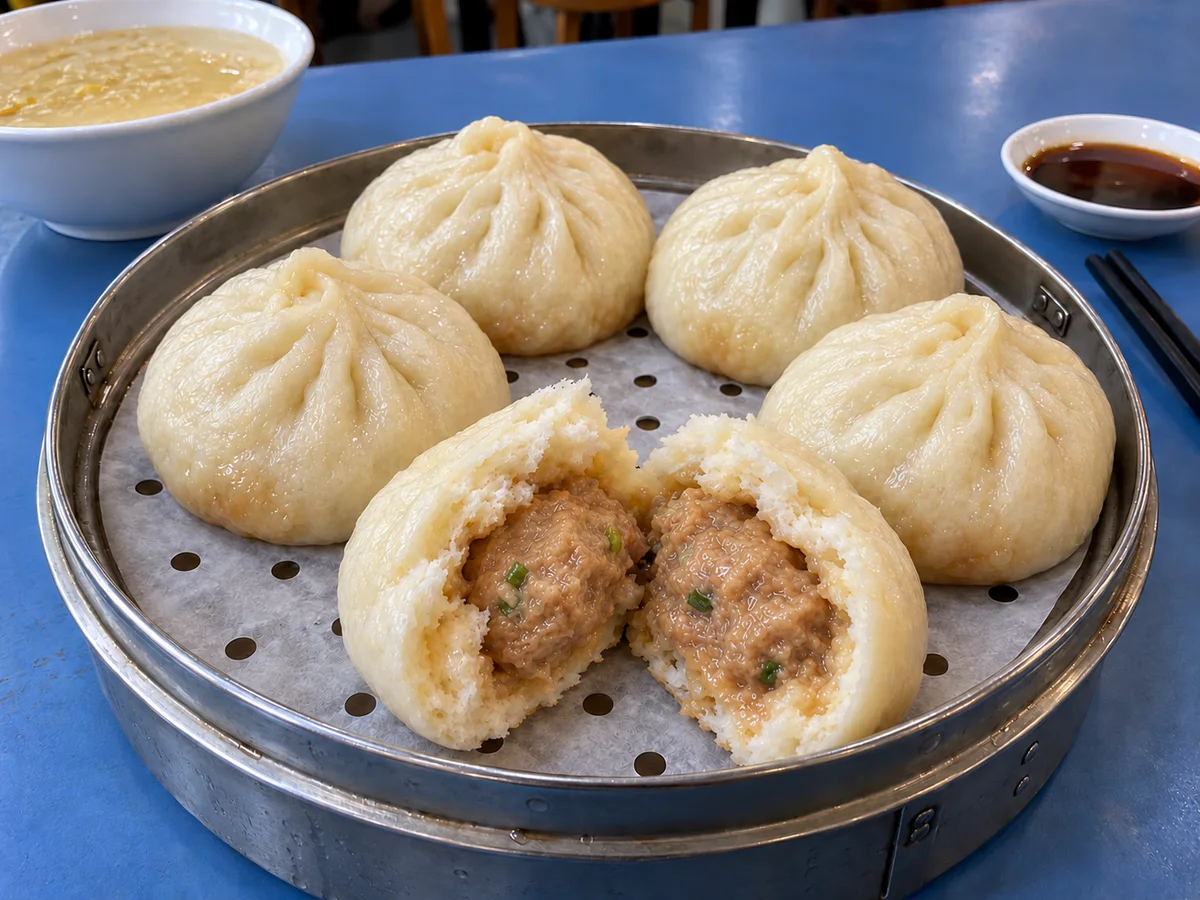
A baozi is a filled bun; take away the filling and in Beijing it becomes a mantou.
The dough is wheat flour and water raised with yeast or an old dough starter, so a baozi is soft and bready, not thin and chewy like a dumpling. A northern breakfast baozi is about the size of a fist or a little smaller, gathered on top into a ring of pleats and steamed in a bamboo or metal steamer. Typical fillings are pork and scallion, pork and cabbage, chive with egg and glass noodles, soy-braised pork, preserved mustard greens with pork, and sweet red bean paste. Shops often sell them by the liang, the old 50-gram measure of flour, so “two liang of pork buns” means however many buns two liang of flour makes at that shop, usually three to six.
The words are confusing even in Chinese. In the north today, mantou means a plain steamed bun with nothing inside and baozi means one with a filling. In Shanghai and the Yangtze delta the older usage survives, and mantou still covers filled buns too, which is why xiaolongbao are called xiaolong mantou and pan-fried pork buns shengjian mantou. The Kangxi Dictionary, compiled in 1716, still defined mantou as leavened dough steamed “with or without a filling.” Jiaozi, the crescent dumplings eaten at Chinese New Year, use thin unleavened wrappers and are usually boiled. In English, “bao” and “bao buns” often mean the Taiwanese gua bao, a folded flat bun around braised pork belly that became fashionable in Western restaurants; it is a relative, but not what a Chinese person means by baozi.
| Name | Dough | Filling | Cooking |
|---|---|---|---|
| Baozi 包子 | Leavened wheat | Yes | Steamed (sometimes pan-fried) |
| Mantou 馒头 (north) | Leavened wheat | No | Steamed |
| Mantou 馒头 (Shanghai) | Leavened, half-leavened or unleavened | Yes | Steamed or pan-fried |
| Jiaozi 饺子 | Unleavened, thin | Yes | Usually boiled |
| Gua bao 割包 | Leavened, folded flat | Tucked in after steaming | Steamed |
02
Zhuge Liang, a gift of gold and the shops of Kaifeng
The bun is old enough to have a legend, and the word baozi first turns up at a court celebration.
The most famous story is a legend recorded in the Song-dynasty encyclopedia Shiwu Jiyuan and repeated in the Kangxi Dictionary. When the strategist Zhuge Liang led his army south across the Lu River in the third century, the local custom was to offer human heads to the river spirits; Zhuge Liang had his cooks wrap mutton and pork in dough, shaped and painted like heads, and offered those instead. The word mantou, the story goes, began there. It cannot be proved, but steamed wheat buns certainly existed by the third century, because the Western Jin writer Shu Xi mentioned mantou in his “Rhapsody on Bread” a few decades later.
The word baozi appears in the Song dynasty. The memoir Yanyi Yimou Lu records that in 1015, on the birthday of the future Emperor Renzong, the palace sent out baozi to the ministers, and inside them were gold and pearls, so the first baozi on record may have been parcels as much as buns. By the 1100s baozi were ordinary street food. Meng Yuanlao’s memoir of the capital Kaifeng, written in 1147 after its fall, names Wang Lou’s “plum-blossom” baozi and the Lu family’s baozi shop, and stalls near the Zhou Bridge selling buns of goose, duck, chicken, rabbit, tripe, lung and eel for no more than 15 cash each. In Hangzhou a century later, Zhou Mi listed “baozi of all kinds” among the city’s snacks. The Kangxi Dictionary in 1716 still treated baozi as another name for mantou; the tidy northern split between the two came later.
03
Three doughs
How much the dough is raised decides what kind of bun you are eating.
Most northern baozi use fully raised dough, light and fluffy, which soaks up the juices of the filling. The traditional raising agent is 老面, a lump of old dough kept from the last batch. It gives a deeper wheat flavor but turns sour, so cooks knead in a little edible alkali (碱) to balance it; too much turns the bun yellow and soapy. Home cooks today mostly use dried yeast. Tianjin’s Goubuli uses half-raised dough, mixing unleavened and leavened dough together; the heritage listing explains that the unleavened part is the bone and the raised part the flesh, giving a skin that does not let the oil through, has some bite and stays glossy. Fully unleavened dough is for soup-filled buns such as xiaolongbao, where the wrapper has to hold a mouthful of broth.
| Dough | Texture | Examples |
|---|---|---|
| Fully raised (发面), yeast or old dough | Soft, bready, absorbs juice | Beijing pork and scallion buns, Qingfeng, qingshui shengjian, char siu bao |
| Half raised (半发面) | Thin, slightly chewy, does not soak through | Goubuli and other Tianjin buns, hunshui shengjian |
| Unleavened (死面 or 呆面) | Thin and strong enough to hold soup | Xiaolongbao, Kaifeng and Xi’an soup buns |
04
Why a good pork bun is juicy
The juice in a pork bun is mostly water that the cook beat into the meat.
Northern cooks “feed” minced pork with a flavored water: Sichuan peppercorns, ginger and scallion steeped in hot water and cooled. It is stirred into the seasoned meat a little at a time, always in one direction, until the meat has absorbed it and turned sticky; a common home ratio is about 60 milliliters for 500 grams of pork. A spoon of oil goes in last to hold the moisture, and chopped scallion is added just before wrapping, so it does not weep. Tianjin is famous for these 水馅, water fillings; A Goubuli bun holds about three qian of filling, pleated like a chrysanthemum about to open. Tianjin shops also make vegetarian buns of their own, such as bean sprouts with sesame paste and fermented tofu, or chives with egg and glass noodles.
05
Beijing: Qingfeng and the chairman’s set
If one shop stands for the Beijing baozi, it is Qingfeng.
Qingfeng Baozipu started in 1948 as a small restaurant called Wanxing Ju, whose cooks put together a bun to local taste from what they learned at other baozi shops. In 1976 it was renamed Qingfeng, “celebrating the harvest,” and became known for pork and scallion buns and chaogan, a thick stew of pork liver and intestine with garlic. Since 2005 it has grown as a fast-food chain across Beijing and into neighboring Hebei. You order and pay at a counter, take a ticket and collect a tray of buns, usually three to an order.
On 28 December 2013 the chain became famous across China when Xi Jinping walked into its branch at Yuetan North Street without warning, queued with everyone else and paid 21 yuan for two liang of pork and scallion buns, a bowl of chaogan and a plate of mustard greens. The combination became known as the “chairman’s set.” In 2025 the chain opened its first “Qingfeng 2.0” shops, with a refreshed look and 20 percent more filling in its premium pork and scallion bun, and some branches began offering one-person hot pots in the afternoon from 21.9 yuan. A Beijing breakfast at Qingfeng is still buns with chaogan or millet porridge, with garlic and vinegar on the table.
06
Tianjin: Goubuli, “dogs won’t touch it”
Tianjin’s most famous bun has the strangest name in Chinese food.
According to the national heritage listing, in 1869 a boy named Gao Guiyou was apprenticed to the Liu family steamed-food shop at Houjiahou, by the Grand Canal wharves in Tianjin. In 1882 he opened his own bun shop, De Ju Hao, and made his buns both tastier and prettier, shaped like a chrysanthemum. Customers queued, and Gao, busy and not much of a talker, often failed to answer them. His childhood name was Gouzi, “little dog,” so regulars joked that “Gouzi won’t talk to anyone,” 狗子不理人. A Taoist priest from the nearby Tianhou Palace told him to put the joke on his sign, and the shop became Goubuli, roughly “dogs won’t touch it.” The company dates the brand to 1858, and the technique entered China’s national intangible-heritage list in 2011.
Goubuli is now a cautionary tale as much as a legend. After a 2005 privatization it spread across China, partly through franchises, then recalled more than 80 franchised shops by September 2020. Its Wangfujing franchise in Beijing was dropped after a row over a blogger’s bad review, and the last Beijing branch, at Qianmen, closed in March 2021. Since then there have been no Goubuli shops outside Tianjin. The buns are good but dear: in 2021 a basket of eight traditional pork buns at the flagship cost 46 yuan, and single buns with beef, prawn or crab 16 to 18 yuan each, which is why Tianjin people say locals do not eat Goubuli. They go to neighborhood shops that make the same half-raised, water-filled buns for a fraction of the price.
07
Shanghai shengjian and Cantonese char siu bao
South of the Yangtze the filled bun went in two directions: into the frying pan and into the teahouse.
According to the Shanghai government’s food guide, shengjian mantou began in neighboring Suzhou in the early 1910s and reached Shanghai by the 1920s; other accounts point to Shanghai itself or Danyang. They were sold in teahouses and the hot-water shops known as tiger stoves. The buns are fried bottom-down in a wide shallow pan, splashed with water and covered, so they steam on top and turn crisp and brown below, then scattered with sesame and scallion. Shanghai splits them into two schools. Hunshui (浑水) shengjian use half-raised dough, pleats facing down and pork mixed with skin jelly for a burst of hot soup; qingshui (清水) shengjian use fully raised dough, pleats facing up and no jelly, so they are breadier. Shengjian are still ordered by the liang, which means four buns, and in 2026 four cost 9 to 13 yuan at the city’s best-known shops.
In Guangzhou the char siu bao is one of the four heavenly kings of yum cha, with shrimp dumplings, egg tarts and siu mai. Its top splits open in the steamer to show the filling, a look that, according to the Cantonese writer Sheng Hui, was perfected in the 1920s at the Datong teahouse in Guangzhou, after the owner’s son came back from studying in America and devised a chemical leavening method. The ideal, he writes, is “tall like a birdcage, round in the belly, burst at the top with the filling just showing.” The dough should be made with an old dough starter, soft, fine-grained and white, with a faint smell of lye. The diced char siu sits in a glossy sauce of oyster sauce, flour, water, oil and soy that Cantonese cooks call glass glaze.
| City | Bun | What marks it |
|---|---|---|
| Beijing | Pork and scallion baozi (Qingfeng) | Fully raised dough; eaten with chaogan |
| Tianjin | Goubuli and neighborhood water-filling buns | Half-raised dough, juicy beaten filling, chrysanthemum pleats |
| Xi’an | Jia San soup buns | Soup-filled buns of the Hui quarter, a national heritage listing |
| Shanghai | Shengjian, xiaolongbao | Pan-fried bottoms; unleavened soup dumplings |
| Guangzhou | Char siu bao | Burst top, sweet-savory glazed pork |
08
How to order and eat baozi
Baozi are breakfast food first, sold from before dawn until about ten in the morning.
Order by the liang or the piece
Northern shops sell by the liang of flour or in sets of three; Shanghai shengjian come four to a liang. Ask how many buns a liang makes if you are unsure.
Add something wet
In Beijing that means chaogan or millet porridge; elsewhere soy milk, egg-drop soup or a bowl of wontons.
Use the condiments
Vinegar, crushed garlic and chili oil are on the table. Dip the pork buns; leave the sweet ones alone.
Mind the juice
Water-filled and soup-filled buns spurt. Bite a small hole first and let the steam out.
09
What baozi cost
A baozi breakfast is one of the cheapest meals in China, unless the name on the door is famous.
Neighborhood shops price a pork bun in single yuan; in 2022 one Tianjin shop sold its water-filling buns at 4.5 yuan for three. Famous names and tourist streets charge several times as much.
| Where | What | Price |
|---|---|---|
| Kaifeng, before 1127 | Goose, duck, offal or eel bun | No more than 15 cash each |
| Qingfeng, Yuetan North Street, Beijing, 2013 | Two liang of pork and scallion buns, chaogan and mustard greens | 21 yuan |
| Goubuli flagship, Tianjin, 2021 | Basket of 8 traditional pork buns | 46 yuan |
| Goubuli flagship, Tianjin, 2021 | One beef, prawn or crab bun | 16–18 yuan |
| Qingfeng, Beijing, 2025 | Afternoon vegetable hot pot, group-buy price | 21.9 yuan |
| Shanghai shengjian shops, 2026 | Four pan-fried buns | 9–13 yuan |
10
Pork and scallion baozi at home
For about 16 buns: 500 g plain flour, 4 g dried yeast, 280 ml lukewarm water; 500 g minced pork with some fat, light soy sauce, a little dark soy, oyster sauce, salt, five-spice or thirteen-spice powder, grated ginger, 60 ml water steeped with Sichuan peppercorns, ginger and scallion and then cooled, 2 tablespoons oil, and 2 to 3 scallions, chopped.
- 1. Make and raise the dough
Stir the yeast into the flour, add the water a little at a time to make shaggy flakes, then knead into a soft dough. Cover and leave until doubled.
- 2. Season the pork
Mix the pork with the seasonings, then add the cooled pepper water in three parts, stirring in one direction until each addition is absorbed and the meat is sticky. Stir in the oil and rest for ten minutes.
- 3. Add the scallion last
Mix in the chopped scallion only when you are ready to wrap.
- 4. Roll and wrap
Knead the dough to knock out the air, cut it into pieces, and roll each into a round that is thicker in the middle than at the edge. Add a spoon of filling and pleat around the top to close.
- 5. Rest, then steam
Set the buns in the steamer and let them rise again for 5 to 15 minutes, depending on the warmth of the kitchen. Steam over high heat for 15 minutes from the boil, then turn off the heat and wait 2 minutes before lifting the lid.
If the buns wrinkle as they cool, the lid came off too soon; if they are hard and small, the dough was not raised enough.
Sources [12]
11
More buns and dumplings
Xiaolongbao
Shanghai’s soup-filled mantou, with an unleavened wrapper and pork-skin jelly.
Read about xiaolongbao →Char siu
The roast pork inside a char siu bao.
Read about char siu →Cantonese yum cha
Char siu bao with shrimp dumplings and egg tarts.
Read about yum cha →Beijing classics
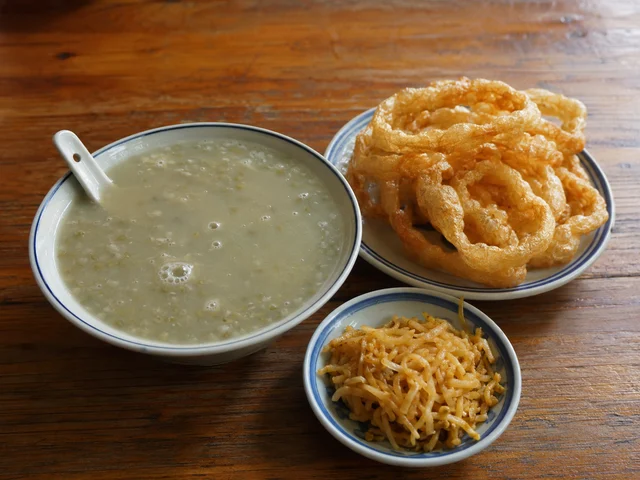
- Douzhir and Jiaoquan
Fermented drink · Breakfast
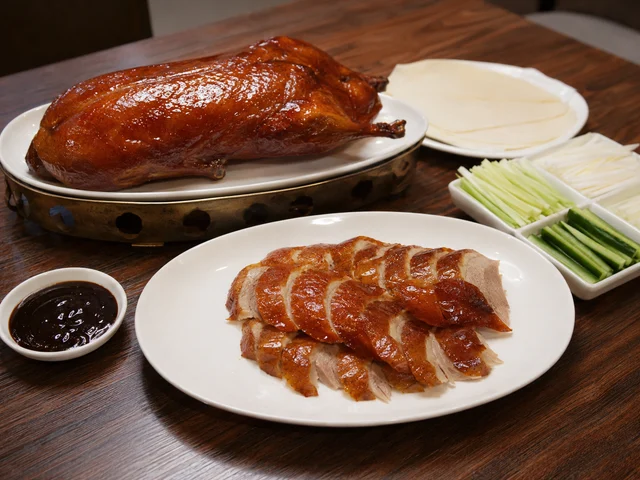
- Beijing Roast Duck
Roast duck · Shared meal
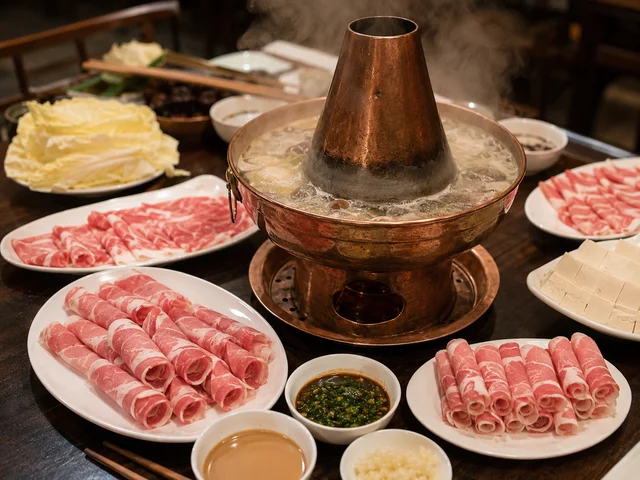
- Beijing Copper-Pot Mutton
Lamb hot pot · Winter, shared
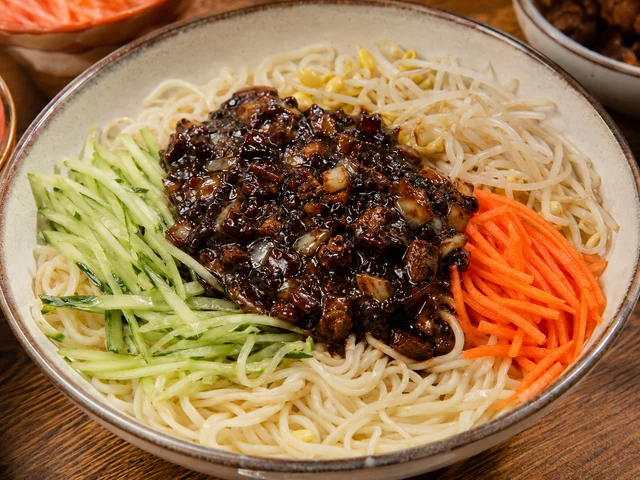
- Beijing Zhajiang Noodles
Home-style noodles · Everyday meal, best in summer
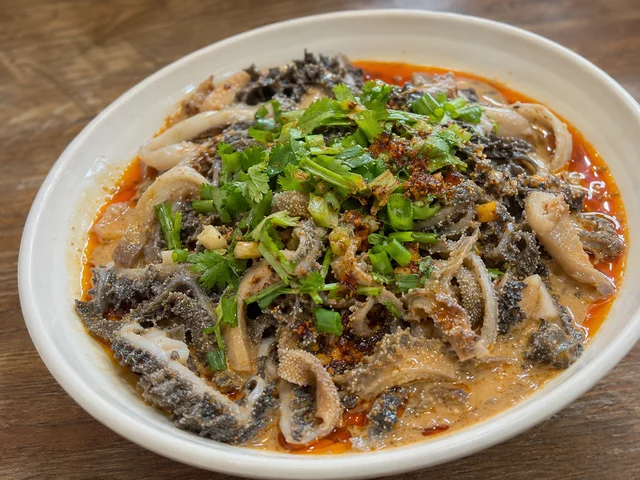
- Beijing Quick-Blanched Tripe
Tripe snack · Snack, one plate at a time
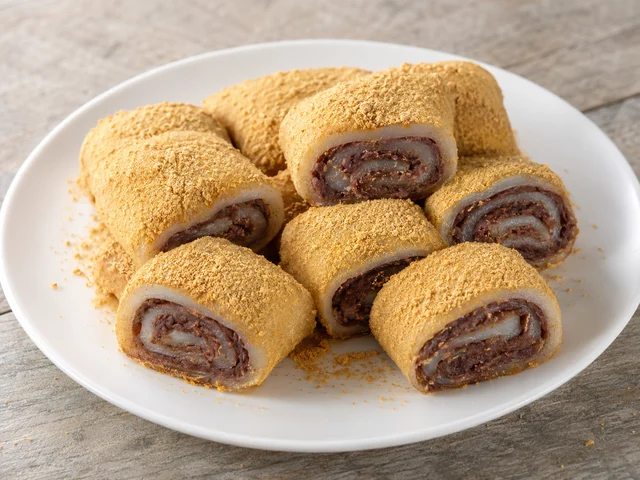
- Ludagun
Traditional sweet · Snack, sold by weight
FAQ
Questions about Baozi
What is baozi?
A Chinese steamed bun of leavened wheat dough with a filling, most often pork and scallion. It is a common breakfast in northern China.
What is the difference between baozi and mantou?
In northern China a mantou has no filling and a baozi does. In Shanghai, mantou also means filled buns.
What is the difference between baozi and dumplings?
Baozi use soft leavened dough and are steamed. Jiaozi dumplings use thin unleavened wrappers and are usually boiled.
Are bao buns the same as baozi?
Not quite. In English “bao bun” often means the Taiwanese gua bao, a folded flat bun with pork belly. Baozi are closed round buns.
How do you pronounce baozi?
Bow-dzuh: bāo with a high level tone, then a light zi.
What is the most famous baozi in China?
Tianjin’s Goubuli is the most famous name, and Beijing’s Qingfeng the most famous chain.
What does Goubuli mean?
Roughly “dogs won’t touch it.” It comes from the founder’s childhood name, Gouzi, and a joke that he ignored his customers.
How long do you steam baozi?
About 15 minutes over high heat for fist-sized buns, then 2 minutes off the heat before opening the lid. Frozen buns need 20 to 25 minutes.
Why did my baozi collapse?
Usually the lid was lifted too soon, or the dough was over-raised before steaming.
What is the char siu bao?
A Cantonese bun filled with diced barbecue pork in a sweet glaze, with a top that splits open in the steamer.
Sources
Sources and further reading
- 1 Kangxi Dictionary (1716), food radical, eleven strokes: entry for mantou (饅頭) (in Chinese)Wikisource ↗
- 2 Meng Yuanlao, Dongjing Menghua Lu (1147), vol. 2: the bun shops of Kaifeng (in Chinese)Wikisource ↗
- 3 Wang Yong, Yanyi Yimou Lu (Southern Song), vol. 3: baozi for the officials in 1015 (in Chinese)Wikisource ↗
- 4 Zhou Mi, Wulin Jiushi (late 13th century), vol. 6: the snacks of Hangzhou (in Chinese)Wikisource ↗
- 5 Sheng Hui, Yuecai Ji (粤菜记), chapter “Notes on morning tea” (早茶小札) (in Chinese)People’s Literature Publishing House, Beijing (2023)
- 6 Try traditional cuisine in parks in Beijing: Qingfeng Baozipu, founded 1948 as Wanxing JuBeijing Municipal Bureau of Culture and Tourism, english.beijing.gov.cn (2023) ↗
- 7 Hot pot in a bun shop: Qingfeng Baozipu 2.0 and other budget time-honored brands open new branches (in Chinese)Beijing Tourism (visitbeijing.com.cn), 10 March 2025 ↗
- 8 Traditional wheat-food techniques: Tianjin Goubuli baozi (item Ⅷ-160, 2011) (in Chinese)China Intangible Cultural Heritage Network ↗
- 9 Pan-fried pork buns: why they are called mantou, hunshui and qingshui, and where to eat themInternational Services Shanghai, Shanghai Municipal People’s Government (2026) ↗
- 10 The 10,000-yuan banquet and the “chairman’s set” (in Chinese)People’s Daily, CPC News (9 January 2014) ↗
- 11 Behind the retreat from Beijing, the time-honored Goubuli shrinks (in Chinese)China News Service, from The Beijing News (17 April 2021) ↗
- 12 Pork and scallion baozi at home: dough, seasoned water and steaming times (video, in Chinese)Tang Tang Xiao Chu Ji (汤汤小厨记), Bilibili (2022) ↗
- 13 A Tianjin bun shop: water-filling pork buns and bean sprouts with sesame paste (video, in Chinese)Xiao Jin Zhang De Chong Chong (小紧张的虫虫), Bilibili (2024) ↗
Last updated October 2026