
01
A small basket, and soup inside
A xiaolongbao is a bun in name, a dumpling in shape and a bowl of soup in the middle.
The name means “small-basket bun”: 小 small, 笼 the bamboo steamer, 包 a filled bun. Shanghai people still say xiaolong mantou, 小笼馒头, which confuses northerners, for whom a mantou is a plain bun with nothing inside. In the old Shanghai usage mantou meant any steamed bun, filled or not. The Shanghai food writer Shen Jialu explains how the words settled: today mantou means the big ones, two of which make a breakfast, and xiaolong means pocket-sized pork buns, six or more to one liang (50 grams) of flour. In English they are called soup dumplings, and the city’s own English-language guide uses the same phrase.
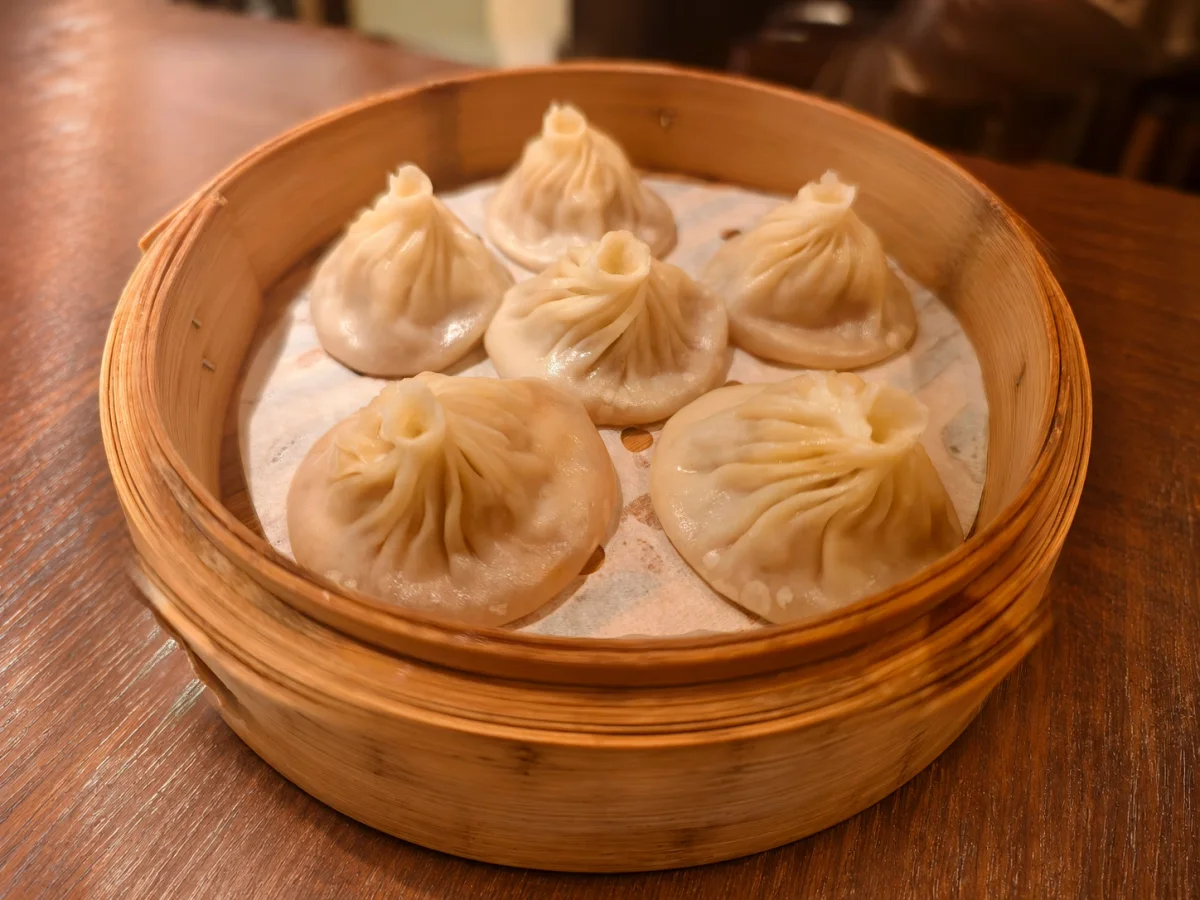
A good one is pale and slightly translucent, gathered at the top into fine pleats, and slumps a little in the basket under the weight of its soup. Lift it and the bottom sags; through the skin you can see the pinkish filling move. The national intangible-heritage entry for the Nanxiang version gives its measurements: a wrapper 1.5 millimeters thick weighing 8 grams, 16 grams of filling, a finished diameter of 2.5 centimeters and 18 pleats. The classic filling is plain pork. Crab is the famous luxury, and shops also sell shrimp, dried scallop and pickled mustard-stem fillings.
Take it apart
A xiaolongbao, bitten open
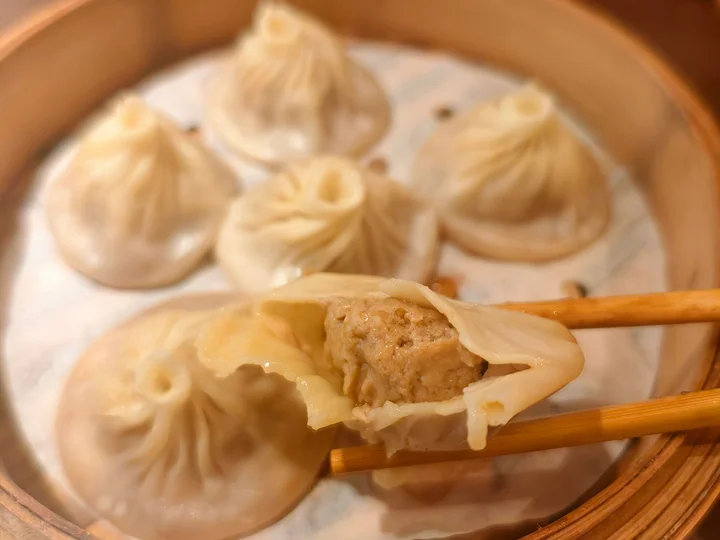
- The wrapper
Unleavened and thin enough to see through
- The filling
Pork mixed with aspic, which melts into soup as it steams
- The pleats
Fine pleats gathered at the top
- Bamboo steamer
The “long” in the name
02
Where the soup comes from
Nobody injects the soup. It goes in solid.
The soup starts as pork-skin jelly, chopped and mixed into the raw filling. Pork skin is simmered for hours, often with chicken, until the liquid is rich in gelatin; it is strained, chilled until it sets, then cut into fine crumbs and folded into the minced pork. In the steamer the jelly melts back into stock and the meat juices join it. The proportions are larger than most people expect: one restaurant kitchen mixes 200 grams of jelly into 250 grams of pork. The heritage entry for Nanxiang specifies pork from the front leg, lean and fat in a ratio of seven to three, with ten other seasonings in a recipe kept secret. Shen Jialu adds that Nanxiang Mantou Dian, the best-known shop, uses black-haired pigs and adjusts the fat and the amount of jelly with the seasons.
The wrapper is what holds it all in. It is made from refined wheat flour and water with no yeast, a dough the trade calls 呆面, “dead dough,” as opposed to the leavened dough of ordinary buns. Shen describes the traditional sizing: 50 grams of flour cut into eight pieces, each rolled on an oiled board rather than a floured one, so that no loose flour toughens the skin. The edge is rolled thinner than the middle, because the middle carries the weight. A good wrapper is thin enough to see through but strong enough to lift with chopsticks; a bad one tears at the first touch and the soup is lost before it reaches your mouth.
| Part | Standard |
|---|---|
| Wrapper | Unleavened refined flour and water, 1.5 mm thick, 8 g |
| Filling | Front-leg pork, lean to fat 7:3, ten seasonings and pork-skin jelly, 16 g |
| Finished size | 2.5 cm across, 18 pleats |
| Steaming | Stacks of 3 to 10 baskets, height adjusted to the heat |
03
How many pleats?
Counting the pleats is a sport, and there is no single right number.
Pleating is done with the left thumb feeding the wrapper round and the right fingers pinching one fold after another until the top closes. Seen from the side the folds hang like a skirt; seen from above, Shen Jialu writes, the closed top looks like the mouth of a carp. Some cooks leave a small hole, a “fish eye,” and some twist it shut into a “goldfish mouth.” Hangzhou cooks say twelve pleats is a pass and more pleats show a defter hand. Eighteen is the figure most often quoted, because it is both the Nanxiang heritage standard and Din Tai Fung’s trademark. More pleats cost labor: the owner of one Shanghai dumpling chain once complained that if the shop’s cooks had to fold like Din Tai Fung’s, they would all quit the next day.
| Who | Pleats |
|---|---|
| Hangzhou rule of thumb | 12 is a pass |
| Nanxiang Mantou Dian, as described by Shen Jialu | 14 |
| Nanxiang heritage standard; Din Tai Fung | 18 |
| A Huaiyang restaurant in Beijing, 2025 | 23 |
| Wu You Xian, Shanghai (MICHELIN star, 2025) | 32 |
04
From Nanxiang to the City God Temple
The dumpling has a birthplace, a founder and a date, which is rare for Chinese street food.
Shanghai’s own telling reaches back to the Northern Song capital Kaifeng, where a filled bun called taixue mantou was popular, and to the northerners who carried wheat cooking south in the 1120s. The documented story begins in Nanxiang, a market town northwest of Shanghai, now in Jiading District. In 1871 Huang Mingxian, who ran a pastry shop there called Ri Hua Xuan, reworked the big meat buns sold in the town, keeping the generous filling but making them smaller with a thinner skin; the heritage entry sums up his change as “heavy filling, thin skin, big made small.” Shen Jialu’s account fills in the steps. The shop had sold rice cakes; Huang, an adopted son who took over the business, switched to meat buns and wontons, and his buns were still big enough that two made a meal, with fourteen neat pleats and plenty of juice. A relative who came to the shop as an apprentice, Wu Xiangsheng, began selling them into the town’s teahouses, where customers wanted small things to nibble, so the buns shrank to one bite and went into little bamboo baskets.
In 1900 the Nanxiang bun moved into Shanghai’s old city. Wu took a cook named Zhao to the City God Temple and opened a shop called Changxing Lou in a pavilion by the Nine-Zigzag Bridge, surrounded by teahouses. Customers ignored its literary name and called it the Nanxiang bun shop, Nanxiang Mantou Dian, and that became its name. It still stands in the Yu Garden bazaar. When Queen Elizabeth II visited the temple in 1986, she stopped for three minutes outside the kitchen to watch the cooks fold dumplings. The shop’s method was written into a standard in 2000, and in 2014 the Nanxiang technique entered China’s fourth national list of intangible cultural heritage, under traditional wheat-food techniques.
05
How to eat one without burning your mouth
Shanghai has a rhyme for it: 轻轻提,慢慢移,先开窗,后喝汤. Lift gently, move slowly, open a window, then drink the soup.
Pick the dumpling up by its pleated top, which is the thickest and strongest part, and set it on a spoon. Bite a small hole in the side, let the steam out for a moment, and sip the soup. Then dip the rest in vinegar with a few shreds of ginger and eat it in one or two bites. The usual accident is biting straight in: the soup is hotter than it looks and sprays across the table, or onto the person opposite.
Shops set out vinegar and finely shredded young ginger, often lightly pickled so it is slightly sweet. Guides disagree on the vinegar: the city government’s English guide says black vinegar, while the Shanghai food writer Huang Qifang insists on the pale Shanghai rice vinegar and says Zhenjiang black vinegar does not suit. Some crab-dumpling shops suggest tasting the first one with no vinegar at all. Eat them as soon as the basket lands. When the food writer Christopher St. Cavish measured dumplings for a year, he found that after ten minutes the wrapper had swollen by about a quarter and kept thickening as it soaked up the soup. Shanghai people also like a bowl of soup alongside, egg-skin soup, fish-ball soup or small wontons, a habit Huang calls pairing the dry with the wet.
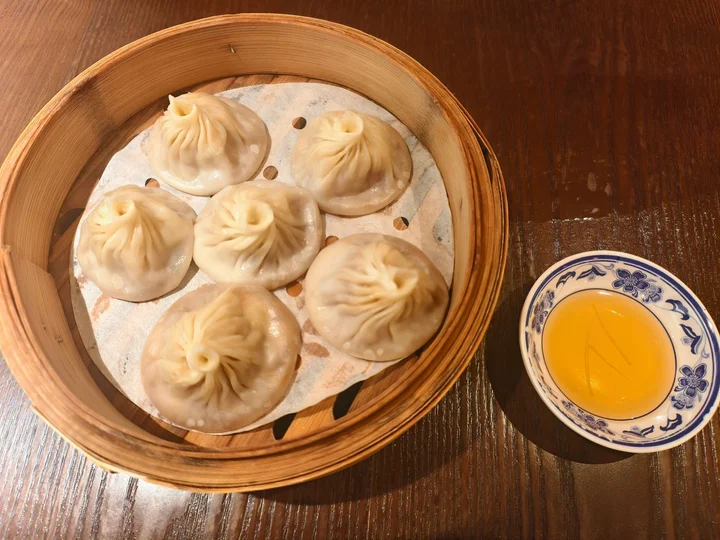
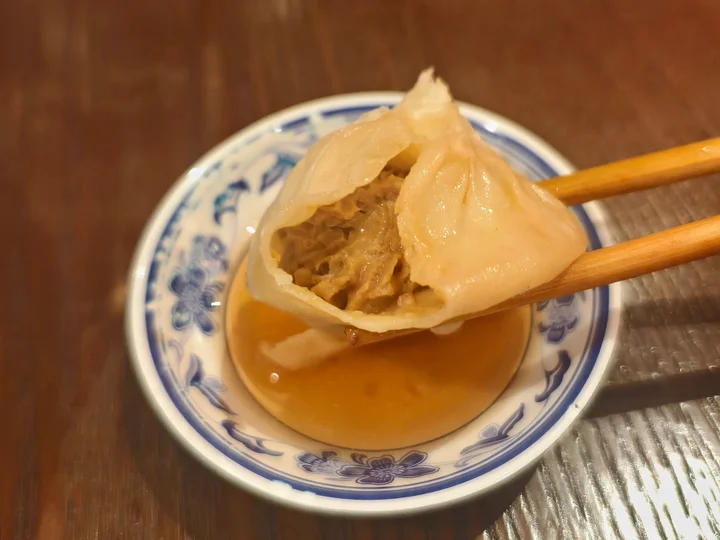
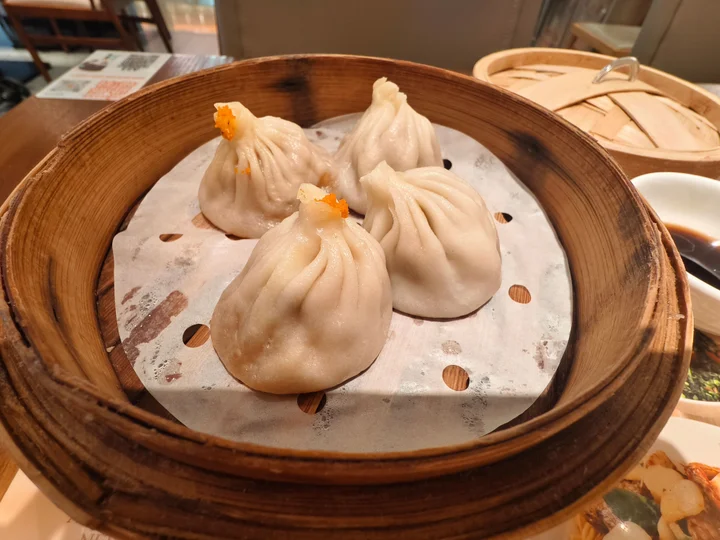
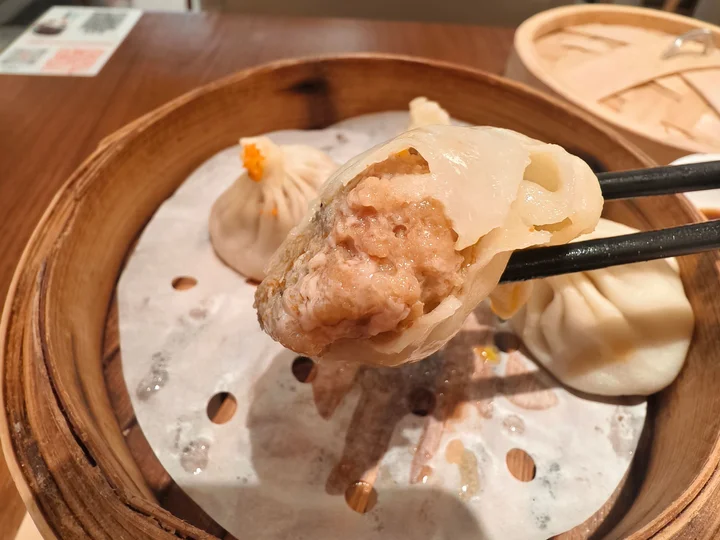
Two baskets of xiaolongbao, October 2026
Our own photographs from two meals in October 2026: a basket of six pork dumplings with vinegar and ginger on the 19th, and a basket of two crab-roe and two pork dumplings on the 26th.
06
Xiaolongbao, tangbao and the other “small buns”
The words overlap, so it helps to know what each one usually means.
Shen Jialu calls xiaolong and tangbao twin brothers. Until about twenty years before he wrote, an old Shanghai shop called Tianxiang Zhai sold xiaolong in the morning and tangbao in the afternoon, eight to a basket in both cases. The tangbao used a half-leavened dough, had its pleats folded underneath so the top was smooth and round, and came with a bowl of clear pork broth. The shop closed and, he writes, the tangbao vanished with it. Today the word tangbao, “soup bun,” is used loosely: Jia Jia Tang Bao, one of the most famous xiaolongbao shops in Shanghai, has tangbao in its name and sells xiaolongbao. In Nanjing and elsewhere in Jiangsu, tangbao shops sell soup dumplings of their own local style.
Outside the Shanghai region, “xiaolongbao” often means something else entirely. In Shengzhou in Zhejiang, small buns are made from leavened dough and left open at the top; their makers spread across China and sold them as “Hangzhou xiaolongbao.” In much of southern and northern China a breakfast-shop xiaolongbao is a small leavened pork bun with little or no soup. These are good food, but they are not what the English “soup dumpling” means.
| Name | Dough | Soup | Where |
|---|---|---|---|
| Xiaolongbao, xiaolong mantou | Unleavened, thin, pleated on top | Yes, from melted skin jelly | Shanghai, Nanxiang, Jiangnan |
| Tangbao (old Shanghai style) | Half-leavened, pleats underneath | Yes, with a bowl of clear broth | Tianxiang Zhai, Shanghai, now gone |
| Shengzhou small buns | Leavened, open at the top | A little, absorbed quickly | Shengzhou, sold as “Hangzhou xiaolong” |
| Breakfast-shop xiaolongbao | Leavened | Little or none | Much of China |
07
Shanghai, Wuxi, Hangzhou and Taipei
Across the Yangtze delta, the soup dumpling changes with the local taste for sugar.
The Shanghai style is savory with only a little sugar. Christopher St. Cavish, after measuring dumplings in more than fifty Shanghai shops, divided them into two schools: one prizing a very thin wrapper and a mild pork flavor, the other a stronger, porkier filling at the expense of everything else. Suzhou and Wuxi dumplings are a different branch of the family. They are bigger, sometimes twice the size, the meat is seasoned with soy sauce and they always contain sugar; St. Cavish describes the soup at one chain as a shade lighter than cola. In Wuxi the filling is a firm ball of meat with a sweet, soy-and-rice-wine taste, eight to a basket. Hangzhou cooks use the tighter meat of the hind leg and little or no sugar. Taiwan’s Din Tai Fung made the thin-skinned, eighteen-fold dumpling its signature and carried it abroad.
| Style | Size | Seasoning | Notes |
|---|---|---|---|
| Shanghai and Nanxiang | Small, one or two bites | Savory, a little sugar | Plain pork or crab; vinegar and ginger |
| Wuxi and Suzhou | Larger, up to twice the size | Soy sauce and sugar, clearly sweet | Firm meatball filling; often eight to a basket |
| Hangzhou | Small | Little or no sugar | Hind-leg pork, tighter filling |
| Din Tai Fung (Taipei) | Small | Mild pork | Very thin wrapper, 18 folds |
08
How a Taipei oil shop made it famous abroad
Many people outside China first eat xiaolongbao at Din Tai Fung.
Din Tai Fung began in Taipei in 1958 as a cooking-oil shop run by Yang Bingyi, born in Shanxi in 1927, and his wife Lai Penmei. When the oil trade slumped in the early 1970s, a friend suggested they give half of the shop front to xiaolongbao, and the dumplings soon replaced the oil altogether. In January 1993 The New York Times named Din Tai Fung one of the top restaurants in the world, and in December 2009 its Silvercord branch in Hong Kong received a MICHELIN star. The chain later opened in Shanghai itself, in Xintiandi, Lujiazui and even beside Yu Garden, where its prices startled locals: in 2012 its plain pork dumplings cost 58 yuan for ten, at a time when Shanghai people thought of 20 yuan a head as a normal dumpling meal and 35 as the limit.
09
The man who measured soup dumplings
In 2013 an American writer in Shanghai bought digital calipers and a kitchen scale online.
Christopher St. Cavish picked the 25 best-rated xiaolongbao shops on the review site Dianping and started cutting dumplings open at the table: he measured the wrapper’s thickness in millimeters and weighed the filling, the soup and the whole dumpling in grams. Twenty-five shops became 52, and by the time he finished, after about eighteen months, he had dissected more than seven kilograms of dumplings. In April 2015 he published the results as The Shanghai Soup Dumpling Index, a half-joking “pseudo-scientific” survey with real data. It made him briefly famous in the city. Nanxiang Mantou Dian, by then a large state-owned chain, asked him to help develop a new flavor; its president wanted cheese. He said no.
His measurements explain some local advice. At Nanxiang Mantou Dian he found the ground-floor takeaway dumplings, made in bulk for the queue, had the thickest skins and least soup in the city, while the upstairs dining rooms made them properly, thin and full of soup. In Nanxiang itself he found the dumplings at the original Guyi Garden restaurant small, thick-skinned and short on soup, worth visiting as a pilgrimage rather than for the best example.
10
Where to eat them in Shanghai
Every neighborhood has a dumpling shop; these are the names that come up again and again.
Nanxiang Mantou Dian, Yu Garden
The shop founded in 1900 at 87 Yuyuan Road, a China Time-honored Brand, known for pork and crab. Expect a queue on the ground floor; the upstairs rooms cost more and make thinner, soupier dumplings. The city guide puts the average spend at about 93 yuan.
Jia Jia Tang Bao, Huanghe Road
Founded in 1986, at 127 Huanghe Road near the Park Hotel. Baskets of twelve (one and a half liang) or eight (one liang); pork, pork and crab, and pure crab roe. Average spend about 41 yuan.
Lai Lai Xiao Long and Wu You Xian
Lai Lai, at 506 Tianjin Road, was a MICHELIN Bib Gourmand in 2024 and 2025 and is known for crab, about 58 yuan a head. Wu You Xian on South Maoming Road received a MICHELIN star in 2025; its dumplings have 32 folds and duck-egg yolk in the dough, about 130 yuan a head.
Wan Shou Zhai and Fuchun
Wan Shou Zhai at 123 Shanyin Road, Hongkou, about seventy years old, opens at 4:30 in the morning and averages about 27 yuan. Fuchun is the place for a strong, porky dumpling, sold by the half-dozen.
Nanxiang and Qibao
In Nanxiang, Guyi Garden restaurant claims the original recipe, and the town holds a xiaolongbao culture festival during the National Day holiday in early October. Zun Ke Lai’s original shop in Qibao has sold up to 30,000 dumplings a day.
11
What a basket costs
The same dumpling can cost fifteen times as much depending on the filling and the room.
A plain pork basket at a small shop is one of the cheapest good meals in Shanghai. Crab changes the price completely, and so does the restaurant. Autumn is crab season and the best time for crab dumplings; shops also make seasonal fillings with wild greens in spring and winter bamboo shoot in winter.
| Where | What | Price |
|---|---|---|
| A neighborhood shop in Nanxiang town, 2025 | Pork, basket of 8 | 8 yuan |
| Wan Shou Zhai, Hongkou, 2026 | Average spend per person | about 27 yuan |
| Jia Jia Tang Bao, Huanghe Road, 2026 | Average spend per person | about 41 yuan |
| Nanxiang Mantou Dian, Yu Garden, 2026 | Spicy crab and pork, basket of 6 | 48 yuan |
| Wu You Xian, 2026 | Pure crab, basket of 6 | 129 yuan |
12
Making them at home
For about 30 dumplings: pork skin and a few chicken pieces for the jelly; 250 g fatty pork, hand-chopped; 500 g strong (high-gluten) flour, 5 g salt and 270 g cold water including one egg white; salt, a little sugar, ginger, light soy sauce; black or rice vinegar and young ginger for the table.
- 1. Make the jelly the day before
Blanch the pork skin, scrape off the fat, and simmer it with the chicken for three to four hours. Strain, chill until firm, then chop the jelly into small crumbs.
- 2. Season the pork
Chop the pork by hand into tiny pieces, season with salt and a little sugar, and stir or slap it in one direction until it turns sticky. Chill it, then fold in about 200 g of the chopped jelly without mashing it.
- 3. Make the dough
Knead flour, salt and the water-and-egg-white mix into a smooth, fairly firm dough. Cover and rest for 40 minutes.
- 4. Roll and fill
Cut pieces of about 7 grams and roll each into a thin round on a lightly oiled board, thinner at the edge than in the middle. Put a spoonful of filling in the center.
- 5. Pleat
Turn the wrapper with your left thumb while the right hand pinches fold after fold, then twist the top closed or leave a small hole.
- 6. Steam and eat
Steam over fast-boiling water on paper or cabbage leaves for five to seven minutes, depending on size. Serve in the basket at once.
If the soup leaks, the wrapper is too thin in the middle or the jelly was too soft; if there is little soup, add more jelly next time.
13
More dumplings on the site
Wonton noodles
The Cantonese cousin of the Jiangnan huntun, in dried-flatfish broth.
Read about wonton noodles →Cantonese yum cha
Shrimp dumplings and siu mai in a Guangzhou teahouse.
Read about yum cha →Zhong dumplings
Chengdu’s pork dumplings in sweet soy and chili oil.
Read about Zhong dumplings →Shanghai classics
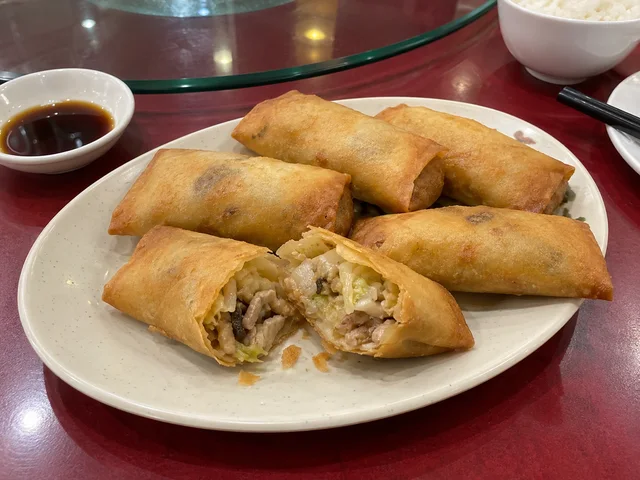
- Spring Rolls
Fried wrapped snack · Spring Festival, dim sum or a snack
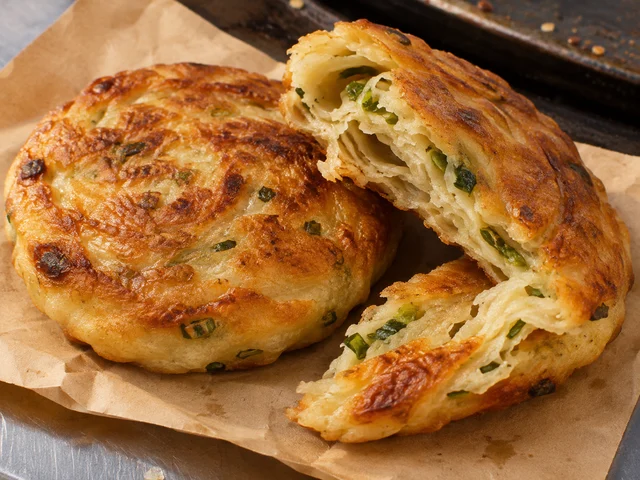
- Scallion Pancakes
Layered wheat flatbread · Breakfast or a hot street snack
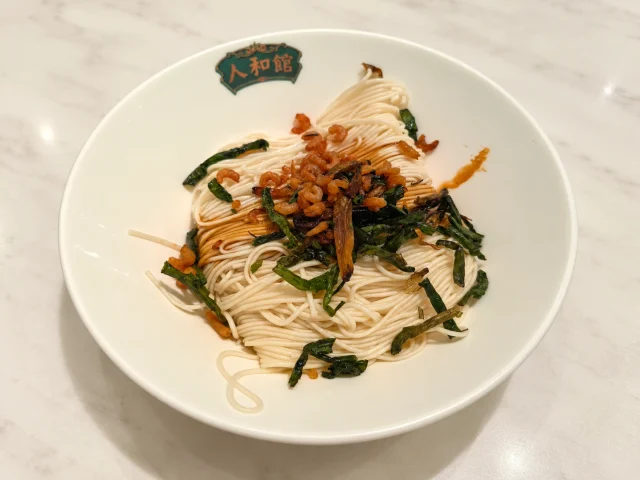
- Scallion Oil Noodles
Tossed noodles · Breakfast, lunch or a late snack
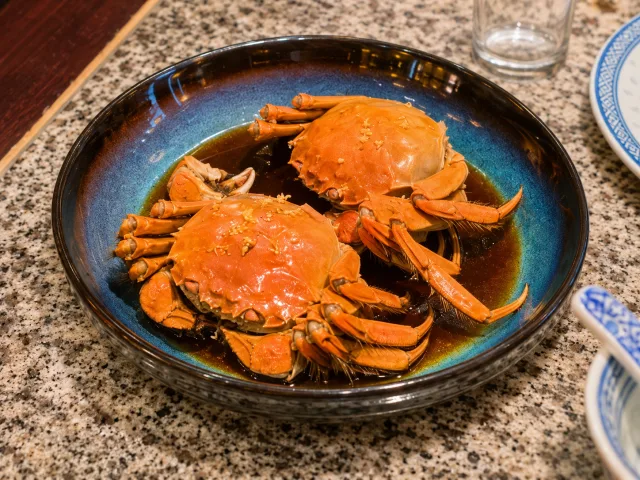
- Drunken Crab
Crab steeped in wine and soy · Cold starter in autumn and early summer
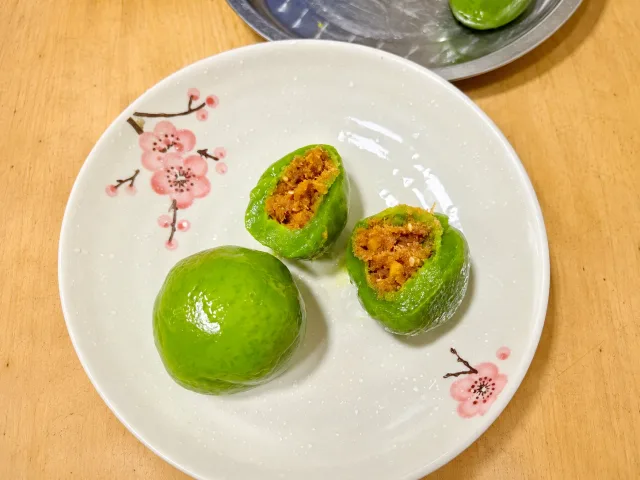
- Qingtuan
Steamed glutinous rice dumpling · The weeks before Qingming, early April
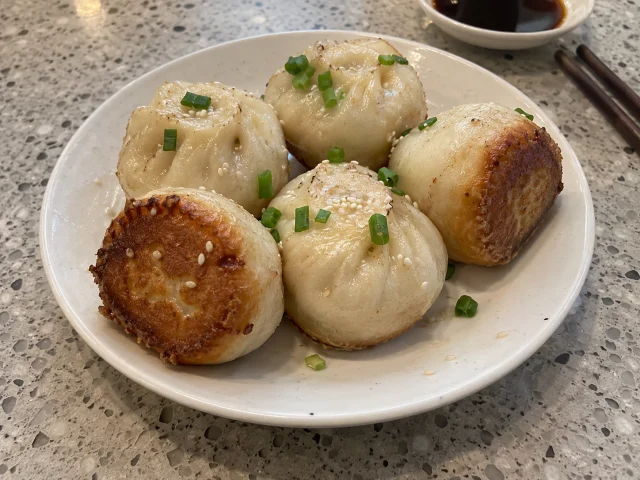
- Shengjian
Pan-fried pork bun · Breakfast, snack or light lunch
Dumplings and dim sum from other regions
FAQ
Questions about Xiaolongbao
What is xiaolongbao?
A small Shanghai steamed dumpling with a thin unleavened wrapper and a pork filling that holds hot soup, known in English as a soup dumpling.
How do they get the soup inside?
Pork-skin jelly is chopped and mixed into the raw filling. It melts into broth while the dumplings steam.
Is xiaolongbao the same as soup dumplings?
Yes, in English the two names mean the same Shanghai dumpling. Larger soup buns from other parts of Jiangsu are also called soup dumplings.
How do you eat xiaolongbao?
Lift it by the top onto a spoon, bite a small hole, sip the soup, then eat the rest with vinegar and ginger.
Where did xiaolongbao come from?
Nanxiang, now in Shanghai’s Jiading District, where Huang Mingxian made the local meat bun smaller and thinner-skinned in 1871. Nanxiang Mantou Dian brought it to the City God Temple in 1900.
Is xiaolongbao Chinese or Taiwanese?
It comes from Shanghai. Taiwan’s Din Tai Fung made a famous version and took it around the world.
How many pleats should a xiaolongbao have?
The Nanxiang heritage standard and Din Tai Fung both say 18, but counts from 14 to 32 are made.
What vinegar goes with xiaolongbao?
Black vinegar or pale Shanghai rice vinegar, with shredded young ginger. Shanghai writers differ on which is right.
Why are Wuxi xiaolongbao sweet?
Wuxi and Suzhou cooking uses more sugar. Their dumplings are bigger and seasoned with soy sauce and sugar.
When is crab xiaolongbao best?
In autumn, when hairy crabs are in season.
Sources
Sources and further reading
- 1 Shen Jialu, Shanghai Lao Weidao (上海老味道), 3rd ed., chapter “Xiaolong and tangbao” (小笼和汤包) (in Chinese)Shanghai Culture Publishing House (2017)
- 2 Huang Qifang, Shanghai Zheme Chi (上海这么吃), chapters on Guyi Garden, Nanxiang Mantou Dian, Din Tai Fung and Jia Jia Tang Bao (in Chinese)Publishing House of Electronics Industry (2012)
- 3 Christopher St. Cavish (沈恺伟), Yangpan: A Miami Kid and Shanghai Soup Dumplings (洋盘:迈阿密青年和上海小笼包), chapter on The Shanghai Soup Dumpling Index (in Chinese)Wenhui Publishing House (2023)
- 4 ‘Xiaolongbao’: A small dumpling with a big storyInternational Services Shanghai, Shanghai Municipal People’s Government (2026) ↗
- 5 Traditional wheat-food techniques: Nanxiang xiaolong mantou (item Ⅷ-160, 2014) (in Chinese)China Intangible Cultural Heritage Network ↗
- 6 About Din Tai Fung: history and chronologyDin Tai Fung, Taipei ↗
- 7 How to eat xiaolongbao like a scientistChristopher St. Cavish, SmartShanghai (2017) ↗
- 8 Xiaolongbao in Hangzhou, Shanghai and Wuxi: pork-skin jelly, pleats and the Shengzhou leavened bun (video, in Chinese)Zhi Chi Shi (知吃师), Bilibili (2022) ↗
- 9 Four Shanghai xiaolongbao shops at prices fifteen times apart, 2026 (video, in Chinese)Miao You Ji (喵游记MuaWoo), Bilibili ↗
- 10 A neighborhood shop in Nanxiang town: 8 yuan for a basket of 8, 2025 (video, in Chinese)A Lang Guang Chi (阿浪逛吃), Bilibili ↗
- 11 Wuxi xiaolongbao and Nanjing tangbao compared (video, in Chinese)Wang Shi Fu De Riji (王师傅の日记), Bilibili (2026) ↗
- 12 Crab xiaolongbao from start to finish: skin jelly, hand-cut pork, dough in grams and 23 pleats (video, in Chinese)Lao Fan Gu (老饭骨), Bilibili (2025) ↗
Last updated October 2026