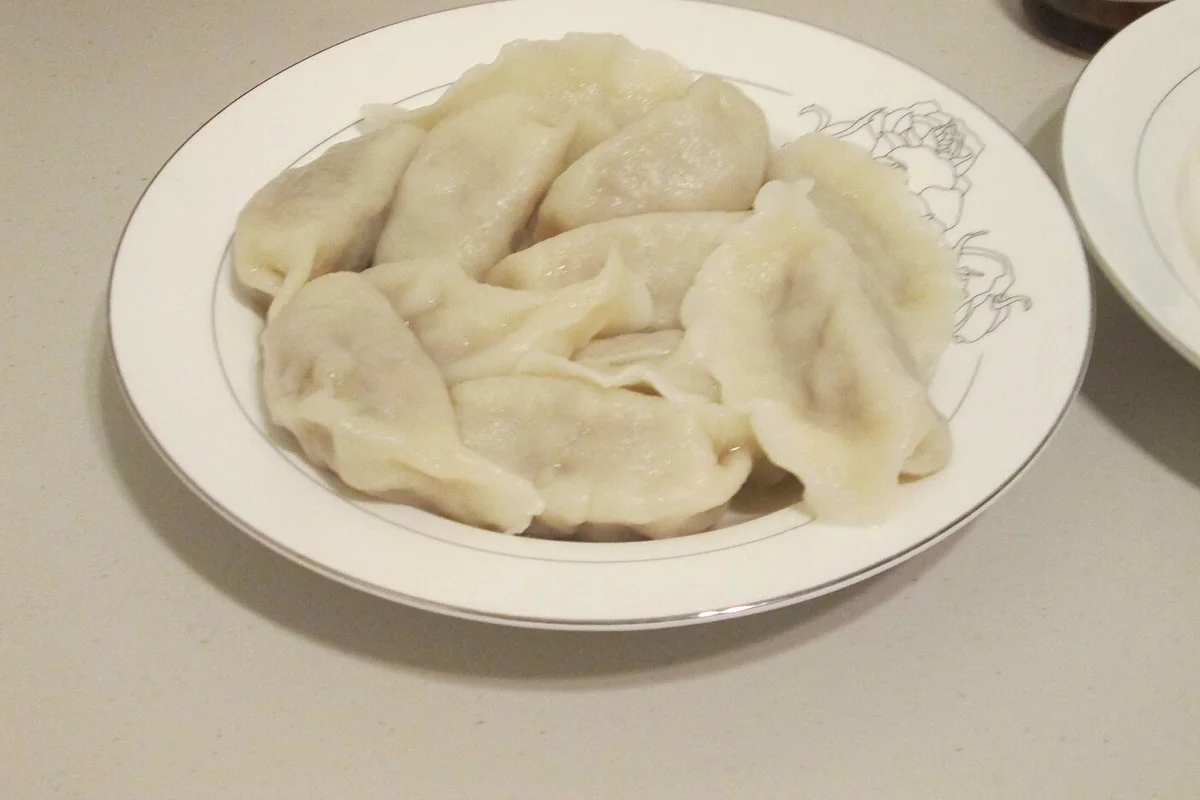
Meet Dongbei dumplings filled with fermented cabbage
Northeastern sauerkraut dumplings wrap a juicy mixture of fermented napa cabbage and pork in sturdy wheat dough. The cabbage brings clean lactic sourness and crunch, while pork fat softens that acidity and keeps the boiled filling moist—an especially natural combination in the region’s cold-season and Lunar New Year food culture.
Common ingredientsWheat wrappers, fermented napa cabbage, minced pork, scallions, ginger and seasonings.
01
Confirm the cabbage-to-pork ratio and cooking method
How to order it
Confirm that the filling uses fermented napa cabbage rather than fresh cabbage if you want the regional sour flavor. Taste one dumpling before reaching for dipping sauce; strong vinegar can hide the filling’s own fermentation. Order a boiled version first, since it best reveals wrapper and filling quality. Expect pork unless the menu explicitly offers a meat-free sauerkraut filling.
How to eat and pair it
Families often make dumplings together, with one person rolling wrappers and others filling, folding and arranging them on floured boards. The process is as important as the finished bowl during New Year gatherings. Dumplings are boiled in batches and carried hot to the table, where they may be eaten plain or with garlic and vinegar. Leftovers can be pan-fried the next day, creating crisp surfaces around an already juicy sour filling.
Easy mix-ups
Misconception: The filling is made by adding vinegar to ordinary cabbage. In practice: Its defining sourness comes from fermented napa cabbage, which has a more complex flavor and different texture. Misconception: Sauerkraut dumplings are automatically vegetarian. In practice: The classic northeastern filling commonly combines the cabbage with pork.
Order by count, confirm boiled versus pan-fried and taste before reaching for vinegar
Northeastern dumplings are often sold in portions larger than a Chengdu snack serving. Ask how many pieces come in an order and whether a half portion or mixed filling plate is possible. Boiled dumplings are the clearest benchmark for wrapper, filling and cabbage aroma; pan-fried leftovers or purpose-made potstickers offer a browned alternative but are not the same service. If the shop offers dumpling broth, sip it separately rather than pouring it over the plate and softening every skin. Taste one dumpling plain. The filling already contains sour cabbage, so black vinegar may be unnecessary or should be added gradually. Garlic is a classic powerful partner, soy sauce adds salt and chilli oil adds heat; combining all three heavily can erase fermentation nuance. Bite a small opening first because pork fat and cabbage steam can be very hot. When sharing, transfer dumplings with serving utensils and do not return bitten pieces to a communal sauce.
02
Compare sour-cabbage dumplings with a fresh-cabbage filling to understand fermentation’s work
Order a small portion of suancai-pork and another familiar filling such as fresh cabbage and pork, keeping both boiled and using the same light dip. Fresh cabbage brings sweetness, water and a greener crunch; fermented cabbage brings lactic acidity, softened fibers and deeper stored-vegetable aroma. The comparison shows that suancai is not simply “more sour cabbage.” It changes how pork fat feels and how much external vinegar the dumpling needs.
Compare wrappers too. A kitchen may use one dough for every filling, but the wetter acidic mixture demands careful sealing and cooking. If only the suancai batch bursts, filling moisture or handling may be the issue. A well-run dumpling house adjusts its preparation while keeping the recognizable house skin, and can explain which filling was made that day rather than selling an anonymous frozen assortment. Fresh handling matters.
03
Fermented cabbage, pork fat and a resilient wrapper form one bite
The filling uses fermented Chinese cabbage, not canned German sauerkraut or vinegar-soaked slaw
Dongbei suancai is commonly made by lactic fermentation of Chinese cabbage, producing a clean, rounded acidity and softened but still fibrous leaves. It is related in principle to other fermented cabbages, yet its cabbage, salinity and culinary role are specific to northeastern Chinese cooking. A dumpling filling made sour only by pouring vinegar over fresh cabbage will taste sharper and release water differently. Imported barrel sauerkraut made from head cabbage can be tasty, but it changes texture and should be identified as an adaptation rather than treated as an invisible substitute. Fermented cabbage is squeezed and chopped before mixing so excess brine does not burst the wrapper. Pork supplies fat and sweetness that balance the acid; lean filling alone can feel dry and aggressively sour. Some homes add scallion, ginger, sesame oil or seasoning, but the cabbage-pork relationship remains the center. Ask whether the restaurant uses pork, another meat or a vegetarian mixture, since “sauerkraut dumpling” describes the vegetable, not the complete filling.
A resilient wheat skin must contain juicy filling without trapping harsh or spoiled sourness
The wrapper is usually rolled with a slightly thicker center and thinner edge, giving the seam strength without creating a hard dough ridge. It should survive boiling, lift intact and yield with moderate chew. A swollen slippery skin that separates from the filling has overcooked; a powdery seam is undercooked. The filling should remain cohesive and moist, with cabbage strands noticeable rather than milled into anonymous paste. Good suancai smells tangy, vegetal and fermented, not rotten, fecal or solvent-like. Pink slime, unexpected mold or an uncontrolled home crock cannot be made safe by enclosing the cabbage in pork and boiling it. Restaurants need reliable fermentation suppliers or documented in-house controls. Diners can ask whether the cabbage is house-fermented and should treat vague claims that “the stronger the smell, the more authentic” with caution.
Fermented napa cabbage
Northeastern suancai is lacto-fermented cabbage, not vinegar-pickled slaw. It is rinsed or squeezed according to its salt and acidity.
Minced pork
A mixture with some fat balances the lean cabbage and helps the filling stay succulent after boiling.
Wheat wrapper
Home-style wrappers are rolled with a slightly thicker center so they can hold the wet filling without becoming heavy at the pleated edge.
Scallion and ginger
Restrained aromatics support the pork and fermented cabbage; overly sweet seasoning would erase the characteristic sourness.
Boiled pork-and-sauerkraut dumplings
The standard family form preserves a soft wrapper and lets the fermented filling remain juicy.
Pan-fried leftovers
Cooked dumplings develop a crisp base in a skillet, especially common as a practical second meal.
Different pork ratios
Lean mixtures taste sharper and drier, while more pork belly produces a richer filling that moderates the cabbage acidity.
- A fresh fermented aroma, not spoilage
- Filling chopped finely enough to hold together
- Juice retained inside the wrapper
The wrapper cannot tell you the filling
Northeastern sauerkraut dumplings usually look much like other boiled jiaozi from the outside. The defining information is inside: fermented napa cabbage is chopped and mixed commonly with pork, producing a juicy filling with lactic acidity that differs from fresh-cabbage dumplings. Confirm the filling on the menu instead of identifying it from shape alone.
04
Moisture control keeps the filling from flooding the wrapper
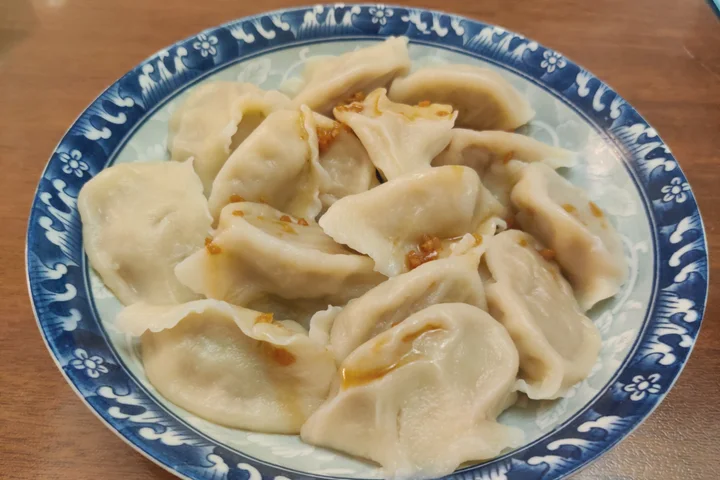
The juicy pork-and-sour-cabbage filling is folded into sturdy wrappers, then boiled and served hot with a dipping sauce.
Freeze uncooked dumplings separately and cool cooked pork fillings promptly
For home storage, freeze freshly wrapped raw dumplings in one layer before bagging so they do not fuse, then boil from frozen according to a trusted method until the pork is safely cooked. Do not thaw a bag on the counter. Cooked leftovers should be refrigerated promptly and reheated once by steaming, boiling briefly or pan-frying until hot. Skins will soften or toughen, so storage safety and fresh quality are separate questions.
05
How winter-stored cabbage entered Dongbei dumplings
Pork-and-sour-cabbage dumplings are a characteristic northeastern winter filling, using naturally fermented napa cabbage rather than vinegar-pickled cabbage.
The cabbage is squeezed and chopped before mixing with pork so the filling stays juicy without flooding the wrapper. They are especially common at family gatherings and New Year meals.
06
How to say Northeastern Sauerkraut Dumplings—and what the name tells you
Pronounced dōng běi jiǎo zi (suān cài xiàn). Menus may call it Dongbei sour cabbage dumplings, suāncài jiǎozi, Chinese sauerkraut dumplings.
Sources
Sources and further reading
- Dumplings in northern language and New Year food cultureNational Office for Philosophy and Social Sciences ↗
- Regional dumpling varieties including northeastern sauerkraut dumplingsPeople’s Government of Kundulun District, Baotou ↗
- Northeast Chinese pickled-cabbage and winter food cultureHailin Municipal People’s Government ↗