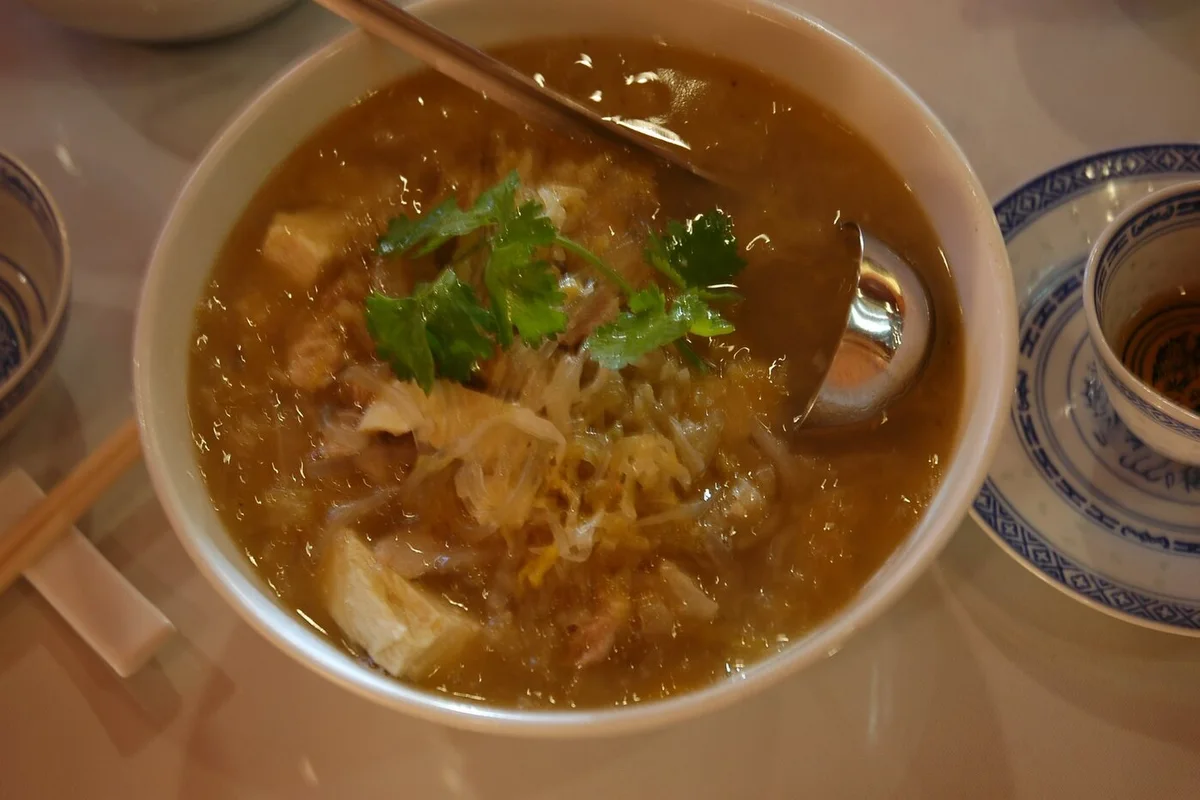
Meet a classic Dongbei shared stew
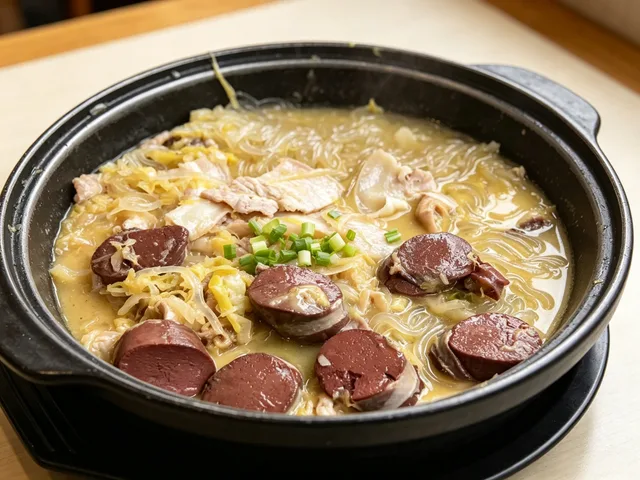
Pork and vermicelli stew is a northeastern home-style braise in which pork belly or shoulder cooks until tender before wide potato- or sweet-potato-starch noodles are added to absorb the savory liquid. The noodles should become translucent and flavorful while keeping enough resilience to lift from the pot.
Common ingredientsPork belly, potato- or sweet-potato-starch noodles, soy sauce, scallions, ginger and spices.
01
Ask which starch the noodles use and what else is in the pot
How to order it
Ask whether the stew includes fresh cabbage, sauerkraut or no cabbage, because the resulting flavor differs greatly. Eat the starch noodles while hot; they continue absorbing liquid and can swell or soften as the pot sits. Order a green vegetable or cold salad for contrast with the rich pork. Expect belly pieces to contain fat, and request a leaner cut if the kitchen offers one.
How to eat and pair it
The pot is placed at the center of the table and served in rounds. Pork gives the broth body first; the noodles, added later, act almost like an edible sponge. Diners lift them carefully with chopsticks, taking meat and cabbage alongside. The dish is generous rather than delicate, but timing still matters: noodles added too early dissolve or consume all the broth, while noodles added too late taste merely wet instead of integrated.
Easy mix-ups
Misconception: The noodles are wheat vermicelli. In practice: Northeastern versions commonly use wide, translucent starch noodles made from potato or sweet potato. Misconception: The noodles can simmer as long as the pork. In practice: They are normally added late because they cook and absorb liquid much faster than the meat tenderizes.
Choose the pot size around diners and starch, then add a fresh counterpoint
A large iron-pot presentation may serve several people, while a cafeteria bowl is a complete individual meal. Confirm whether rice, corn cakes or buns are included before adding another main starch; the vermicelli already fills quickly. A cucumber salad, pickled vegetable or crisp greens give welcome acid and texture. Another soy-braised pork dish makes the table heavier without showing a new side of northeastern cooking. Use a ladle and serving chopsticks to distribute pork as well as noodles. Long strands can tangle around bones or hot metal, so lift modest bundles and cut only in your own bowl if needed. Skin-on pork and gelatin-rich sauce stay extremely hot. Diners with swallowing difficulty need shorter strands and supervision rather than a large slippery mouthful.
Store broth and noodles separately when possible because starch keeps drinking overnight
Potato noodles may be naturally gluten-free, yet soy sauce can contain wheat and shared kitchens introduce cross-contact. The dish contains pork fat even when a scoop looks mostly cabbage and noodles. Ask about sugar, soy, stock and noodle starch for dietary needs. “Clear vermicelli” describes appearance, not an ingredient guarantee.
02
Here the starch noodles are part of the structure, not a side
In zhurou dun fentiao, pork tenderizes first and wide potato- or sweet-potato-starch noodles enter later. Their job is to absorb the braising liquid while remaining translucent, slippery and liftable. The timing creates the dish: noodles added with the raw pork can break down or drink the pot dry, while noodles added just before service taste wet on the surface but never become part of the stew.
The noodle-centered logic separates this pot from chicken and mushroom stew, where dried fungi should lead the aroma and starch noodles are optional. It also differs from sha zhu cai, a communal winter feast associated with sauerkraut, multiple fresh pork cuts, offal and blood sausage. Ask whether this pork-and-noodle pot includes fresh cabbage, fermented cabbage or neither, because that choice changes sweetness and acidity. Whatever the version, there should still be enough liquid at the table to keep the noodles supple rather than clumped.
03
Clear noodles, tender pork and a broth that does not turn gluey
Potato-starch noodles are an active part of the stew, not a last-minute garnish
Dongbei glass noodles are commonly made from potato starch, giving them a slippery, translucent chew and a strong appetite for broth. They absorb pork fat, soy seasoning and cabbage sweetness as they cook. Sweet-potato or mung-bean noodles can work but behave differently, so ask what the restaurant uses if texture or allergens matter. The finished strands should be flexible and springy, not chalky at the core or dissolved into short gluey fragments. Timing is decisive. Noodles added too early consume the liquid before pork tenderizes; added too late remain tough while the table waits. They continue swelling after the heat is off, so the first bowl can be ideal while the pot bottom grows salty and dry. Serve noodles promptly with enough broth, and ask for extra hot stock rather than cold water if the pot tightens during a long meal.
Fatty pork gives the noodles flavor while cabbage keeps the brown stew from becoming monotonous
Pork belly or another cut with skin and fat is often braised until tender, its rendered richness becoming seasoning for the starch noodles. Pieces should hold shape and yield through lean, fat and skin without dry centers or greasy collapse. Some kitchens caramelize sugar or use dark soy for color; sweetness should round the pork, not turn the pot into candy-braised meat. Chinese cabbage is a common partner, adding water, sweetness and soft leaves. Other versions may use sauerkraut, potatoes or tofu. Ask which vegetables are included rather than assuming every “pork and vermicelli” stew is identical. Cabbage should be tender yet recognizable, and the broth must remain spoonable. A pan containing only oil-coated noodles and a few pork crumbs has lost the intended exchange among meat, vegetable and starch.
The pot should evolve as noodles absorb broth without collapsing before the final serving
Notice the first bowl’s broth level and noodle resistance, then compare the last. Some absorption is the dish’s pleasure: later strands carry more pork and cabbage flavor. A well-sized pot still has enough liquid to serve them. If the bottom becomes a salty fused cake, the noodle timing or broth ratio failed; if it remains watery and bland, the ingredients never exchanged flavor. Restaurants can slow the change by adding noodles in batches or serving extra stock. Diners help by taking moderate portions promptly rather than leaving the pot on high heat for conversation. This is a shared timing dish, not a stew that improves indefinitely the longer it sits.
Pork
Belly creates a rich broth, while shoulder produces a leaner pot. Browning or red-braising before simmering deepens color and aroma.
Potato-starch noodles
Northern potato production makes durable, slippery starch noodles especially natural to the region; sweet-potato noodles are also used.
Cabbage
Fresh napa cabbage is a common addition that sweetens the broth. Fermented cabbage creates a related but distinctly sour stew.
Soy and aromatics
Soy sauce, scallion, ginger and restrained spices build a brown savory base without turning the dish into a heavily sweet red braise.
Pork-and-noodle core
A straightforward red-braised pork base with wide starch noodles foregrounds meat richness and slippery texture.
Fresh-cabbage version
Napa cabbage contributes sweetness and makes the pot feel lighter while remaining a winter family stew.
Sauerkraut version
Fermented cabbage adds acidity that cuts the pork fat; this overlaps with the broader northeastern family of pork-and-suan-cai stews.
- Pork tender but not dry
- Translucent noodles that remain intact
- Enough broth left to keep the pot moist
04
Pork and vermicelli must enter the pot at different times
The pork is braised until nearly tender before soaked starch noodles are added to absorb the cooking liquid without disintegrating.
05
The household logic of one shared Dongbei pot
Pork stewed with starch noodles is a widespread northeastern home-style dish rather than the invention of one city. Potato-starch noodles are especially natural to the region, though sweet-potato noodles are also used.
The noodles are added late enough to retain some structure while absorbing the pork broth. Recipes may also include cabbage or fermented napa cabbage.
06
How to say Pork and Vermicelli Stew—and what the name tells you
Pronounced zhū ròu dùn fěn tiáo. Menus may call it Dongbei pork noodle stew, zhurou dun fentiao, zhūròu dùn fěntiáo, Northeast Chinese pork stew.
Sources