Neither cold noodle soup nor an ordinary stir-fry
Grilled cold noodles, kao lengmian, are a northeastern street snack in which a flexible noodle sheet is cooked hot on a griddle with egg, sauce, vinegar, scallion and coriander, then folded and cut into bite-size pieces. The name refers to the cold-noodle product used as the base, not the serving temperature.
Common ingredientsA cold-noodle sheet, egg, oil and water, sweet-savory chilli sauce, vinegar, onion, scallion and cilantro; sausage, chicken, mushrooms or cheese are optional additions.
01
Set heat, sweet-sour balance, herbs and add-ons before the griddle
How to order it
Choose mild, medium or hot sauce before cooking, because it is spread directly over the sheet. Ask for less sugar or extra vinegar if you prefer a sharper northeastern balance. Treat sausage, chicken or cheese as optional additions rather than requirements. Eat it immediately from the tray; the sheet becomes firmer and stickier as it cools.
How to eat and pair it
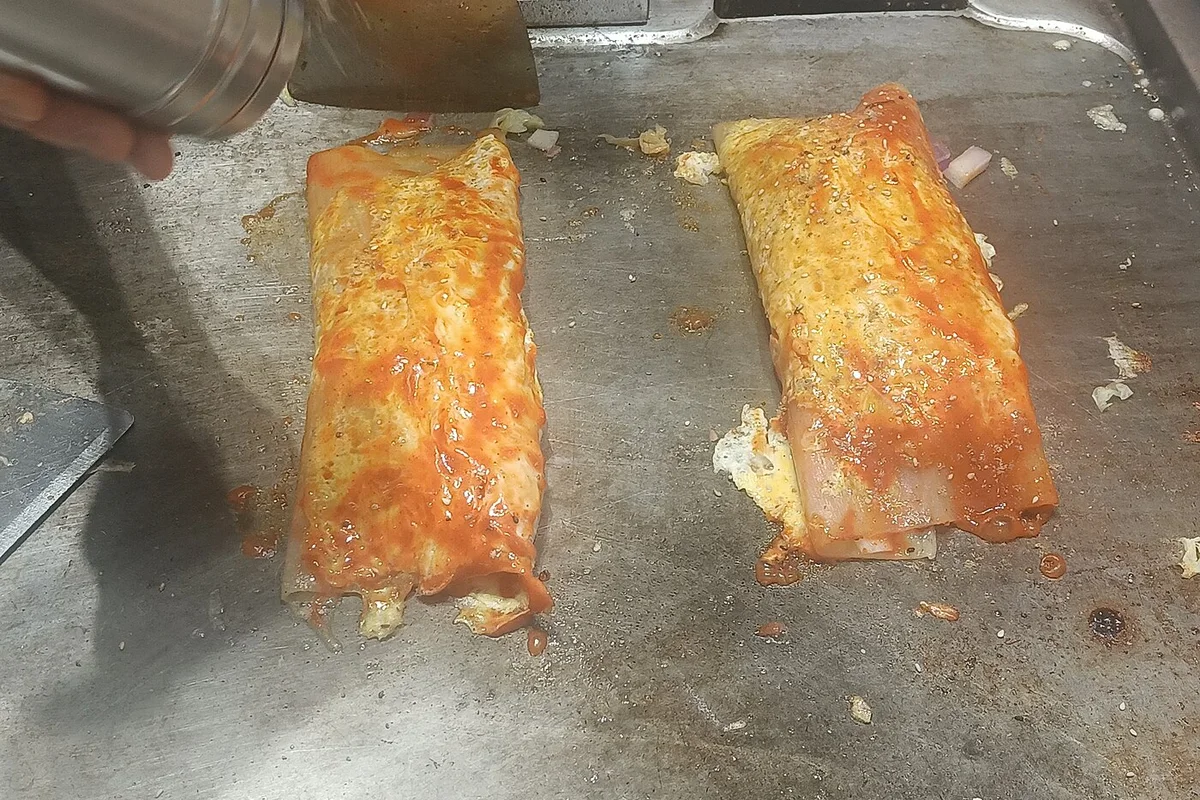
The vendor oils the griddle, lays down one noodle sheet, cracks an egg over it and flips the joined layer. Sauce, vinegar and aromatics go on next, followed by any requested filling. The sheet is folded, chopped rapidly with metal spatulas and handed over with small skewers. It is hot, portable and deliberately messy—a few minutes of griddle theater followed by a chewy, saucy snack.
Easy mix-ups
Misconception: Grilled cold noodles are served cold. In practice: They are cooked and served hot. “Cold noodles” identifies the noodle product from which the sheet developed. Misconception: The snack has always been made on an iron griddle. In practice: Mishan accounts describe an earlier charcoal-grilled form before the now-common griddle method evolved.
Texture requests must come before water and folding
A vendor can often steer the sheet softer or crisper, but only while controlling moisture on the griddle. Asking after cutting cannot reverse a brittle or over-softened sheet.
“Less sauce” does not control every flavor separately
Sweetness, salt, chilli and vinegar may come from different bottles or a house mixture. State the priority—less sweet, extra vinegar or no chilli—before cooking instead of expecting one vague reduction to solve all three.
02
The sheet should soften without collapsing into paste
Egg should adhere to the noodle sheet
The two layers need enough contact to fold and cut together. Detached hard egg and a scorched sheet show that the griddle sequence lost coordination.
Fresh onion and cilantro complete the street-food aroma
They add raw brightness against hot sauce and browned noodle. Because they enter late, they can usually be adjusted without changing the central griddle technique.
Cold-noodle sheet
Commercial noodle strands are joined into a thin flexible sheet that softens with oil and a little water on the griddle.
Egg
An egg is spread over the sheet, helping bind it and creating a tender layer against the chewy noodles.
Sweet-savory sauce
Vendors balance sweetness, salt, chilli and acidity differently; vinegar is important to keep the finish lively.
Scallion, onion and coriander
Fresh aromatics cut through the griddled sauce. Sausage or other fillings are optional modern additions.
Modern iron-griddle style
The nationally familiar version combines noodle sheet, egg, sauce and chopped aromatics on a flat hot plate.
Early Mishan charcoal style
Local government accounts trace the snack to Mishan around 1996, where cold noodles were initially clamped and grilled over charcoal with oil and seasoning.
Loaded street-stall version
Sausage, chicken, enoki mushroom or cheese may be rolled inside, turning the snack into a larger meal.
- A sheet softened but still pleasantly chewy
- Egg attached to the noodles rather than burnt separately
- Balanced vinegar and sauce
Onion and coriander are part of the familiar street-stall aroma
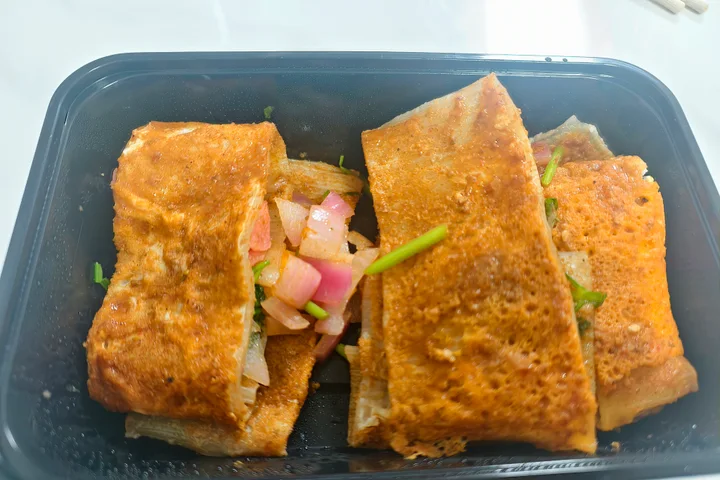
Diced onion and chopped coriander are common finishing ingredients in grilled cold noodles. Onion brings sweetness and crunch as it warms on the griddle; coriander adds a fresh herbal lift after the sweet, tangy and chilli seasonings. Both can usually be omitted when ordering. Modern stalls also commonly offer ham sausage, other meat sausages, chicken fillet, spicy Korean instant noodles and cheese as optional additions.
03
How a cold-noodle sheet becomes a hot griddle snack
The sheet is heated with a little oil and water until flexible, joined to a fully set egg layer, flipped and seasoned with sauce, vinegar and aromatics. Any added meat is cooked through before the sheet is folded, chopped and served immediately while still chewy.
Moisture determines whether the sheet bends or cracks
A measured splash creates steam that relaxes the sheet; too little leaves it brittle and too much dissolves its chew. Egg, sauce, garnish and folding then have to follow without a long pause.
04
From Mishan school stalls to a nationwide griddle food
Kao lengmian is traced by Jixi and Mishan municipal accounts to school-area vending in Mishan in the mid-1990s. Those sources describe an early charcoal-grilled form before the flexible sheet, egg and flat-griddle method spread nationally; precise first-sale anecdotes remain local testimony.
The name is misleading in English: lengmian identifies the noodle product, while the snack is cooked and served hot. Egg, sauce, vinegar and aromatics form the basic griddle structure; sausage, cheese and other loaded fillings are popular additions rather than authenticity requirements. Vegan, allergy and gluten questions require checking the sheet, sauce and shared griddle.
05
How to say Grilled Cold Noodles—and what the name tells you
Pronounced kǎo lěng miàn. Menus may call it kao leng mian, Dongbei grilled cold noodles, kǎo lěngmiàn, Mishan grilled cold noodles.
Kao preserves the snack’s early grilling identity. The nationally familiar version is now usually cooked on a flat iron griddle, but the name did not change when equipment and technique evolved.
The base is a flexible sheet made from joined cold-noodle strands or a purpose-made sheet. It is not a finished bowl of northeastern cold-noodle soup drained and fried as leftovers.
Mishan is the documented local origin; exact first-sale details remain local memory: Municipal accounts place the snack near a Mishan school in the mid-1990s and describe an early charcoal-grilled form. Precise names and accidental-invention details come from local testimony, not a universally agreed historical record.
The griddle decides whether the noodle stays chewy
A cold-noodle sheet begins firm and slightly brittle. On the griddle, the cook uses a little oil for browning and a controlled splash of water or vinegar-rich liquid for steam. Too little moisture leaves the sheet stiff enough to crack when folded; too much turns it soft and pasty. The successful middle is flexible, lightly browned and still resistant when bitten. Egg also needs time to set against the sheet before it is flipped, otherwise the finished pieces separate into wet egg and scorched noodle.
Sauce should sharpen that texture rather than bury it. A basic order usually includes egg, sweet-savory chilli sauce, vinegar, onion or scallion and cilantro. Sausage, chicken, enoki mushrooms and cheese are additions, not a test of authenticity. For a useful first comparison, order one straightforward version before building a heavily filled roll: you will be able to taste whether the vendor controls moisture, acidity and griddle heat.
Ask before removing cilantro or onion
These fresh aromatics are normally added during the final seconds, so the vendor can usually leave them out without changing the griddle process.
Choose your texture early
Some vendors can make the sheet softer or crisper, but the request needs to come before water, sauce and folding are complete.
Eat from the hot tray
Steam trapped after cutting softens the browned surface quickly; takeaway boxes exaggerate that change.
FAQ
Quick answers to common searches
What are grilled cold noodles?
Grilled cold noodles are a hot northeastern Chinese griddle snack. A connected cold-noodle sheet is softened on the griddle, joined with egg, brushed with sweet-savory sauce and vinegar, then folded and cut.
Why are they called cold noodles?
Cold noodles names the sheet-like noodle product used to make the snack; it does not mean the finished dish is served cold. Modern versions are cooked and eaten hot from the griddle.
Are grilled cold noodles made from ordinary noodles?
No. The cook starts with a flexible connected cold-noodle sheet that can be heated, folded and cut. It is not a bowl of boiled noodles stir-fried without broth.
Should grilled cold noodles be eaten hot?
Yes. They are best immediately after griddling, when the sheet is flexible and lightly seared. Cooling or trapped takeaway steam makes the texture harder or stickier.
Sources