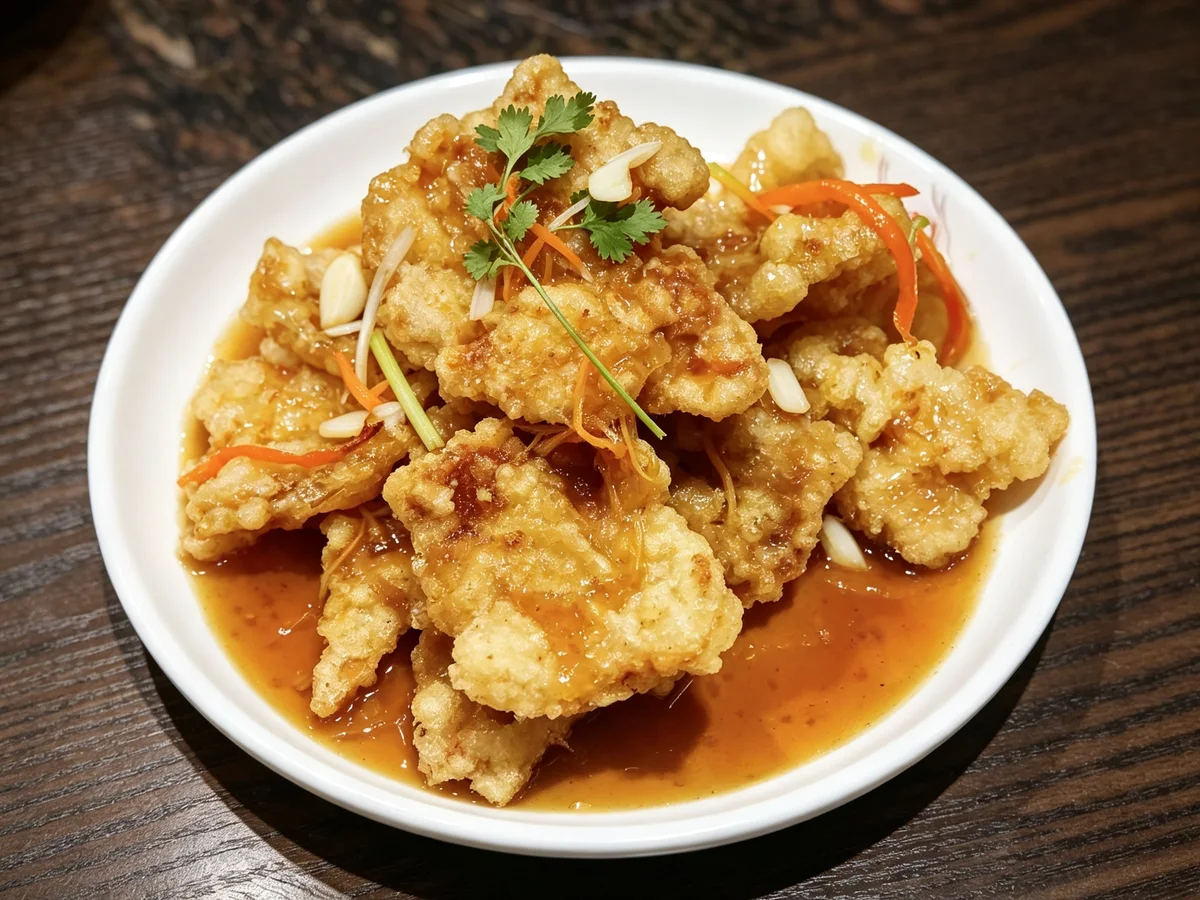
Meet Harbin’s signature crisp sweet-and-sour pork
Guo bao rou is one of the northeastern dishes most closely associated with Harbin. Thin pork-loin slices are coated primarily with potato starch, fried into a light brittle shell, then flashed through a clear vinegar-and-sugar glaze. Shredded ginger, scallion and carrot add fragrance rather than weight. The pleasure lies in contrast: a dry, audibly crisp crust, tender pork within and a bright glaze that clings without pooling. Traditional Harbin versions are commonly pale gold to amber and distinctly vinegar-led; tomato-colored, fruitier versions are also familiar in parts of Liaoning, Jilin and the wider Northeast.
Common ingredientsPork loin, potato starch, vinegar, white sugar, ginger, scallion, carrot and coriander, with small amounts of salt and cooking wine.
01
Choose the pale Harbin style or a red regional variation
Order
For a first plate, ask for old-style Harbin guo bao rou to experience the pale-gold crust and direct vinegar aroma. If sharp vinegar is not your preference, ask whether the restaurant makes a redder, tomato-influenced version with softer fruitiness. Northeastern portions are often generous, so one plate is usually meant for sharing. Do not confuse it with hui guo rou: the Sichuan dish is a savory stir-fry of twice-cooked pork and fermented bean paste, not crisp sweet-and-sour pork.
Eat
The ideal texture does not last long. Take a piece soon after the plate arrives and notice the sequence: brittle crust, tender loin, then hot vinegar rising before the clean sweetness settles. There is no universal three-minute deadline, but the longer the pork sits, the more glaze the starch shell absorbs and the weaker the contrast becomes.
Pair
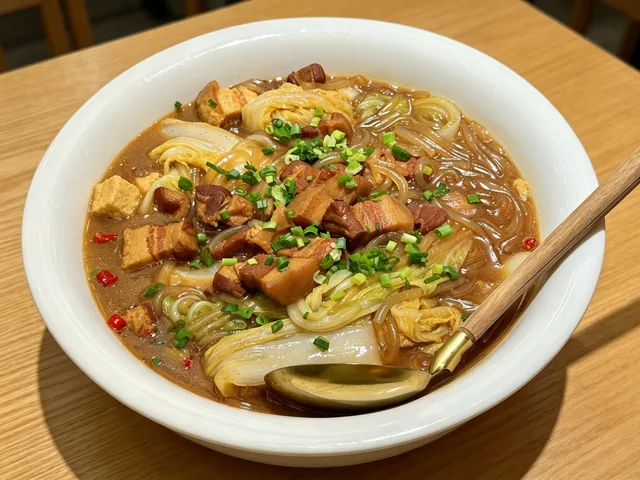
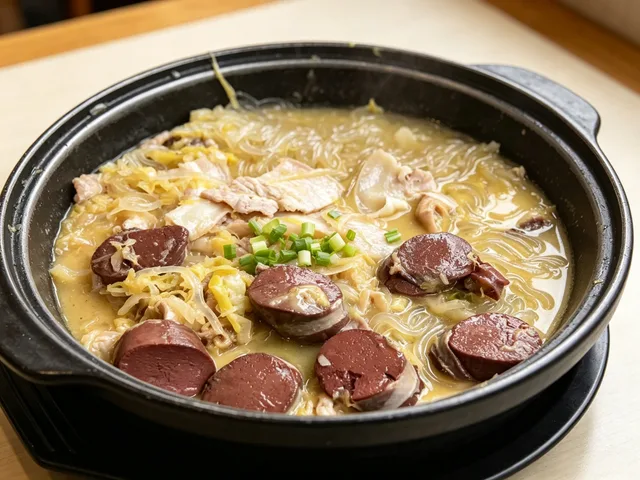
Balance the plate with something savory or fresh rather than another sweet fried dish. Pickled-cabbage and pork stew, soy-braised bones, a northeastern cold dish, soup or simple greens all provide useful contrast; plain rice is an easy staple. Beer may be enjoyable, but it is a personal pairing rather than part of the dish’s definition.
02
Thin pork, a potato-starch shell and a bright glaze create the contrast
Good guo bao rou is an exercise in balance. Crispness is the baseline, sweet and sour form the main line, and the aromatic shreds should lift the pork rather than compete with it.
Thin pork loin: tender, not dry
Pork loin is trimmed and cut into evenly thin slices. It must be thin enough to cook through as the coating crisps, but not so thin that the tender meat disappears. Consistency from slice to slice matters more than one absolute millimeter measurement.
Potato-starch shell: the defining texture
Hydrated potato starch clings closely to the pork and fries into a relatively translucent, brittle shell. The coating should be thin and even rather than a heavy dough jacket. This is one of the clearest distinctions between guo bao rou and many thick-battered, heavily sauced sweet-and-sour pork dishes.
Staged frying: preserving the crunch
A common method fries in stages: the first sets the coating and cooks the pork, while a shorter, hotter second fry drives excess moisture from the shell. Exact temperature and timing depend on slice thickness and batch size; the goal is crisp without scorching and tender without drying.
A light vinegar-sugar glaze
Old-style Harbin guo bao rou emphasizes a clear, lightly clinging mixture of vinegar and sugar rather than a thick starch-bound sauce. Vinegar reaches the nose first and sweetness rounds the finish. A large pool of sauce at the bottom of the plate is a warning that the shell will soften quickly.
Amber and red: related regional versions
Harbin-style plates are commonly pale gold to amber and more directly vinegar-led. Some Liaoning and Jilin versions use tomato seasoning for a redder color, gentler fruitiness and sweeter balance. This is a regional development, not a useful basis for declaring every red version fake.
Pork, coating, frying and glazing form one continuous chain. The meat determines tenderness; starch and oil build the shell; and the final seconds in the wok decide whether that shell survives. More sauce is not better: each slice should be lightly coated and still crisp when lifted.
03
Double frying and a final flash of glaze protect the crunch
Sugar-vinegar ratios, slice thickness and frying schedules vary, but the essential logic is consistent: cut evenly, coat lightly, control the oil and glaze for the shortest possible time.
Prepare the pork
Trim the loin and cut even slices across the grain. A small amount of cooking wine, salt or ginger-scallion water may be used to remove raw aromas, but the base seasoning stays light so the pork and clean sweet-sour finish remain legible.
Coat with hydrated starch
Potato starch is mixed with water and allowed to settle; the hydrated sediment is then worked evenly over the pork. The coating must cover each slice without forming thick clumps. Uneven starch leads to bare patches in some places and a doughy shell in others.
Fry in stages
The first fry sets the slices and cooks them through. A shorter fry at higher heat then brings the shell to a firm golden crisp. Batch size, slice thickness and oil temperature all change the timing, so texture matters more than a fixed number of seconds.
Glaze and serve quickly
Aromatics such as ginger, scallion and carrot are briefly heated before the prepared vinegar-sugar mixture goes into the wok. Once it bubbles, the fried pork is tossed over high heat just until evenly coated, then plated immediately. Prolonged tossing or excess liquid softens the shell.
04
From Harbin banquet kitchens to the wider Dongbei table
The dish’s local lineage is commonly traced to the Harbin Daotaifu, or Chief Official’s residence, in the late Qing period. The widely repeated account says chef Zheng Xingwen adapted a savory fried pork preparation for foreign guests by using a brighter vinegar-and-sugar finish and rapid wok glazing. Precise banquet details survive mainly through restaurant lineage and local food memory, so they are best presented as Harbin’s established origin narrative rather than as an archive-complete account in every detail.
As the dish moved from official banquets into restaurants and homes, it spread through Northeast China and developed recognizable regional forms. Harbin old-style cooking retained the clear glaze and amber-gold appearance, while tomato color and a softer fruitiness became familiar elsewhere in the region.
Potato starch, widely used in northeastern cooking, makes the characteristic brittle shell possible. The dish also fits the northeastern shared table: one generous plate brings an appetizing sweet-sour contrast beside stews, soy-rich meats, soups and cold dishes.
05
How to say guo bao rou—and where the name comes from
Say guō bāo ròu: first tone, first tone, then fourth tone. In the local origin narrative, an earlier written form used a middle character associated with the brief high-heat action of tossing bubbling sweet-sour liquid around the fried pork.
A common explanation says foreign diners’ pronunciation and later retelling gradually shifted that earlier name toward the present one. The newer written form also happens to suggest a crisp starch shell “wrapping” the meat. This is a widely circulated name story and should be understood as part of the dish’s local transmission history.
The Daotaifu and Zheng Xingwen
Local lineage links the dish to chef Zheng Xingwen at Harbin’s Daotaifu in the late Qing era. He is said to have adapted fried pork for foreign guests who preferred a sweet-sour profile, using a light vinegar-sugar glaze and rapid high-heat finishing.
From official cooking to a city signature
Later lineage accounts describe Zheng-family cooks carrying the method into restaurants, where it moved from banquet tables into everyday city dining and then across the Northeast. Whatever the archival limits of each anecdote, guo bao rou is now one of Harbin’s most recognizable dishes.
06
Remember more than sweet-and-sour pork
To understand guo bao rou, remember more than its sweet-sour flavor. Notice how potato starch creates a thin brittle shell, how staged frying controls moisture, and how the final seconds of high-heat glazing preserve both vinegar aroma and crunch. The dish also carries Harbin’s memory of cross-cultural exchange. In Harbin or a northeastern restaurant, look for an old-style plate that is fried and glazed to order, lightly coated and still crisp when lifted.
The final minute matters: order the plate when the table is ready to eat it
A cook can build an excellent potato-starch shell and still lose it under a lid. Steam from a covered platter or sealed takeaway box migrates into the crust, while the vinegar-sugar glaze continues softening it. Ask for guo bao rou to arrive after cold dishes and soup, clear space on the table, and begin with the thinner edge of a piece. That first audible fracture is not decoration; it confirms that frying, draining and glazing reached the diner before moisture won.
A vented container and a light coating of sauce slow the loss of crispness, but no reheating method recreates the vinegar aroma and just-set glaze of the plate leaving the wok. Delivery is therefore a different texture test, not a fair substitute for dining in.
FAQ
Quick answers to common searches
What is guo bao rou?
Guo bao rou is a Harbin and northeastern Chinese dish of thin pork-loin slices fried in a brittle potato-starch shell, then tossed quickly in a light vinegar-and-sugar glaze.
Are guobaorou and guo bao rou the same dish?
Yes. Guobaorou, guo bao rou and guobao rou are spelling variations for 锅包肉. They normally refer to the same northeastern crispy sweet-and-sour pork dish.
How is guo bao rou different from sweet-and-sour pork?
Harbin-style guo bao rou usually uses broad, thin pork slices, a light potato-starch shell and a sharp vinegar-led glaze. Cantonese and many overseas sweet-and-sour pork dishes more often use chunks, a thicker coating, more sauce and sometimes pineapple or peppers.
Why should guo bao rou be eaten immediately?
Its thin starch shell begins absorbing moisture as soon as it meets the glaze. Eating it promptly preserves the brittle edge, tender pork and bright vinegar aroma that define the dish.
Sources