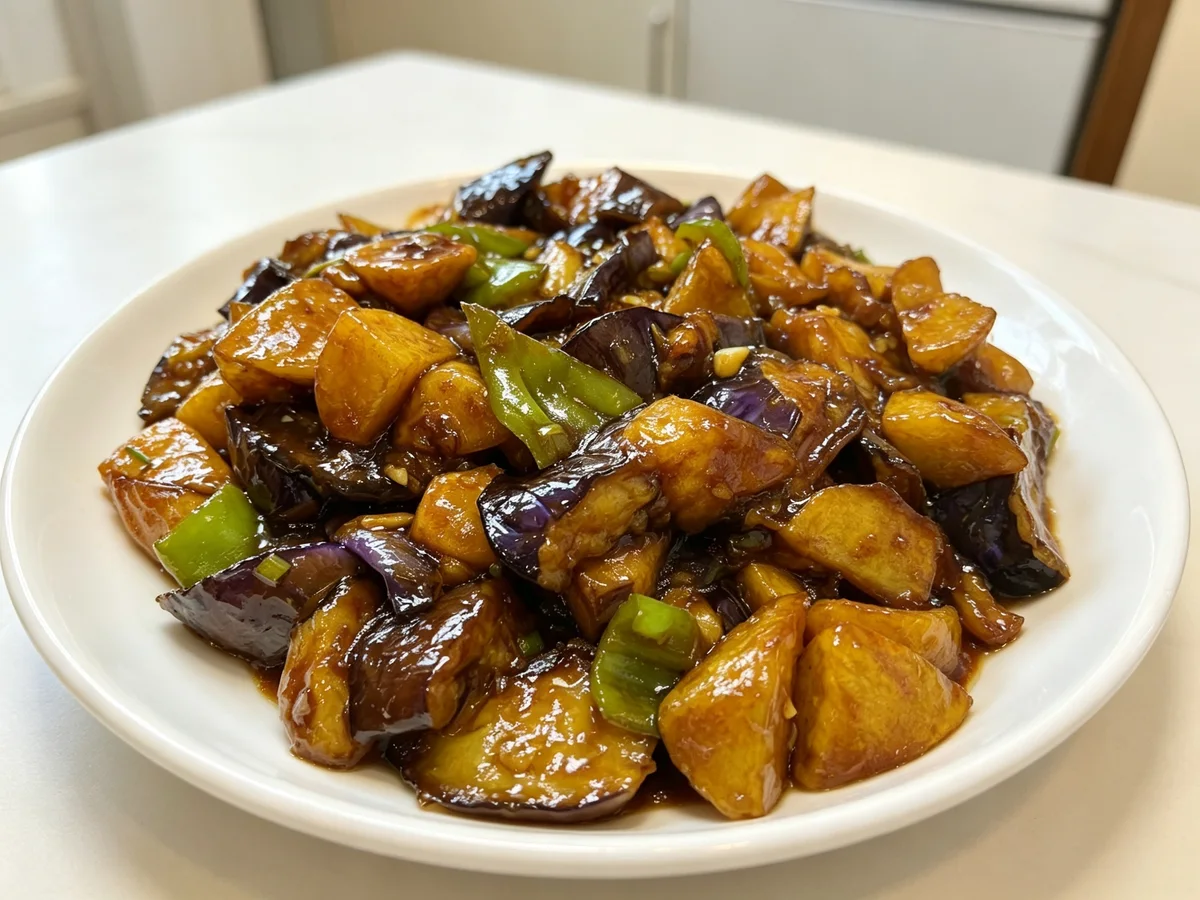
Three ordinary vegetables become one dish through separate cooking
Di san xian, literally “three fresh things from the earth,” is a northeastern dish of potato, eggplant and green pepper brought together in a glossy garlic-and-soy sauce. Each vegetable is cooked for its own texture before the three are combined, producing crisp edges, creamy eggplant and fresh pepper in one rich plate.
Common ingredientsPotato, eggplant, green pepper, garlic, soy sauce, a little sugar, starch and frying or cooking oil; stock varies by kitchen.
01
Order it as a substantial shared vegetable dish
How to order it
Share the plate: despite being meatless, traditional restaurant versions can be rich because the vegetables are fried. Ask whether the kitchen can use less oil, understanding that steaming, pan-searing or air-frying changes the classic texture. For strict vegetarian or vegan eating, confirm stock, oyster sauce, shared frying oil and wok use rather than relying on the visible vegetables. Eat it soon after arrival so the potato edges retain some structure and the pepper stays lively. Pair it with rice and a clean broth or cold cucumber rather than another fried dish.
How to eat and pair it
The dish arrives as a generous shared plate, and diners take potato, eggplant and pepper with rice. It turns familiar late-summer produce into a substantial northeastern main dish through staged high-heat cooking. The best versions do not reduce everything to one soft texture: potato stays structured, eggplant becomes yielding and pepper remains recognizably fresh, all connected by a thin garlic glaze. Household reduced-oil versions are legitimate adaptations, but they should be understood as a different texture target rather than proof that a classic restaurant plate must be light.
Easy mix-ups
Misconception: Because it contains only vegetables, di san xian is a light diet dish. In practice: Traditional versions fry the vegetables and can be energy-dense; “vegetarian” does not automatically mean light. Misconception: San xian always means seafood or three luxury ingredients. In practice: Here the phrase refers specifically to three fresh products of the earth: potato, eggplant and green pepper.
02
Each vegetable must keep its own identity
Potato
Pieces are fried or seared until golden outside and tender inside so they retain shape when tossed in sauce.
Eggplant
Eggplant absorbs oil readily; skilled cooking softens it without allowing it to become greasy or collapse completely.
Green pepper
Added later than the dense vegetables, it contributes freshness, color and a slight bitter or sweet edge depending on the variety.
Garlic sauce
Soy, garlic, a little sugar and starch create a light glaze that joins the vegetables without hiding them.
Classic fried version
All three vegetables receive high-heat treatment before a quick final toss, creating the richest flavor and strongest textural contrast.
Reduced-oil home version
Pan-searing, steaming or air-frying can reduce oil, though the eggplant and potato will not taste exactly like a restaurant plate.
Pepper variations
Mild bell pepper, long green pepper or a slightly hot local variety changes the dish from sweet-fresh to gently spicy.
- Three vegetables still visually distinct rather than collapsed into one brown mixture
- Potato cooked through with golden edges and no hard center
- Eggplant silky and intact enough to lift, without releasing a pool of oil
03
Why potato, eggplant and pepper cannot enter the wok together
Potato is cooked through and given golden edges, eggplant is softened quickly without prolonged low-temperature oil absorption, and green pepper is held until later. Garlic and a thin starch-bound sauce join the three only at the end so their textures remain distinct.
04
Late-summer Dongbei produce turned into a rice-friendly main
Di san xian, literally “three fresh things from the earth,” is a northeastern Chinese dish built from potato, eggplant and green pepper. San xian names this specific trio in the full regional dish name; it does not mean seafood, and other dishes called san xian may contain entirely different ingredients.
Classic restaurant versions stage or fry the vegetables separately before combining them briefly in a thin garlicky soy glaze, preserving golden potato, yielding eggplant and fresher pepper as three distinct textures. The plate is meatless in appearance but usually rich, and strict vegetarian or vegan diners should still confirm stock, oyster sauce and shared frying oil.
05
How to say Di San Xian—and what the name tells you
Pronounced dì sān xiān. Menus may call it disanxian, three earthly treasures, three fresh vegetables, Northeast Chinese eggplant potato pepper.
Di points to produce from the land, while san xian refers here to the familiar trio of potato, eggplant and green pepper. The word xian can describe fresh, savory appeal in Chinese food names; it does not automatically mean seafood.
Other dishes use san xian for different combinations, including seafood, mushrooms or meat. The full name di san xian and its northeastern context are what identify this particular vegetable plate.
Potato, eggplant and pepper need separate treatment before they meet
Di san xian combines three ordinary garden vegetables—potato, eggplant and green pepper—but they do not cook at the same rate. Potato needs a tender center and browned surface; eggplant must soften without collapsing into oil; pepper should retain color and a slight bite. A cook commonly fries or oil-treats them in stages, then brings them together with garlic and a savory sauce.
The staged method explains the restaurant dish’s richness. Eggplant absorbs oil readily, while potato requires enough heat to cook through. Crowding everything into one cool wok produces greasy eggplant, pale potato and limp pepper. Modern kitchens may reduce oil through shallow frying, steaming or other preparation, but the final plate still needs three distinct textures rather than a generic vegetable stew.
The glaze usually uses soy-based seasoning, garlic and a small amount of starch or sugar. It should cling lightly and link the vegetables, not pool as a sweet brown soup. Di san xian is often translated as “three fresh things from the earth” or “three earthly treasures”; fresh refers to valued produce, not rawness.
A vegetable dish can still hide animal seasoning and substantial oil
The visible ingredients make di san xian a useful vegetarian possibility, but stock, oyster sauce, lard or shared wok practices vary. Ask for a deliberate vegetarian or vegan preparation rather than assuming. Soy sauce may contain wheat, and shared fryers complicate strict allergy needs. Removing one sauce after cooking is not possible because the vegetables absorb it.
For a first order, pair the plate with rice, a light soup and a protein or tofu dish. Its potato and oil already make it filling, so another fried starch creates less contrast. Spoon a little sauce and all three vegetables onto rice together: the point is the change from creamy eggplant to fluffy potato and fresh pepper, not selecting only the most familiar piece.
Quality declines as steam collects. Crisp potato edges soften, pepper loses color and eggplant continues absorbing sauce, so eat promptly. A takeaway box exaggerates oiliness and should not be the only reference. At the restaurant, look for freshly tossed garlic aroma, no raw potato core and an eggplant surface that is glossy without leaking oil at every touch.
Do not equate vegetarian with light
Classic restaurant technique can be oil-rich even without meat.
Expect green pepper, not mandatory chilli heat
The pepper adds freshness and mild bitterness; the dish is usually savory rather than defined by spice.
Check the potato first
A browned exterior cannot compensate for a hard, undercooked center.
Home cooks and restaurants can pursue the same contrast with different amounts of oil
Restaurant kitchens often deep- or shallow-fry the vegetables for speed, color and a glossy finish. Home cooks may pan-fry potato, salt or steam eggplant first and use a covered wok to reduce oil. Neither setting owns the dish. The question is whether potato is cooked through, eggplant is soft without disintegrating and pepper still brings freshness when the three meet.
Cut size controls that result. Potato slices or wedges must be thin enough to cook before burning, eggplant pieces large enough to survive tossing and pepper pieces broad enough to blister without vanishing. Uniformity within each vegetable matters more than forcing all three into the same shape. Staging lets the cook recombine them only when each is ready.
Leftovers become softer and oil more visible after refrigeration. Reheat quickly in a wide pan rather than simmering with extra water, and add a fresh garlic or pepper note only if needed. The reheated plate can be satisfying, but the first hot service remains the standard for the three-texture idea. When ordering, pair it with rice and a leaner, less oily dish rather than another fried vegetable plate. The rice catches the savory coating, while a clear soup or cold salad resets the palate between the soft, glossy bites.
Sources
Sources and further reading
- Northeastern food and regional dishes including di san xianPeople’s Government of Yimei District, Yichun ↗
- Dietary guidance and the oil content of di san xianPeople’s Government of Shuangtaizi District ↗
- Representative Northeast Chinese dishes for visitors, including di san xianDepartment of Culture and Tourism of Heilongjiang Province ↗