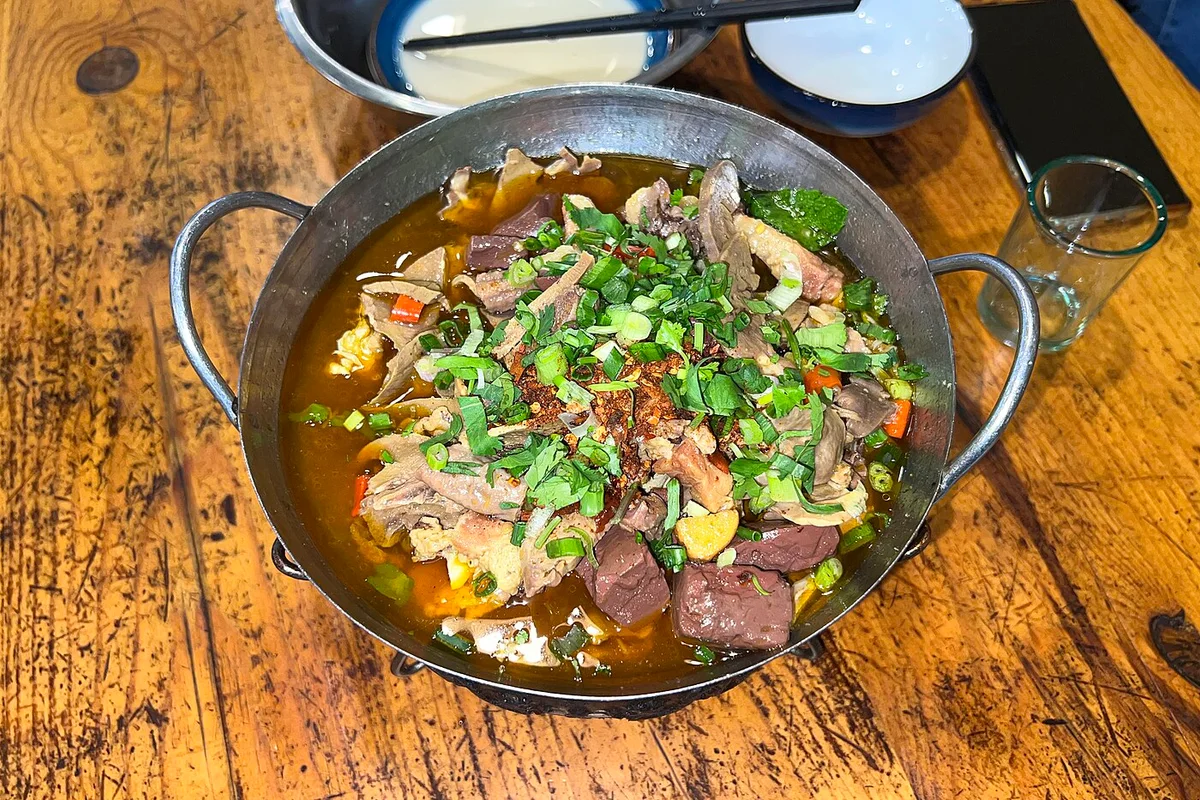
Meet a Dongbei winter and festival feast
Sha zhu cai is a Dongbei winter-feast tradition built around fresh pork, sour cabbage and shared work. Sourness, richness and distinct whole-animal textures define a strong table.
Common ingredientsFresh pork cuts, offal, blood sausage, fermented napa cabbage, broth, garlic and seasonings.
01
Treat shazhucai as a table of dishes, not one fixed plate
How to order it
Ask what today’s serving includes, whether it comes as one central pot or several dishes, how many people it serves and whether blood sausage or offal enters the broth.
How to eat and pair it
Serve sour cabbage with richer pork cuts, let blood sausage cool slightly before biting and use a plain staple or fresh vegetable to pace the table.
Easy mix-ups
Misconception: The name excuses an anonymous pot of leftover pork and offal. In practice: careful sourcing, separate preparation and clean, fully heated flavors are essential to the feast.
Order for a group, identify every component and cool leftovers quickly
A feast pot can be extremely large and rich. Confirm the number of diners, add a plain grain and fresh vegetable, and avoid ordering several other organ dishes. Use communal utensils and separate raw additions from cooked food if the meal involves a table-side pot. Blood products, pork and offal must all be fully cooked; color alone is unreliable in a dark broth.
02
How collective winter work shaped the Dongbei table
Processing a household’s winter pig brought relatives and neighbors together after shared labor. Fresh cuts, bones and organs reached the kitchen at once, while preserved napa cabbage supplied acidity from the cold-season pantry.
That occasion encouraged whole-animal cooking and several textures at one table: clear broth from bones, richness from pork, tang from cabbage and the delicate set of blood sausage. The food records a seasonal social rhythm as much as restaurant technique.
03
Sauerkraut, pork, blood sausage and bone broth each have a role
The pot is readable when blood sausage, sour cabbage and pork keep distinct textures
Blood sausage should be fully cooked, moist and sliceable, with a mineral savory flavor rather than raw liquid or crumbling dryness. Sauerkraut provides lactic acidity that cuts pork fat; it should smell cleanly fermented, not rotten. Pork belly and bone-in cuts contribute richness and broth. Offal may add chew or softness depending on the organ. Heavy garlic or chilli is optional, not a remedy for unclean ingredients. Blood sausage can split if boiled violently or held too long. Ask staff when it was added and take slices before they disintegrate. Fine bones and casing pieces may hide in the dark pot, so serve into small bowls and chew carefully. Diners who do not eat blood or offal should request a clearly separate pork-and-sauerkraut dish, not pick through a shared broth that has cooked all components together.
Fresh pork cuts
Belly, ribs, lean meat and bones may be cooked in different ways; the historical point was using the whole animal carefully rather than one prized cut.
Northeastern sauerkraut
Fermented napa cabbage absorbs pork broth while its acidity balances rich fat.
Blood sausage
Prepared pig blood is seasoned and cooked in casing. It must come from a regulated source and be heated thoroughly but gently enough to stay tender.
Offal
Heart, liver, intestine and other cuts may appear according to household or restaurant tradition; cleaning and separate cooking are essential.
Pork-and-sauerkraut central pot
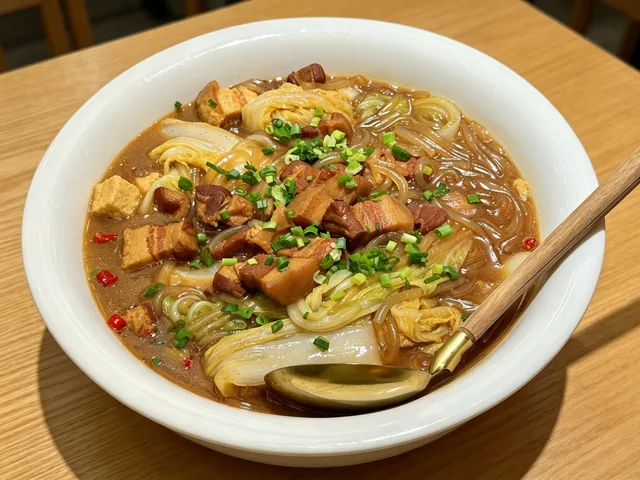
Belly, bones and fermented cabbage simmer together, with blood sausage warmed near the end.
Multi-dish feast
Boiled pork, offal, blood sausage, sauerkraut stew and broth may arrive as separate plates and bowls.
Manchu-style regional traditions
Specific communities preserve their own ingredient choices, cutting and serving methods; “northeastern” should not erase those local identities.
- A clear description of included cuts
- Sauerkraut acidity balancing rather than disappearing under fat
- Blood sausage tender and fully heated
04
Prepare the cuts separately, then combine them by cooking time
Pork, bones and sour cabbage are simmered together; offal may be prepared separately, and sliced blood sausage is commonly warmed gently in the broth before serving.
Blood sausage and offal require careful sourcing, separation and complete cooking. A properly served pot should arrive fully hot, not merely warm around the edges.
05
From winter pig feasts to today’s Dongbei restaurants
The tradition belongs to northeastern winters, when preservation, household pig raising and collective work shaped what could be cooked and shared immediately.
Contemporary Dongbei restaurants preserve parts of that occasion through generous portions, sour-cabbage broth and whole-animal cuts, even when urban service is shorter and the diners did not take part in the original work.
06
How to say Sha Zhu Cai—and what the name tells you
Pronounced shā zhū cài. Menus may call it Dongbei pig-killing feast, Northeast Chinese pork and sauerkraut feast.
Sources