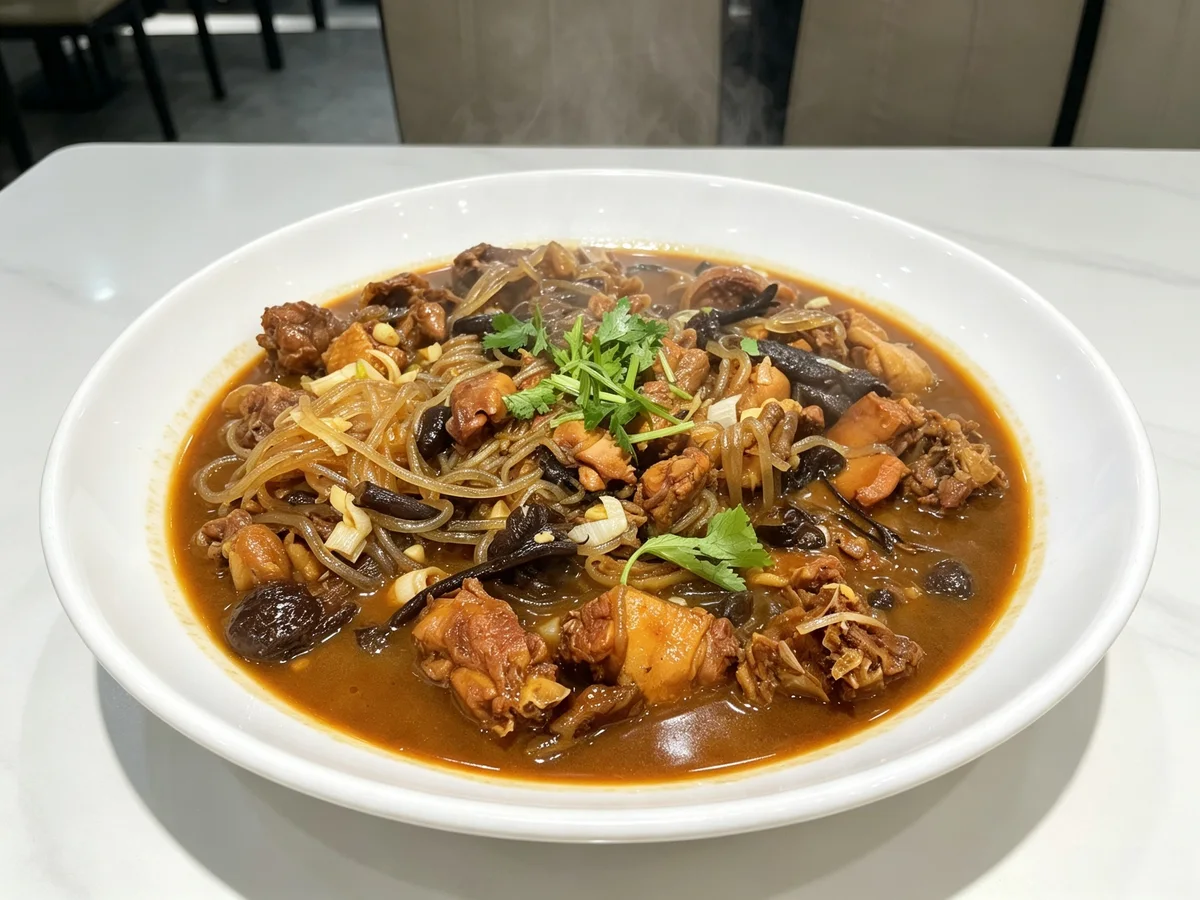
Meet a forest-scented northeastern stew
Chicken and mushroom stew, xiaoji dun mogu, is a northeastern home-style braise in which bone-in chicken and rehydrated woodland mushrooms cook slowly in a soy-seasoned broth. Dried hazel mushrooms are especially associated with the dish because they contribute a forest aroma and absorb the chicken juices; starch noodles are a familiar but optional addition.
Common ingredientsChicken, dried hazel mushrooms or other woodland mushrooms, soy sauce, ginger, scallions and spices; starch noodles are a common but optional addition.
01
Ask which chicken, mushrooms and noodles are in the pot
How to order it
Expect bone-in chicken and eat carefully; long cooking builds the broth from the whole bird. Ask whether the pot contains starch noodles if you want or wish to avoid them. Share the mushrooms as well as the meat—they are central, not a garnish. Order a green vegetable or cold dish to contrast with the rich, warming stew.
How to eat and pair it
The stew is placed in the center of the table and served generously, often in a deep bowl or iron pot. Guests receive chicken, mushrooms and broth over several rounds. Northeastern sayings connect the dish with hospitality and welcoming a new son-in-law, reflecting its status as more than routine weekday food. The exact poultry, mushrooms and noodle additions still change from household to household.
Easy mix-ups
Misconception: Any chicken cooked with button mushrooms is the same dish. In practice: The northeastern identity is closely tied to a slow braise and the concentrated fragrance of dried woodland mushrooms. Misconception: Starch noodles are mandatory. In practice: They are a popular and satisfying addition, but many descriptions and household versions focus simply on chicken and hazel mushrooms.
Order the stew as a table centerpiece and choose only one major starch to finish it
Confirm pot size, chicken cut, mushroom type and included vegetables. Pair with rice, corn cakes or noodles, not necessarily all three. Add a crisp cold vegetable or lightly cooked greens to interrupt the soft brown textures. When the pot arrives, serve broth and obvious meat pieces into individual bowls rather than letting everyone search among bones with personal chopsticks. Eat breast pieces earlier because they dry fastest; legs tolerate more holding. Small mushroom caps and bone shards can hide in dark broth, so chew attentively and check children’s portions. If noodles are included, take them before they swell and salt the final broth. Extra hot water may stretch a concentrated pot, but ask the kitchen to rebalance it instead of pouring table beverages into the stew.
A large earthenware pot retains heat too slowly for casual overnight cooling
Never place cooked chicken on a platter that held raw pieces, and do not taste the stew before poultry is fully cooked. Dark soy color cannot reveal doneness; check the thickest meat near bone. Stored mushroom stew that becomes sour, fizzy or slimy must be discarded. Reboiling does not correct unidentified mushrooms, previous temperature abuse or toxins that may already be present.
Four questions reveal more than a rustic clay pot
Ask the mushroom name, whether it is dried, which chicken cuts are included and whether noodles or potatoes are already in the pot. These answers predict aroma, bone handling, portion size and how quickly the broth will disappear. A decorative iron or clay vessel may retain heat, but it cannot compensate for generic mushrooms, dry breast meat or undisclosed offal.
02
A chicken-and-woodland-mushroom stew, not a generic brown pot
Xiaoji dun mogu is built around the exchange between chicken and fragrant dried woodland mushrooms, traditionally including hazel mushrooms when available. Rehydrated mushrooms perfume the liquid while chicken fat and stock soften their concentrated forest aroma. Starch noodles may be added, but they are optional; the dish should still make sense when chicken, mushrooms and broth are the only major elements.
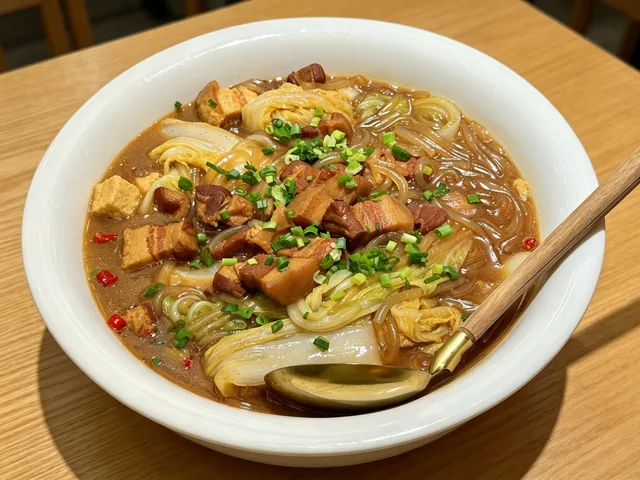
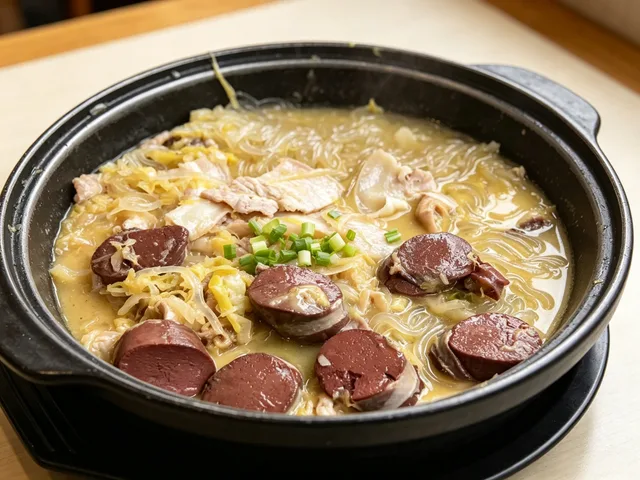
That center distinguishes it from two other northeastern cold-weather dishes. In pork and vermicelli stew, wide starch noodles are essential absorbers of a pork-and-soy braising liquid. Sha zhu cai is a winter pig-processing feast whose defining range may include fermented cabbage, several pork cuts, offal and blood sausage. For chicken and mushroom stew, ask which mushroom the kitchen uses and whether noodles are included, then judge the pot by mushroom fragrance, tender bone-in chicken and broth that tastes integrated rather than merely dark with soy.
03
Chicken, dried-mushroom aroma and broth should stay distinct
The classic aroma often comes from dried hazel mushrooms, not generic button mushrooms
Xiaoji dun mogu is strongly associated with northeastern dried wild or cultivated mushrooms commonly translated as hazel mushrooms, including Armillaria species in culinary trade. They contribute woodsy depth, a slender resilient texture and a soaking liquid that can enrich the stew after careful filtering. English menus may simply say “mushroom.” Ask which kind is used and whether it is dried; shiitake or fresh button mushrooms make a different but possible adaptation. A restaurant name is not a foraging guide. Similar-looking wild mushrooms can be toxic, and common names vary. Purchase documented edible products from reliable channels, follow species-specific handling and never add self-collected mushrooms based on a photograph of the stew. Dried mushrooms should smell forest-like and clean, without mustiness, insects or damp spoilage. Soaking water must be filtered to remove grit and used only when the ingredient source and recipe support it.
Chicken
A mature or free-ranging bird gives the broth more flavor and retains texture during a long simmer; everyday cooks use whatever good chicken is available.
Dried hazel mushrooms
Zhenmo from northeastern forests are prized for fragrance and a slippery-tender bite. Other dried mushrooms create valid household versions.
Mushroom soaking liquid
After careful straining to remove grit, some cooks add the aromatic liquid to deepen the braise.
Starch noodles
Potato- or sweet-potato-starch noodles absorb broth and make the pot more substantial, but not every family includes them.
Hazel-mushroom classic
Dried zhenmo give the most regionally specific forest aroma and are simmered until tender with the chicken.
Starch-noodle version
Wide potato or sweet-potato noodles are added near the end so they absorb broth without dissolving.
Mixed woodland mushrooms
Families and restaurants use shiitake or other safe dried mushrooms when hazel mushrooms are unavailable.
- A broth that tastes of both chicken and dried mushrooms
- Chicken tender enough to pull from the bone but not shredded dry
- Mushrooms fully rehydrated and free of grit
04
Soaking mushrooms and stewing chicken follow separate timelines
Chicken and rehydrated mushrooms simmer together until tender and deeply flavored; starch noodles, when used, are added toward the end.
Bone-in chicken and long-cooking mushrooms create depth, but neither should be cooked to exhaustion
Traditional descriptions often value a relatively young, flavorful chicken cut through the bone rather than boneless breast. Legs, wings and back contribute fat and gelatin, while chopped bone increases the need for careful eating. Ask whether the pot uses a whole chopped bird, only legs or boneless pieces, and how many people it serves. A whole-bird stew can include neck, feet or offal depending on house practice; these should be disclosed, not treated as surprises. Chicken should be fully cooked and moist, separating from bone with gentle pressure but not shredding into dry cotton. Mushrooms keep a pleasant chew and absorb broth without turning slimy. Potatoes or glass noodles appear in some versions and change holding time: potatoes can disintegrate, while noodles drink the liquid. The broth should taste of poultry and mushroom before soy and spice, with enough body for rice but not an oil cap.
05
Chicken and mushrooms at a shared Dongbei winter table
Chicken stewed with dried woodland mushrooms is a representative northeastern home-style dish. Hazel mushrooms are especially traditional, but availability leads to other mushroom choices.
Dried mushrooms contribute both aroma and a dark, savory broth. Starch noodles are a familiar addition, not an obligatory ingredient in every household version.
06
How to say Chicken and Mushroom Stew—and what the name tells you
Pronounced xiǎo jī dùn mó gu. Menus may call it chicken mushroom stew, little chicken stewed mushrooms, Dongbei chicken stew, xiaoji dun mogu.
Sources
Sources and further reading
- Hazel mushroom stewed chickenGreater Khingan Range Administrative Office ↗
- Jilin expressway food journey featuring chicken with mushroomsJilin Provincial Department of Transport ↗
- Hazel mushrooms and the Dongbei classic chicken-and-mushroom stewHeilongjiang Provincial Department of Agriculture and Rural Affairs ↗