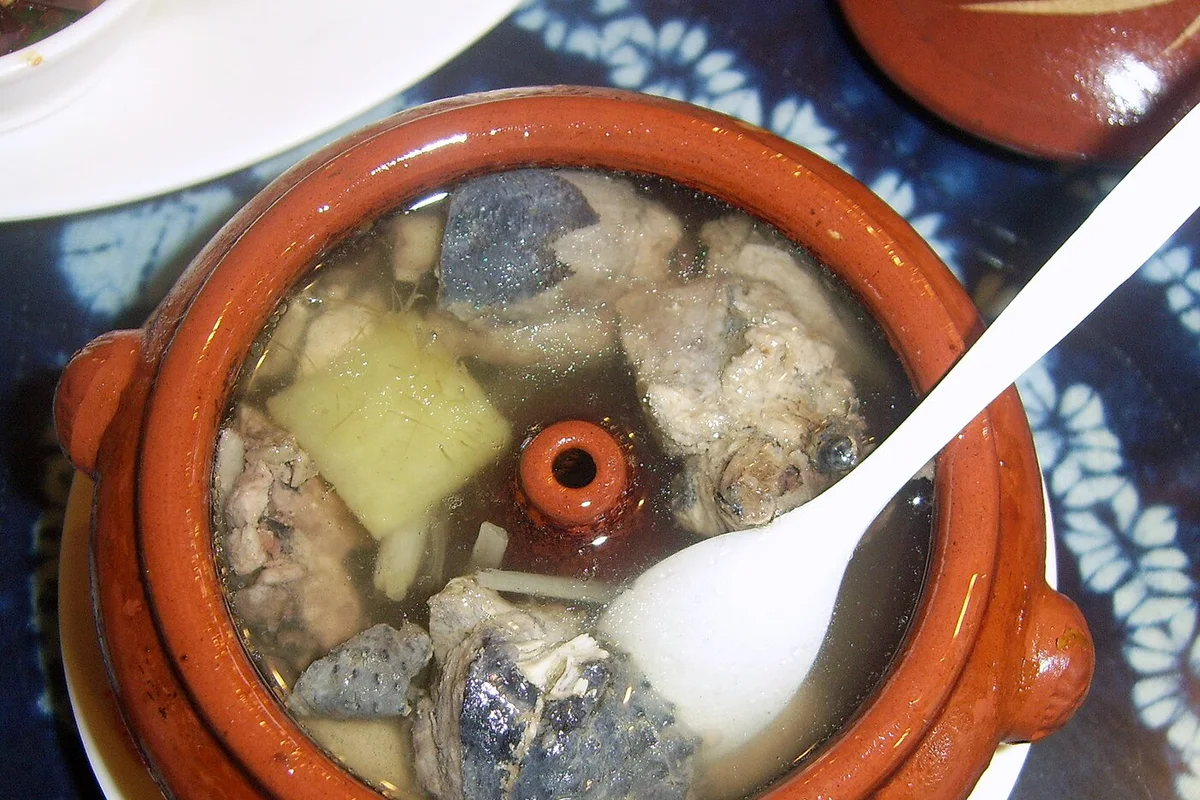
Meet Yunnan’s steam-condensed chicken soup
Steam pot chicken is a Yunnan soup made in a distinctive earthenware vessel with a hollow central chimney. Steam rises through the chimney, cooks the chicken gently and condenses inside the covered pot. Because little or no water is poured directly over the meat in the classic method, the collected broth is remarkably clear yet concentrated.
Common ingredientsChicken, ginger, scallions, salt and sometimes Yunnan ham or medicinal herbs.
01
Confirm that the broth truly condenses inside a steam pot
How to order it
Expect a smaller quantity of intense broth rather than a large pot diluted with water. Taste the broth before adding soy or chilli; restraint is central to the dish. Ask whether the pot includes medicinal herbs or ham if you have dietary concerns. Share both broth and chicken pieces—the dish is not only a consommé.
How to eat and pair it
The pot is normally brought to the table intact, revealing chicken surrounded by the broth created during steaming. Diners ladle a small bowl and notice how much flavor has developed without aggressive seasoning. In Yunnan banquet settings, it may anchor an entire qiguo meal in which several small steam pots contain different meats, roots or herbs.
Easy mix-ups
Misconception: It is ordinary chicken soup served in a decorative pot. In practice: The vessel creates the broth by directing and condensing steam; the cooking method is the defining feature. Misconception: Every steam-pot chicken contains medicinal herbs. In practice: Herbal and notoginseng versions are well known, but the classic technique can be expressed with chicken and simple aromatics.
Choose the base chicken first, then decide whether medicinal or mushroom additions suit the table
Menus may offer plain qiguo chicken or additions such as ham, notoginseng, cordyceps-related cultivated ingredients or mushrooms. These versions can be established specialties, but each changes salt, aroma, cost and dietary suitability. A first order should emphasize chicken and clear broth. Ask which cuts are included, whether the pot contains a chopped whole bird and how many diners it serves; neck, feet or small bone pieces can appear in whole-bird service. Ingredients marketed as medicinal are still foods in a restaurant, not personalized treatment. Diners who are pregnant, take medication or manage a health condition should not rely on therapeutic menu claims and may need professional advice. Ask for the exact botanical or cultivated product instead of accepting an imprecise “herbal” translation. Allergies and sourcing matter even when the broth looks simple.
02
A side-by-side comparison reveals what condensation changes
Compare one spoon of qiguo broth with an ordinary simmered chicken soup if the restaurant serves both. Simmering moves water around meat and can emulsify fat or extract strongly through bubbling. The steam pot accumulates condensed vapor gradually around relatively undisturbed pieces, often yielding a clearer, more concentrated but smaller volume. Neither technique is universally superior; they express chicken differently.
The amount of liquid is therefore a quality clue only in context. A steam pot is not supposed to provide an endless tureen, yet a nearly dry vessel may indicate a poor seal, blocked chimney or insufficient time. Ask how long the house cooks it and whether more broth was added. Transparent explanation is more useful than a theatrical “one drop of water never touched it” claim.
At home, use equipment designed for steam-pot cooking and follow the maker’s setup. Improvised stacking can tip, block steam or boil the lower vessel dry. Keep adequate water below, monitor heat and avoid sealing the apparatus like a pressure vessel. The technique’s elegance depends on controlled vapor, not risk.
03
Broth concentration, chicken doneness and steam safety all matter
Clear broth should carry deep chicken aroma without raw bone, scorched clay or heavy seasoning
A successful pot has a clean golden liquid with small natural fat droplets. Clarity comes from gentle condensation and limited agitation; it does not require the broth to be colorless or fat-free. The first spoon should taste intensely of chicken, with ginger, pepper or added ham in support. Cloudy grey liquid, burnt mineral notes or a salt level that masks the bird point away from the technique’s purpose. Chicken must be fully cooked near the bone. Steam-pot romance does not excuse pink raw joints, and dark-colored breeds can make visual checks difficult. Meat should stay moist and separate from bone with moderate pressure, not dry into fibers after an unnecessarily long hold. Serve pieces into small bowls, watch for chopped bone shards and offer the broth throughout the meal rather than drinking it all before the solids.
Concentrated broth should be precious, not mysteriously absent
Note how much liquid surrounds the chicken when the lid opens. A relatively small volume is expected because it accumulated through condensation, but every diner should receive enough to understand the technique. If the pot is nearly dry, ask whether the seal, cook time or serving delay affected it. If it is filled like ordinary soup, ask whether stock was added. Honest answers matter more than enforcing a rigid volume.
The qiguo vessel
Its central chimney is functional, not decorative: it channels steam into the sealed chamber where condensation becomes broth.
Chicken
Bone-in pieces provide gelatin and savoriness while remaining tender during the slow, moist cooking.
Ginger and scallion
Seasoning is restrained so the chicken and condensed broth remain clear in aroma and appearance.
Optional Yunnan additions
Xuanwei ham, notoginseng and regional mushrooms appear in named variations, but they are not required in every pot.
Classic Jianshui-style chicken
Chicken, ginger and restrained seasoning emphasize the special pottery and condensation method.
Xuanwei ham steam-pot chicken
A small amount of cured ham deepens savoriness and salt, so additional seasoning must be reduced.
Notoginseng versions
Wenshan is known for adding sanqi or notoginseng. This is a distinct regional food tradition, not a necessary ingredient in standard steam-pot chicken.
- A genuine chimney-shaped clay steam pot
- Clear broth formed inside the vessel
- Tender bone-in chicken without a boiled, washed-out texture
04
How a central chimney turns steam into soup
Steam enters through the chimney of a clay pot, gently cooking the chicken while collecting concentrated broth.
The central chimney condenses steam inside the pot, creating broth without ordinary boiling
A Yunnan steam pot, or qiguo, has a hollow central spout rising through its base. The filled clay pot sits over a source of steam; vapor travels up the chimney, circulates beneath the lid and condenses around chicken pieces. Over time those droplets combine with juices released by the bird, producing a clear, concentrated broth. The classic claim that the cook “adds no water” refers to the upper pot: water is still essential below as the steam source, and kitchens may vary in setup. This is not pressure cooking. Steam must move steadily, the lid must fit and the lower vessel must not boil dry. Pouring stock directly into the upper pot makes a chicken soup but bypasses the defining condensation method. A decorative qiguo used only as a serving bowl also proves nothing. Ask whether the chicken was actually steamed in the vessel if the technique matters to you.
The clay pot retains heat, so serving and cooling both require attention
The lid, chimney and handles can be extremely hot. Let staff open the pot, keep faces away from escaping steam and do not pour cold liquid into hot clay. Pair with rice and a fresh vegetable; the concentrated chicken pot is already the table’s soup and meat course. If ham was added, taste before adding salt or soy sauce.
05
How Jianshui pottery shaped a Yunnan dish
Steam-pot chicken is a Yunnan specialty traditionally made in a Jianshui clay qiguo, a pot with a central chimney that channels steam into the vessel.
Little or no water is poured directly over the chicken in the classic method; condensed steam gradually creates the clear, concentrated broth.
06
How to say Steam Pot Chicken—and what the name tells you
Pronounced qì guō jī. Menus may call it Yunnan steam pot chicken, qiguo chicken, qi guo ji, qìguō jī.
Sources