Crossing-the-Bridge Noodles
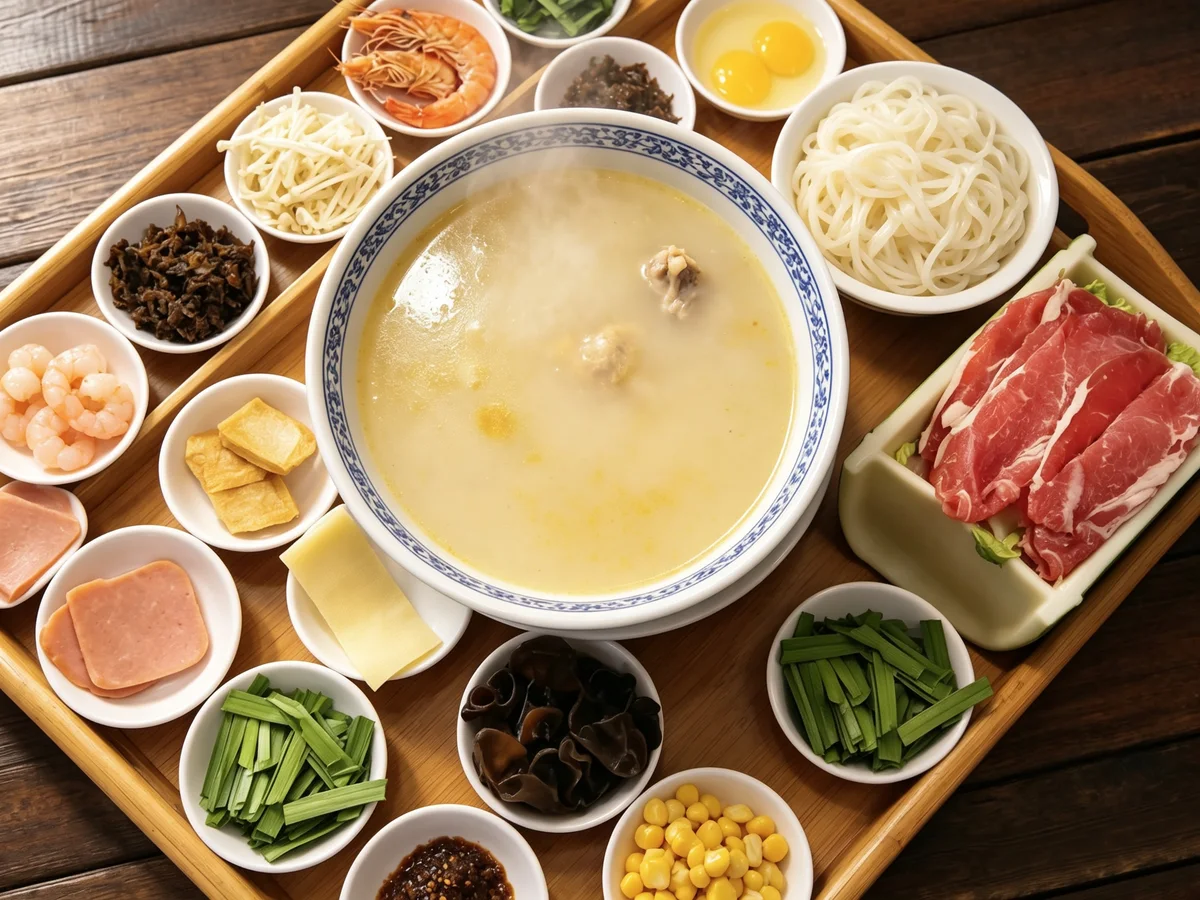
A Mengzi rice-noodle meal assembled in sequence from a preheated bowl of very hot broth and separate plates of thin meat, egg, vegetables and herbs.
Regional food guide
Mushrooms, herbs and flavors shaped by many cultures
Mountainous Yunnan has one of China’s most varied food cultures. Wild mushrooms, fresh herbs, flowers, cured meats and rice noodles reflect its climate and the traditions of many ethnic communities.
Start with the classics
Open the region through its most useful dishes first, then read the deeper story behind the flavors below.
A Mengzi rice-noodle meal assembled in sequence from a preheated bowl of very hot broth and separate plates of thin meat, egg, vegetables and herbs.
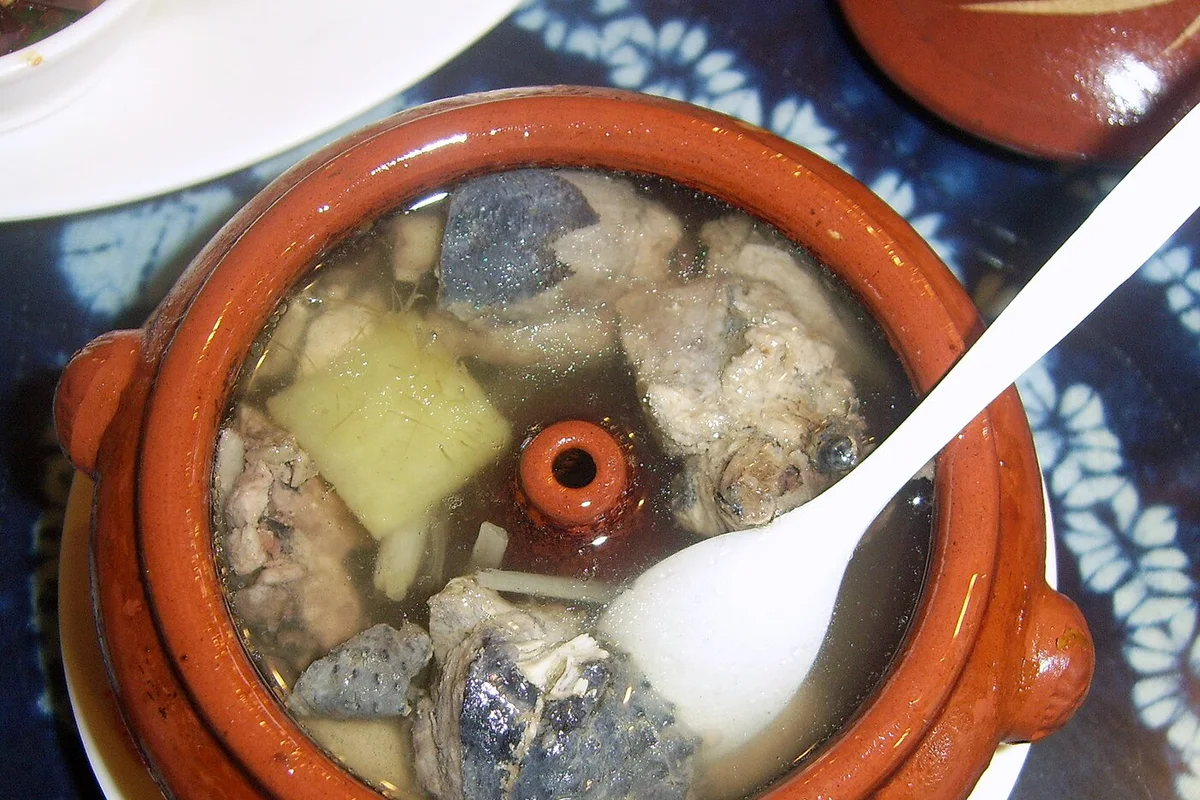
Yunnan chicken slowly steamed in a chimney-shaped clay pot, where condensation becomes a clear, concentrated broth; some versions add Xuanwei ham or medicinal herbs.
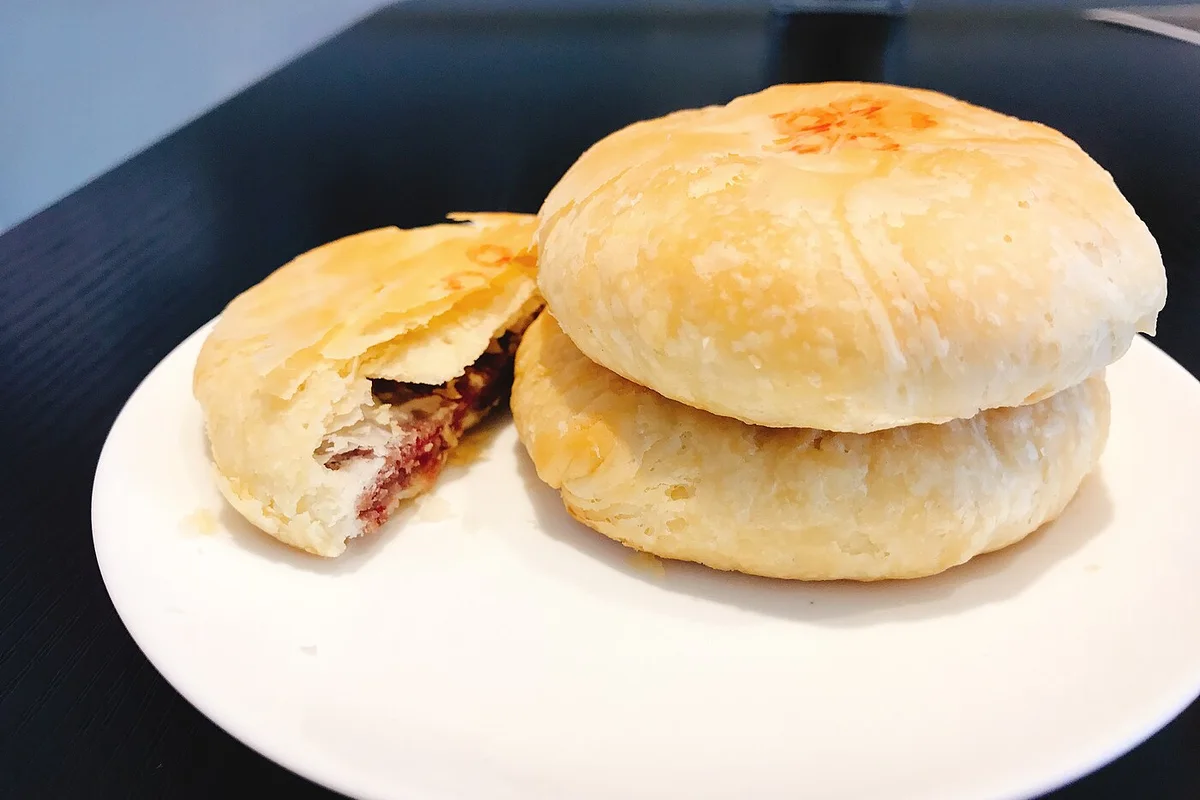
A Yunnan flaky pastry filled with softened food-grade rose petals, balancing clear floral aroma, moist filling and layered crust.
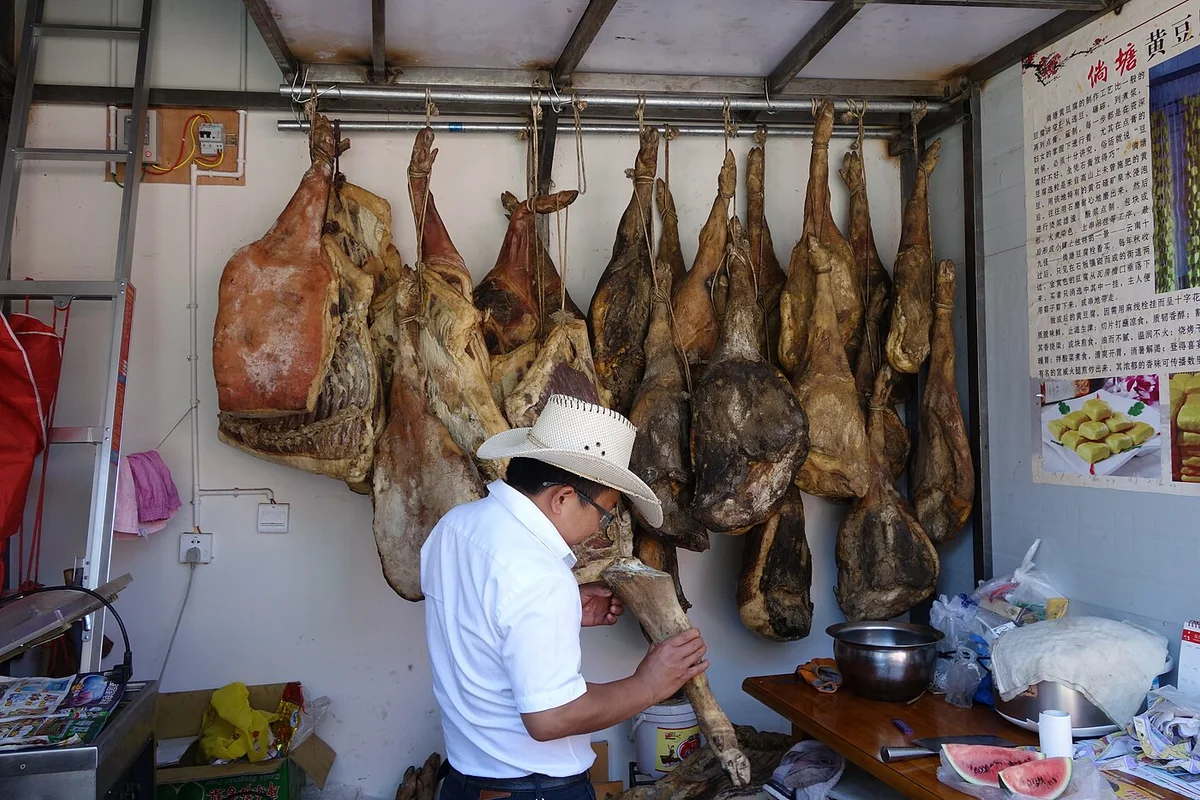
A celebrated dry-cured Yunnan ham, commonly steamed in thin slices, added to soups or stir-fried with mushrooms; preparation should follow the product label.
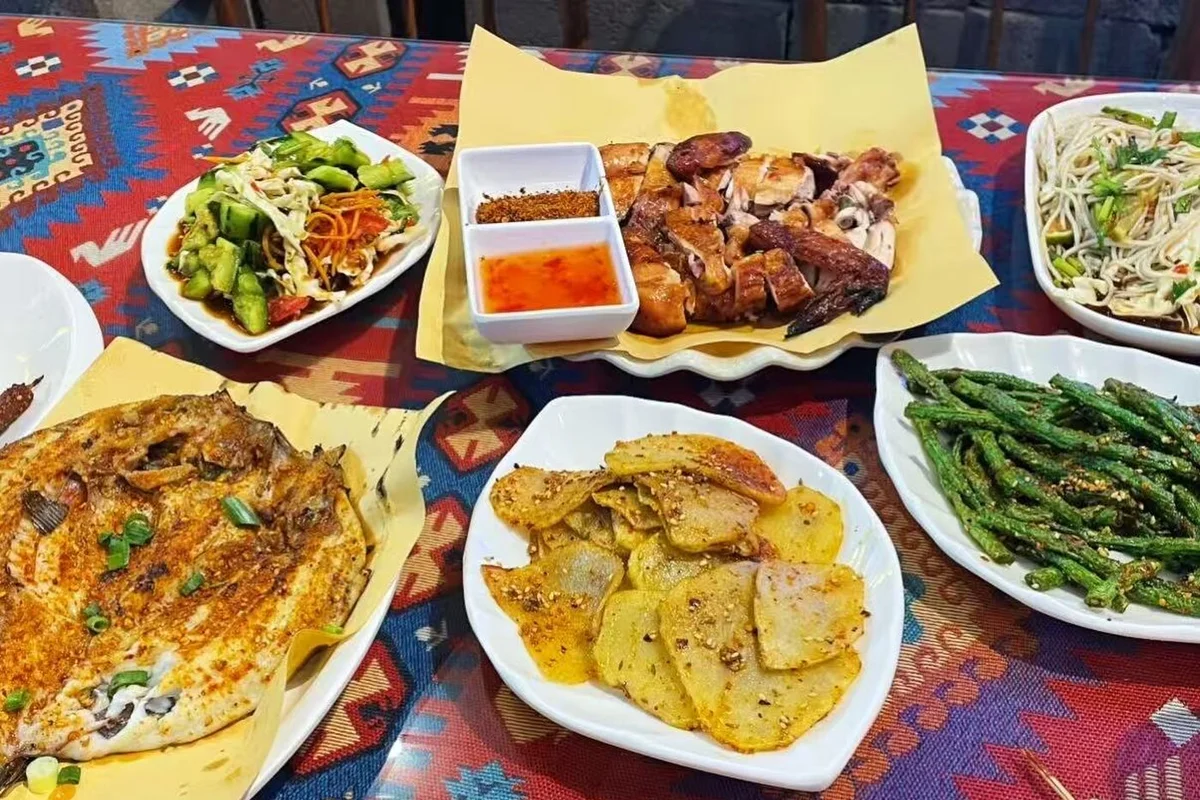
Fish packed with fresh herbs and spices, then grilled in the fragrant style of Yunnan’s Dai communities.
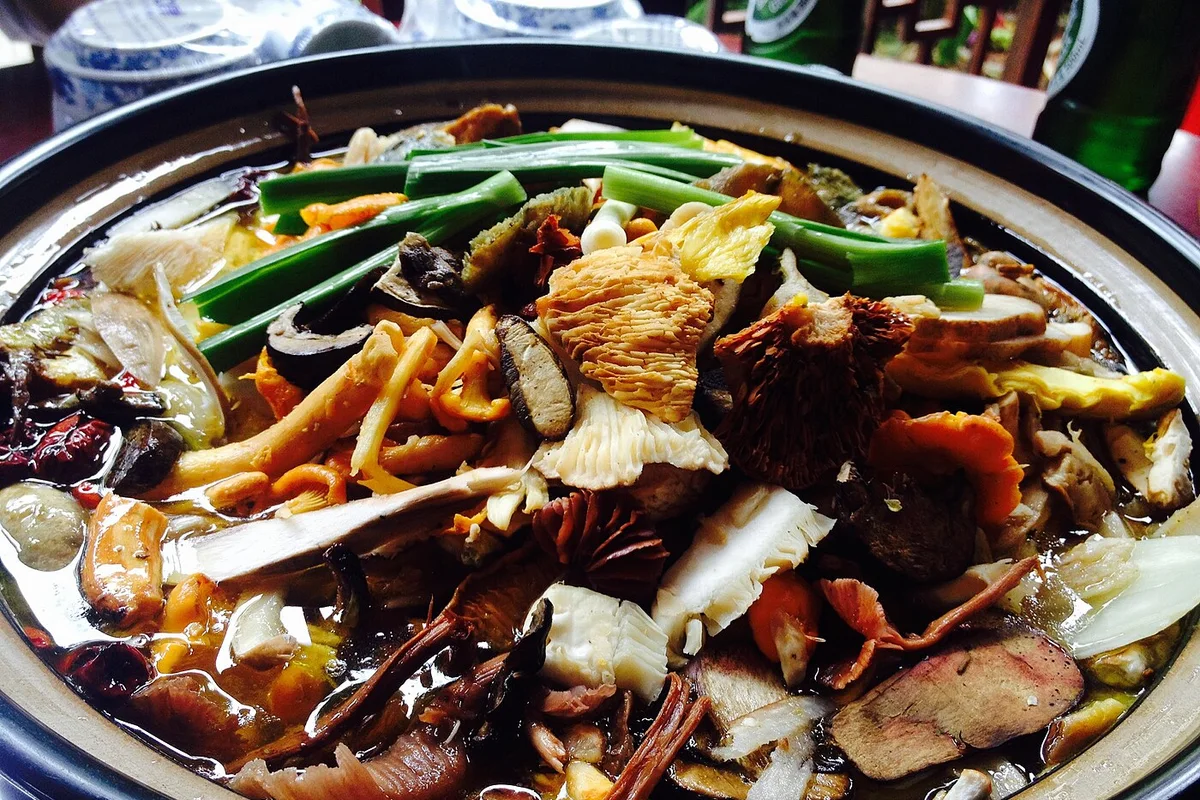
A seasonal Yunnan hot pot built around the aromas and textures of local wild mushrooms.
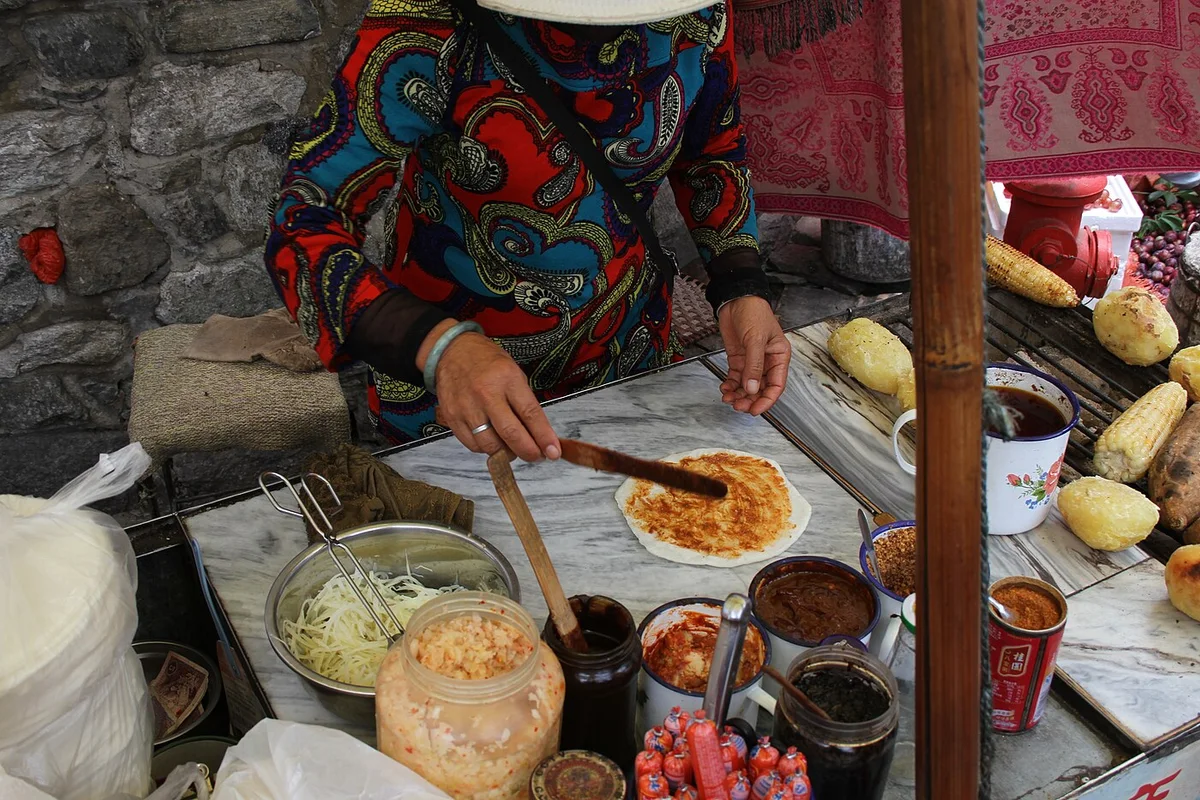
Related Yunnan rice foods: erkuai is shaped as cakes or sheets, while ersi is cut into noodle-like strands.
01
Yunnan is China’s southwestern borderland, a highland province where old caravan routes, minority cultures, lake cities, tropical valleys and mountain markets sit close together. Kunming is the gentle gateway, but the food changes quickly as you move toward Dali, Tengchong, Pu’er or Xishuangbanna.
The table follows altitude and season. Rice noodles steam in clear broths, flowers become pastries, mushrooms arrive with the rains, herbs and sour notes brighten grilled fish, and Xuanwei ham carries the patience of dry mountain air. Yunnan’s signature is variety that still tastes rooted in place.
02
Yunnan is better read as connected microregions than as one exotic pantry. Elevation, season, trade and the cooking traditions of different communities change the ingredients and techniques from one area to the next.
Yunnan is one of the hardest Chinese regions to summarize because geography changes quickly. Plateau cities, river valleys, border areas, mushroom forests, flower-growing zones and communities with different languages and food histories all sit within one province. The result is a food culture that can feel fresh, sour, herbal, smoky, floral or deeply cured depending on where you are eating.
Rice noodles are the easiest doorway. Crossing-the-bridge noodles, small-pot rice noodles and ersi show how rice can become silky strands, chewy slices or a meal built around broth temperature. But Yunnan is not only noodles. Xuanwei ham brings long curing and salt-air complexity, steam pot chicken shows restrained broth technique, flower cakes turn edible roses into pastry, and Dai grilled fish uses lemongrass, herbs and charcoal.
Wild mushrooms are another famous entry point, but they require care. A good mushroom hot pot should come from a reputable restaurant that identifies species, controls cooking time and gives clear instructions. The point is not bravery; it is aroma, texture and safety. Treat Yunnan’s food diversity with the same respect: ask where a dish comes from, because Kunming, Dali, Tengchong and Xishuangbanna do not eat in one identical style.
03
Yunnan food often combines clean rice-based staples with high-impact ingredients: fresh herbs, sour pickles, cured ham, seasonal mushrooms, flowers, chilli, charcoal smoke and chicken broth. The province’s dishes can be gentle or vivid, but many of them preserve a sense of the ingredient rather than burying it under a single sauce.
Mixian, ersi and other rice forms differ in thickness, chew and how they carry broth or sauce.
Dai and other southern Yunnan tables often use fresh herbs, lemongrass, chilli and sour accents to keep grilled or rich foods bright.
Xuanwei ham may appear in thin slices, soups, pastries or vegetable dishes, where a little aged pork can perfume the whole plate.
Seasonal mushrooms are delicious, but casual identification is unsafe. Reputable sourcing and full cooking instructions matter.
04
Yunnan breakfast often revolves around rice textures. A bowl of small-pot rice noodles can be quick, hot and aromatic; ersi has a firmer chew; grilled erkuai rolls can wrap sauce, egg, pickles or fried dough. The same ingredient family appears in different forms across cities, so asking for the local version is more useful than searching for one universal Yunnan breakfast.
05
06
No single Kunming checklist can represent the province. A better first route contrasts a rice-noodle breakfast, a restrained steam-pot dish, a southern herb-and-charcoal preparation and one carefully sourced seasonal ingredient.
Crossing-the-bridge noodles, small-pot mixian, ersi and erkuai differ in grain structure, service and local identity. “Yunnan noodles” is only the beginning of the order.
Steam-pot chicken demonstrates condensation, clear broth and pottery technique. Pairing every Yunnan dish with heavy chilli hides the province’s quieter side.
Lemongrass, fresh herbs, sourness and charcoal in southern Yunnan are not a province-wide default. Keep Xishuangbanna or another specific place attached to the description.
Use a reputable specialist, keep the timer visible and wait for staff approval before tasting. Folk identification tests and personal confidence are not food-safety controls.
07
The province contains many local and ethnic food traditions; geography and community matter a great deal.
Appearance and folk tests are unreliable. Proper identification, sourcing and cooking controls are essential.
They are famous, but small-pot rice noodles, ersi, erkuai and many local noodle styles show different textures and routines.
Sources
We use these references to check regional context, food terms and dining customs. Individual restaurants and households still vary.
Keep exploring
Move from this guide into a different flavor world, with a quick visual hint before you open the next region.