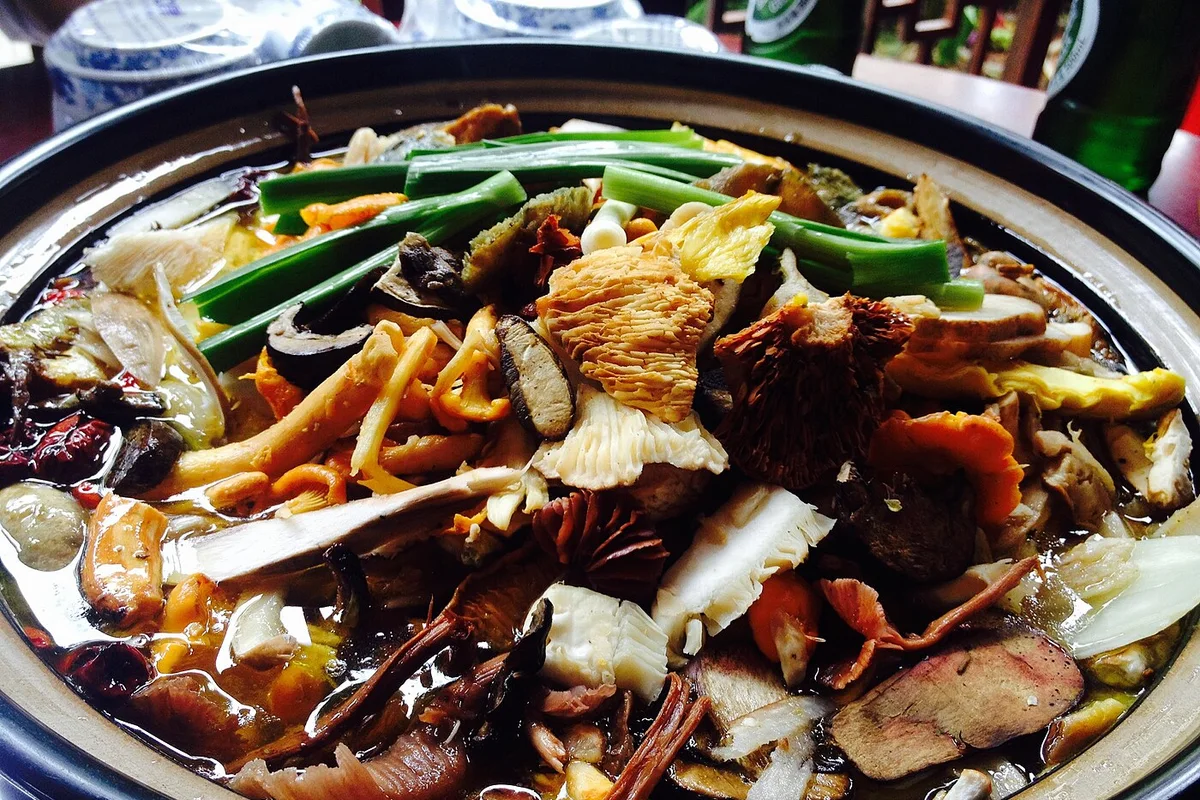
Yunnan mushroom hot pot depends on traceable species and full cooking
Yunnan mushroom hot pot is a seasonal restaurant meal in which carefully sourced edible mushrooms simmer in a chicken or mushroom broth. Different species contribute nutty, fruity, woodland and deeply savory aromas, but the experience depends on strict identification and cooking controls as much as culinary variety.
Common ingredientsA variety of edible mushrooms, chicken or mushroom broth, garlic, herbs and seasonal vegetables.
01
Choose a restaurant that manages species and cooking times
How to order it
Choose a reputable restaurant that identifies its mushrooms, explains the cooking process and controls the timer. Never taste from the pot before staff say it is ready, even if the broth is already boiling. Do not bring self-foraged mushrooms into a restaurant or combine unknown species based on appearance. Avoid alcohol with wild mushrooms and seek immediate medical help for nausea, vomiting, abdominal pain, diarrhea, hallucinations or other unusual symptoms.
How to eat and pair it
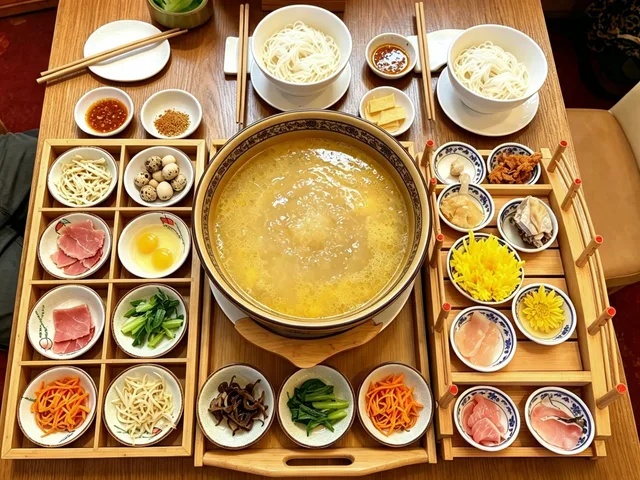
The uncooked mushroom platter may arrive as the visual centerpiece, but diners must wait. Staff add the mushrooms, bring the pot back to a full boil and often set a timer or cover the lid. Only after the required interval should anyone begin eating. Mushrooms are sampled in small portions so their textures can be compared, while the broth becomes increasingly savory. Responsible restaurants keep unknown species out, follow pretreatment rules and retain samples for traceability.
Easy mix-ups
Misconception: Bright mushrooms are poisonous and plain-colored mushrooms are safe. In practice: Color is not a reliable test. Several deadly species look pale or ordinary, and identification requires expertise. Misconception: Once the broth boils, every mushroom is safe to eat. In practice: Species differ in required treatment and time. Diners must follow professional cooking instructions and wait until staff release the pot.
Choose a specialist restaurant and let the staff run the first pot
For a first meal, a reputable busy restaurant with named mushrooms, cold storage and clear timer rules is more valuable than the largest basket. Ask staff to explain the selection, cooking sequence and whether broth may be drunk. Keep raw and cooked utensils separate, do not lift the lid against instructions and make sure children understand that the timer applies to everyone. Mushroom hot pot may still contain chicken stock, pork fat, soy, wheat or other allergens. A vegetable-and-mushroom platter is not automatically vegan. Some diners also react to mushrooms that are safe for others, so disclose known allergies and avoid treating a large mixed pot as a safe way to test many unfamiliar species at once. Finish with rice noodles or another starch only after the mushroom course has been declared ready. The final broth will be richer and more concentrated, so taste before adding salt. If new mushrooms are added, follow staff instructions again rather than assuming the earlier timer covers them. Safe pacing is part of the regional craft, not an interruption to it.
02
Identification and complete cooking are the foundation, not optional caution
Yunnan mushroom hot pot celebrates a remarkable range of edible fungi, but visual familiarity is not proof of safety. Species identification, sourcing and preparation belong to trained suppliers and specialist kitchens. Diners should never add self-foraged mushrooms to a restaurant pot, copy an identification from social media or taste a raw slice because another species on the platter looks similar.
Many shops use a table timer and instruct diners not to drink broth or remove mushrooms until cooking is complete. Follow that rule even when the aroma is tempting or the pot appears to boil. Different mushrooms, slice sizes, altitude and batch temperature affect cooking. A universal internet countdown cannot replace the restaurant’s procedure; adding a late plate may require restarting or extending the timer.
Toxic reactions are not a desirable “Yunnan experience.” Nausea, vomiting, confusion, visual disturbance or other unusual symptoms after eating mushrooms require urgent medical advice, and diners should preserve information about the restaurant and species if possible. Alcohol and folk remedies do not neutralize an unsafe mushroom. The pleasure of the meal depends on professional control.
03
A good mushroom pot shows both flavor layers and visible safety practice
A good pot lets seasonal mushrooms taste different from one another
Yunnan’s rainy season brings the widest fresh-mushroom selection, while dried or cultivated fungi extend the category through the year. A specialist menu may list porcini-like boletes, termite mushrooms, matsutake and many local names, but availability changes daily. Ask what is fresh, cultivated or dried rather than expecting one permanent luxury roster. Price often varies by species and weight. The broth should support fungi without drowning them in chilli or medicinal sweetness. Chicken or another mild stock is common because fat and savoriness carry mushroom aroma. Begin with the kitchen’s recommended mushrooms, allow the full cook, then add vegetables, tofu and starch later. Throwing every plate in at once drops the temperature and makes it harder to know which addition completed its required time. Texture is part of the comparison: some mushrooms become silky, others firm, crisp or slightly fibrous. After staff release the pot, taste the broth and individual pieces before loading a heavy dipping sauce. A murky pot can result naturally from spores and proteins, but sour odor, slimy raw ingredients or careless room-temperature display are warning signs.
Do not turn a safe restaurant meal into a home-identification shortcut
Remembering a menu name or taking a photograph does not qualify a diner to collect the same-looking mushroom later. Local common names can refer to different species, and appearance changes with age, weather and handling. Buy mushrooms only through appropriate food channels and follow official preparation guidance; the restaurant’s trained supply chain is part of what the price covers. Packing uncooked mixed mushrooms from the table is also risky when labels have been discarded. Ask staff whether leftovers may be taken, which items are fully cooked and how quickly they must be chilled. Reboiling a mixed bag at home cannot correct uncertain identity. When in doubt, leave it rather than treating waste avoidance as a reason to accept poisoning risk. A safe meal should still be pleasurable: after the timer, compare aroma, broth contribution and texture, then ask staff the names you enjoyed. Record the restaurant and dish name for future ordering, not for wild foraging. Curiosity is best directed toward better specialist menus and documented cultivation, where it can grow without gambling on identification.
Verified edible mushrooms
Appearance, color, insects or folk tests cannot reliably establish safety. Restaurants must source and identify every species professionally.
Broth
Chicken broth is common because it supports the mushrooms without burying them; a mushroom-only broth may be available but should not be assumed vegetarian.
Aromatics
Garlic and restrained herbs may support the broth. Heavy chilli is usually kept in a separate dip so the mushrooms remain distinct.
Cooking time
Some mushrooms require specific pretreatment and thorough high-temperature cooking. The restaurant’s timer and staff instructions are safety requirements, not suggestions.
Mixed seasonal mushroom pot
A curated combination offers several textures and aromas, but only species considered compatible and safe should be cooked together.
Chicken-broth pot
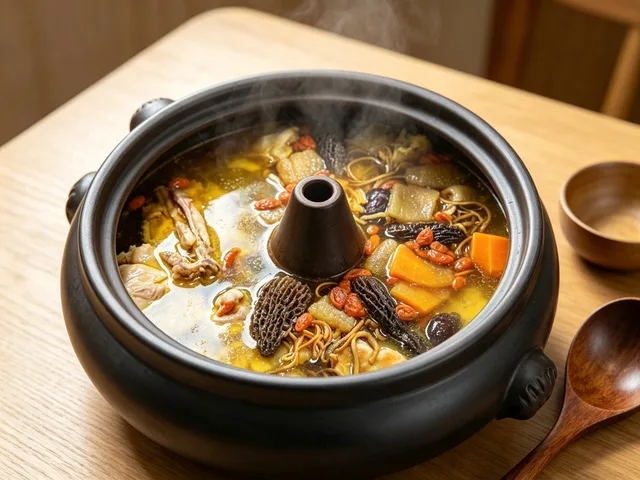
A whole or cut chicken gives the soup body and turns the mushrooms into a substantial shared meal.
Cultivated-mushroom pot
Restaurants outside peak season may rely more heavily on cultivated varieties; it can still be delicious and is not an inferior test of bravery.
- Mushrooms identified by the restaurant rather than an anonymous mixed pile
- A visible timer or explicit staff instruction
- A full boil and sufficient cooking period
04
Identification, preparation, timed batches and retained samples form one method
Mushrooms are simmered thoroughly in broth at the table, following strict cooking times for safe eating.
Use a specialist restaurant that identifies and sources its mushrooms, follow the table timer, and cook every mushroom completely. Do not taste from the pot before staff say it is ready.
05
Rainy-season forest produce and restaurant controls both matter
Wild-mushroom hot pot is a seasonal Yunnan restaurant format that showcases the province’s exceptional fungal diversity.
Only mushrooms identified as edible should be served, and they must be cooked according to professional guidance. Diners should follow the restaurant’s required boiling time and never taste unknown or undercooked wild mushrooms.
06
How to say Mushroom Hot Pot—and what the name tells you
Pronounced yě shēng jūn huǒ guō. Menus may call it Yunnan mushroom hot pot, wild mushroom hot pot, wild mushroom hotpot, Yunnan fungi hot pot.
Sources
Sources and further reading
- Food-safety warning on preventing wild-mushroom poisoningYunnan Administration for Market Regulation ↗
- How to prevent wild-mushroom poisoningYunnan Provincial Disease Control and Prevention Administration ↗
- Consumer guidance for buying, cooking and eating wild mushroomsYunnan Provincial Health Commission ↗