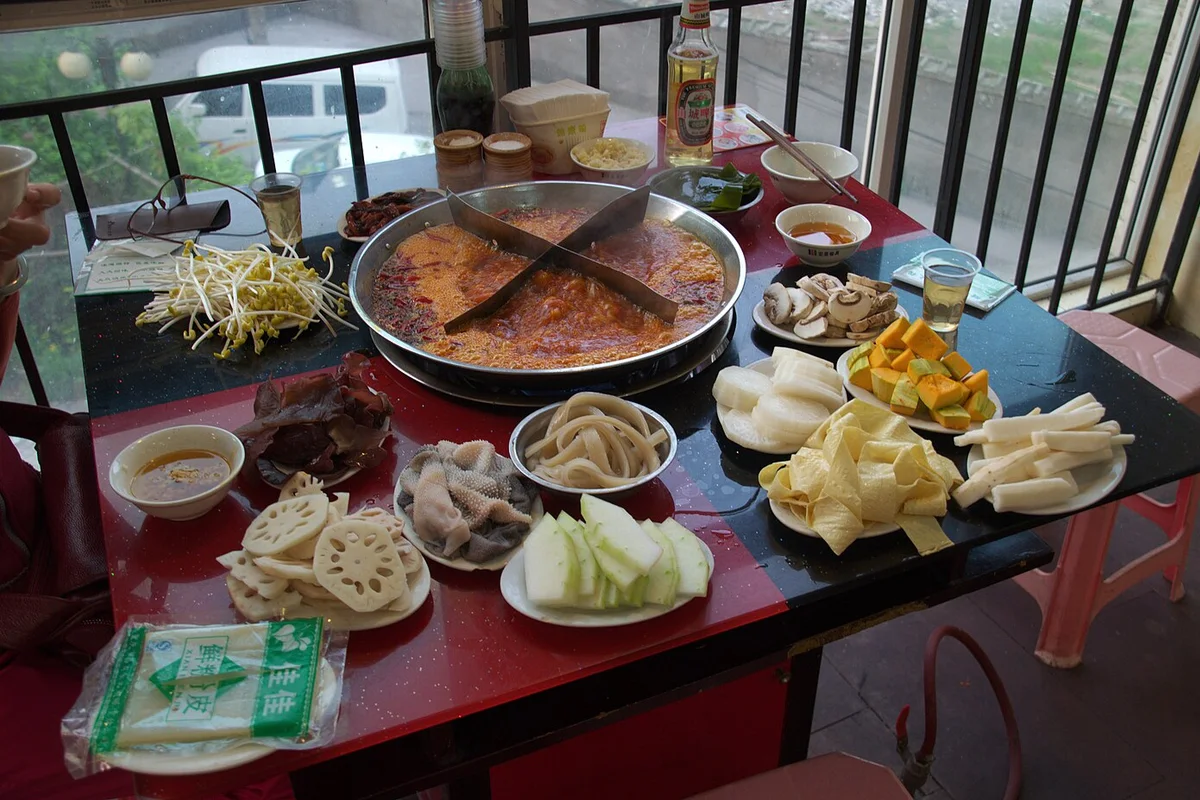
Think of it as a shared dining system
Sichuan hot pot is a broad family of communal, table-cooked meals from the Sichuan–Chongqing region. Its best-known red broths bloom dried chillies, Sichuan pepper and fermented seasonings in oil or beef tallow; diners order raw meats, offal, tofu, mushrooms and vegetables, then cook each item in short batches. Chengdu and Chongqing share a culinary world but should not be collapsed into one fixed recipe.
Common ingredientsDried chillies, Sichuan pepper, fermented broad bean paste, aromatics and beef tallow or vegetable oil, plus meats, offal, tofu, mushrooms and vegetables. Broth, dips and processed items may contain soy, wheat, sesame or peanuts.
01
Build the first table around broth, ingredients and dipping sauce
How to order it
For a gentler first experience, choose a divided yuanyang pot with both spicy and mild broths. Order a mix of quick-cooking items and vegetables rather than only meat. Ask the staff about cooking times, especially for offal, meatballs and thick root vegetables. Build a personal dipping sauce before the food arrives; sesame oil with garlic is common in Sichuan and Chongqing restaurants.
How to eat and pair it
The table controls the pace. Ingredients arrive raw on separate plates, diners cook manageable batches, and everyone watches the pot together. Thin beef or duck intestine may need only a short swish, while meatballs, offal and dense vegetables require thorough cooking; staff guidance takes priority over internet countdowns. The seasoned red broth is primarily a cooking medium, not a soup that must be drunk. Current joint Sichuan–Chongqing operating standards also emphasize separating raw food and never recycling served broth or ingredients.
Easy mix-ups
Misconception: Every ingredient should go into the pot at once. In practice: Small batches protect texture and make it easier to retrieve food at the right moment. Misconception: Sichuan and Chongqing hot pot are one fixed recipe. In practice: They are related traditions with many restaurant, city and household variations, especially in the choice of fat and intensity.
02
Good hot pot does not prove itself with a layer of red oil
Red broth base
Chilli, Sichuan pepper, fermented broad-bean paste, aromatics and fat build the cooking medium. Beef tallow is especially associated with Chongqing; vegetable-oil bases are also widespread.
Offal and meats
Beef, mutton, duck intestine, tripe and other crisp or tender cuts are selected for different cooking times rather than added as one undifferentiated meat platter.
Tofu and vegetables
Tofu skin, frozen tofu, mushrooms, lotus root, potato, leafy greens and noodles absorb broth at different rates and give the table relief from meat.
Individual dip
Sesame oil with garlic is common in Sichuan and Chongqing red-pot restaurants; dry chilli dips, sesame-paste sauces and house blends reflect local and restaurant variation.
Chongqing-style red pot
Often especially robust, with beef tallow, dried chilli and Sichuan pepper producing a deep, persistent broth. Offal and crisp-textured cuts are classic choices.
Chengdu and broader Sichuan styles
Restaurants vary widely in oil, spice and aromatics. Vegetable-oil bases and a broader mix of ingredients are common.
Yuanyang split pot
A divided vessel pairs red málà broth with a mild broth. It is practical for mixed spice tolerances, not a lesser experience.
- A lively simmer maintained throughout the meal
- Raw ingredients arranged separately and cooked in batches
- Aromatic broth with more depth than simple chilli heat
03
How red broth is built and kept balanced through the meal
The seasoned broth is built by frying aromatics and fermented seasonings in the chosen fat, then kept at a stable simmer while diners cook identified ingredients in small batches. Beef-tallow red pots are strongly associated with Chongqing, while oil, broth, dip and ingredient styles vary across the basin.
Keep utensils for raw and cooked food separate, and cook poultry, meatballs and offal completely. Treat the red broth as a cooking medium rather than a soup to drink by the bowl.
04
Sichuan and Chongqing share a hot-pot culture, not one recipe
Málà hot-pot traditions are shared across the Sichuan Basin. Beef-tallow red broth, offal and gridded service are particularly identified with Chongqing, now a separate municipality, while Chengdu and other Sichuan cities also maintain vegetable-oil, clear, divided and related skewer traditions.
Hot pot is a social cooking system rather than a finished soup: diners identify raw ingredients, cook small batches to different safe doneness and season each bite in an individual dip. Modern cold chain, raw-cooked separation, ventilation and a ban on recycling served broth are part of responsible continuity.
05
How to say Sichuan Hot Pot—and what the name tells you
Pronounced sì chuān huǒ guō. Menus may call it Szechuan hot pot, Sichuan hotpot, mala hot pot, má là huǒ guō.
Huǒ refers to fire or heat and guō to the cooking pot: the name emphasizes food cooked in a continuously heated vessel at the table. Má is the fragrant tingle associated with Sichuan pepper, while là is chilli heat. A diner can therefore ask separately for less chilli or less numbing pepper rather than treating “spicy” as one indivisible setting.
English menus use Sichuan hot pot, Szechuan hot pot, mala hot pot and hotpot. Chongqing hot pot belongs to the same basin-wide culinary world but has its own strong beef-tallow, offal and nine-grid associations. Mala tang and dry pot share flavors or ingredients, yet follow different service systems and are not synonyms for Sichuan hot pot.
The broth cooks the food; the dipping bowl finishes each bite
A red Sichuan hot-pot broth is a cooking medium, not an ordinary soup course. Beef tallow or vegetable oil carries chilli, Sichuan pepper, fermented broad-bean paste and other aromatics around the pot, while salt and stock season ingredients as they cook. Recipes differ between cities and restaurants, and the visible number of chillies does not reliably predict intensity. Fragrant pepper, fermented depth and clean fat matter as much as raw heat. Drinking repeated bowls of the concentrated red broth is not the intended way to experience it.
The personal dipping bowl creates a second flavor layer. A Chengdu-style oil dip often starts with sesame oil and garlic, with cilantro, scallion, oyster sauce or other additions chosen by the diner. The oil cools food slightly and rounds the chilli; it does not erase the broth. Sesame paste appears more strongly in northern hot-pot traditions and at some contemporary Sichuan restaurants, but it is not the only default. Ask what the house provides before combining every condiment at the station.
A divided yuanyang pot is useful for a mixed table, but the pale side is not automatically vegetarian or allergen-free. It may contain chicken or pork stock, and ladles or chopsticks can cross between broths. Choose it to manage heat and ingredient preferences, then confirm stock and cross-contact separately. If the table wants to understand the red broth, keep at least a few ingredients simply dipped rather than coating every bite in a heavy sauce.
Cook in small rounds so texture and safety stay under control
Begin with ingredients that enrich the pot or need thorough cooking, such as meatballs and some sturdy cuts, while delicate beef slices, leafy vegetables and tofu skin are better cooked in smaller later batches. Tripe and duck intestine are valued for a crisp springy texture and can become tough when forgotten; poultry, minced products and dense offal need complete cooking. Restaurant timing cards are useful starting points, but thickness, pot temperature and batch size always change the real time.
Keep raw-food chopsticks or tongs separate from the utensils used for eating. After adding a large plate, wait for the broth to return to a proper boil instead of fishing immediately through lukewarm liquid. Do not overcrowd the pot: temperature falls, delicate pieces disappear and diners lose track of what is cooked. One plate at a time also makes it easier to compare textures and prevents a long meal from becoming a pot of overcooked leftovers.
For a first table of four, a practical mix is sliced beef or pork, one offal item if the group wants it, tofu or tofu skin, mushrooms, a leafy vegetable, a root vegetable and a starch for the end. Order modestly and repeat favorites. Hot pot is paced by conversation, but ingredients still have ideal moments; assigning one diner to watch each batch is more helpful than relying on everyone to remember at once.
Name allergies before the sauce station
Sesame, peanuts, soy, wheat, shellfish ingredients and oyster sauce can appear in dips even when they are absent from the visible plate.
Close with starch deliberately
Noodles or rice cakes absorb the seasoned broth after meat and vegetables have cooked, so add them late and expect a stronger, saltier flavor.
Treat spice adjustment as more than chilli count
A milder request can reduce chilli while retaining pepper fragrance and fermented seasoning; removing every aromatic changes the dish more fundamentally.
Sources
Sources and further reading
- Chengdu, UNESCO Creative City of GastronomyUNESCO ↗
- The Food of SichuanBloomsbury ↗
- Joint Sichuan–Chongqing operating standard for hot-pot restaurantsChongqing Municipal People’s Government ↗
- Sichuan provincial intangible-heritage list: traditional hot-pot craftPeople’s Government of Sichuan Province ↗