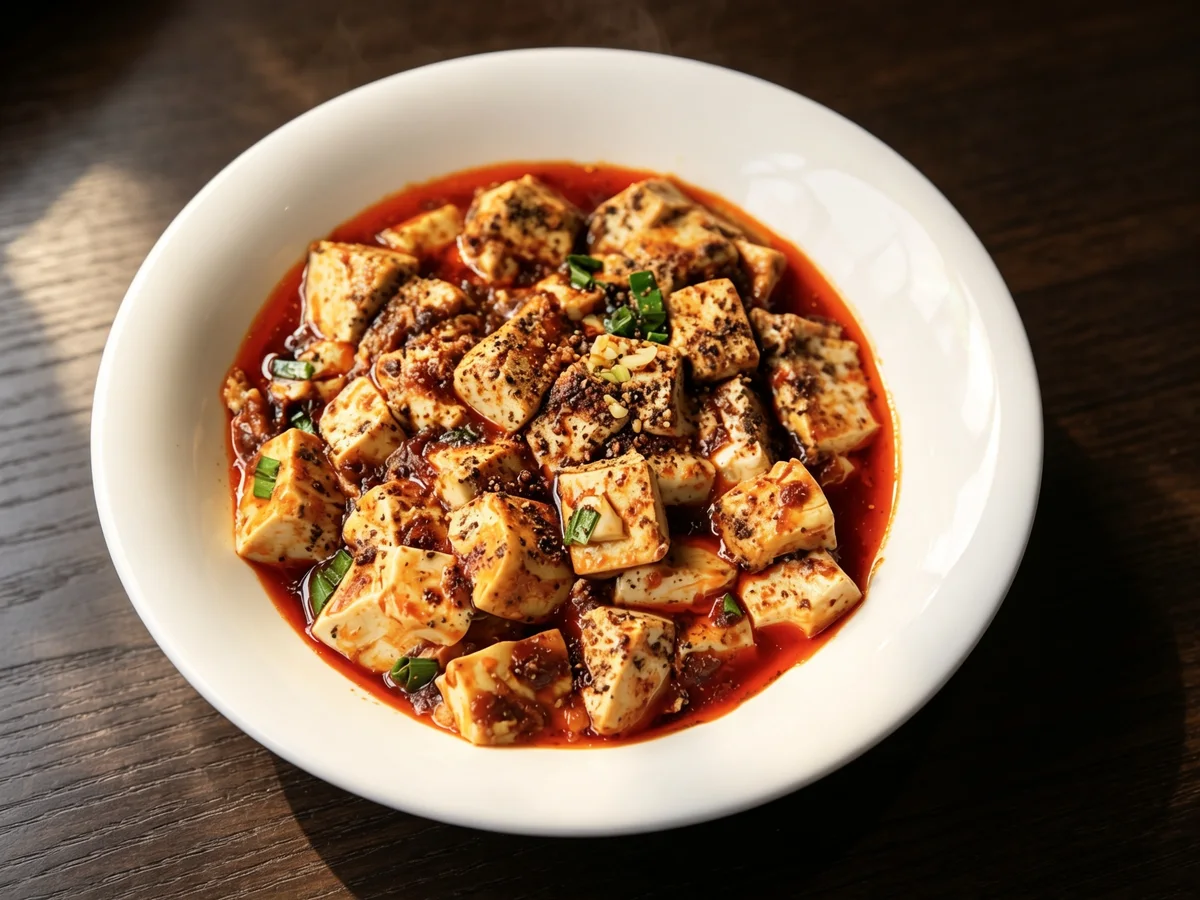
A Chengdu classic built on contrast, not a chilli test
Mapo tofu pairs tender tofu with a loose, glossy sauce of fermented chilli broad-bean paste, aromatics, a small amount of minced meat and Sichuan pepper. A memorable bowl is hot, numbing and deeply savory, but its real achievement is balance: fragile tofu against concentrated sauce, fermented depth against fresh pepper fragrance, and rice against everything intense.
01
What the bowl is trying to balance
Mapo tofu should arrive hot enough that the sauce still trembles around the tofu. The first aroma is fermented and savory; chilli warmth follows, then freshly ground Sichuan pepper leaves a clean citrusy tingle. The tofu offers relief without becoming bland, while tiny pieces of meat season the sauce rather than turning it into a meat dish.
This is why “very spicy tofu” is an incomplete description. A bowl can be fiercely hot and still miss the point if it has no fermented depth, no pepper fragrance or a thick sugary sauce. Conversely, a moderate bowl can feel unmistakably Sichuan when every layer remains clear.
02
Four ingredients doing different jobs
The dish becomes easier to recognize when you know what each part contributes.
Thin starching should happen in stages
A first light thickening lets sauce approach the tofu; a later adjustment accounts for water released during simmering. The target is a fluid coating that moves when the plate is tilted, not a single heavy slurry that sets around the cubes.
Moving the pan protects the tofu better than hard stirring
After the tofu enters, the cook pushes gently with a ladle or moves the pan so fermented sauce reaches each face. Vigorous flipping breaks tender cubes and releases enough water to weaken the seasoning.
Freshly ground pepper belongs near the finish
Long boiling dulls Sichuan pepper’s citrus aroma. Adding or refreshing it late preserves the clean numbing finish and keeps chilli heat, fermentation and pepper from collapsing into one blunt sensation.
Tender tofu
Soft or medium tofu absorbs flavor while staying mostly intact. Dry fried cubes create a different dish and eating experience.
Pixian doubanjiang
Fermented chilli broad-bean paste gives the sauce salt, brick-red color and aged bean aroma; it needs to be fried until fragrant.
A little minced meat
Beef is prominent in classic accounts and pork is common today. The mince perfumes the sauce rather than filling the plate.
Sichuan pepper
Freshly ground pepper added near the end brings the citrus aroma and numbing má that chilli alone cannot provide.
Starch is often added in stages so the sauce lightly clings to the tofu while remaining fluid. A gummy glaze is not the goal.
03
The Chen Mapo story, carefully told
Chengdu’s accepted local lineage connects the dish to a woman surnamed Chen who ran an eatery near Wanfu Bridge in the late Qing period. Her nickname, Mapo, is commonly translated as “pockmarked older woman” or “pockmarked grandmother,” and the restaurant tradition became inseparable from the dish’s name.
The broad lineage is well established in Chengdu food history; the vivid details often repeated around individual customers, dates and the first improvised bowl are harder to verify independently. Treating those details as retellings does not weaken the dish. It makes the distinction between documented tradition and a good food story clearer.
Not every spicy tofu dish is mapo tofu
The name implies a Chengdu lineage and a recognizable relationship among tender tofu, fermented broad-bean paste, mince and Sichuan pepper. A generic chilli tofu can be good, but should be named for what it actually is.
“Ma” belongs to both the name story and the taste vocabulary
In the established nickname story, ma describes facial pockmarks; in modern tasting language, the same syllable is also used for numbing sensation. The overlap is memorable, but it does not prove that the two meanings share one origin.
04
How to order it as part of a table
Order steamed rice at the same time. Mapo tofu is designed to season it, and rice makes the heat, salt and soft texture feel complete rather than relentless. Add a mild green vegetable or a clear soup if the table already includes another chilli-heavy dish.
If you need a vegetarian version, ask about both the mince and the stock; a meatless-looking bowl is not automatically vegetarian. If you prefer less heat, ask for less chilli while keeping doubanjiang and Sichuan pepper. Removing every strong seasoning may leave tofu in a generic brown sauce rather than a gentler mapo tofu.
Look for
Tender intact tofu, a fluid red sauce, fermented aroma and pepper fragrance that survives the chilli.
Be cautious of
Dry fried cubes, a sugary sticky glaze or a menu description that mentions only “hot sauce.”
05
What changes when mapo tofu travels
Across China and overseas, kitchens change the meat, tofu firmness, sweetness, amount of sauce and level of Sichuan pepper. Japanese mabo dofu often follows its own milder, thicker and sweeter restaurant tradition. Vegetarian versions may replace meat with mushrooms or fermented beans. These versions can be satisfying without being identical to a Chengdu bowl.
The useful distinction is not “real or fake” based on one ingredient. Ask what the restaurant is trying to make, then judge whether the bowl has a coherent balance. A Chengdu-style version should still make fermented bean paste, tender tofu and Sichuan-pepper aroma legible beneath the heat.
Read the sauce before judging only the heat
A well-made sauce is fluid enough to settle around the tofu yet cohesive enough to cling when spooned onto rice. Fermented broad-bean paste contributes a brick-red color and aged savoriness; chilli oil brings warmth and sheen; stock carries the seasonings; starch links them without turning the dish into jelly. Freshly ground Sichuan pepper belongs near the finish because its citrusy aroma fades under prolonged heat.
Tofu handling is the quiet test. Cubes may be briefly blanched in salted water to warm them, reduce raw bean aroma and firm the surface, then simmered gently in sauce. Aggressive stirring breaks them into crumbs, while a thick sauce merely hides cold centers. The best bowl keeps most pieces intact but tender enough to yield against a spoon, with small grains of meat and fermented beans distributed between them.
Spice can be adjusted only so far
A kitchen can reduce chilli, but removing doubanjiang and Sichuan pepper entirely also removes much of the dish’s structure. Ask for a moderate house version rather than plain tofu in red sauce.
Tofu does not make it vegetarian
Classic and many contemporary versions include beef or pork mince and may use meat stock. Request a deliberate meat-free preparation if needed.
Rice completes the balance
Spoon tofu and sauce over plain rice instead of eating all the concentrated sauce alone; the pairing is part of the dish’s everyday logic.
Sources