“Twice-cooked” describes two purposeful stages
Twice-cooked pork is a foundational Sichuan stir-fry of thin skin-on pork, cooked fermented bean paste and seasonal vegetables. Its best plates balance rendered richness with fresh allium aroma.
Common ingredientsSkin-on pork belly or a balanced hind-leg cut, Pixian fermented broad bean paste, fermented black beans, green garlic or garlic shoots, aromatics and seasonal vegetables such as peppers or cabbage. Soy and broad beans are standard; wheat may occur in some sauces.
01
Place twice-cooked pork within a balanced Sichuan meal
How to order it
Order plain rice: the concentrated fermented seasoning is designed to accompany it. Ask what vegetable the kitchen uses; garlic shoots are classic, but cabbage and peppers are established variations. The pork should contain fat, but it should not feel boiled or greasy—the second cooking must render and brown it. Balance the table with a vegetable, tofu dish or mild soup rather than ordering several similarly rich meats.
How to eat and pair it
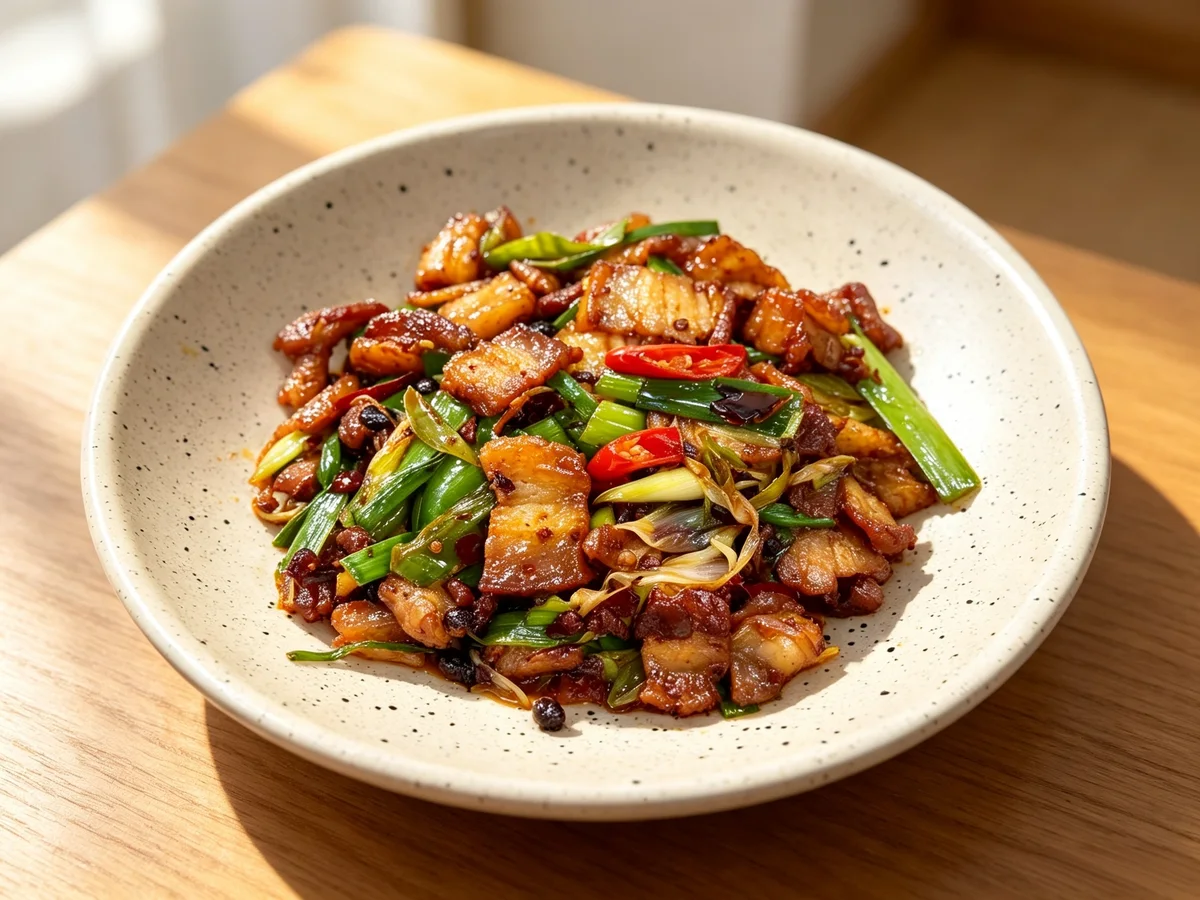
In Sichuan, huiguorou has the familiarity of a dependable home dish, yet restaurants use it as a test of wok control. Diners look for thin slices whose fatty edges have rendered and curled into the shape sometimes called a “lamp socket.” The dish arrives in the middle of the table and is eaten a few pieces at a time with rice. Its flavor should be fermented, savory and aromatic before it is simply hot.
Easy mix-ups
Misconception: An authentic plate must be overwhelmingly spicy. In practice: chilli bean paste matters, but fermented depth, properly rendered pork and fresh garlic shoots are more important than raw heat.
02
Four details distinguish a good plate
Pork
Skin-on pork with alternating lean and fat is simmered before slicing. Pork belly is common, while Sichuan cooks may prefer a hind-leg cut sometimes called erdaorou.
Pixian doubanjiang
Fermented chilli broad bean paste supplies salt, red color and the deep bean aroma that distinguishes the Sichuan form.
Garlic shoots
Green garlic or garlic leaves are especially characteristic; leeks, green peppers and cabbage appear when seasons or local habits differ.
Fermented black beans
Used in modest quantity, douchi adds a dark, rounded savoriness beneath the chilli bean paste.
Garlic-shoot huiguorou
The widely recognized form combines sliced pork with green garlic. The leaves perfume the rendered fat and stay lightly crisp.
Lianshan-style twice-cooked pork
A Guanghan specialty uses unusually large slices and may incorporate local soy sauce and guokui bread, creating a distinct regional presentation.
Household vegetable changes
Green pepper, cabbage, onions or leeks can replace garlic shoots. These are practical home variations rather than proof that the dish has one rigid vegetable list.
- Thin pork slices with browned, curled edges
- A glossy coating rather than a pool of oily sauce
- Fermented broad bean aroma with visible red oil
03
Why the same pork passes through water and wok heat
The whole pork cut is simmered only until set and sliceable, then cooled and cut thinly. In the second stage the slices render and curl in a hot wok before fermented seasonings are fried until aromatic and green garlic or another seasonal vegetable is added briefly at the end.
04
Why Sichuan home cooks treat twice-cooked pork as a fundamental skill
In Sichuan, huiguorou has the familiarity of a dependable home dish and the precision of a restaurant wok test. Thin slicing, fat control and the timing of fresh vegetables make modest ingredients reveal the cook’s judgment.
Garlic shoots are especially recognizable, while peppers, cabbage and the large-slice Lianshan style show how household season and locality can change the plate without turning it into a different category.
05
How to say Twice-Cooked Pork—and what the name tells you
Pronounced huí guō ròu. Menus may call it twice pork, twice cooked pork, hui guo rou, huiguorou.
Huí means “return,” guō means a cooking pot or wok, and ròu means meat. Menus may use twice-cooked pork, double-cooked pork, hui guo rou or huiguorou; guo bao rou is a different northeastern sweet-and-sour pork dish.
Vegetables vary, but rendered pork and fermented flavor should stay legible
Sichuan cooks may use garlic sprouts, green chilli, cabbage, onion or other seasonal vegetables, and restaurants outside the region adapt to local supply. These changes can be convincing when the vegetable remains crisp and supports the pork. A huge mound of sweet bell pepper with a few lean meat strips is a different balance. The dish also needs enough fatty pork to fry the paste and keep slices supple; making it entirely lean changes both texture and cooking logic.
For a shared meal, pair hui guo rou with plain rice, a leafy vegetable, tofu or a mild soup. Ordering it beside several other salty preserved-meat dishes can make the table exhausting. The plate is concentrated, so a smaller portion goes farther than its volume suggests. Taste before adding chilli oil: doubanjiang and black beans already contribute salt, heat and fermentation.
Ask about pork, stock and sauces if dietary restrictions matter. The dish cannot become vegetarian by removing visible slices after cooking, and fermented pastes can contain broad beans, soy or wheat depending on the product. Garlic sprouts are not the same as garlic cloves; if unavailable, a substitution may change aroma and texture. A good menu names the actual vegetable rather than promising one rigid garnish year-round.
Leftovers can be reheated, but repeated high heat continues rendering the pork and dulls garlic-sprout aroma. Warm a small amount quickly rather than returning the whole plate to the wok several times. If ordering for one person, a rice set or smaller portion protects the intended balance better than saving most of a family-size plate. The first serving remains the quality reference: supple slices, cooked fermented aroma and vegetables that still have life.
- Slices should show skin, translucent rendered fat and moist lean meat, with some edges gently curled.
- Fermented paste should smell cooked and savory, not raw, bitter or dominated by sugar.
- Vegetables should retain color and bite while carrying pork fat and seasoning from the wok.
The Chinese name hui guo rou is often more reliable on an international menu than a literal English label. “Double-cooked pork” and “twice-cooked pork” normally mean the same Sichuan dish, while “cooked twice pork,” “twice pork” or a photograph alone may be ambiguous. Look for thin skin-on slices, fermented broad-bean paste and garlic sprouts or another named vegetable. If the description promises battered pork in a sweet sauce, it is pointing toward a different preparation despite the repeated-cooking language. Asking for hui guo rou also avoids confusion with reheated pork specials that merely happen to be cooked more than once.
Sources
Sources and further reading
- Sichuan cuisine joins the national intangible cultural heritage listSichuan Provincial Government ↗
- Lianshan twice-cooked pork and local intangible heritageGuanghan Municipal Government ↗
- The Food of SichuanBloomsbury ↗
- Taking Sichuan food abroad: huiguorou ingredients and adaptationPeople’s Government of Sichuan Province ↗