First answer the obvious question: it usually contains no lung
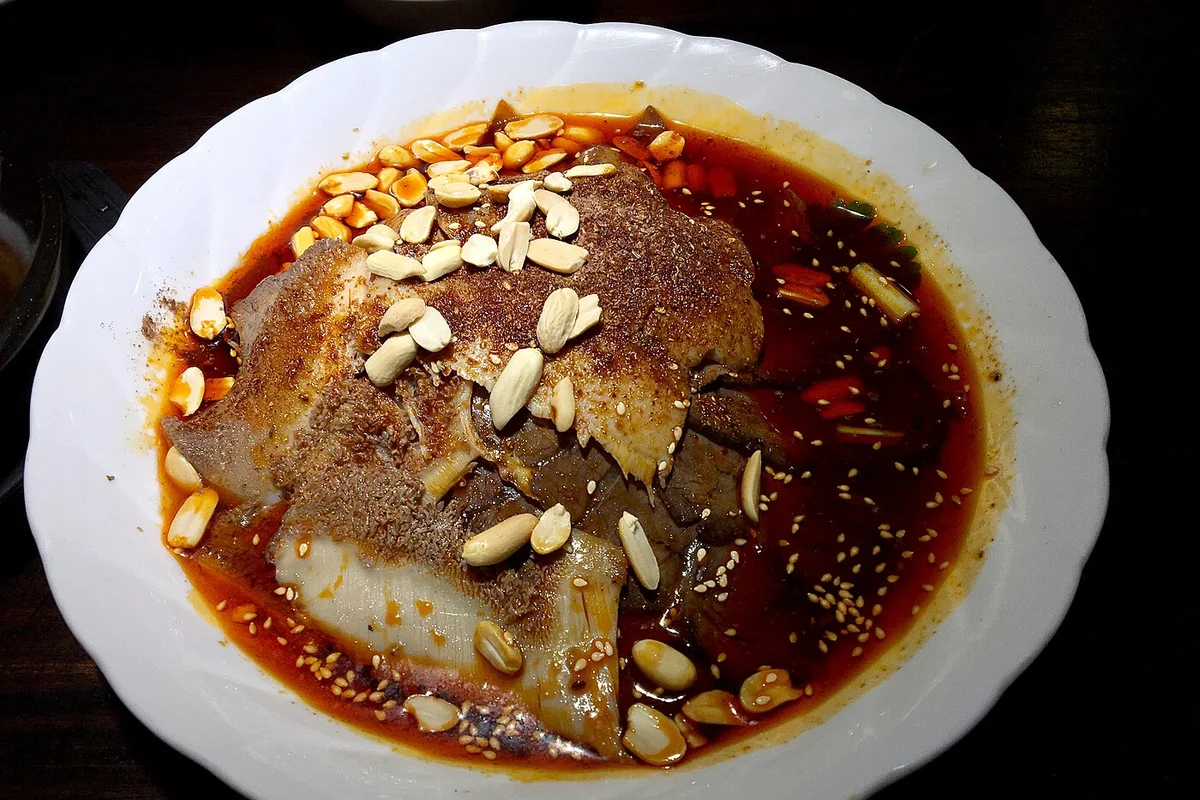
Fuqi feipian is a Chengdu cold dish of thinly sliced braised beef and selected offal dressed with red chilli oil, Sichuan pepper, sesame, peanuts and aromatic seasonings. Its name literally mentions “lung slices,” but contemporary established versions normally feature cuts such as beef, tongue, tripe, heart or head skin rather than lung.
Common ingredientsBeef and cuts such as tripe, tongue, heart or head skin, plus braising liquid, chilli oil, Sichuan pepper, soy seasoning, sesame, peanuts, celery and scallion; lung is not normally central today.
01
Order it as a shared cold dish, not a dare
How to order it
Ask which cuts are included that day if you dislike specific offal textures; a literal English menu title may not describe the actual plate. Mention peanut and sesame allergies before ordering; both commonly appear in the dressing or garnish and may already be mixed into the sauce. Ask for a beef-forward plate if available, understanding that it narrows the classic contrast among cuts. Order plain rice, a mild vegetable dish or a clear soup to balance the concentrated seasoning. Eat it cool but freshly dressed, before the slices sit too long in the oil and the celery or nuts soften. Choose a clean, busy restaurant with good chilled-food turnover; red oil cannot compensate for poor cooling, storage or utensil hygiene.
How to eat and pair it
Fuqi feipian is placed among the shared cold dishes at the beginning of a meal. Diners take a few slices at a time, catching celery, scallion, crushed nuts and dressing together. Thin knife work matters because tongue, tripe and lean beef each resist the bite differently. Ministry of Commerce heritage material supports the dish’s association with a married Chengdu vendor lineage, while popular versions of the early stall, ingredient list and renaming episode vary. The secure craft is already substantial: thorough cleaning, cut-specific braising, safe cooling, precise slicing and a layered dressing turn inexpensive parts into a refined Chengdu classic.
Easy mix-ups
Misconception: The dish is made mainly from beef lung. In practice: Despite the historical name, lung is not normally used in contemporary standard versions; beef, tripe, tongue and other cuts are more typical. Misconception: Fuqi means the meat comes from a husband and wife. In practice: The name honors the husband-and-wife vendors associated with popularizing the dish, not a category of ingredients.
02
The reddest, hottest plate is not necessarily the best
Beef and offal
Cuts are cleaned and braised separately as needed, then cooled safely and sliced thinly so tongue, tripe, lean beef and other textures remain distinct.
Red chilli oil
The dressing should be fragrant and translucent rather than a thick sweet sauce; it carries the seasonings across every slice.
Sichuan pepper
Ground pepper adds citrusy numbness and aroma, balancing the deep flavor of the braised cuts.
Peanut and sesame
Crunch and nuttiness are classic finishing notes and important allergens that diners should confirm.
Mixed-cut classic
Beef, tongue, tripe, heart or head skin create a deliberate range from tender to crisp and springy.
Lean-beef-forward plate
Some restaurants reduce the offal for visitors, producing a milder textural range while retaining the red-oil dressing.
Modern composed presentation
Contemporary restaurants may arrange the slices more formally or adjust sweetness and spice, but the cold braised beef and málà dressing remain central.
- Very thin, even, intact slices rather than shredded scraps
- Several identifiable textures—tender beef, fine-grained tongue or springy tripe—rather than uniformly rubbery pieces
- Clear fragrant red oil with roasted chilli and citrusy Sichuan-pepper aroma, not a thick sweet sauce
03
Cleaning, separate braising, cooling and thin slicing all matter
Each cut is cleaned and braised for its own thickness and texture, then cooled under safe conditions until firm enough to slice thinly. The slices are dressed close to service with red oil, Sichuan pepper, seasoned soy and fresh or crunchy garnishes so the cuts remain distinct.
This is a cooked, chilled meat-and-offal dish. Choose a restaurant that keeps the sliced ingredients cold and dresses each order promptly rather than leaving finished plates at room temperature.
04
From Chengdu beef-offal snack to a refined cold dish
The modern name is associated with a married Chengdu vendor lineage, building on an older local tradition of sliced beef and offal served cold with a highly seasoned dressing. Popular retellings of the early stall and renaming episode differ in their details.
The word fèi, meaning lung, survives in the name, but contemporary versions normally use beef together with cuts such as tripe, tongue, heart or head skin rather than lung. The current ingredient list matters more than the literal translation.
05
How to say Fuqi Feipian—and what the name tells you
Pronounced fū qī fèi piàn. Menus may call it fu qi fei pian, husband and wife lung slices, Sichuan beef offal salad, fūqī fèipiàn.
The “husband and wife” refers to the married Chengdu vendors associated with popularizing the named dish, not to a pair of animals. The historic name survives even though established modern versions commonly use beef, tongue, tripe, heart or head skin rather than lung.
English menus often keep the literal translation because it is memorable, but the actual cut list is more useful than the title. Ask what the kitchen includes that day instead of assuming either that lung must be present or that all offal has been removed.
The feipian–waste-slices word story has several versions: A popular account says inexpensive “waste slices” were renamed with the similar-sounding character for lung. Retellings disagree on exact wording, dates and who changed the sign, so the story is best presented as culinary folklore rather than a fully documented transcript.
The dish is a cold composition of beef cuts, not a plate of lung
Contemporary fuqi feipian commonly combines thin slices of beef with beef tongue, tripe or other cooked offal, dressed cold or cool in aromatic red oil. Despite the famous English translation “husband-and-wife lung slices,” lung is generally not the defining modern ingredient. Feipian became part of the historical name; asking which cuts the restaurant uses is more useful than searching the plate for lung.
Each cut contributes a different resistance: lean beef is tender and fibrous, tongue dense and smooth, tripe springy and ridged. They must be cooked, cooled and sliced separately enough to protect those textures. Thick irregular chunks cannot take the dressing evenly; paper-thin pieces disappear under peanuts and oil. A composed plate alternates cuts rather than hiding them in a red puddle.
The sauce layers chilli oil, Sichuan pepper, soy-based savoriness, garlic and often sesame or crushed peanuts. It should smell fragrant before numbness accumulates. A small amount of braising liquid or stock can give depth, but the finished plate should not resemble soup. Cool service sharpens the contrast between elastic offal, tender beef and warm-tasting spice.
The name carries a Chengdu vendor story and an easy translation trap
The dish is associated with Chengdu and with the story of a married vendor couple whose carefully sliced beef scraps became popular. Details vary in retellings, so the account works best as a local name tradition rather than a perfectly documented transcript. The important result is that fuqi—husband and wife—signals the couple, while feipian does not provide a reliable ingredient list for today’s restaurant plate.
For a first order, ask which cuts are included and whether offal can be adjusted. Removing tripe may be possible, but a plain plate of sliced beef loses much of the intended textural range. Peanuts and sesame are common and can be hard to remove after the sauce is mixed. Soy, wheat-containing sauces, chilli and cross-contact with other cold dishes also require confirmation for allergies.
Fuqi feipian is a cold appetizer for sharing, not a main course salad. Pair it with rice, a mild vegetable, tofu or a warm dish so the table moves between temperature and intensity. Serve with clean utensils and good refrigeration; cooked meat and offal should not sit warm for long. Fresh red-oil aroma and neatly dressed slices matter more than the deepest possible color.
- Different cuts should remain identifiable by shape and bite.
- Pepper and chilli should lift braised-meat flavor rather than replace it.
- Peanuts or sesame should be fresh and crisp, never stale or softened by long holding.
Sources
Sources and further reading
- Fuqi Feipian heritage brand, history and production methodChina Time-honored Brand Digital Museum, Ministry of Commerce ↗
- Sichuan cuisine as national intangible cultural heritageSichuan Provincial People’s Government ↗
- Eat at Ease: Sichuan dishes including fuqi feipianSichuan Provincial People’s Government ↗