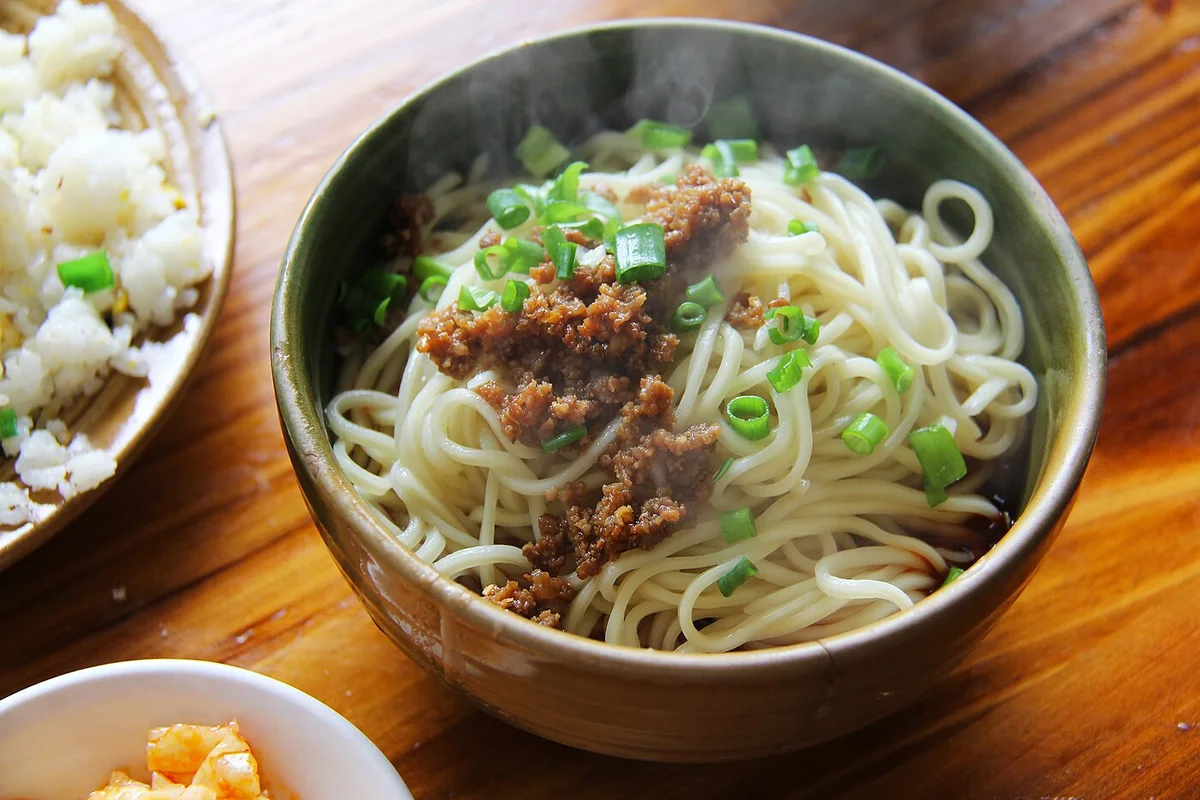
Separate the small Chengdu bowl from overseas noodle soup
Dan dan noodles are a concentrated Sichuan noodle snack, not one globally fixed bowl. A typical Chengdu-style serving combines wheat noodles with chilli oil, Sichuan pepper, preserved vegetables and a small spoonful of seasoned mince. The sauce waits underneath and comes alive only after vigorous mixing.
Common ingredientsThin wheat noodles, chilli oil, Sichuan pepper, soy sauce, vinegar, Yibin yacai or another preserved vegetable, scallions and seasoned pork mince; sesame or peanut paste appears in some versions but is not universal. Wheat and soy are inherent, and sesame or peanut requires confirmation.
01
Ask whether it is dry-mixed, lightly sauced or soupy
How to order it
Mix from the very bottom before judging the flavor. Expect a small, concentrated portion in traditional snack shops. Ask whether sesame or peanut paste is used if you have a preference or allergy. For a meat-free bowl, confirm both the topping and the base sauce.
How to eat and pair it
The pleasure is in contrast: hot noodles, cool or room-temperature seasonings, crisp preserved vegetables and a little mince. Locals mix until no pale noodles remain, then eat before the strands soften. A smaller bowl can sit alongside Zhong dumplings, wontons or other Chengdu snacks rather than functioning as an oversized entrée. Dry, nearly dry and soupier Sichuan bowls coexist, so no single sauce level works as an authenticity test.
Easy mix-ups
Misconception: Dan dan noodles must have a thick peanut sauce. In practice: Sesame and peanut versions exist, but many Sichuan bowls are lighter and driven by chilli oil, soy, vinegar, pepper and preserved vegetables. Misconception: The name describes the sauce. In practice: “Dan dan” refers to the carrying pole historically associated with itinerant noodle vendors.
Mix from the bottom while the noodles are hot
The concentrated base, mince and preserved vegetables often sit beneath the noodles. Complete lifting motions distribute them before the wheat strands tighten and prevent the first bites from being bland while the last become unbearably salty.
02
How a small bowl keeps every layer distinct
Preserved vegetable and mince create different particles
Yacai contributes fermented salinity and fine vegetable texture; browned mince adds roasted aroma and crispness. Both should punctuate the noodles rather than become a thick meat sauce.
A small portion belongs to Chengdu snack logic
Concentrated seasoning and a compact bowl allow dan dan noodles to sit beside other xiaochi. Making the portion enormous often requires more sauce and turns a layered snack into a heavy sesame noodle meal.
Wheat noodles
Usually relatively thin so the concentrated seasoning can coat them without becoming heavy.
Yibin yacai
A preserved vegetable that supplies salty, fermented depth and a slight crunch.
Chilli oil and Sichuan pepper
Together they provide red warmth, fragrance and the characteristic málà tingle.
Seasoned mince
Often pork, used sparingly as a savory topping rather than the bulk of the bowl.
Dry Chengdu-style bowl
A small portion with concentrated seasonings and little free liquid. Preserved vegetables and mince stay distinct after mixing.
Soupier versions
Some Sichuan shops and many restaurants serve more broth. This is a recognized branch, although it changes the intensity and texture.
Sesame-heavy overseas style
Sesame or peanut paste can make a creamier bowl and is popular abroad. Many Sichuan bowls use a lighter chilli-oil, vinegar and preserved-vegetable structure instead.
- Sauce and aromatics concentrated at the bottom
- A modest serving of springy wheat noodles
- Visible preserved vegetables and a small amount of mince
03
Why four flavor bases are prepared separately
Soy, vinegar, chilli oil and other concentrated seasonings are arranged in the bottom of a small bowl. Freshly cooked noodles are drained well and topped with dry-fried mince and preserved vegetables, then mixed immediately so every strand is lightly coated rather than submerged in soup.
The four flavor bases are prepared separately
Aromatic soy, chilli oil, preserved vegetables and mince each need their own heat and timing before service. Replacing them with one bottled “dan dan sauce” removes the different jobs they perform.
Boiling, draining and saucing share one short clock
Residual noodle water dilutes the bottom seasoning, while noodles held dry become impossible to mix. The bowl succeeds when draining and assembly finish close enough to preserve both bite and aroma.
04
From shoulder-pole vending to Chengdu snack shops
The name refers to the shoulder pole, or dandan, once used by itinerant noodle sellers to balance cooking equipment and ingredients. Compact portions and concentrated seasoning fit that mobile Sichuan street-snack format; no single sauce formula can be inferred from the name.
A Chengdu-style bowl is usually small, dry or nearly dry, with bottom-of-bowl seasoning, preserved vegetables and modest mince. Soupier Sichuan bowls and sesame-heavy overseas versions are real adaptations, but sesame or peanut paste is not a defining ingredient in every preparation.
05
How to say Dan Dan Noodles—and what the name tells you
Pronounced dàn dàn miàn. Menus may call it dandan noodles, dan dan mian, dandanmian, Sichuan street noodles.
A shoulder pole balanced cooking equipment, noodles and seasonings in baskets at either end. Compact portions and concentrated bottom-of-bowl seasoning suited a vendor who had little workspace and needed to assemble each serving quickly. The name preserves that street scene even though most bowls now come from permanent shops.
English spellings include dan dan noodles, dandan noodles, dan dan mian and dandanmian. None specifies whether the restaurant serves a dry Chengdu snack bowl, a little broth or a large sesame-heavy overseas adaptation, so the service style is worth asking about before ordering.
Why the Chengdu bowl is deliberately small and concentrated
Dan dan noodles developed as a compact street snack rather than a large noodle soup. A modest portion lets the cook use an intense seasoning base without exhausting the diner: soy sauce, vinegar, chilli oil, preserved vegetables and a little crisp mince sit beneath freshly drained noodles. The diner mixes immediately, coating the strands in a thin aromatic film. If the bowl is flooded with broth or a large quantity of sesame paste, the balance moves toward another regional or restaurant interpretation.
The name does not prescribe one immutable sauce. Chengdu shops differ in sweetness, vinegar, sesame and the amount of meat, and overseas versions have created their own familiar forms. The useful benchmark is structural: resilient wheat noodles, concentrated seasoning, preserved-vegetable savoriness and enough Sichuan pepper and chilli aroma to remain clear without becoming a heavy peanut noodle.
Mix before the noodles cool
Seasoning is often hidden at the bottom. Lift repeatedly until no pale bundle remains and the mince and preserved vegetables are distributed.
Order another snack rather than demanding a huge bowl
In Chengdu, a small dan dan portion can sit beside dumplings, wontons or another xiaochi, allowing contrast without diluting the noodles.
Confirm sesame and peanuts
Neither is universal, but both appear often enough in restaurant versions that allergy-sensitive diners should ask explicitly.
FAQ
Quick answers to common searches
What are dan dan noodles?
Dan dan noodles are a Chengdu-associated Sichuan snack of wheat noodles mixed with concentrated bottom-of-bowl seasoning, chilli oil, Sichuan pepper, preserved vegetables and usually a modest amount of seasoned pork mince.
Why are they called dan dan noodles?
Dandan refers to the shoulder pole once used by itinerant noodle sellers to carry cooking equipment and ingredients. The compact portion and concentrated seasoning fit that mobile street-food format.
Do dan dan noodles always contain sesame or peanut paste?
No. Sesame or peanut appears in some Chengdu shops and many regional or overseas versions, but it is not universal. Chilli oil, Sichuan pepper, preserved vegetables, soy, vinegar and mince are more central to the Chengdu-style structure.
Are dan dan noodles dry or soupy?
Chengdu-style bowls are commonly dry or nearly dry, with concentrated seasoning mixed from the bottom. Soupier Chinese, Japanese and overseas adaptations also exist and should be described by their actual style.
Sources