
Define the bowl
Separate noodle format, seasoning base and topping choice
Chongqing-style noodles are a family of bowls, not one universal recipe. Use the examples to identify what remains structural when broth, meat and heat level change.
01
What does xiao mian mean?
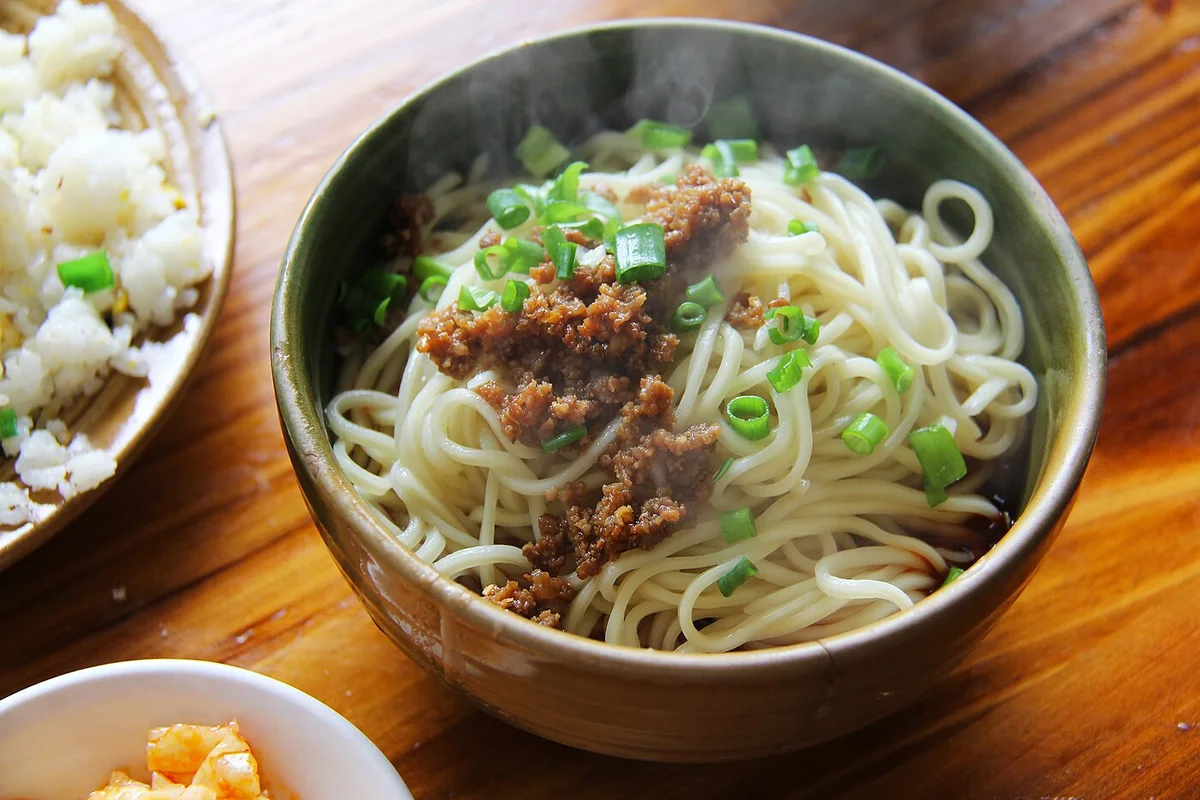
Xiao mian literally means “small noodles,” but the name points to an everyday category rather than a miniature portion or one protected formula.
At its simplest, a bowl begins with wheat noodles and a concentrated seasoning base prepared in the serving bowl. Chilli oil, Sichuan pepper, soy seasoning, garlic, scallion and preserved vegetables may all appear, with proportions changing by shop. The cook adds drained noodles and enough cooking liquid or broth for the chosen style, then sends the bowl out while the noodles are still lively.
Toppings create familiar named variants: beef, peas with minced pork, pork intestine and fried egg are among many possibilities. A menu may translate several of them as “Chongqing noodles.” Keep the words xiao mian and the topping name when possible, because they reveal more than the generic English label.
02
What do Chongqing noodles taste like?
The signature is layered mala fragrance—not chilli heat by itself.
Chilli oil gives warmth, color and toasted aroma. Sichuan pepper contributes a citrus-like fragrance and tingling sensation; garlic, scallion, soy seasoning and preserved vegetables add sharpness and savoriness. Vinegar, sesame paste, peanuts or other additions vary, and no single bowl represents every shop or neighborhood.
The noodles are commonly thin-to-medium wheat strands with enough resilience to survive vigorous mixing. A good bowl tastes integrated after stirring: the first impression may be fragrant heat, but salt, acidity, numbing spice and the wheat noodle should remain legible rather than collapsing into undifferentiated oil.
03
Dry or soup: which xiao mian should you order?
The amount of liquid changes concentration, temperature and the speed at which the noodles soften.
A dry-mixed bowl keeps seasoning close to the noodle surface and usually feels more concentrated. A soup version loosens the seasoning through broth or cooking liquid and can be easier to eat as a morning meal, although it is not automatically mild. Ask whether the shop’s default is dry or soupy instead of inferring it from the English name.
Whichever style you choose, mix promptly from the bottom. Taste before adding more vinegar or chilli oil: the base has already been measured for the bowl, and extra condiment can hide the balance you came to understand.
Dry-mixed
Little free liquid; seasoning clings closely and the bowl rewards immediate mixing.
Soup noodles
More liquid and a looser seasoning profile; still commonly aromatic and spicy.
Add a topping
Beef, peas with minced pork, intestine or egg can turn the basic bowl into a more substantial meal.
04
Chongqing noodles vs dan dan noodles: what is the difference?
They share a Sichuan-basin pantry, but neither is simply the other with more broth.
Dan dan noodles are associated especially with Chengdu and an older carrying-pole snack tradition. Contemporary bowls commonly use a compact portion of wheat noodles with chilli oil, Sichuan pepper, soy seasoning, preserved vegetables and seasoned minced pork. Sesame or peanut paste appears in some restaurant traditions, especially outside the region, but it is not a reliable universal dividing line.
Xiao mian is a wider Chongqing category whose basic bowl may contain no meat topping at all and whose dry and soup forms both matter. Compare the menu’s local name, topping and service rather than declaring every red noodle bowl dan dan noodles. For a direct side-by-side lesson, order each at a specialist shop and note broth, preserved vegetables, meat and the balance of chilli and Sichuan pepper.
Read the dan dan bowl
See how Chengdu-style seasoning, preserved vegetables and minced pork fit together.
Open the dan dan noodle guide →Compare noodles across China
Place xiao mian beside Shaanxi broad noodles, Wuhan hot dry noodles and other regional structures.
Open the regional noodle map →05
How do you order Chongqing noodles?
Choose liquid, topping and heat level before adding side dishes.
First ask whether the bowl is dry-mixed or in soup. Then choose plain xiao mian or a named topping. If your heat tolerance is limited, say so before cooking, but understand that chilli and Sichuan pepper are structural to many house bowls. A reduced-heat version can still explain the style; a completely unseasoned bowl may not.
Treat one bowl as an individual meal rather than a side dish. Confirm meat, stock and preserved-vegetable ingredients for vegetarian or allergy needs. Overseas, look for a Chongqing or Sichuan noodle specialist whose menu retains 小面 or Xiao Mian and describes the toppings, rather than assuming every “spicy noodle” is the same dish.
Quick-reference tool
Chongqing xiao mian at a glance
Use the local name, liquid style and topping to predict the bowl more reliably than the phrase “spicy noodles.”
| Menu clue | What it usually tells you | What to ask |
|---|---|---|
| Xiao mian | The broad everyday Chongqing noodle family; not one fixed topping | Is the house bowl dry-mixed or in soup? |
| Dry-mixed | Little free liquid and a concentrated seasoning base | How hot is the standard bowl? |
| Soup noodles | Noodles served with more broth or cooking liquid | Does the broth contain meat? |
| Beef noodles | A more substantial beef-topped noodle bowl | Is the beef braised and is the broth spicy? |
| Pea and minced-pork noodles | Peas and seasoned minced meat over noodles | Dry or soup, and are peanuts or sesame used? |
Names and recipes vary by shop. Confirm the actual bowl when meat, gluten, sesame, peanuts or heat level matters.
A first xiao mian order in four decisions
Choose the base
Ask whether the house default is dry-mixed or served in soup before choosing a topping.
Set a workable heat level
Request a level you can finish; chilli and Sichuan pepper may both be part of the standard seasoning.
Pick one topping
Begin with plain xiao mian or one named topping instead of ordering several full bowls at once.
Mix, taste, then adjust
Lift seasoning from the bottom before adding vinegar, chilli oil or other table condiments.
Field method
Read a xiao mian menu in four decisions
A short sequence—form, topping, heat and restrictions—turns an ambiguous English noodle name into a predictable order.
Do not make sesame paste the test
Online comparisons often reduce xiao mian and dan dan noodles to one ingredient.
Both noodle families vary by shop, and sesame or peanut paste is not a universal switch that separates them. The stronger evidence is the local name, whether the bowl is dry or soupy, the role of minced meat and preserved vegetables, and how the restaurant describes its own house base.
Treat heat as two sensations
Chilli heat and Sichuan-pepper tingle can be discussed separately.
Ask for less chilli when you need a gentler bowl and mention Sichuan pepper separately if numbing spice is also a concern. The kitchen may be able to reduce one more easily than the other, but its premixed base sets practical limits.
Worked example
A first order at a Chongqing noodle specialist
The menu lists plain xiao mian, beef noodles and pea-and-mince noodles, each available dry or in soup.
- Step 1 · Choose the reference bowl
Start with plain xiao mian so the shop’s seasoning base is visible rather than hidden beneath a heavy topping.
- Step 2 · Choose the liquid style
Ask which form the shop considers its signature; choose dry for concentration or soup for a looser bowl.
- Step 3 · Set a sustainable heat level
Order a level you can finish and taste. Extreme heat is not a test of authenticity.
- Step 4 · Mix before adjusting
Bring seasoning up from the bottom, taste, and only then add vinegar or chilli.
The first bowl becomes a useful baseline. On a later visit, add beef or pea-and-mince topping and compare what changes.
FAQ
Frequently asked questions
Are Chongqing noodles spicy?
They are commonly chilli-hot and fragrant with Sichuan pepper, but intensity varies by shop. Ask for a lower heat level before the bowl is assembled.
Is xiao mian vegetarian?
A plain bowl may have no visible meat, but stock, lard, minced topping and condiments vary. Confirm the complete base with the restaurant.
Are Chongqing noodles the same as Sichuan noodles?
Chongqing shares the Sichuan Basin’s pantry and culinary history, but “Sichuan noodles” is a broad English category. Xiao mian is a specifically Chongqing everyday noodle family.
Are Chongqing noodles gluten-free?
Usually not. Xiao mian normally uses wheat noodles, and soy-based seasonings may also contain wheat.
What should a first-time diner order?
Start with the shop’s basic xiao mian in its recommended dry or soup form, at a manageable heat level, before adding a heavy topping.
Sources
Sources and further reading
These sources support the food names, regional context, techniques and dining practices used in this guide. Individual restaurants, households and cities still vary.