
01
Thick noodles in sweet soy and chili oil
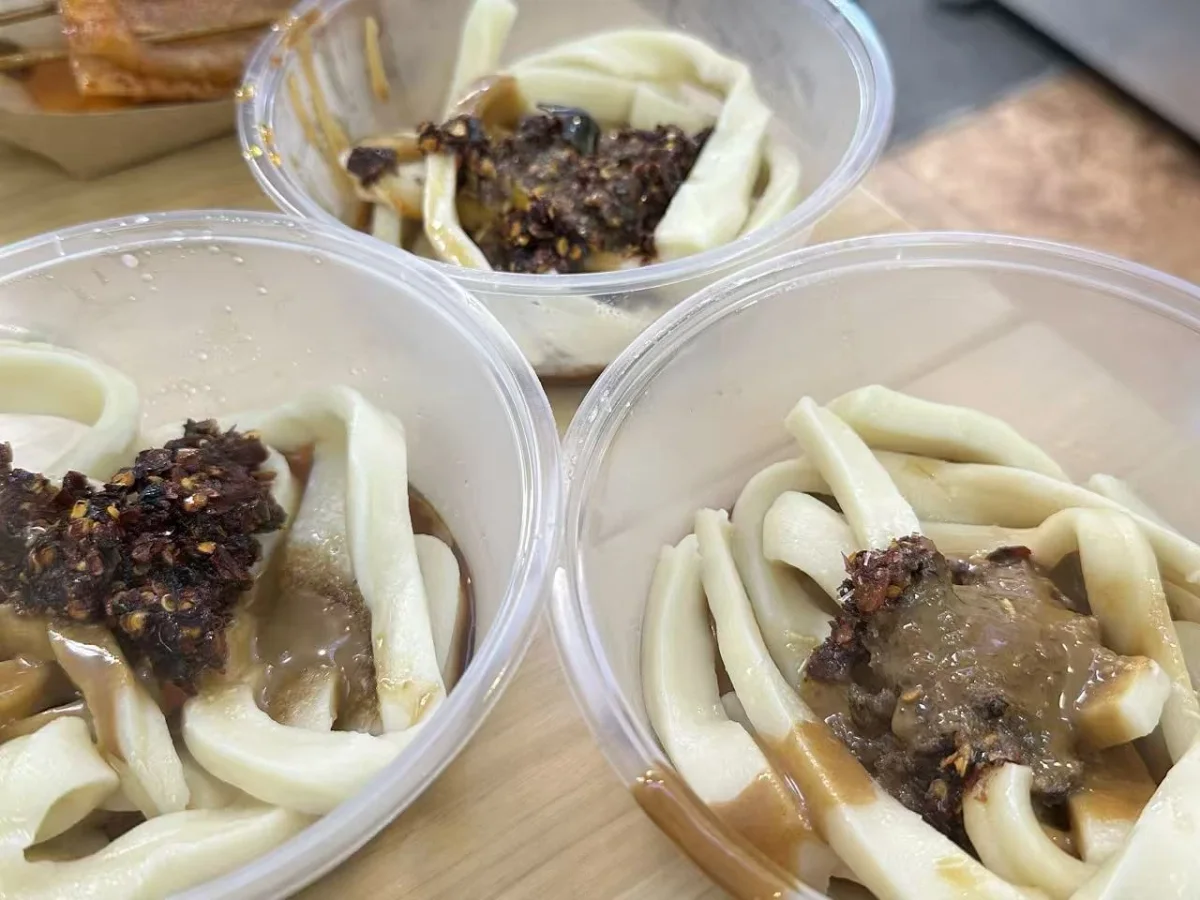
Sweet water noodles are thick, chewy noodles in a dressing that is sweet first and hot second.
More than a century ago a Chengdu writer complained that sweet water noodles were too thick. The thickness is now the point. The noodles are a little thicker than chopsticks, springy and very chewy, and locals joke that “three noodles make a bowl,” 三根面一碗. Fuchsia Dunlop calls them a snack every Chengdu person loves: hand-cut noodles in glossy chili oil and sweet soy, scattered with crushed nuts and garlic.
The second thing you notice is the sweetness, which a Chengdu breakfast roundup from Hong Kong’s Chinese Culture Research Institute calls the key to the dish. The “sweet water” is simply a soy sauce simmered with sugar and spices. Chili oil and garlic come in behind it, and many cooks add sesame paste and crushed peanuts. The noodles are cooked ahead, tossed with oil and served at room temperature; dressed this way they keep for hours without drying out, which suits a snack sold from early morning. Before eating, turn the bowl over from the bottom so every strand is coated in the thick sauce.
02
Rolled, cut, stretched and slapped
Many Chengdu noodle shops buy their noodles. Sweet water noodles are made in the shop.
Most Chengdu noodle shops, Dunlop notes, buy fresh noodles from a supplier. A few kinds are made in house, and sweet water noodles are one of them: thick, and cut straight from the dough. In the kitchen of Dongzikou Zhang Lao’er Liangfen, the old snack shop opposite Wenshu Monastery, she watched a cook named Jiang knead the dough by hand and roll it out on a wooden table with a long rolling pin. He cut it into thick strips, picked up a few at a time, stretched them, slapped them on the table and dropped them into a big pot of water.
It is a plain, non-alkaline wheat dough, made with the same flour used for steamed buns. Chinese Cooking Demystified class the noodle as gungunmian, “stick noodles,” a thick style better known in neighboring Shaanxi, and compare it to Japanese udon. Because the noodles are meant to be chunky, there is no need to cut them perfectly. For a chewier noodle, use high-gluten flour and flatten and fold the dough several times as it rests.
03
The “sweet water”: sweet aromatic soy sauce
The sweetness comes from a Sichuan pantry staple, 复制酱油, “reprocessed soy sauce.”
Sichuan cooks make their own sweet soy sauce, also called red soy sauce, 红酱油, by simmering soy sauce with spices and sugar until it is sweet, fragrant and as thick as syrup. Dunlop counts it among the marvels of the Sichuan kitchen: it is essential for Zhong dumplings and sweet water noodles, and it goes into cold dishes too. There is no fixed formula. Each cook has preferences, some simmer dried shiitake stems in it for extra savoriness, and the usual spices include star anise, cassia, licorice, fennel and Sichuan pepper, cooked long enough to turn a glossy reddish brown, salty with a sweet edge.
The two recipes in the table show how far the sweetness can vary. Dunlop’s sauce has 275 g of sugar to 500 ml of soy, roughly half as much sugar as soy, and eight spices; Chinese Cooking Demystified use sugar at a quarter of the soy’s weight, and four spices, and cook it covered until it coats a spoon. Taste any sweet soy, homemade or bought, before dressing the bowl.
| Dunlop (2020) | Chinese Cooking Demystified (2023) | |
|---|---|---|
| Soy sauce | 500 ml light soy | 100 g light soy |
| Sugar | 175 g white and 100 g brown sugar | 25 g slab sugar or dark brown sugar |
| Spices | 1 small black cardamom, 1 star anise, 1 slice licorice, 1 piece cassia, 1 slice sand ginger, 1 bay leaf, 1 tsp fennel, ½ tsp Sichuan pepper | 1 star anise, 2 slices sand ginger, ½ cinnamon stick, 1 black cardamom |
| Cooking | Spices simmered 30 minutes, sugar added, brought back to the boil | Everything simmered covered on low, 15 minutes |
| Makes | About 375 ml; keeps a long time | About 12 bowls; 2–3 months in the fridge |
04
What goes on top
Every shop has its own mix, but the same few things recur.
Dunlop’s basic bowl has four seasonings: garlic pounded with a pinch of salt and loosened with cold water, chili oil with some of its sediment, sweet soy sauce and crisp fried peanuts. Some cooks add crushed sesame or soybean flour instead of peanuts. Her sesame version adds sesame paste thinned with oil, a little sesame oil and crushed toasted sesame. Richer bowls use chili oil, brown-sugar syrup, sesame paste, ordinary soy sauce, sweet red soy, garlic paste and toasted sesame all at once.
The garlic goes in as “garlic water,” 蒜水: raw garlic pounded and loosened with water. Six or seven cloves pounded to a paste with three tablespoons of cool water is enough for four bowls; it does not keep, so it is made fresh.
05
Sold from carrying poles since at least 1909
Sweet water noodles have been sold on Chengdu’s streets for well over a century.
An early record is in Chengdu Tonglan, a survey of city life by the late-Qing Chengdu writer Fu Chongju. Its first volume came out in September 1909 and the rest the next year: eight volumes and some 700,000 characters, from geography to trades. In 2025 it was published complete for the first time. Among the snacks it lists that Chengdu still eats are buckwheat noodles, tangyuan and sweet water noodles.
Fu put sweet water noodles among the foods sold from carrying poles and recorded the price: 16 wen a bowl at a restaurant in the morning, 6 wen from a street seller. The food writer Jiang Shu explains the gap: a carrying pole paid no rent or taxes. Even so, he adds, such snacks were bought less by the poor than by wage earners and people of leisure. Fu was not a fan. 太粗无味, he wrote: “too thick and tasteless.”
Locals have their own version of the story, which Dunlop passes on: that the noodles first appeared at the end of the Qing dynasty in the old imperial city, around today’s Tianfu Square, sold by peddlers, and became a famous local snack around Baiyun Temple only in the 1940s.
06
Where to eat them in Chengdu
Look for them in old-style snack shops around Wenshu Monastery, especially in the morning.
The streets around Wenshu Monastery are the classic place to look. When Dunlop visited for The Food of Sichuan, she singled out Dongzikou Zhang Lao’er Liangfen, opposite the monastery, where sweet water noodles were a house specialty and a team of servers dressed each bowl at speed and passed it through a small window. A prize-winning 2020 essay by a visitor from Dalian describes another shop in the same area, in a lane of Wenshufang, early in the morning: a glass case holding a dozen or more seasonings, bowls of plain, finger-thick noodles waiting beside it, and an owner who turns one into a red, glossy bowl scattered with sesame and crushed peanuts in moments. Stir it, and the noodles take on the sauce; the writer ordered a second bowl.
Sweet water noodles are sold alongside other cold snacks such as liangfen, and many people eat them for breakfast. Some shops also offer a sesame version, 芝麻甜水面, with sesame paste in place of peanuts.
Go early
It is a breakfast and morning snack; the noodles are cooked ahead and dressed to order.
Pair it
Old snack shops that sell sweet water noodles often sell liangfen too; Zhong dumplings use the same sweet soy.
Mix well
The sauce sits at the bottom. Turn the noodles over several times before the first bite.
07
Relatives: Zhong dumplings, dan dan and cold noodles
Most Sichuan noodles are thin and alkaline. Sweet water noodles are neither.
The closest relative is Zhong dumplings, small pork dumplings in the same sweet soy, chili oil and garlic. In old Chengdu all carrying-pole noodles, sweet water noodles included, counted as “dan dan noodles” in the broad sense: snacks to stave off hunger, sold by the liang and never meant as meals.
To a newcomer, Chinese Cooking Demystified joke, much of the Sichuan noodle world looks like “noodles with chili oil, MSG and soy sauce,” and the way to sort it is by the noodle. Dan dan noodles, Yibin burning noodles, Chongqing xiaomian, cold noodles and Leshan’s MSG noodles all use thin alkaline noodles; sweet water noodles use thick, non-alkaline ones. Sichuan cold noodles take almost the same dressing, seasoned soy, garlic water and chili oil, plus vinegar and Sichuan pepper. Put the two bowls side by side and the difference is the noodle: the sweet soy is what you taste first, but the noodle is what sets the dish apart.
| Dish | Noodle | Dressing and toppings |
|---|---|---|
| Dan dan noodles 担担面 | Thin, alkaline | Chili oil, soy, sesame, MSG, Sichuan pepper; pork, yacai, scallion |
| Chongqing xiaomian 重庆小面 | Thin, alkaline | Spicy chili oil, soy, stock, sesame, lots of Sichuan pepper |
| Yibin burning noodles 宜宾燃面 | Thin, alkaline | Chili oil and MSG; peanuts, sesame, yacai |
| Cold noodles 凉面 | Thin, alkaline, served cold | Seasoned soy, chili oil, Sichuan pepper, sesame, garlic water, vinegar |
| Sweet water noodles 甜水面 | Thick, non-alkaline | Sweet soy, garlic water, chili oil |
08
Sweet water noodles at home
Make the sweet soy and chili oil first; the noodles take about 45 minutes.
This is Dunlop’s recipe for two bowls. Make the sweet soy in advance (recipes in the table above) or use a bought one; any Sichuan-style chili oil with plenty of sediment will do.
For 2 bowls: 250 g plain flour (plus extra for dusting); 1 teaspoon salt; 125–150 ml warm water; 1 tablespoon cooking oil; ½ tablespoon crushed garlic (mixed with a pinch of salt and ½ tablespoon cold water); 2 tablespoons chili oil (plus 1 tablespoon of its sediment); 2 tablespoons sweet aromatic soy sauce; 15 g crushed crisp fried peanuts.
- 1. Make the dough
Mix the flour and salt, make a well and work in warm water a little at a time until you have a soft but firm dough. Knead for at least 5 minutes until smooth, cover with a damp cloth and rest for 20 minutes.
- 2. Roll and cut
Bring a large pot of water to a simmer. Roll the dough on a floured surface into a sheet about 5 mm thick, then cut it into strips 1 cm wide and dust them with flour.
- 3. Stretch
Turn up the heat. Pick up five or six strips by both ends, stretch them and slap them on the work surface until they are about as thick as chopsticks. Trim off the thick ends and drop the noodles into the boiling water, stirring so they do not stick.
- 4. Boil and cool
Boil for about 5 minutes, until cooked through. Drain, rinse quickly under cold water, toss with the oil and divide between two bowls.
- 5. Dress
Add the garlic water, chili oil with its sediment, sweet soy and peanuts, and mix thoroughly before eating. For the sesame version, leave out the peanuts and use 2 teaspoons sesame paste thinned with 2 teaspoons oil, the sweet soy, the chili oil, ½ teaspoon sesame oil, 2 teaspoons crushed toasted sesame and the garlic water.
Sources [1]
09
More Chengdu snacks
Related dishes and the Sichuan region guide.
Zhong dumplings
Small pork dumplings in the same sweet soy, chili oil and garlic.
Read about Zhong dumplings →Dan dan noodles
The best-known Chengdu street noodle, with minced pork and preserved vegetables.
Read about dan dan noodles →Sichuan food
Hot pot, mapo tofu and the rest of Chengdu’s small bowls.
Explore Sichuan food →Sichuan classics
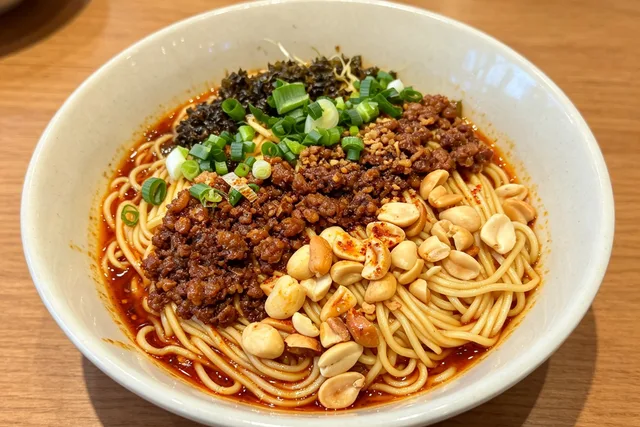
- Dan Dan Noodles
Small dressed noodles · Snack
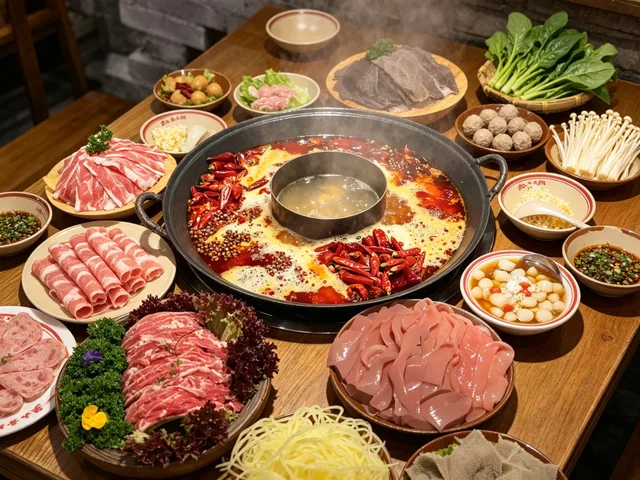
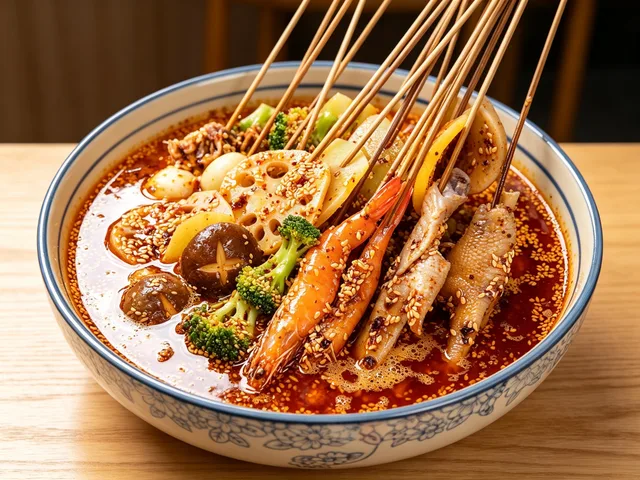
- Sichuan Hot Pot
Hot pot · Shared meal
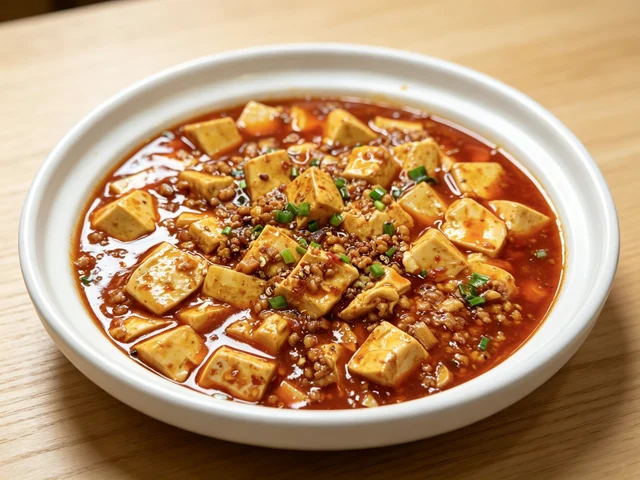
- Mapo Tofu
Tofu dish · Lunch or dinner, with rice
- Bobo Chicken
Cold skewers · Snack
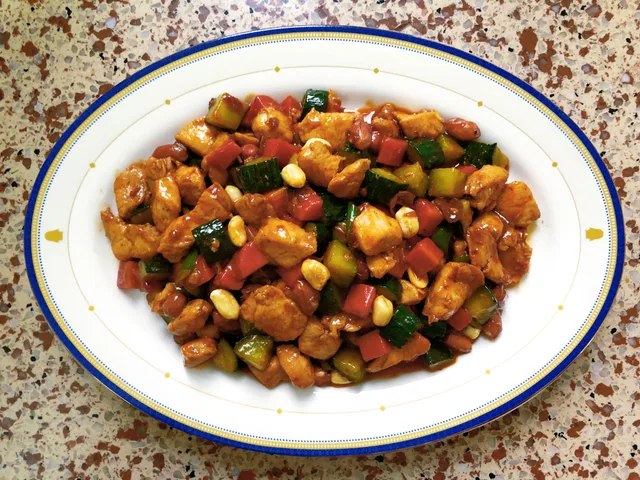
- Kung Pao Chicken
Chicken stir-fry · Lunch or dinner, with rice
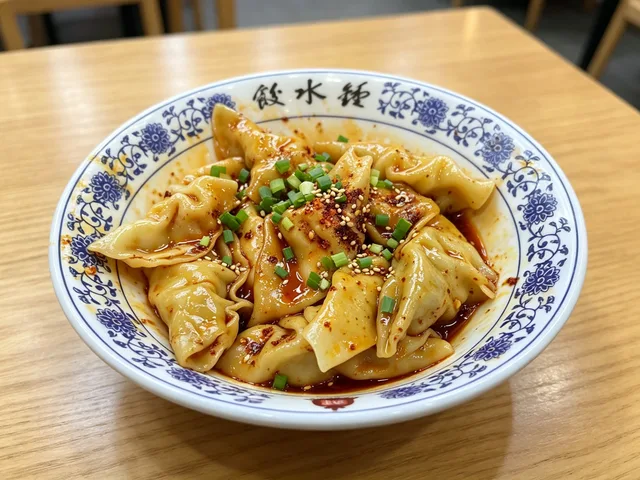
- Zhong Dumplings
Boiled dumplings · Snack
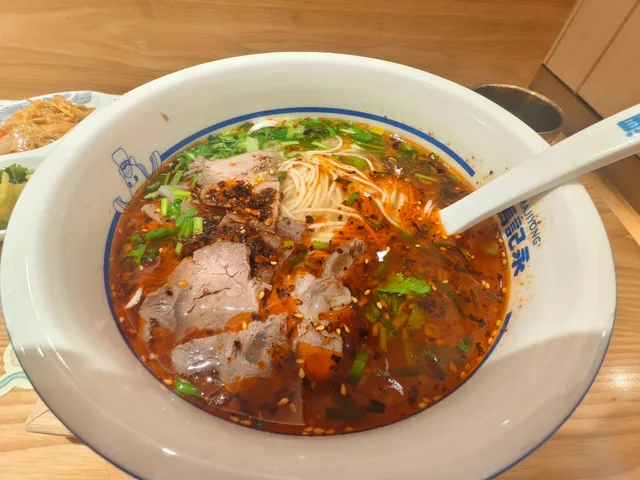
Noodles from other regions
FAQ
Questions about Sweet Water Noodles
Why are they called sweet water noodles?
The “sweet water” is the sweet aromatic soy sauce in the dressing, soy simmered with sugar and spices.
Are sweet water noodles spicy?
Mildly. They are dressed with chili oil, but the sweet soy is the first thing you taste, and you can ask for less chili oil.
Are they vegetarian?
The basic bowl has no meat: noodles, sweet soy, chili oil, garlic and peanuts or sesame. Recipes for chili oil and sweet soy vary from shop to shop, so ask if you are strict.
When do people eat them?
Mostly in the morning, for breakfast or a snack.
Is it the same as dan dan noodles?
No. Dan dan noodles are thin noodles with minced pork. Sweet water noodles are thick, meatless and sweeter, though both began as carrying-pole street food.
Can I use bought noodles?
Thick fresh udon is the nearest shop-bought substitute, since it is also a plain, non-alkaline wheat noodle.
Sources
Sources and further reading
- 1 Fuchsia Dunlop, The Food of Sichuan, Chinese edition Chuancai (川菜): “Noodles” (sweet water noodles and the sesame variation), “Snacks” (Chengdu Tonglan) and “Seasonings and stocks” (sweet aromatic soy sauce) (in Chinese)CITIC Press (2020)
- 2 Jiang Shu, “Dandan noodles: the lingering taste of Chengdu” (担担面:意犹未尽的成都味道) (in Chinese)The Beijing News (May 19, 2022) ↗
- 3 Lu Xingyu, “Chengdu Tonglan published complete for the first time” (《成都通览》首次出版全本) (in Chinese)Sichuan Daily, Chuanguan News (December 18, 2025) ↗
- 4 “Boss, a bowl of sweet water noodles!” (老板,来碗甜水面!), prize-winning essay in the “Anyi Sichuan” writing contest (in Chinese)Chuanguan News, Sichuan Daily (September 24, 2020) ↗
- 5 “What to eat for breakfast in Chengdu: far more than mala” (全国早餐盘点|成都有何必吃早餐?远不止麻辣) (in Chinese)Our China Story, Chinese Culture Research Institute (August 1, 2023) ↗
- 6 Chengdu ‘Sweet Water’ Noodles (甜水面)Chinese Cooking Demystified (October 15, 2023) ↗
Last updated November 2026