
01
Noodles boiled first, then fried
Chow mein simply means fried noodles, and every part of China has its own.
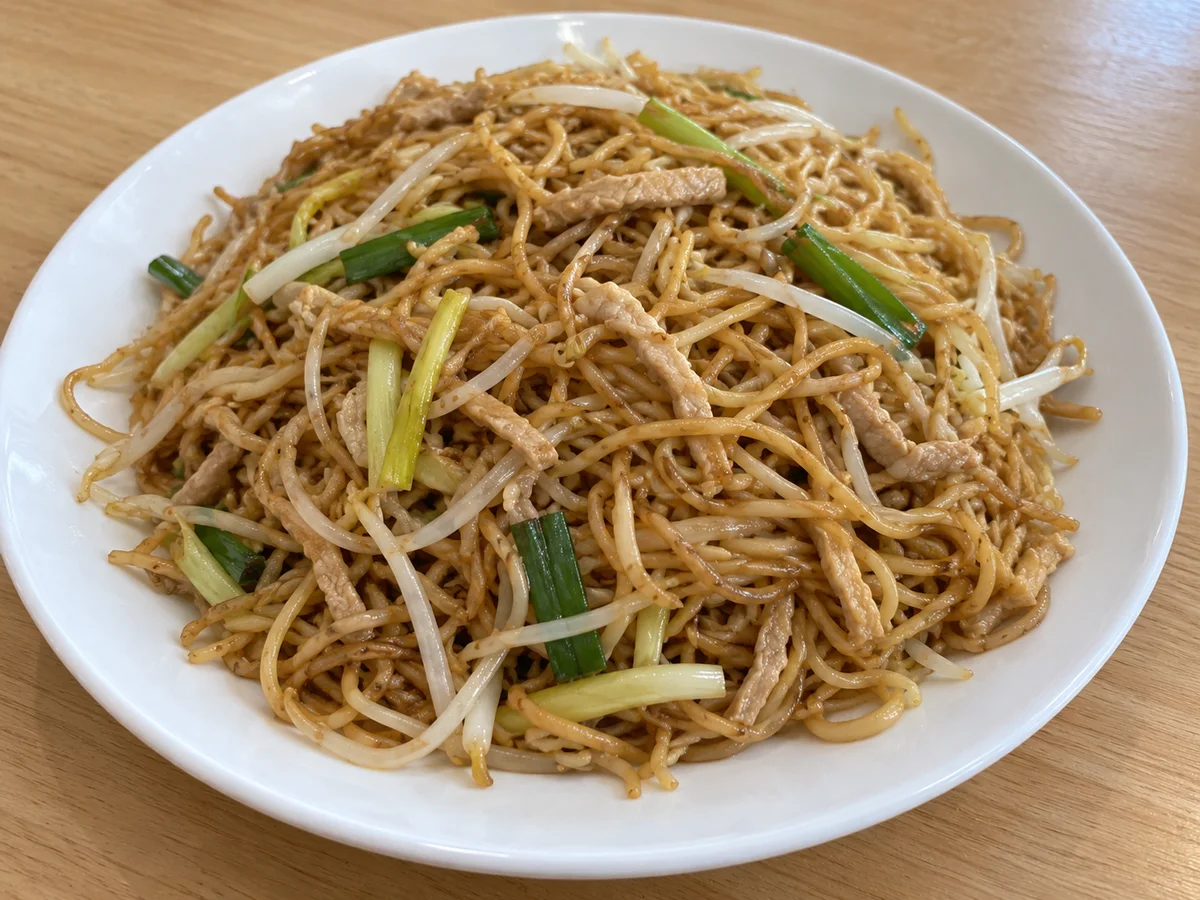
The noodles in chow mein are cooked twice. They are boiled or soaked until just done, drained and spread out to dry, then tossed in a very hot wok with a little oil and a sauce, or pressed into a pan and fried into a crisp cake. Wheat noodles are the rule; the same treatment applied to flat rice noodles is 炒河粉, chow fun, a different dish. In Hong Kong and Guangzhou the classic version is soy sauce chow mein, thin egg noodles with bean sprouts, yellow chives and scallion and almost nothing else; in Suzhou it is liangmianhuang, noodles fried golden on both sides and covered with a shrimp or crab sauce; in Xinjiang it is ganbian chaomian, thick noodles dry-fried with sliced beef or lamb; and in canteens and small restaurants everywhere it is plain fried noodles with shredded pork.
The English word came from the Cantonese pronunciation, carried abroad by emigrants from the Pearl River Delta who opened the first Chinese restaurants in America and Britain. The food writer Fuchsia Dunlop, who grew up in England, remembers the childhood takeaway as a stack of foil trays: shrimp chop suey, chicken with canned bamboo shoots, gritty bean-sprout chow mein, pancake rolls and egg fried rice. Both names are Cantonese, and both dishes were Cantonese cooking simplified for foreign customers.
02
Fried noodles in China, from the Song markets to Guangzhou teahouses
Fried noodles are much older than the restaurants that made them famous abroad.
Liu Haiyong, who has combed the Song-dynasty memoirs of Kaifeng and Hangzhou, counts nearly a hundred kinds of noodles in them, and the markets of the Northern Song capital already sold fried noodles and pan-fried noodles alongside noodles with toppings. By the Republican era fried noodles were ordinary restaurant food. At the Tianjin-style eateries around Shanghai’s Great World amusement hall, the best sellers were guotie, two jiao for a serving of twenty, and fried noodles, two jiao a plate, the shredded pork version the most delicious.
In old Guangzhou a plate of shredded-pork fried noodles was part of a marriage arrangement. At a teahouse matchmaking, the man and a few friends or relatives booked a private room, the matchmaker brought the woman at the agreed time, and with the cups of tea and the melon seeds came a plate of shredded-pork fried noodles, over which the two sides inspected each other from head to toe. Guangzhou also ate fried noodles late at night, after the theatres and dance halls closed, alongside dry-fried beef rice noodles, wonton noodles and dumplings. A visitor from Shanghai noticed that Guangzhou noodle shops served their noodles in rice bowls, as a snack rather than a meal, and a 1940s diner who went to a Cantonese restaurant for fried noodles noted that it did not make the crisp liangmianhuang of the Yangtze delta, but piled on enough topping for two people to drink with.
03
How chow mein became Chinese food in America and Britain
For about a century, chow mein and chop suey were what “Chinese food” meant in the West.
Chinese food in America began in San Francisco. By 1850 five restaurants serving Chinese customers stood around Portsmouth Square, an area called “Little Canton,” the seed of America’s oldest Chinatown and of its chop suey restaurants. When the reformer Liang Qichao visited New York in 1903, Liang counted three or four hundred chop suey restaurants in the city alone, and claimed they had spread after the statesman Li Hongzhang’s visit in 1896, with menus advertising “Li Hongzhang chop suey” and “Li Hongzhang noodles.” Both Zhou Songfang and the American food historian Andrew Coe point out that Li never ate chop suey: Li did not even dine in Chinatown, and the story is the kind of legend that grows around Chinese-American food.
What these restaurants sold was a Cantonese village stew of mixed bits adapted for Americans: by the twentieth century a brown, cornstarch-thickened sauce with pork, bean sprouts, cabbage, onion, mushrooms and bamboo shoots. Served over rice it was chop suey; over fried noodles it was chow mein. In 1939 Chin Lee, a large restaurant on Broadway, offered a 70-cent dinner of exactly that, and in the 1940s nearly every restaurant in New York’s Chinatown had a “Chop Suey” or “Chow Mein” sign over its door. Liang Shiqiu, who lived in America in the 1920s, wrote dryly that Chinese restaurants there used to serve mostly chop suey and chow mein, which was enough to fool the foreigners.
Britain followed a few decades later. Dunlop writes that after the Commonwealth Immigration Act of 1962 the wives and children of Chinese restaurant workers joined them, restaurants became family businesses, and takeaways spread across the country selling a standardized Cantonese mix: chop suey, sweet-and-sour, curry sauce, fried rice and bean-sprout chow mein. In America, broccoli beef, General Tso’s chicken and kung pao chicken eventually pushed the old pair off menus, but old neon signs reading “Chop Suey” and “Chow Mein” still hang over a few restaurants.
04
Hong Kong soy sauce chow mein: the test of a cook
Cantonese cooks rank soy sauce chow mein with dry-fried beef chow fun as a test of skill.
The finished plate should be dry, glossy and fragrant, with every strand coated in sauce and no oil left on the plate. The sauce is simple: light and dark soy sauce in equal parts, the dark one thick and slightly sweet, with a dash of Maggi seasoning, a pinch of sugar and sesame oil. The noodles are thin egg noodles made with alkaline water. One Hong Kong cook loosens them in hot water with a little oil so they do not stick, then fries them in oil at about 160°C before softening them in water again, which gives a chewier bite; another, a Cantonese chef, makes the unfried style, soaking the dried noodles for about five minutes off the heat until just tender and spreading them out to cool without rinsing.
Both agree on the wok. It must be heated until it smokes and wiped of excess oil and water, so the noodles fry rather than stew. The sauce goes onto the noodles, a little at a time, never straight onto the hot metal, or it burns and sticks. Bean sprouts, yellow chives and scallion go in at the end and stay crisp. The Hong Kong cook explains wok hei, the prized “breath of the wok,” as the white smoke given off when the surface of the food reaches 180 to 200°C; the Cantonese chef keeps the heat lower than for chow fun, because egg noodles scorch more easily. The goal is a plate that tastes good on the first bite without growing saltier with each one.
05
Suzhou liangmianhuang: noodles fried golden on both sides
The Yangtze delta turns fried noodles into a crisp cake.
Liangmianhuang, 两面黄, “yellow on both sides,” is the Suzhou and Shanghai way. Egg noodles are boiled, rinsed, tossed with oil and salt, and then fried slowly in a flat pan, first one side and then the other, until the outside is golden and crisp and the inside still soft. A topping is poured over just before serving, so the crust soaks some of it up: shredded pork, shrimp, or in the most extravagant versions crab meat and roe with river shrimp in a lightly thickened sauce. It has been called the emperor of noodles, and it is the style the 1940s diner expected and did not get at a Cantonese restaurant.
06
Xinjiang ganbian chaomian
In the northwest, fried noodles are thick, chewy and a full meal.
Xinjiang’s 干煸炒面, ganbian chaomian, is made with thick, chewy noodles, boiled and then dry-fried with slices of beef or lamb until the sauce clings to them. It is mildly spicy and very filling. In 2024 a plate cost 15 yuan at a restaurant in Xinjiang, and in 2022 a university canteen in Kashgar sold it for 6 yuan, about a third of what restaurants outside charged.
07
Chow mein, lo mein and chow fun
Three dishes that share a menu and are easy to confuse.
Lo mein, 捞面, means noodles that are scooped out of the pot and tossed, not fried. In Cantonese noodle shops the noodles are served dry under a topping such as braised beef brisket or shrimp roe, with a bowl of broth on the side; in the north, 捞面条 are boiled noodles fished out of the water and dressed with a sauce, a habit Liu Haiyong traces to the Song-dynasty lengtao, cold-rinsed noodles. Overseas, the line blurs, and lo mein often means soft noodles tossed in the wok with sauce, while chow mein means noodles fried longer or into a crisp cake. Chow fun, 炒河粉, is the same technique applied to wide rice noodles; dry-fried beef chow fun is its Cantonese classic.
| Dish | Noodle | How it is cooked | Where |
|---|---|---|---|
| Soy sauce chow mein 豉油皇炒面 | Thin egg noodles | Tossed dry in a smoking wok with soy, sprouts and chives | Hong Kong, Guangzhou |
| Liangmianhuang 两面黄 | Egg noodles | Pan-fried crisp on both sides, sauce poured over | Suzhou, Shanghai |
| Ganbian chaomian 干煸炒面 | Thick noodles | Dry-fried with sliced beef or lamb | Xinjiang |
| Shredded-pork fried noodles 肉丝炒面 | Ordinary wheat noodles | Home and canteen stir-fry | Everywhere |
| American chow mein | Fried noodles or crispy noodles | Under a thickened stir-fry of meat and bean sprouts | America, Britain |
| Lo mein 捞面 | Egg noodles | Boiled and tossed, not fried | Guangzhou, Hong Kong; overseas |
| Chow fun 炒河粉 | Wide rice noodles | Dry-fried with beef and soy | Guangdong |
08
How to order it and what it costs
Fried noodles are cheap almost everywhere, and best with soup.
| Where | What | Price |
|---|---|---|
| Kashgar university canteen, 2022 | Ganbian chaomian | 6 yuan |
| Xinjiang restaurant, 2024 | Ganbian chaomian | 15 yuan |
| Tianjin-style eatery, Republican Shanghai | Fried noodles, shredded pork best | 2 jiao a plate |
| Chin Lee, New York, 1939 | Dinner with chop suey or chow mein | 70 cents |
Ask for soy sauce chow mein
In Hong Kong and Guangzhou cafés and dai pai dong, 豉油皇炒面 is the plain classic.
Order soup with it
Dunlop notes that a meal of fried rice or fried noodles feels dry to Chinese diners without a bowl of soup.
Check the plate
Good fried noodles leave no pool of oil behind.
In Suzhou, ask for liangmianhuang
Choose the topping; it arrives over the crisp noodle cake.
In Xinjiang, expect a meal
Ganbian chaomian is one large plate for one hungry person.
09
More noodles on the atlas
Other noodle dishes from Guangdong and beyond.
Beef chow fun
Guangzhou’s dry-fried rice noodles with beef.
Read about beef chow fun →Wonton noodles
Cantonese egg noodles in broth with shrimp wontons.
Read about wonton noodles →Scallion oil noodles
Shanghai’s tossed noodles with fried scallion oil.
Read about scallion oil noodles →Chinese noodles by region
Wheat, rice and where lo mein and chow mein fit.
Read the noodle guide →Across China classics
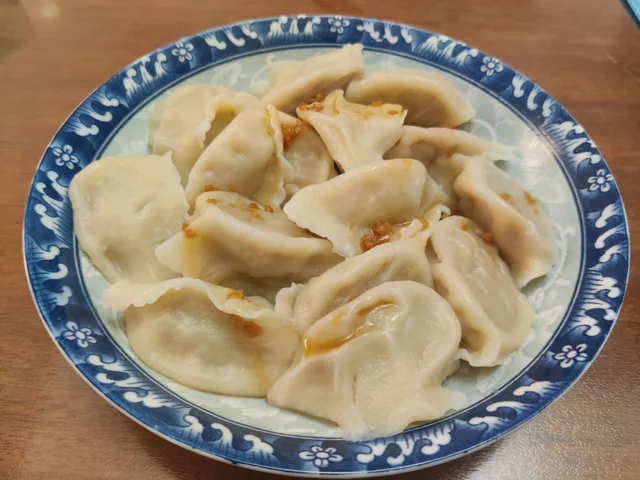
- Jiaozi
Boiled, steamed or pan-fried dumplings · Everyday meals; New Year’s Eve in the north
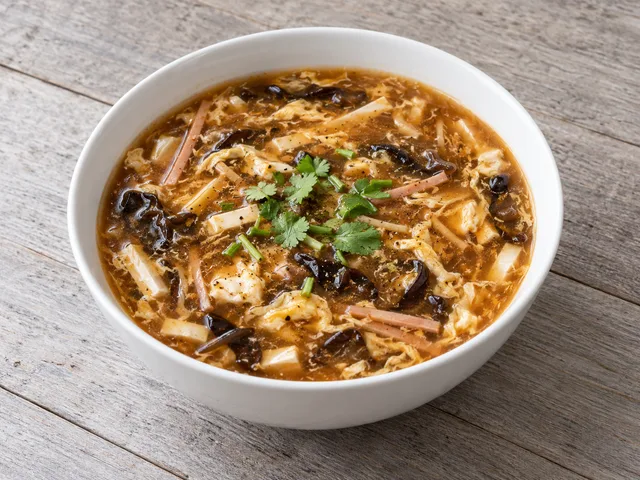
- Hot and Sour Soup
Thickened soup · With dumplings, at banquets
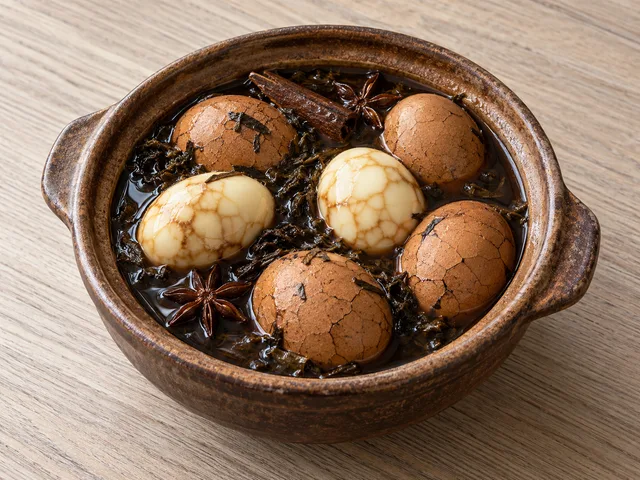
- Tea Eggs
Tea-marbled boiled eggs · Breakfast and snacks
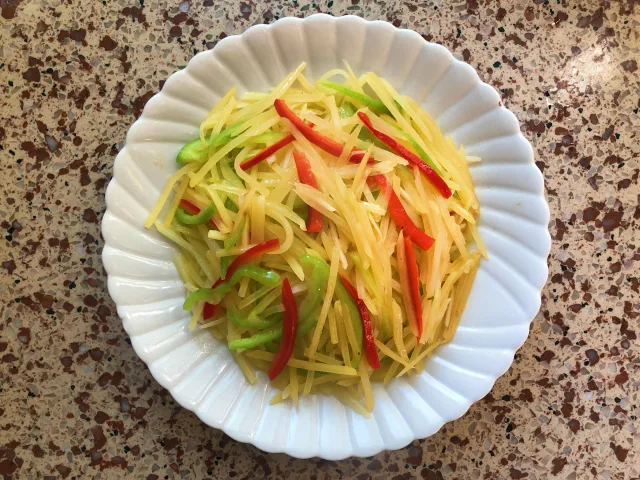
- Stir-Fried Shredded Potatoes
Stir-fried vegetable side dish · Everyday meals with rice
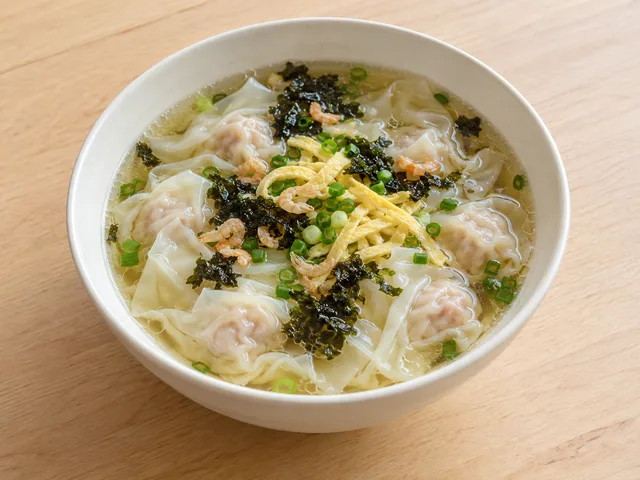
- Wonton
Wontons in broth · Breakfast to late night
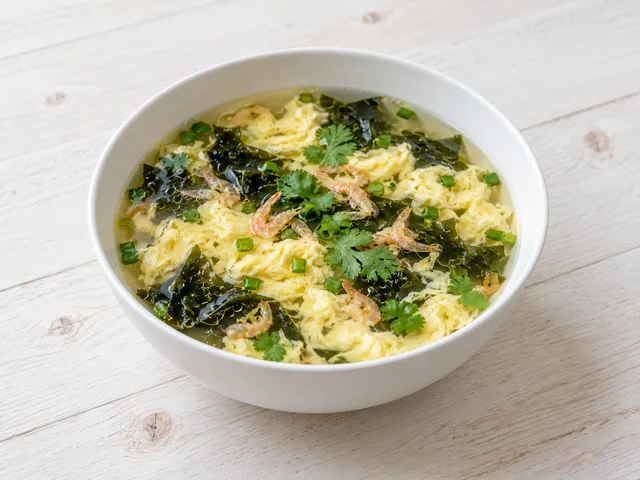
- Egg Drop Soup
Light egg soup · With any everyday meal
Noodles from other regions
FAQ
Questions about Chow Mein
What does chow mein mean?
Fried noodles: it is the Cantonese pronunciation of 炒面.
Is chow mein Chinese or American?
Both. Fried noodles are eaten all over China; the bean-sprout version with a thickened sauce grew up in Chinese restaurants in America and Britain.
What is the difference between chow mein and lo mein?
Chow mein is fried; lo mein is boiled and tossed with sauce, traditionally with soup on the side.
Is chow mein the same as beef chow fun?
No. Chow fun uses wide rice noodles; chow mein uses wheat or egg noodles.
What is soy sauce chow mein?
The Hong Kong and Guangzhou classic: thin egg noodles tossed dry with light and dark soy, bean sprouts, yellow chives and scallion.
What is liangmianhuang?
Suzhou’s noodles fried golden on both sides into a crisp cake, with a topping poured over.
What noodles are used for chow mein?
Thin alkaline egg noodles in Cantonese cooking; thick noodles in Xinjiang; ordinary wheat noodles elsewhere.
Did Li Hongzhang invent chop suey or chow mein?
No. Menus used Li’s name after the 1896 visit to America, but Li never ate chop suey.
What is wok hei?
The smoky aroma of food tossed in a very hot wok, essential to good soy sauce chow mein.
How much is chow mein in China?
From 6 yuan in a Xinjiang canteen to about 15 yuan at a restaurant (2022–2024).
Sources
Sources and further reading
- 1 Zhou Songfang, Yinshi Jianghu (饮食江湖): chapters on Cantonese restaurants across China and Chinese restaurants abroad (in Chinese)Zhonghua Book Company (2026)
- 2 Zhou Songfang, Bufang Chang Zuo Lingnan Ren (不妨长作岭南人): chapters on old Guangzhou teahouses and late-night eating (in Chinese)Guwuxuan Publishing House (2022)
- 3 Fuchsia Dunlop, Invitation to a Banquet, Chinese edition Jun Xing Shi (君幸食): chapters on Chinese food abroad and on soup (in Chinese)Shanghai Translation Publishing House (2024)
- 4 Liang Shiqiu, Yashe Tan Chi (雅舍谈吃): the essay on Chinese restaurants in America (in Chinese)China Women’s Publishing House (2019 edition)
- 5 Liu Haiyong, Da Song Taoke Zhinan (大宋饕客指南): the chapters on Song-dynasty noodles (in Chinese)Henan Literature and Art Publishing House (2022)
- 6 Mixed bits: the true history of chop sueyAndrew Coe, American Heritage (2017) ↗
- 7 Hong Kong soy sauce chow mein: the sauce ratio, frying the noodles and a smoking-dry wok (video, in Chinese)Xianggang A Long (香港阿龍_龍記小廚), Bilibili (2026) ↗
- 8 A Cantonese chef on soy sauce chow mein: fried and unfried styles, little oil and no oil left on the plate (video, in Chinese)Gu Zhihui (古志辉), Bilibili (2026) ↗
- 9 Suzhou liangmianhuang: noodles boiled, then pan-fried golden on both sides under a crab and shrimp sauce (video, in Chinese)Xiao Man Jia De Wan Fan (小满家的晚饭), Bilibili (2022) ↗
- 10 Xinjiang ganbian chaomian: thick noodles stir-fried with sliced meat, 15 yuan (video, in Chinese)Lao Wang Zai Zhongguo (老王在中国), Bilibili (2024) ↗
- 11 A Kashgar university canteen: ganbian chaomian for 6 yuan (video, in Chinese)Kashi Nong Mei Ge (喀什浓眉哥), Bilibili (2022) ↗
Last updated November 2026