
Compare the bowl
Classify noodles by material, shape, liquid and finishing action
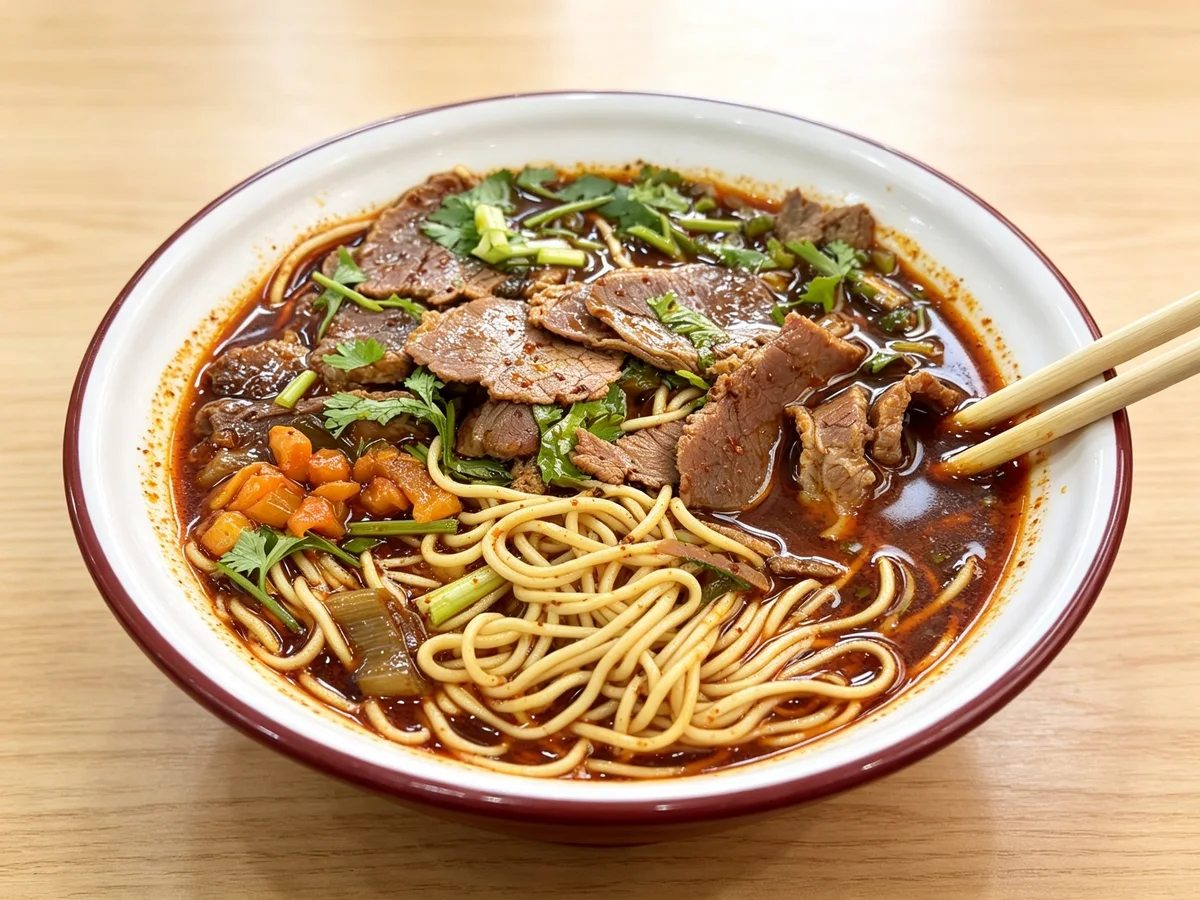
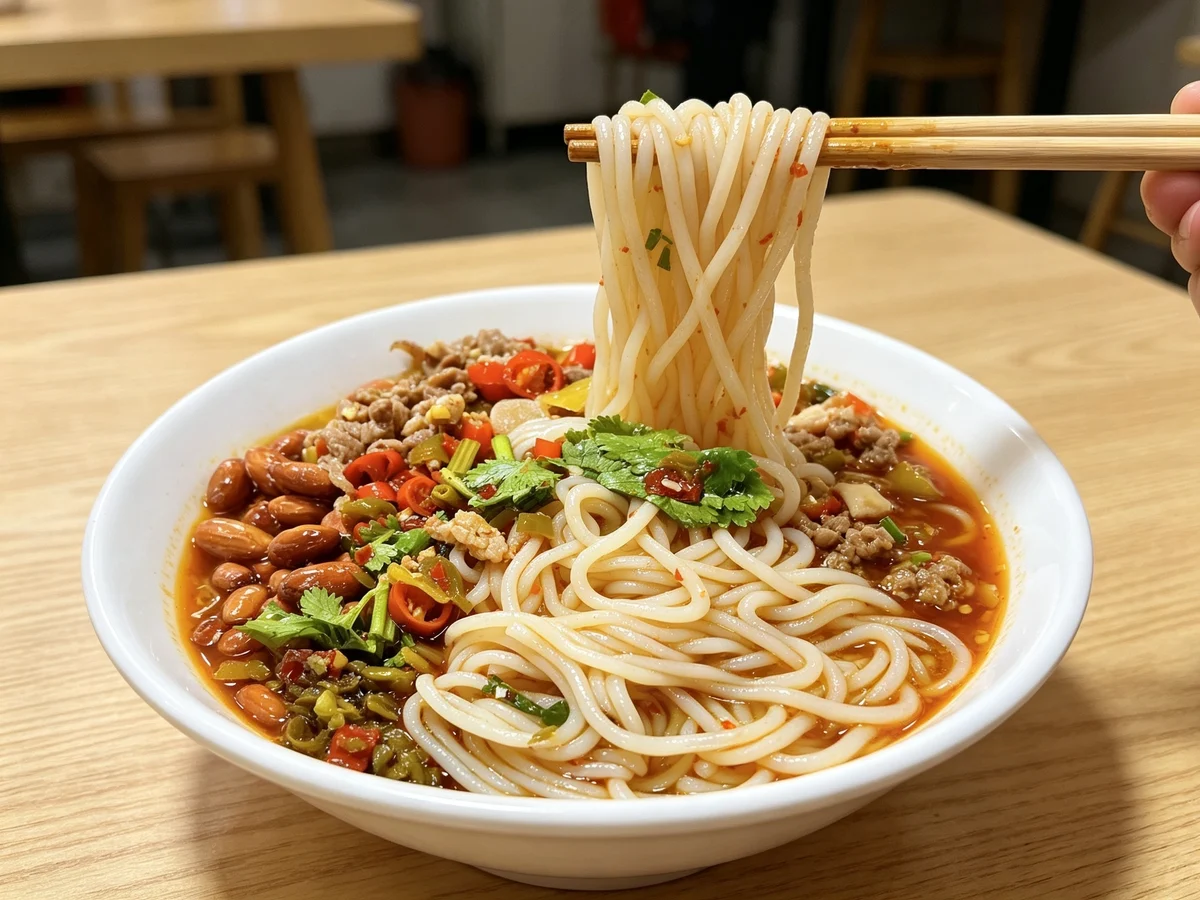
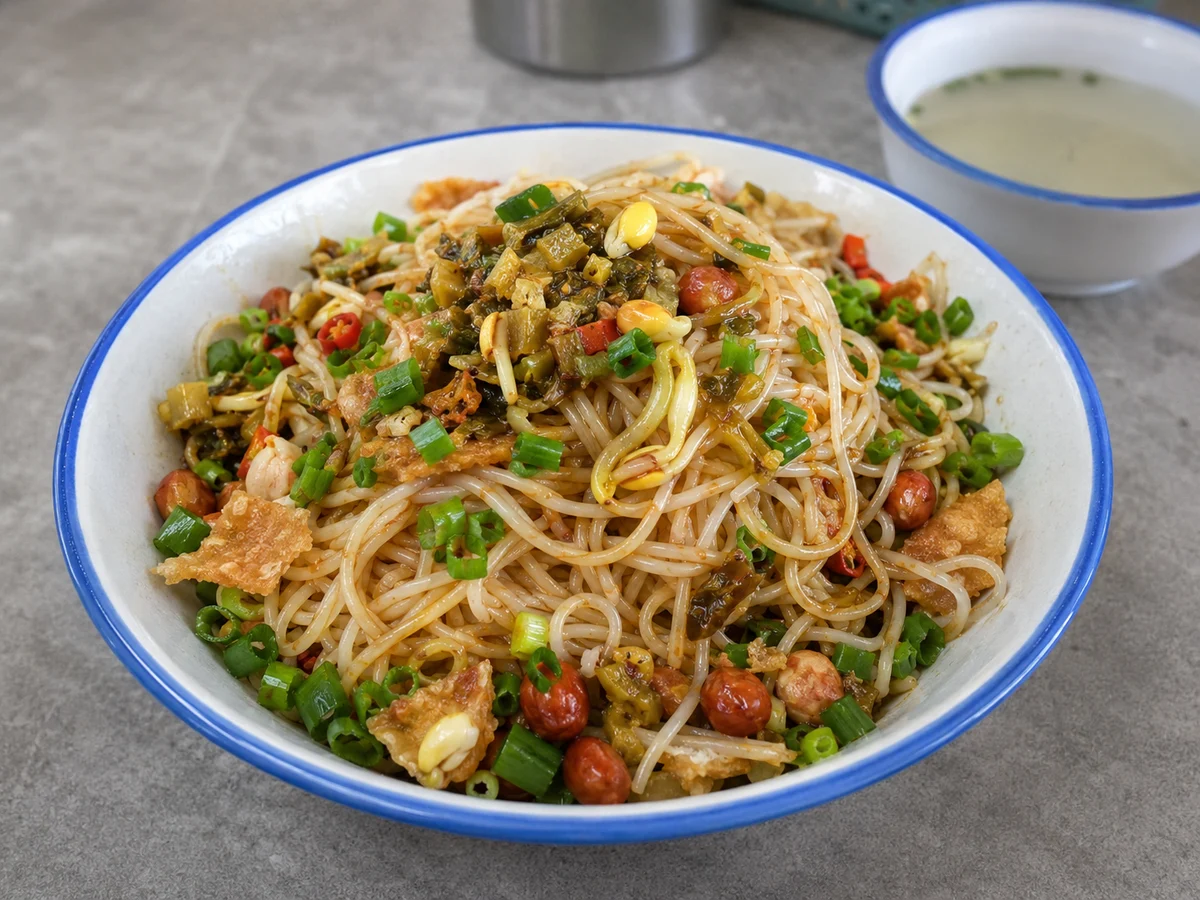
A regional noodle map becomes useful only when “noodles” is broken into variables. Compare what the strand is made from, how it is shaped and what happens in the final minute.
01
Use five questions to identify a bowl
Material, shaping, liquid, toppings and time of day work together.
First ask whether the base is wheat or rice, then whether it is hand-pulled, knife-cut, machine-pressed, or made from rice batter, cooked rice dough or fermented batter. Width is only an outcome; equally broad wheat and rice strands can differ completely in elasticity, sauce absorption and cooking tolerance.
Next decide whether the bowl is soupy, dry-mixed, gravy-dressed, finished with hot oil or assembled tableside in hot broth. Finally ask whether it belongs to breakfast, fast lunch, banquet theater or late-night eating, because the occasion changes portion and pairing.
02
Shaanxi and Hubei show two wheat logics
Broad noodles emphasize surface and chew; alkaline noodles emphasize separation and sauce adhesion.
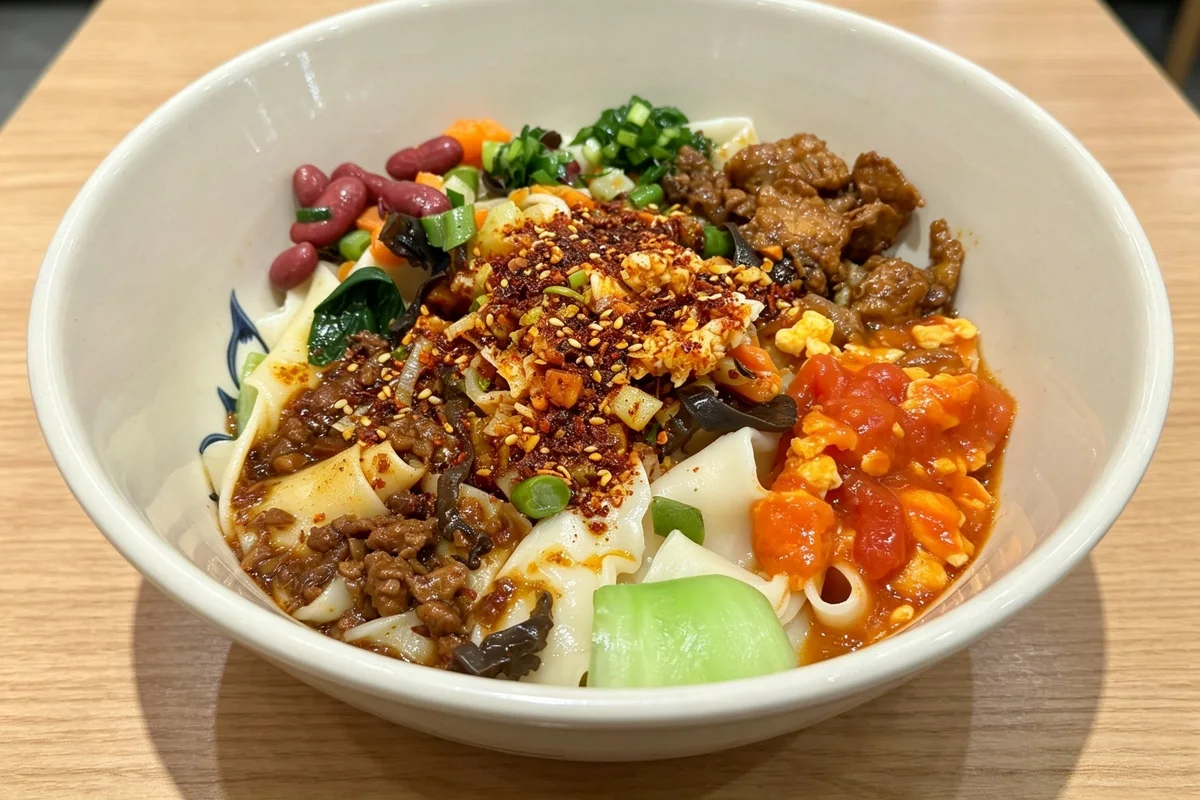
Shaanxi biang biang and oil-poured noodles use broad, substantial sheets to carry chilli, garlic, vinegar and hot oil. Mince, meat sauce and vegetables can change, but the elasticity and surface of the noodle remain central.
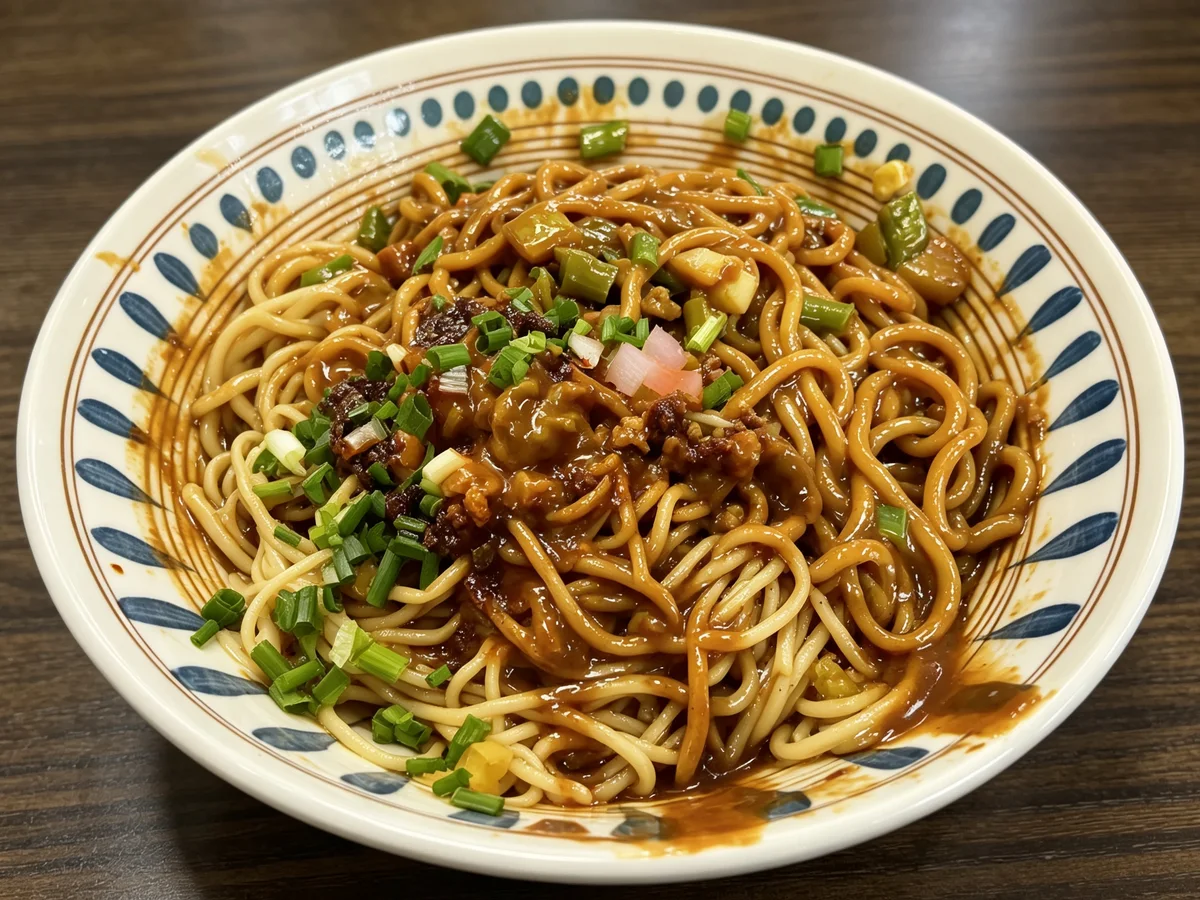
Wuhan hot dry noodles use prepared alkaline noodles that stay separate when reheated, then must be mixed quickly with sesame paste, soy and pickles. They are not ordinary soup noodles with the soup removed. Xiangyang beef noodles take another Hubei route through alkaline noodles, red broth and breakfast rhythm.
03
Yunnan, Hunan and Hainan rice noodles are not interchangeable
Mixian, mifen, ersi and local fen names carry processing as well as place.
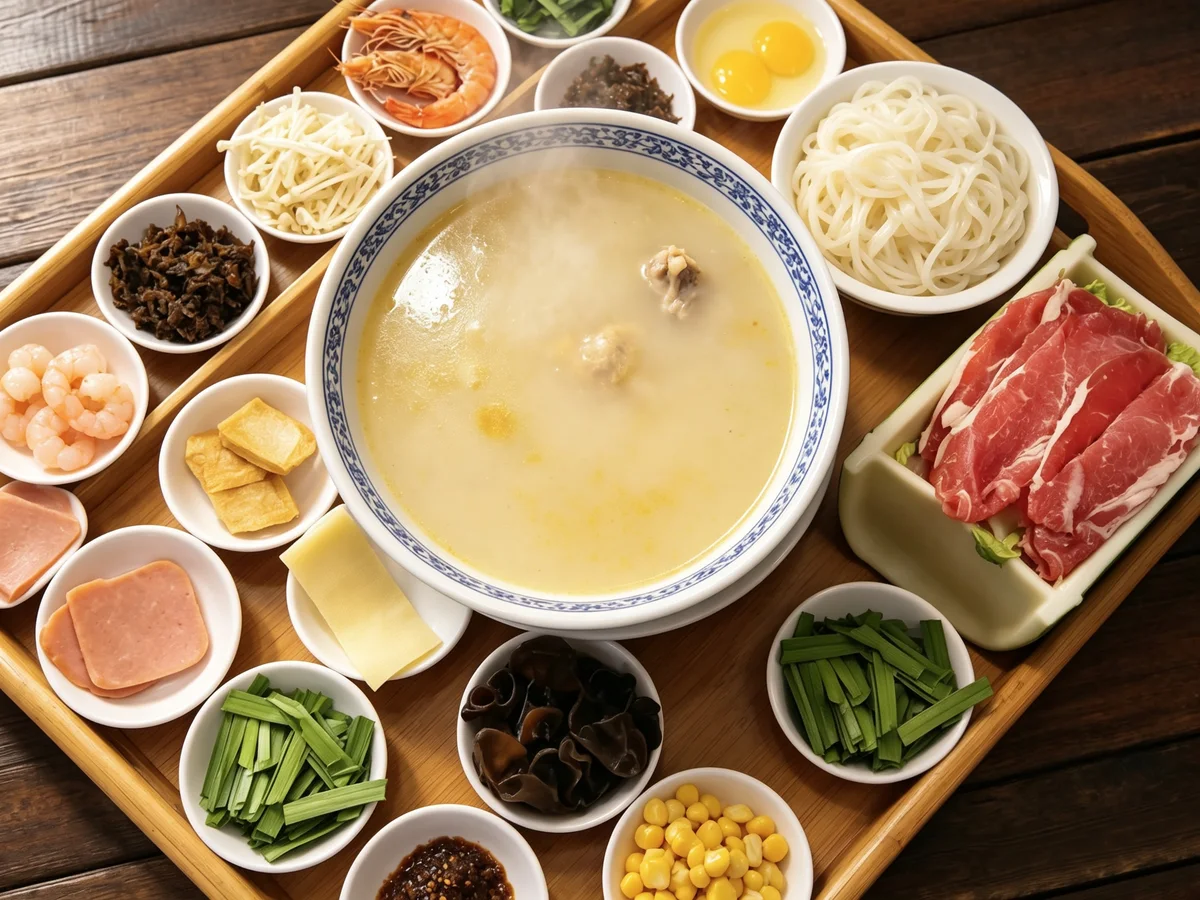
Yunnan mixian are rice noodles; crossing-the-bridge noodles add ingredients in sequence to very hot broth. Ersi are cut from compressed cooked-rice erkuai and have a different density and chew. Translating both simply as rice noodles loses the production difference.
Hunan rice noodles vary by city through round or flat strands, soup or dry service and named toppings. Hainan rice noodles, Baoluo noodles, Lingshui sour noodles and Hou’an noodles differ in thickness, broth or gravy, acidity and garnish. Keep town and county names when ordering.
04
Do not plan a noodle route around seven equally heavy bowls
Comparison needs pacing and small portions because every example is still a staple.
Choose three different structures: one dry-mixed or oil-poured wheat bowl, one soup noodle and one rice-based bowl. Share a portion when practical rather than stacking sesame paste, rich broth and broad wheat noodles in one sitting.
Mix or assemble the bowl in the way the shop intends before adding chilli, vinegar or garlic. Heavy table seasoning applied immediately hides the broth and noodle texture and makes the kitchen’s original balance impossible to judge.
Compare
Lo mein vs chow mein: what actually changes
“Lo mein” and “chow mein” are Cantonese noodle terms that became fixtures on overseas menus. Both are everyday noodles; the split is mostly about how the noodles meet the wok—tossed after boiling, or stir-fried in it.
撈麵 (lāu mihn), “tossed noodles”
炒麵 (cháau mihn), “stir-fried noodles”
Noodles are boiled, then tossed with sauce and toppings
Noodles are stir-fried in a hot wok, sometimes pressed until crisp
Soft, slippery and evenly sauced
Soft to crisp, depending on the region and restaurant
More sauce clinging to soft noodles
Drier, with more wok aroma
Fairly consistently soft noodles
Varies widely—often crispy/fried on the US East Coast, softer on the West Coast
Everyday Cantonese tossed noodles
炒麵 spans many regional styles, from crisp Cantonese 兩面黃 to soft Guangzhou fried noodles
So do not assume chow mein is always “the crispy one,” or that lo mein is just “soft noodles.” Both can be excellent. Authentic stir-fried noodles run far deeper across the Cantonese noodle world and beyond.
For soft, saucy noodles
Order lo mein. The noodles stay soft, saucy and evenly seasoned.
For wok aroma or a crisp bite
Order chow mein, and ask “soft or crispy?”—that is where overseas menus differ most.
For the authentic range
Stir-fried noodles are a large family in China, not one recipe; start from the Cantonese noodle world.
Before you order
Two questions—“soft or crispy?” and “how much sauce?”—settle most surprises.
Quick-reference tool
Twelve regional noodle traditions worth separating
Twelve regional examples show how grain, shape, cooking method and serving style produce very different noodle meals across China.
| Region and example | Grain / form | How to read the bowl |
|---|---|---|
| Gansu · Lanzhou beef noodles | Hand-pulled wheat noodles | Clear beef broth, selectable noodle width, radish, herbs and chilli oil |
| Shanxi · knife-cut noodles | Knife-shaved wheat pieces | Irregular edges and substantial chew; toppings vary more than one English label suggests |
| Beijing · zhajiang noodles | Wheat noodles, fried sauce and fresh garnishes | Mix sauce gradually and judge the contrast between savory paste and crisp vegetables |
| Shaanxi · biang biang / youpo noodles | Very wide or hand-stretched wheat noodles | Chew, vinegar, garlic and hot oil are central; dry-mixed rather than brothy |
| Henan · huimian | Broad pulled wheat noodles | A substantial soup meal commonly built around broth, meat and greens |
| Jiangsu · Su-style soup noodles | Fine wheat noodles in carefully tuned broth | Broth clarity and toppings matter; service can be more restrained than northern bowls |
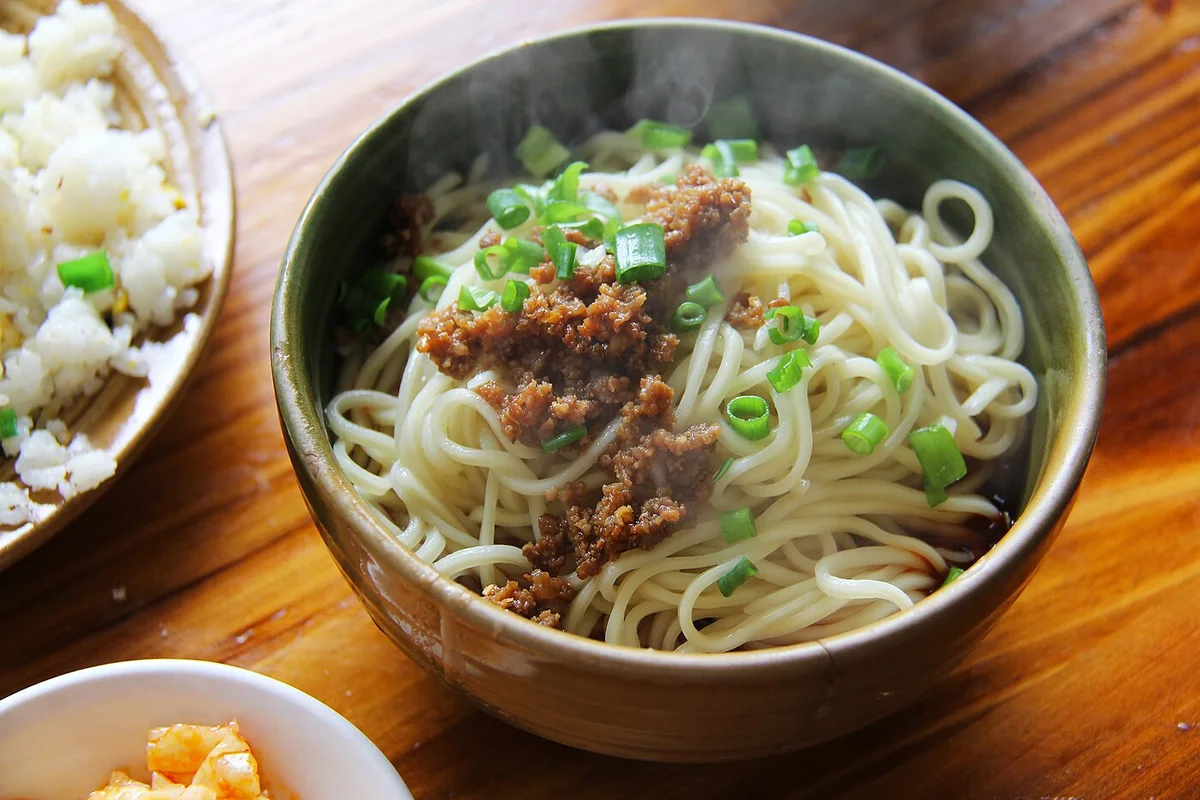
| Shanghai · scallion-oil noodles | Fine wheat noodles, dry-mixed | Aromatic scallion oil and soy seasoning; simplicity exposes oil freshness and mixing |
| Guangxi · Guilin rice noodles | Rice noodles with braised toppings or broth | Condiment stations and local serving styles make customization part of the meal |
| Guangxi · luosifen | Rice noodles in a snail-based, fermented-sour broth | Bamboo shoots, chilli and sourness create the famous aroma; packaged versions are not the only benchmark |
| Yunnan · crossing-the-bridge noodles | Rice noodles assembled with hot broth | Ingredient order and heat retention are part of the dish, not table theater |
| Wuhan · hot dry noodles | Alkaline wheat noodles, sesame-coated | No soup; mix quickly and use pickles to cut the dense sauce |
| Hainan · Hainan / Baoluo noodles | Fine or thicker rice noodles | Dry dressing, sourness and broth styles vary by town and shop |
A national noodle guide should not imply that this list is exhaustive. China also has major traditions in Xinjiang, Chongqing, Fujian, Guangdong and many other localities.
The five-variable comparison
Base
Wheat, rice, mung bean or another starch changes elasticity and flavor.
Formation
Pulled, cut, shaved, pressed and rolled noodles create different surfaces and bite.
Shape
Width and thickness change sauce adhesion, cooking time and perceived chew.
Liquid
Clear broth, rich broth, dry dressing and hot-oil finishing are distinct meal structures.
Occasion
Breakfast bowl, quick lunch and assembled specialty meal should not be evaluated by one portion formula.
Field method
Compare noodle bowls through a fixed set of variables
Region matters, but flour, shape, surface, liquid and eating method make the comparison concrete.
Record five variables
Identify wheat or rice, width, hand-forming method, broth or dressing, and the dominant garnish.
Biang biang noodles are wide wheat belts built for chew and hot oil; hot dry noodles are thinner and sesame-coated without a soup; crossing-the-bridge noodles use rice strands and a hot broth assembly. “Spicy noodles” does not capture these differences.
Ask whether the bowl is dry, soup-based or served with components to combine. Mix dry noodles promptly, but follow staff guidance when raw or delicate ingredients must cook in broth.
Order a bowl as a meal
Regional noodles are usually complete individual dishes, not neutral side starches.
Choose portion and toppings before adding shared plates. Dense sesame dressing, beef broth and chilli oil produce different appetite loads. A cold vegetable or small side may add contrast; another full noodle bowl usually does not.
For dietary needs, confirm wheat versus rice, broth, minced meat, peanut or sesame and shared cooking water. Rice noodles are not automatically gluten-free in a mixed kitchen.
Worked example
Worked example: comparing three regions over three meals
A visitor wants meaningful comparison without tasting cold leftovers.
- Step 1 · Meal one
Try hot dry noodles and note sesame coating and dry texture.
- Step 2 · Meal two
Choose a Shaanxi wheat noodle and focus on width and chew.
- Step 3 · Meal three
Order a Yunnan rice-noodle broth and observe assembly and heat retention.
- Step 4 · Compare notes
Use the same five variables instead of choosing one universal winner.
Separate meals preserve temperature and make regional technique visible.
FAQ
Frequently asked questions
Are mixian and mifen the same thing?
The words overlap in everyday use, but regions distinguish ingredients, thickness and production. Keep the specific local name, especially in Yunnan and Hainan.
Why must hot dry noodles be mixed immediately?
Alkaline noodles and sesame paste tighten quickly as they cool. Prompt mixing coats the strands before they clump.
Which noodle is least spicy?
Heat depends on the preparation. Clear-broth noodles are often easier to keep mild, but confirm chilli oil, pepper, pickles and stock.
Sources
Sources and further reading
These sources support the food names, regional context, techniques and dining practices used in this guide. Individual restaurants, households and cities still vary.
- Hot Dry Noodles and Wuhan BreakfastHubei Provincial People’s Government ↗
- Representative Shaanxi Noodles and SnacksShaanxi Provincial People’s Government ↗
- Production Standards for Mixian, Ersi and ErkuaiYunnan Administration for Market Regulation ↗
- Hainan Rice Noodles and Local Food CultureHainan Provincial People’s Government ↗