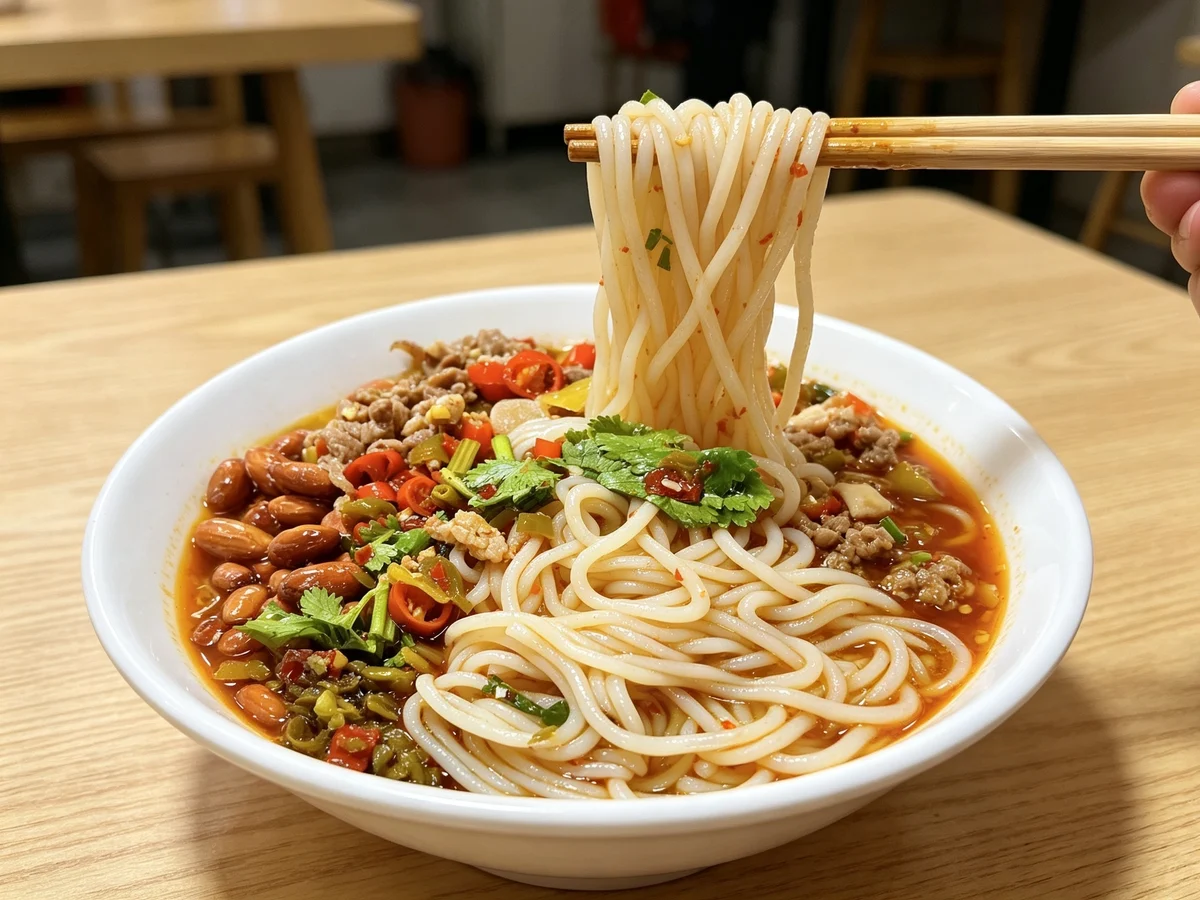
Meet Hunan’s many local rice-noodle traditions
Hunan rice noodles are a province-wide breakfast world rather than one bowl. Shops serve round or flat rice noodles in clear, red or braised broths, or mixed without soup, then add a chosen ma such as beef, pork, offal, pickled beans or chilli.
Common ingredientsFresh rice noodles, pork or beef broth, a chosen meat topping, scallions, pickles and chilli.
01
Use four choices to build your first bowl
How to order it
Choose soup noodles or mixed noodles first. Ask whether the shop offers round or flat noodles. Read the ma topping board before ordering; the topping is normally more important than selecting a generic spice level. Add condiments gradually after tasting the broth. Order a small bowl if you plan to compare several breakfast foods. If avoiding offal or pork, confirm the broth as well as the visible topping.
How to eat and pair it
A fen shop is part breakfast counter, part personal ritual. Hunan market-regulation reporting describes rice noodles as a major breakfast preference, but the cultural category is decentralized: Changsha, Changde, Hengyang, Xiangxi and other places differ in noodle cut, broth, toppings and condiments. Regulars order quickly because they already know their shape, ma and chilli routine. For newcomers, the most useful question is not “What is the authentic Hunan bowl?” but “What is this shop’s signature topping, and is it served in soup or mixed?”
Easy mix-ups
Misconception: There is one canonical “Hunan noodle soup.” In practice: Cities and even shops differ in noodle, broth, topping and service; the diversity is the tradition. Misconception: Hunan rice noodles means one dish comparable to one fixed recipe. In practice: It is a provincial family of breakfast bowls with major city and shop differences.
Choose the topping first and adjust fresh chilli without erasing the base
Counters may list beef, minced pork, braised meat, intestine, tripe or vegetarian-looking pickles. Ask what is in the stock, whether offal is mixed in and how extra topping is priced. Fresh green or red chilli, chopped pickles and fermented beans can be self-service or cooked into the bowl. “Less spicy” is possible only to the extent the base stock is not already hot. Taste broth or dressing before visiting the condiment station. Add one spoon at a time, keeping a few plain strands for comparison. A mountain of pickles increases sodium and can make every shop taste identical. First-time diners learn more from the standard topping and moderate chilli than from building the loudest bowl.
Eat promptly at breakfast and separate noodles from broth for travel
Rice-noodle breakfasts can be intense but are not a chilli endurance test. Pair with tea, soy milk or water, choose a small portion when comparing towns and begin eating before the noodles absorb enough broth to change their texture.
Round and flat noodles change how the same topping reaches the mouth
Round strands present less broad surface and can feel springier in soup; flat noodles carry more dressing on each face and fold around minced toppings. Neither is universally more authentic. When a shop offers both, keep the stock and topping constant and share small bowls. Notice sauce adhesion, cooling speed and how easily each strand separates. This concrete comparison is more useful than choosing by appearance alone. If the cashier uses local shorthand, ask staff to point out the two forms before ordering. A photograph of the uncooked or displayed noodle can help future visits, but freshness and cooking still determine the final bite. The same shape held too long will not represent its style fairly.
02
Hunan rice noodles form a regional family of shapes, broths and toppings
A generic Hunan mi fen label can cover round or flat rice noodles, soup or dry-mixed service and city styles associated with Changsha, Changde, Hengyang and elsewhere. Beef, pork, offal, fish, chilli and pickles vary. Ask the shop which locality or house tradition it follows, what noodle shape is used and whether the listed topping comes with broth. One bowl cannot stand for the province.
The rice noodle should match the service. Fine round strands carry clear broth quickly; broader or thicker noodles tolerate robust toppings and mixing. Fresh and dried noodles behave differently. A useful English menu describes form and topping—such as beef soup rice noodles—rather than promising only “authentic Hunan noodles.”
03
Judge the noodles, broth or dressing, and topping separately
Separate strands, clean stock and a clear topping are better signals than redness
Rice noodles should lift without a chalky core, mushy exterior or storage sourness. Soup needs meat, bone or vegetable depth beneath chilli; dry dressing must coat rather than pool. Beef and pork should be tender, offal clean and pickles crisp. A very red bowl may be excellent or may only contain much oil. Aroma and balance decide. Many Hunan shops let diners choose noodle quantity, topping and add-ons through a compact menu code. Confirm your order at the counter and watch whether noodles are blanched per bowl. High turnover and organized toppings help. A large batch of finished noodles waiting in broth will soften regardless of the shop’s reputation.
Fresh rice noodles
Thickness and shape vary by city and shop. Changsha counters may ask round or flat; other cities maintain their own local cuts.
Ma topping
The prepared topping—braised beef, pork, offal, fish, pickled beans or another house specialty—often defines the bowl.
Broth or dressing
Clear bone broth, red braise, fish soup and mixed-noodle seasoning all appear; “Hunan rice noodles” does not imply one universal soup.
Condiments
Chopped chilli, pickles, garlic and vinegar let diners tune the final profile after tasting.
Changsha-style fen
Many small shops offer flat or round noodles with braised meat toppings and a condiment counter.
Changde beef rice noodles
Known for fragrant, richly seasoned beef broth and its own local rice-noodle culture.
Hengyang fish noodles
Local bowls may center fresh fish and peppery broth.
- Noodles blanched to order and not breaking
- Topping with a clear identity
- Broth or dressing tastes specific rather than generically salty
04
Noodles, broth and toppings meet only when the order arrives
Noodles are blanched to order and combined with hot broth or seasoning before toppings and condiments are added.
05
The regional character lies in differences between Hunan’s cities
Rice-noodle breakfasts appear across Hunan, with Changsha, Hengyang, Changde and other cities maintaining distinct broths, toppings and noodle textures. “Hunan rice noodles” is therefore an umbrella, not one provincial recipe.
At neighborhood fen shops, diners choose soup or mixed noodles and add a ma, or topping, such as beef, pork, offal or pickled vegetables. Condiment counters make each bowl personal.
06
How to say Hunan Rice Noodles—and what the name tells you
Pronounced hú nán mǐ fěn. Menus may call it Hunan mifeng, Hunan mi fen, húnán mǐfěn, Changsha rice noodles.
Four menu choices turn a vague “Hunan noodles” order into a specific bowl
First choose noodle form: round, flat, thin or broad where options exist. Second choose soup or dry-mixed service. Third choose a named topping such as beef, pork mince or intestine. Fourth decide whether chilli and pickles should start at house level or be adjusted. Repeating those four choices back to the cashier prevents most translation failures and creates a record you can use at another shop. On a breakfast crawl, change only one variable at a time. Compare round and flat noodles under the same topping, or compare two beef broths with the same noodle. Ordering completely different bowls may be enjoyable but cannot show why one strand or city style feels distinct. Photographs should capture the menu name and topping, not only a red surface. The condiment station is a second kitchen. Fresh chilli must be bright and protected, pickles should remain crisp, and spoons should not migrate among bins. Heavy customer use can create allergen cross-contact even when the stock itself is suitable. Ask staff for a clean portion when medical restrictions matter. At the end of the bowl, judge whether broth, noodle and topping declined together. A little softening is inevitable; a sludge of broken rice noodles suggests overholding, while a thick oil layer and no stock flavor suggests seasoning imbalance. The final spoon often exposes weaknesses that the first chilli-bright bite hides.
Sources
Sources and further reading
- Hunan rice noodles as an everyday breakfast industryHunan Administration for Market Regulation ↗
- Local rice-noodle textures, toppings and regional food cultureHunan Provincial Department of Culture and Tourism ↗
- Changsha rice-noodle shops and breakfast historyPeople’s Government of Hunan Province ↗
- Hunan cuisine and local food traditionsHunan Provincial Government ↗