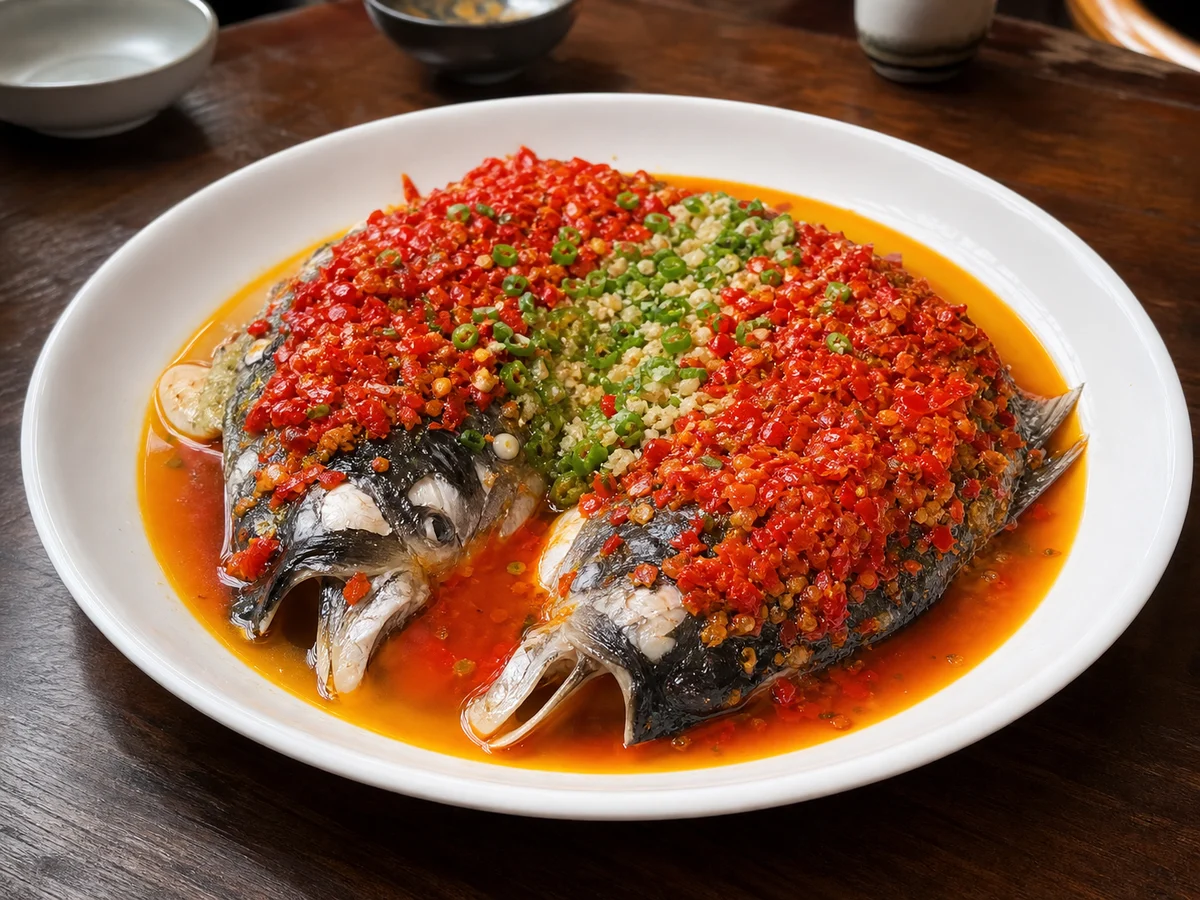
The dish is about more than chilli—or size
Chopped-chilli fish head is a Hunan shared dish in which the split head and collar of a large freshwater fish—commonly bighead carp—are cleaned, lightly seasoned and steamed beneath salted or fermented chilli, ginger and garlic. The head contributes especially tender cheek meat and gelatin-rich sections, while the preserved chilli supplies salt, acidity, aroma and heat. Good versions are not judged by size or redness alone: the thickest flesh must be safely cooked yet moist, the chilli should remain fragrant rather than punishingly salty, and the natural plate juices should be worth mixing with noodles after the fish is eaten.
Common ingredientsA thoroughly cleaned bighead-carp or other large freshwater fish head, preserved chopped chilli, ginger, garlic, scallion, light seasoning and restrained finishing oil; noodles are optional.
01
Order the fish head for the group and set the heat level early
How to order it
Order it for the table and confirm whether the price is per portion, fish-head size or weight. Ask how many people the selected size serves; a larger head also requires more precise steaming. Confirm the chilli level and whether a milder or two-colour version is available, understanding that removing duo jiao entirely changes the dish. Ask for noodles only after the fish course unless the restaurant follows another service sequence. Eat slowly around jaw, collar and fine bones, especially when serving children or first-time diners. Tell the restaurant about fish, soy or wheat allergies and ask what is present in the chilli mixture and seasoning.
How to eat and pair it
On a Hunan table, diners share the head and seek out cheek, jaw and collar meat rather than treating the plate as a dare. Plain rice softens the preserved-chilli intensity, while noodles often arrive after the main fish has been lifted away and turn the remaining juices into a deliberate second course. The large red presentation suits restaurant dining, but its logic is grounded in ordinary regional techniques: freshwater fish, preserved chilli and steaming. Stories crediting one historical figure or restaurant remain folklore because surviving accounts do not resolve a single invention history.
Easy mix-ups
Misconception: It is only a stunt built around extreme heat. In practice: Its success depends equally on fresh fish, preserved-chilli aroma, salt balance and exact steaming. Misconception: A bigger fish head is automatically better. In practice: Size creates spectacle but also makes even steaming harder. Freshness, cleaning and precise doneness are more meaningful quality tests.
02
Judge the fish, chopped chilli, juices and steaming
Freshwater fish head
Bighead carp is common. Gill removal, blood-line cleaning and freshness matter more than sheer size, because steaming cannot hide muddy or stale odor.
Chopped chilli
Salted or fermented red chilli provides acidity, fragrance and savory heat rather than only a raw burn. Its salt level must be considered before extra seasoning is added.
Ginger, garlic and scallion
These support the fish and preserved chilli. Fresh scallion or garlic may be bloomed with a restrained amount of hot oil after steaming.
Steaming juices
Fish gelatin, chilli brine and aromatics form a naturally glossy sauce on the plate; it should not need a heavy starch glaze.
Red chopped chilli
The best-known presentation uses a bright layer of salted or fermented red chilli for savory acidity and direct heat.
Two-colour fish head
Red and green chilli preparations divide the plate. The exact green component and heat balance vary by kitchen, so it is worth asking.
Noodle second course
Cooked rice noodles or wheat noodles are mixed into the fish-and-chilli juices after the head is mostly eaten.
- Moist fish separating cleanly from bone with the thickest section fully cooked
- No residual gill, stale blood or muddy odor beneath the chilli
- Chillies fragrant and gently acidic rather than harshly salty
03
From cleaning the fish head to the final aromatic oil
The gills and residual blood are removed before the head is split and lightly seasoned. Chopped chilli and aromatics cover the fish for steaming until the thickest flesh is safely cooked yet moist, then fresh scallion or garlic is bloomed with a little hot oil.
04
How Hunan’s chopped-chilli tradition became a centerpiece
Chopped-chilli fish head is strongly associated with modern Hunan cuisine and the Xiangtan–Changsha dining world. It joins the region’s freshwater fish, preserved-chilli traditions and steaming technique. Stories crediting one historical figure or restaurant remain local narratives rather than a fully settled invention record.
It is a shared centerpiece with a deliberate second phase: diners navigate the bones to lift cheek, jaw and collar meat, then may add noodles to the fish-and-chilli juices. Freshness, gill and blood-line cleaning, safe doneness and preserved-chilli balance matter more than sheer fish-head size or extreme heat.
05
How to say Chopped-Chilli Fish Head—and what the name tells you
Pronounced duò jiāo yú tóu. Menus may call it chopped chilli fish head, Hunan fish head, duojiao yutou, steamed fish head with chilli.
Duo jiao is not merely a fresh chilli chopped immediately before service. It usually refers to a salted or fermented chilli preparation that brings acidity, savory depth and aroma as well as heat.
The dish uses the head and attached collar of a large freshwater fish, not a whole fish hidden beneath sauce. Cheek, jaw and collar meat provide tender flesh and gelatin, but diners must still navigate many bones.
Single-inventor stories are local narrative, not settled proof: Several popular accounts connect the dish to named historical figures or one moment of refuge. They are part of Hunan food storytelling, but the documented regional combination of freshwater fish, preserved chilli and steaming is stronger evidence than one fully resolved invention tale.
The head supplies prized textures; fermented chilli supplies the seasoning
Chopped-chilli fish head uses a split head and collar from a large freshwater fish, not a token garnish attached to a fillet. Cheek, collar, skin and gelatinous areas offer moist, varied textures that many Chinese diners prize. The plate also contains substantial bone, so eating is slower than lifting boneless fish cubes. A large spoon and chopsticks help separate meat without crushing fine bones.
Duo jiao is chopped chilli preserved with salt and often fermentation, not merely fresh chilli cut over the plate. Red and sometimes green chilli preparations bring acidity, salinity and aroma as they steam over the fish. Good duo jiao tastes lively and fermented, not harshly salty or stale. The fish should remain identifiable beneath it rather than serving as a platform for an undifferentiated red paste.
The collar and cheeks need enough steam to become moist and release clean juices, while overcooking makes the meat cottony. Because head size changes, one fixed steaming time is unreliable. A well-run kitchen matches vessel, cut and heat, then serves immediately. Cloudy old liquid or a strong muddy odor cannot be repaired with more chilli.
Order by head size, share carefully and save room for noodles
Ask the fish species or house description, approximate weight, price basis and number of diners before ordering. One head can dominate a small table. Heat is difficult to remove because duo jiao is the dish’s central seasoning, but a kitchen may reduce the amount or use a two-color presentation. Lower chilli does not necessarily lower salt, so clarify both if needed.
Eat the exposed cheek and collar meat first while hot, then work methodically around bone. Children and diners unfamiliar with fish heads need close attention; this is not a boneless dish despite soft meat. Use serving utensils rather than turning the shared head repeatedly with personal chopsticks. If fish freshness is uncertain or an odor feels wrong, chilli color is not reassurance.
Many restaurants add cooked noodles to the remaining chilli-rich juices after most fish is eaten. The noodles absorb fish gelatin, salt and fermented chilli, making a concentrated final course. Order a modest amount and mix thoroughly. Pouring in noodles at the start hides the fish, cools the plate and consumes sauce before diners understand the main ingredient.
Expect moisture, not a dry baked head
Steaming juices and fermented chilli form the sauce; the meat should remain succulent.
Confirm soy and gluten
Seasoning blends and added noodles may contain soy and wheat beyond the visible fish and chilli.
Balance the table
Rice, a green vegetable and a mild soup give relief from salt and chilli.
Knowing where the meat sits makes the plate easier to enjoy
The cheek holds a compact moist piece, the collar behind the head provides broader flakes and fatty skin, and small pockets around the jaw reward patient chopsticks. Work from obvious meat toward the bones rather than stirring the entire head into fragments. Turn sections with a serving spoon when needed and place discarded bones on a side plate.
The eye and gelatinous tissues are appreciated by some diners but never compulsory. A first-timer can focus on cheek and collar without treating refusal as disrespect. The goal is confident, safe sharing and recognition that a fish head contains valued meat—not a performance in which every anatomical part must be eaten.
Sources