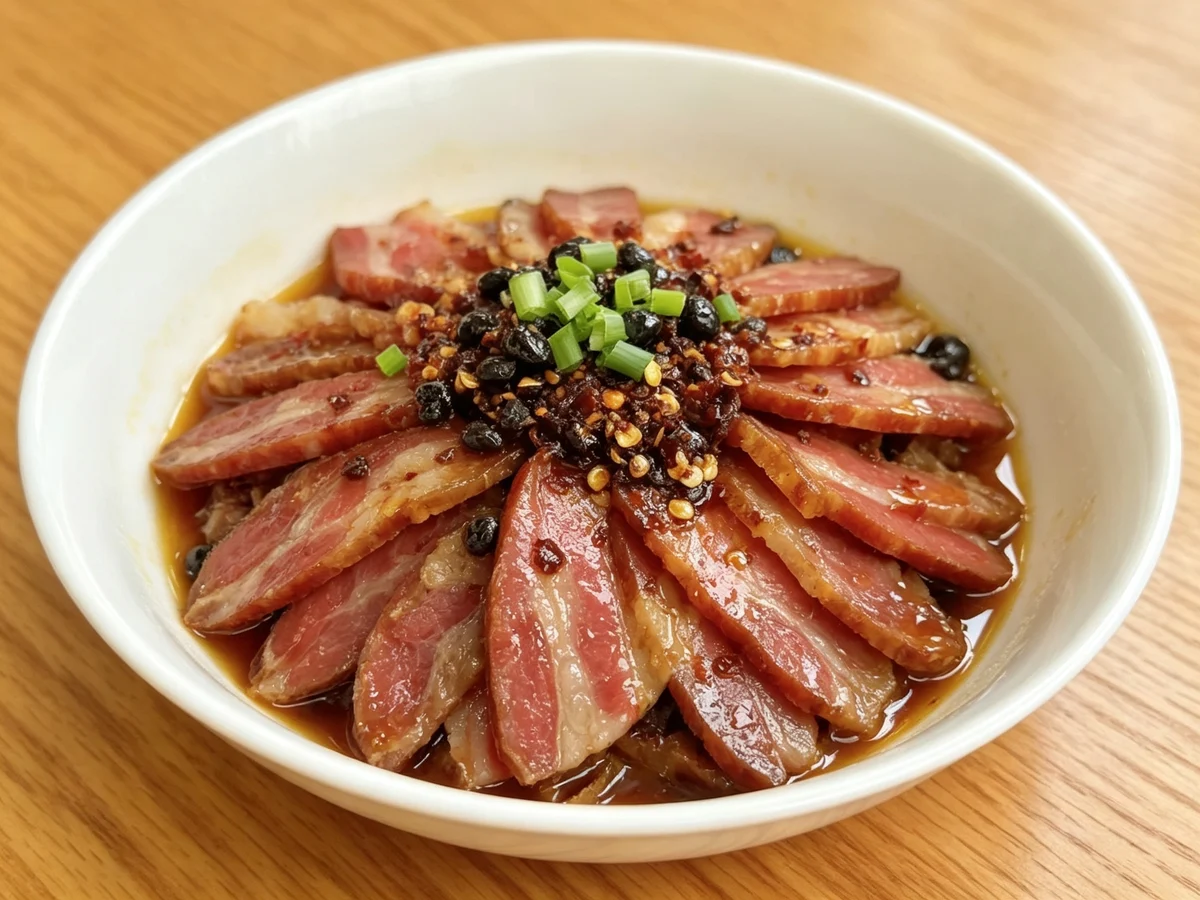
Meet a central-Hunan winter dish
Lawei hezheng steams several Hunan cured foods—commonly smoked pork, sausage, chicken or fish—together so their fats and aromas mingle. Steaming softens dense winter preserves while retaining the deep smoke and salt created during curing.
Common ingredientsHunan cured pork, cured fish and cured chicken or duck, plus chilli, fermented black beans and aromatics.
01
Ask which cured meats are sharing the steamer today
How to order it
Ask which cured meats are included; lawei hezheng is a format, not a guarantee of one fixed trio. Share it and order rice plus lightly seasoned vegetables. People sensitive to smoke or sodium should start with a small portion. Expect bones in cured fish and poultry and eat those sections carefully. Ask whether the restaurant’s cures are house-made if provenance matters, without assuming house-made automatically means safer.
How to eat and pair it
Winter curing helped households preserve pork, fish and poultry and prepare for Lunar New Year. Official Hunan food and archival sources identify lawei hezheng among the province’s representative dishes and place cured foods within mountain and household preservation traditions. Steaming is not merely reheating: it softens dense flesh, renders fat and allows smoke and savory juices to season neighboring slices. The result is concentrated, so it is served as one shared element in a meal rather than a large plate for one person.
Easy mix-ups
Misconception: Lawei simply means very spicy meat. In practice: La refers to curing and the twelfth lunar month; chilli may appear, but preservation is the defining idea. Misconception: The platter must contain exactly pork, chicken and fish. In practice: That trio is familiar, but restaurants and households combine available cured pork, sausage, poultry and fish in different proportions.
Order one modest platter with rice, greens and an unsalted counterpoint
This is a concentrated shared dish. Pair it with plain rice, steamed or stir-fried greens and a mild soup. Avoid ordering several preserved-meat plates together unless conducting a comparison. Pickled vegetables can add acid but also more sodium. Ask whether chilli, fermented black beans or dried radish are steamed into the platter, since they shape heat and salt. Taste lean and fat together, then alternate meat types. Do not eat all sausage first and leave only bones or fatty pieces. For diners managing sodium, a smaller quantity and more plain food may be appropriate under individual professional guidance; steaming does not remove all curing salt.
Treat cured meat as regulated meat, not a shelf-stable decoration
For home use, buy labelled products with producer, date and storage instructions. Some require refrigeration before opening; others change after cutting. White crystals, casing bloom and surface mold cannot be diagnosed from a general rule. Follow the maker rather than copying a village display seen online.
02
A deliberate tasting order separates smoke, fat and animal before salt overwhelms the palate
Begin with the mildest lean slice, often a less smoky pork or poultry piece, then move toward fattier sausage, duck or strongly cured fish. Take rice or greens between them. Starting with the saltiest, smokiest bite makes every later component seem dull. If the restaurant can identify the placement on the steamer, diners can follow the intended progression instead of choosing only by color.
Compare aroma before texture. Clean smoke can suggest wood, tea or hearth without stinging like soot. Fermented depth can resemble aged meat or cheese without becoming sour spoilage. Then notice whether steam softened the slice appropriately: lean sections bend, belly fat becomes translucent and fish flakes without disintegrating. These observations are more useful than asking which item was cured longest.
Condiments on the steamer also need individual attention. Fermented black beans add dark savoriness, dried chilli adds aroma and heat, and dried radish can contribute crunch and salt. They should connect different meats rather than form a universal mask. Taste a component with and without the garnish before adding table chilli.
For a home comparison, never buy several unlabelled products and assume identical cooking. Steam each according to producer guidance, then combine only when their required doneness and salt treatment are compatible. Traditional appearance does not replace product-specific instructions.
03
One plate should still reveal the character of each cured meat
The platter is a coordinated selection of cured meats, not one mandatory trio
Lawei hezheng means cured flavors steamed together. Pork belly, sausage, cured duck, chicken or fish can appear according to region, household and supply. Some restaurant translations promise “three cured meats,” but the actual combination should be named. Ask which animals and cuts are included, whether fish bones remain and how large the steamer serves. Diners avoiding one meat cannot simply remove it after shared juices have mingled. Each component contributes a different ratio of lean, fat, smoke, salt and fermentation. Pork belly may be translucent and rich, sausage sweet or peppery, duck firmer and fish intensely savory. The goal is not maximum salt or the largest pile. Thin, deliberate portions let diners compare without exhausting the palate.
Use one spoon of plain rice to test whether cured juices are concentrated or merely harsh
Place a small lean-fat slice and a few drops of steamer juice on plain rice. The rice should open smoke, fermentation and pork sweetness while softening salt. If a large bowl of rice is needed to make one slice tolerable, pretreatment or portion thickness may be wrong. Repeat with the fish or sausage using fresh rice, since reusing an already seasoned spoon confuses the comparison. A well-balanced platter leaves diners curious about the next component rather than thirsty after the first. Tea and water remain drinks; do not rely on sugary beverages to cover salt. The correct response to excessive sodium is a smaller portion, not more chilli.
Hunan larou
Salted, dried and often smoked pork supplies rich fat and woodsmoke. Surface salt may be rinsed or the meat briefly blanched before steaming.
Cured sausage
Sweet-savory sausage adds warm spice and a finer, softer texture.
Cured fish or poultry
These provide contrast and show the breadth of Hunan preservation; a restaurant platter does not require every possible cure.
Chilli and fermented black beans
Common accents reinforce Hunan aroma but should not obscure the differences among the meats.
Three-cure platter
Pork, fish and chicken are a familiar combination, though the exact trio varies.
Sausage-and-bacon platter
An accessible restaurant version focused on two pork textures.
Fish-forward version
Cured fish can contribute firm flakes and more pronounced salt; small bones require attention.
- Distinct meats rather than one undifferentiated pile
- Fat translucent after steaming
- Slices softened but not wet and crumbling
04
Salt level, slicing and steaming order all matter
Cured meats are washed, sliced and arranged together, then steamed until tender and fragrant.
Steam softens fat and joins aromas while preserving the identity of each cured piece
Cured meats may be rinsed, soaked or blanched according to salt level before slicing and layering. Steam melts fat and carries it downward, so placement matters: a very fatty piece above delicate fish can overwhelm it. The cook must heat everything fully while preventing lean slices from becoming leather. A little collected juice is flavorful; a deep pool of oil indicates imbalance. Good cured meat smells cleanly smoky, porky or fermented, without rancid paint, ammonia or uncontrolled mold. Dark color is not proof of age. Sausage casing should be intact, fat clean and lean meat sliceable. Fish and poultry need species-appropriate handling and bone awareness. Curing reduces water but does not make every product safe to eat without cooking.
05
How Hunan cured meats connect season and shared table
Lawei hezheng developed from Hunan’s winter curing traditions, in which pork, chicken, fish or sausage were salted, smoked or air-dried for storage, then steamed together.
The dish turns preservation into a celebratory platter. Steam softens the cured meats while allowing their different smoke, fat and texture to season one another.
06
How to say Steamed Hunan Cured Meats—and what the name tells you
Pronounced là wèi hé zhēng. Menus may call it Hunan preserved meat platter, lawei hezheng, làwèi hézhēng, Hunan smoked pork.
Sources
Sources and further reading
- Hunan cuisine and representative cured-meat dishesPeople’s Government of Hunan Province ↗
- Hunan preservation traditions and steamed cured meatsHunan Provincial Archives ↗
- A taste of Hunan cuisine and its representative dishesHunan Provincial Department of Culture and Tourism ↗
- Hunan cuisine and local food traditionsHunan Provincial Government ↗