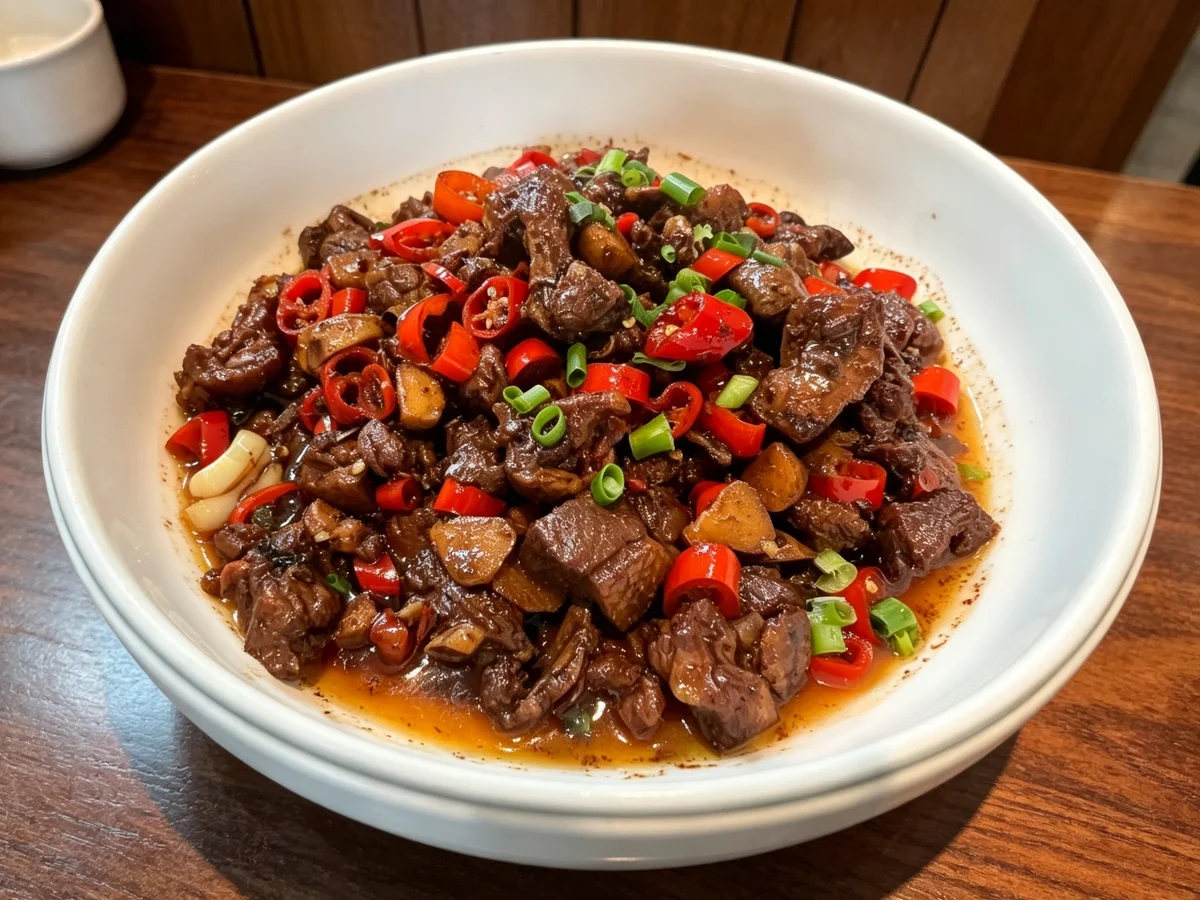
Meet this signature dish from southern Hunan
Bone-in duck pieces are browned with ginger and chillies, then cooked until nearly tender before fresh duck blood is stirred in to form a dark, velvety coating. The blood enriches and binds the sauce; it should not remain raw or form large curds.
Common ingredientsDuck, fresh duck blood stabilized with vinegar, chillies, ginger, garlic and local aromatics.
01
Confirm the blood sauce, bone-in pieces and heat level
How to order it
Confirm that your group is comfortable with blood-based dishes before ordering a shared plate. Expect small bone-in pieces and eat slowly. Choose a reputable restaurant with strong turnover and proper handling of fresh poultry and blood. Eat it hot with rice; the coating thickens as it cools. Ask which county style the restaurant follows if it advertises Ningyuan, Xintian or another local version.
How to eat and pair it
Yongzhou and its counties maintain competing favorite formulas—dry or saucier, hotter or more aromatic. Official local reporting identifies blood duck as a regional food emblem and contemporary heritage activity recognizes its cooking craft. Across versions, seasoned fresh blood is kept fluid, then added near the end and cooked until it binds the sauce around bone-in duck. Stories about a battlefield accident or one named cook belong to local folklore; available records do not establish either as the origin of every version.
Easy mix-ups
Misconception: It is duck served in a bowl of raw blood. In practice: The blood is cooked into the sauce and used as a binder and flavoring. Misconception: All Yongzhou blood duck follows one standard recipe. In practice: County and household versions vary in moisture, heat and additions; cooked blood coating and bone-in duck are the common center.
Order for sharing, expect chopped bone and tell the table what the dish contains
A half or whole duck may be chopped into small bone-in pieces, sometimes with head, feet, neck or organs. Confirm portion and contents before ordering. Diners who avoid blood cannot remove the coating afterward; choose another duck preparation. The dish pairs with rice and a cooling vegetable or soup, which are more useful than a second heavily chilli-coated meat. Use serving chopsticks and place bones on a side plate. Small dark pieces make fine bone shards hard to see, so chew slowly and debone children’s portions. Duck skin and blood sauce retain heat. Take a little rice with each piece rather than eating all meat first and leaving sauce behind.
02
Sauce moisture can vary while cooked blood and duck remain the anchors
Some plates are relatively dry, with blood clinging tightly around fried-looking duck pieces; others retain more glossy liquid for rice. Ask which style the restaurant serves. A dry version should not have dusty grainy blood or desiccated meat, and a wetter version should not contain raw-looking blood. Both need fully cooked duck, fresh chilli aroma and a sauce integrated with rendered fat.
Take the first bite from a meaty leg or breast section, not a tiny bone end. This reveals whether duck stayed moist beneath the coating. Then taste a piece carrying more chilli and aromatics. If every bite communicates only metal and heat, the sauce has failed to balance. Rice should absorb excess coating without becoming a way to hide fragments.
Ask whether vinegar or another acid is perceptible in the house version. It can brighten blood and fat, but an unexpectedly sour leftover is not automatically that ingredient. Compare with the fresh plate’s known profile and storage history. Food safety takes priority over preserving a rare dish.
Because the dish is visually dark, good service benefits from a clear component description. Staff should be able to say whether gizzard, liver or other organs appear. Diners can then approach texture with consent instead of discovering an unidentified piece after swallowing.
03
Cooked blood should coat lightly while duck, ginger and chilli stay distinct
Duck
Bone-in duck gives the dish depth and requires careful eating. County versions may prefer different bird sizes and chopping styles.
Fresh duck blood
Vinegar is commonly mixed with the blood to delay clotting before it is cooked into the dish; safe handling and complete cooking are essential.
Ginger and chilli
They cut through richness and create southern Hunan’s forceful aroma.
Local additions
Green soybeans, bitter melon, peanuts, pickled peppers or local spices appear in county and household versions but are not universal.
Dry-fried style
Reduced until the blood coating clings closely to each piece.
Saucy county styles
Some versions retain more braising liquid and add local pickles or spices.
Ningyuan and Xintian styles
County names signal local preferences in duck size, chilli, texture and optional vegetables rather than one province-wide formula.
- Even dark coating without raw liquid
- Duck cooked through but not stringy
- Blood sauce cooked smooth rather than broken into large curds
04
Cook the duck first and fully set the blood at the end
Duck pieces are stir-fried and simmered; seasoned blood is added near the end and cooked through to coat the meat.
Duck blood becomes a savory coating, not a raw sauce pooled over cooked meat
Yongzhou blood duck uses fresh duck blood managed so it can be incorporated toward the end of cooking, coating chopped duck and aromatics in a dark, glossy layer. Vinegar or another acidic element is often discussed in relation to keeping blood workable and balancing richness, but house methods vary. The finished dish should be fully cooked, with no liquid raw blood or metallic gush. The coating adds mineral savoriness, body and color while fresh chilli, ginger, garlic and duck fat supply heat and aroma. It should cling thinly enough that duck pieces remain distinct. A heavy black paste can conceal dry meat and bone fragments. Ask how spicy the house version is and whether offal is included beyond blood.
Blood demands controlled collection, immediate handling and complete cooking
Animal blood is highly perishable. It must come from inspected slaughter, be collected hygienically, held at safe temperature and used promptly according to established food-safety procedures. Rustic or “same-day slaughter” language does not replace regulation. Home cooks should not source unregulated blood or improvise preservation from social media. The cook browns and cooks duck pieces, manages liquid and chilli, then incorporates blood so it coagulates into the sauce without becoming grainy or raw. Timing must also ensure thick bone-in meat is done. Dark color makes visual doneness difficult, so technique and temperature control matter. Reheating cannot correct blood that was unsafe before cooking.
Shared blood duck works best when heat is agreed before the wok starts
Because chilli is cooked with duck and blood, one communal plate cannot be made mild by scraping its surface. Ask the table first and choose a level everyone can eat, adding fresh chilli on individual portions if offered. A split order may be possible, but confirm whether each half is cooked separately. This preserves the sauce structure and avoids wasting blood-coated pieces. A cooling side should be genuinely mild rather than another vinegar-heavy pickle that competes with the sauce’s acid. Plain rice, leafy greens and clear soup let diners pace both mineral richness and chilli.
Duck blood is part of the sauce and must be handled and cooked carefully. Order the dish from a reputable kitchen and do not treat a dark, glossy finish as evidence of doneness by itself.
05
Why blood duck is closely identified with Yongzhou
Yongzhou blood duck is a southern Hunan specialty. Chopped duck is stir-fried or braised, and fresh duck blood is added near the end so it coats and enriches the meat rather than forming a separate pudding.
It is a robust local dish with many county and household variations. Ginger, chilli and aromatics counter the duck’s richness; diners should expect bone-in pieces.
Yongzhou has internal versions, and a responsible menu can describe its own
County and household preparations can differ in chilli type, acidity, duck cut and sauce moisture. A restaurant should name its style or explain what the cook emphasizes rather than declaring every other version false. The dish’s identity rests on cooked blood coating duck within Yongzhou’s food tradition, not one universal shade or heat score.
06
How to say Yongzhou Blood Duck—and what the name tells you
Pronounced yǒng zhōu xuè yā. Menus may call it Hunan blood duck, Yongzhou xueya, yǒngzhōu xuèyā, Ningyuan blood duck.
Sources
Sources and further reading
- Yongzhou blood duck as a local culinary specialtyYongzhou Municipal Government News ↗
- Yongzhou blood-duck craft in Hunan heritage funding recordsHunan Provincial Department of Finance ↗
- A taste of Hunan cuisine and its representative dishesHunan Provincial Department of Culture and Tourism ↗
- Hunan cuisine and local food traditionsHunan Provincial Government ↗