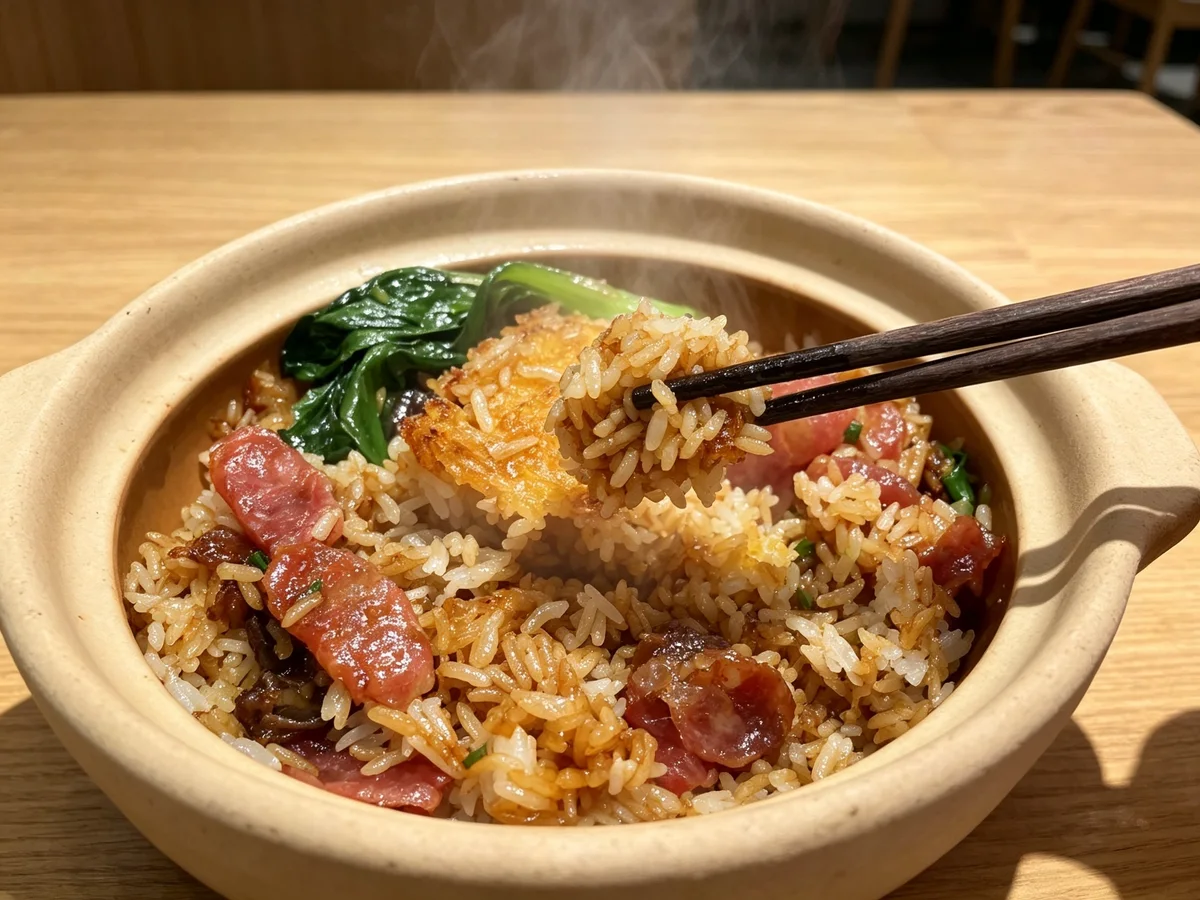
The pot, rice, toppings and scorched crust all matter
Claypot rice cooks rice and toppings together in a small earthenware pot, traditionally over charcoal. The closed pot traps steam while heat from below builds fan jiu, the toasted rice crust prized around the base. Cantonese sausage, cured duck, marinated chicken, pork ribs or beef release their juices into the grains before a seasoned soy sauce is added at the table.
Common ingredientsRice, a small clay pot, Cantonese cured meats or marinated chicken, ribs, beef or eel, plus aromatics and seasoned soy.
01
Expect claypot rice to take time
How to order it
Allow extra time: good claypot rice is cooked to order rather than assembled from pre-cooked rice. If a claimed raw-rice pot appears in only a few minutes, ask how it was prepared. After the pot arrives, add sauce modestly, replace the lid briefly if instructed, then mix the topping through the rice. Scrape the base gently with the provided spoon to release the crust without breaking the pot; the vessel and escaping steam can remain dangerously hot. Choose preserved meat for a rich winter flavor or chicken, ribs, beef or eel for a fresher topping. Judge meat and rice separately: a good crust does not excuse undercooked chicken or ribs, and safely cooked meat should not require soggy rice.
How to eat and pair it
The first task is patience. A freshly fired pot is extremely hot, and some restaurants ask diners to rest it briefly after adding sauce. Mix the upper rice with the topping juices, then loosen the bottom gradually so pieces of crust stay crisp instead of soaking in soy. Temple Street and other Hong Kong night-food areas give claypot rice a strong urban image, while Guangzhou neighborhood shops and home kitchens maintain related versions. It belongs to a wider Cantonese rice, cured-meat and earthenware tradition rather than to one street or one compulsory topping.
Easy mix-ups
Misconception: The brown layer at the bottom means the rice was accidentally burned. In practice: A controlled golden crust is the most prized part. Black, bitter scorching is a flaw, but crisp fan jiu is intentional. Misconception: Claypot rice is simply rice transferred into a clay bowl. In practice: The rice must complete its main cooking in the vessel for its texture, topping integration and base crust to develop.
02
Read the rice, toppings and crust as three layers
Rice
Fresh and aged grains may be blended so the finished rice stays cooked through and separate while still forming a crisp base. A soupy top or raw center signals poor water and heat control.
Clay pot
Earthenware distributes and retains heat while allowing direct contact with charcoal or a gas flame.
Preserved or fresh toppings
Lap cheong, liver sausage and cured duck contribute sweet-salty winter aromas; chicken, ribs, beef and eel are equally established and must be cooked for their own safe doneness.
Seasoned soy
Added near the end or at the table, it should season the rice without turning the crust wet.
Preserved-meat claypot rice
Lap cheong, cured duck and liver sausage perfume the rice with sweet, smoky fat and are strongly associated with cool-season eating.
Chicken and mushroom
Marinated chicken, dried mushrooms and sometimes Chinese sausage create a juicy, savory pot.
Beef and egg
Seasoned minced or sliced beef may be topped with an egg that cooks in the residual heat.
- Rice that completed its main cooking in the serving pot rather than being transferred in at the end
- Separate, fully cooked grains at the top and a dry golden crust below
- Toppings cooked safely for their cut, with juices that perfume rather than flood the rice
03
How one clay pot cooks rice, toppings and crust together
Measured rice and water begin cooking in the serving pot; toppings are added in stages according to the time they need. As steam finishes the upper grains, controlled heat and sometimes turning the pot dry and toast the base into fan jiu without burning it. Seasoned soy is added near the end or at the table.
04
A winter rice tradition of the Pearl River Delta
Claypot rice is closely associated with Guangdong and Hong Kong rice cookery, earthenware cooking and cool-season cured meats, though toppings vary widely by shop and household.
The prized feature is fan jiu, the golden toasted rice crust formed where the rice meets the hot pot. Cantonese sausage, cured meats, chicken, ribs, beef and eel are established toppings, not a fixed formula.
05
How to say Claypot Rice—and what the name tells you
Pronounced bāo zǎi fàn. Menus may call it Cantonese claypot rice, clay pot rice, bo zai fan, bo jai fan.
In Cantonese usage, bo zai refers to the small earthenware pot used for an individual or compact rice meal. The vessel is part of the cooking method: the rice completes its main cooking in the pot while the toppings perfume the upper grains and direct heat builds the crust below.
Fan jiu is the Cantonese term commonly used for the golden toasted rice at the base. “Scorched rice” can sound accidental in English, but a dry, nutty crust is intentional; black, smoky-bitter rice is still a fault.
The rice, topping and clay pot follow one coordinated heat schedule
Cantonese claypot rice cooks soaked rice in an individual clay pot, then adds a topping at the point where its juices can season the grain without being overcooked. Cured sausage and duck, chicken, pork ribs, beef or eel all release moisture and fat differently, so the kitchen adjusts timing rather than using one universal assembly. The rice should finish tender and separate above while the base dries into a fragrant crust.
The clay pot stores and directs heat around the bottom and sides. Cooks may rotate it over the flame to build an even fan jiu, the toasted rice crust, instead of one black patch. Too little heat leaves a pale wet base; too much scorches the grain before the center cooks. A good crust is golden to deep brown, crisp and nutty, not carbonized, bitter or welded so hard that it cannot be loosened.
Seasoned soy is commonly added near service, sometimes poured by the diner. It should run through the rice in a thin layer and meet juices from the topping. Flooding the pot makes the upper grains salty and immediately softens the crust. Mix part of the rice first, then scrape the bottom gradually so crisp pieces stay distinct through the meal.
A real claypot order takes time and should arrive genuinely hot
Because the rice is cooked in its serving pot, a specialist shop may quote a noticeable wait, especially at peak hours. That delay is part of the method, not automatically poor service. Confirm portion size and topping before ordering; one pot is often a complete meal for one diner, while a shared table can order two contrasting pots and vegetables rather than expecting one small pot to feed everyone.
When the lid comes off, notice rice aroma and topping before pouring extra sauce. Mix with a spoon from the edges toward the center, then use the spoon to lift crust without cracking the pot. Clay retains heat, and oil or sauce at the bottom can be extremely hot even after the top looks calm. Children and first-time diners should avoid touching the vessel or holding it steady with bare hands.
Cured-meat pots are rich and salty; blanched greens or a clear soup make a useful contrast. Chicken, ribs, eel and other raw toppings must be fully cooked, so do not treat pink meat or cool bones as a desirable claypot characteristic. Ask about lap cheong, soy sauce, oyster sauce and stock if pork, alcohol, wheat, soy or shellfish matters. A vegetable-topped pot is not automatically vegan when its sauce and cooking fat are unknown.
Choose the topping for the rice you want
Cured meats give pronounced fat and sweetness; chicken or ribs produce fresher juices; beef can be leaner and more sensitive to overcooking.
Scrape, do not abandon, the crust
The toasted bottom is a defining pleasure. Loosen it in stages and combine a few crisp grains with softer rice in each spoonful.
Takeaway changes the dish quickly
Steam trapped under a lid softens fan jiu. If crispness matters, eat at the shop rather than judging a delivered pot by the same standard.
Do not pour tea or soup into the pot merely to release a stubborn crust unless that is a specific house practice. Liquid loosens the rice but converts crisp fan jiu into soaked grains. A metal or sturdy ceramic spoon and a patient edge-first scrape should lift a properly formed crust without damaging the vessel.
Sources
Sources and further reading
- Claypot rice: how the prized crust is madeHong Kong Tourism Board ↗
- Local cuisine to try on Temple StreetHong Kong Tourism Board ↗
- Sheung Hei and charcoal-cooked claypot riceHong Kong Tourism Board ↗
- Cantonese cured meats and the development of claypot ricePeople’s Government of Guangzhou Municipality ↗