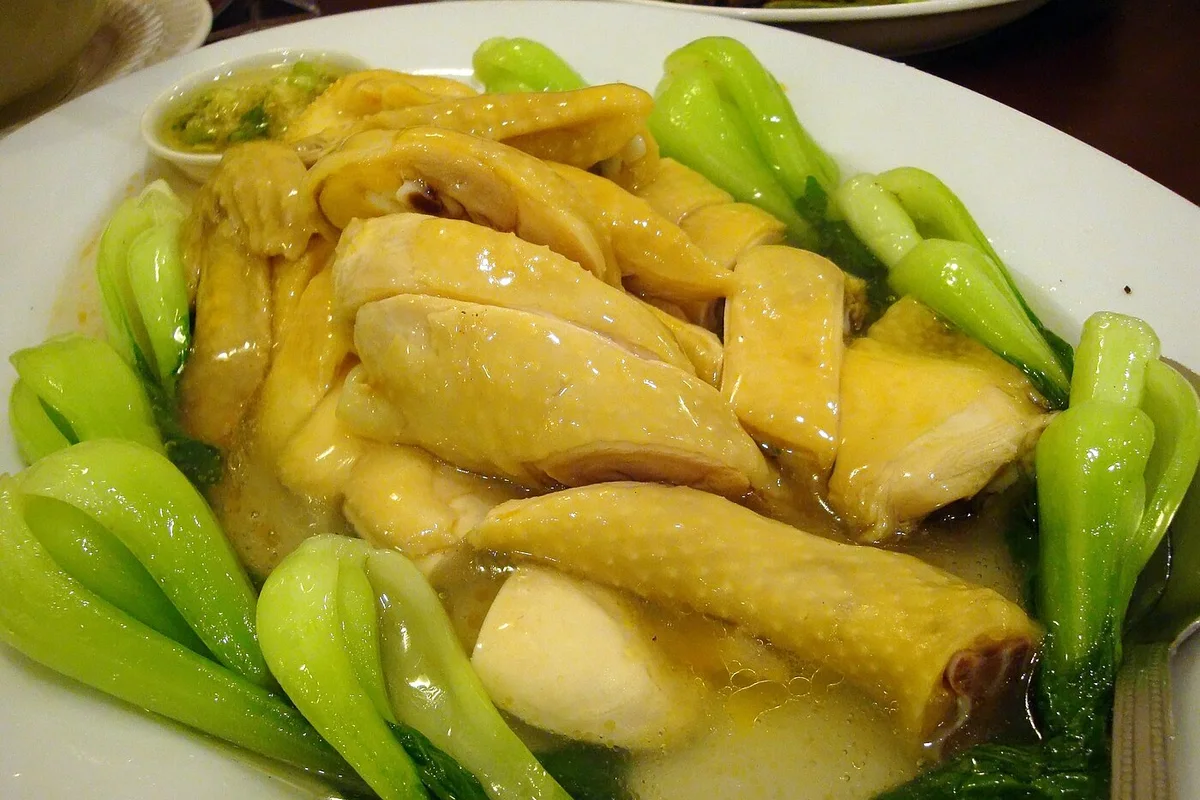
White-cut chicken puts the bird itself fully on the table
White cut chicken is a Cantonese expression of restraint: a whole chicken is gently poached or steeped until just cooked, rested, then chopped through the bone and served with a ginger-scallion condiment. Its pale appearance is deliberate. The dish asks diners to notice the bird’s flavor, supple skin and juicy meat instead of a dark sauce or roasted crust.
Common ingredientsWhole chicken, water or light stock, ginger, scallion and salt, plus ginger-scallion oil, sand ginger or light soy for dipping.
01
Order by party size, preferred cuts and serving temperature
How to order it
Ask whether the order is a standard portion, half chicken or whole bird, and expect bone-in pieces. Taste one piece before adding sauce so you can judge the skin, juice and chicken flavor. Use ginger-scallion oil sparingly and eat carefully around small chopped bones. Color near a bone is not a reliable food-safety test. If the meat has an obviously raw texture, releases bloody liquid or causes concern, ask the restaurant to verify or recook it. Order it with rice and a vegetable or soup for a balanced Cantonese meal.
How to eat and pair it
The platter is shared, and diners often have preferred sections: breast for its clean meat, thigh for richness, or skin for its smooth bite. Ginger-scallion oil, sand-ginger sauce or light soy is used as an accent rather than poured over the entire plate. Good white cut chicken may be served warm, cool or near room temperature, but it should taste freshly prepared and remain succulent. Guangzhou, Shunde and other Pearl River Delta kitchens vary in bird, steeping liquid and cooling method; reliable complete cooking and safe holding take priority over any claim that visible pinkness proves special skill.
Easy mix-ups
Misconception: The pale color means the chicken is bland. In practice: The visual restraint is intentional. Flavor comes from the chicken, careful poaching and a fresh aromatic dip. Misconception: It should be served boneless like a Western chicken breast. In practice: Traditional Cantonese chopping leaves the bone in, giving a cross-section of the whole bird and protecting texture.
02
Judge the skin, meat, juices and flavor of the chicken
Whole chicken
A relatively young, flavorful bird is preferred because texture is exposed rather than hidden by browning or a strong marinade.
Gentle poaching liquid
Water or light stock may contain ginger and scallion. Temperature control keeps breast and leg meat tender.
Ginger-scallion oil
Finely chopped ginger and scallion mixed with hot oil and salt provides fragrance while preserving the chicken’s clean flavor.
Bone-in chopping
Cantonese service typically cuts the whole bird into bite-sized bone-in pieces, preserving skin and the natural shape of each section.
Guangzhou-style white cut chicken
The chicken is gently cooked, chilled or rested for texture, then paired with ginger-scallion oil and sometimes a light soy condiment.
Shunde ingredient-first approach
Shunde kitchens are known for emphasizing freshness and the natural character of ingredients; bird selection and exact doneness become central.
Hainanese and Southeast Asian relatives
Poached chicken traditions across southern China and Southeast Asia share techniques, but rice, sauces and service differ. They should not all be collapsed into one dish.
- Breast and leg meat fully cooked yet moist, with no raw center or dry fibrous edges
- Supple, lightly springy skin attached neatly to the meat rather than leathery or slimy
- Clean chicken aroma without heavy soy color, stale refrigeration notes or poultry odor
03
How a whole bird cooks gently and remains juicy
The cleaned whole bird is warmed through with hot liquid inside and out, then gently steeped and rested rather than boiled aggressively. Once fully cooked, it is cooled or settled under controlled conditions so the skin tightens and the juices stabilize before bone-in chopping.
Traditional color around the bone can vary with the bird and cooking method, but the chicken still requires safe handling and proper cooking. Ask the restaurant for a fully cooked version if that is your preference.
04
Cantonese cooking tests ingredient and heat with minimal disguise
White-cut chicken is a longstanding Cantonese whole-bird preparation and part of a wider southern Chinese family of gently cooked poultry. Guangzhou, Shunde and other Pearl River Delta kitchens vary in the bird, steeping liquid and cooling method; those living variations are more credible than assigning the dish to one inventor.
The pale, unbrowned finish is intentional rather than a sign of blandness. Gentle cooking, careful resting and bone-in chopping foreground the chicken’s skin, juice and natural flavor, while ginger-scallion oil, sand ginger or light soy remains an accent. Safe, complete cooking and controlled holding matter more than treating pink color near a bone as proof of either skill or rawness.
05
How to say White Cut Chicken—and what the name tells you
Pronounced bái qiē jī. Menus may call it white sliced chicken, Cantonese poached chicken, bak chit gai, bai qie ji.
White refers to the pale, unbrowned finish rather than blandness: the bird is neither coated in dark soy nor roasted to form a crust. Cut or chopped describes portioning the gently cooked whole chicken through the bone for a shared plate.
Gentle cooking protects skin and meat, but safety still sets the boundary
White cut chicken is cooked with restrained seasoning so the bird’s flavor, skin and texture remain exposed. Depending on the kitchen, the chicken may be lowered into hot water, poached gently and rested in retained heat rather than boiled violently. Aggressive bubbling tears skin and tightens the outer meat before the center is ready. The cook balances bird size, water temperature and resting time, then cools the chicken enough to firm skin and permit clean chopping.
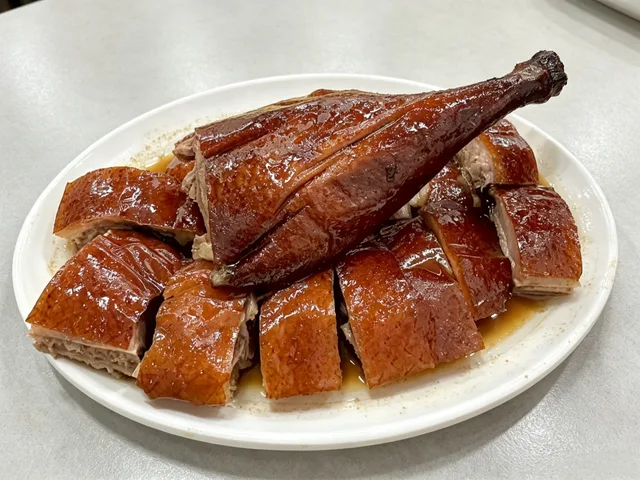
The finished bird is normally chopped bone-in with a cleaver. A good piece holds smooth pale-yellow skin, a thin layer of gelatinous tissue and moist meat together. Bones and marrow can affect color near joints, but appearance alone cannot establish safety. Chicken still requires controlled sourcing, handling and adequate cooking; diners who want no pinkness should request a fully cooked version when ordering instead of trying to diagnose doneness from one photograph.
Cooling does not mean the plate should taste refrigerator-cold and stale. Many restaurants serve the chicken around room temperature so skin remains supple and meat flavor is clear. Long uncovered holding dries the cut surface; chopping far ahead releases juices onto the plate. Busy turnover and chopping to order are therefore more useful clues than a perfectly uniform color.
The dipping sauce should sharpen a quiet chicken, not replace it
Ginger-scallion oil is a familiar Cantonese partner: minced or pounded ginger and scallion meet hot oil and salt, producing fresh aroma and richness. Some Guangdong and Hainan tables use sand ginger, light soy, chilli or citrus-influenced dips. Taste one piece plain before choosing a sauce. If every bite is submerged, it becomes impossible to judge skin, meat or the careful low-seasoning cookery that defines the dish.
White cut chicken is a broad southern Chinese method, while Wenchang chicken identifies a particular Hainan poultry tradition and ingredient identity. Southeast Asian Hainanese chicken rice developed from related Hainanese foodways but includes seasoned rice, broth and its own sauces. These foods can illuminate one another without becoming synonyms. A Cantonese white-cut plate should be named for its method and bird, not automatically sold as Hainanese chicken rice without rice.
Order a quarter or half bird according to table size and ask whether upper or lower portions can be chosen. Leg-side pieces are richer and more forgiving; breast pieces show moisture control clearly. Bone-in chopping is normal, so eat carefully and provide another dish for children or diners who need boneless meat. Pair the chicken with rice, greens and soup; several other pale poached meats on the same table provide less contrast.
Confirm the bird and portion
Free-range, specialty-breed and standard chickens differ in chew and price. Ask what the restaurant actually serves rather than assuming yellow skin proves one breed.
Keep dips separate for allergies
Soy, sesame oil and shared utensils may be present even when ginger-scallion sauce looks simple.
Notice the chop
Even bone-in pieces with intact skin and limited splintering show more care than a pile crushed by an uncertain cleaver.
Because the chicken is mildly seasoned and commonly served cool or near room temperature, freshness and holding are unusually exposed. The plate should arrive promptly, with no dried edges, stale refrigerator odor or warm puddle from long display. Leftovers belong in the refrigerator quickly and should be reheated according to safe poultry guidance; they will not retain the same supple skin as the first service.
Sources