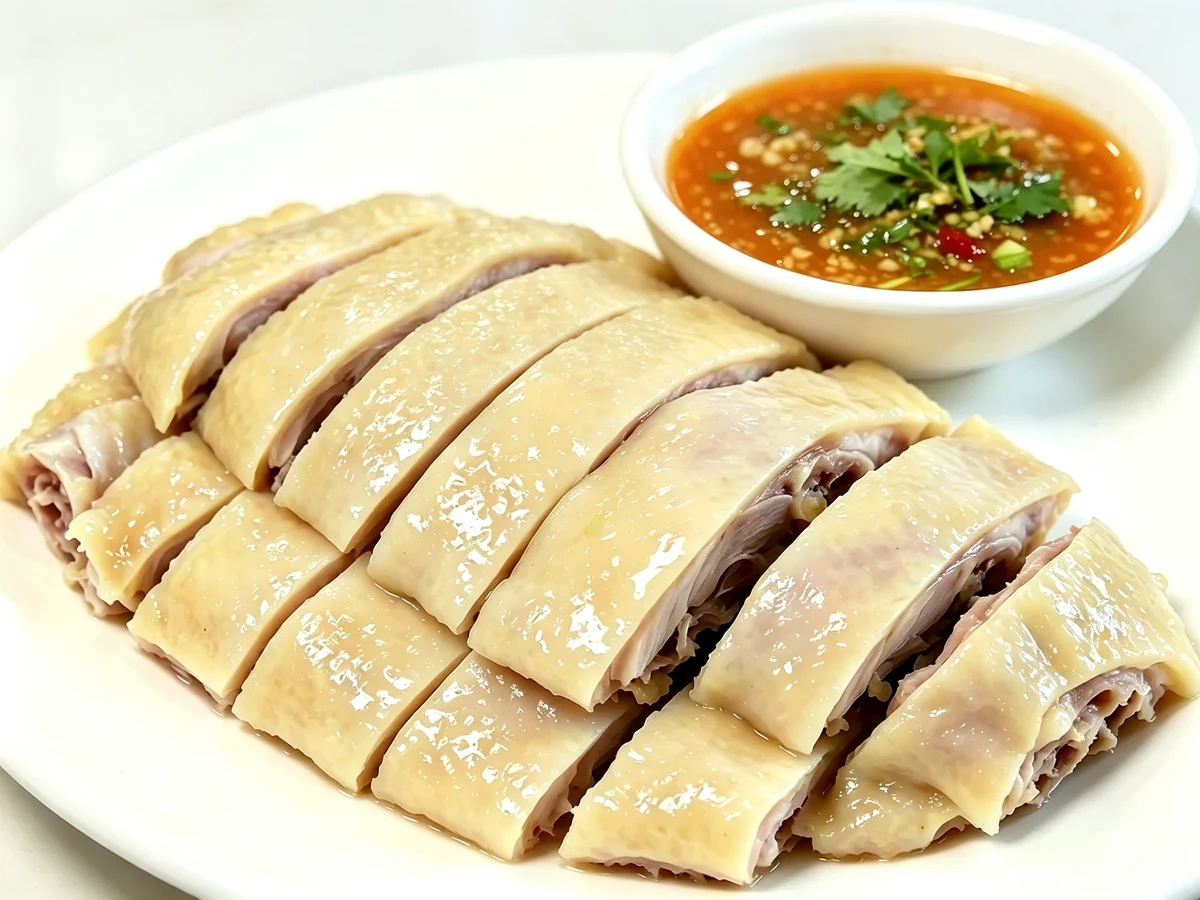
Wenchang chicken names both a regional product and a Hainan dish
Wenchang chicken names both a protected Hainan regional poultry product and the island dish that puts it at the center of the plate. In the classic white-cut preparation—báiqiē or báizhǎn jī—the whole bird is gently cooked, rested and chopped bone-in. The goal is not blandness but an exact natural texture: thin golden skin, a narrow layer of fat and meat that is tender yet still firm, sharpened at the table with ginger, garlic, soy and tart Hainan small citrus.
Common ingredientsWenchang chicken, ginger, garlic, soy sauce, salt and tart local citrus such as small green oranges.
01
Confirm whether it is true Wenchang chicken or Wenchang-style poached chicken
How to order it
Ask whether the restaurant is serving actual Wenchang chicken or a chicken cooked “Wenchang style.” Expect bone-in cross-cut pieces unless boneless service is stated. Taste one piece without sauce before judging the bird and cooking. Use the ginger-garlic-citrus dip lightly; it should brighten rather than cover the meat. Order chicken-fat or chicken-stock rice when available, plus a green vegetable or soup. A half bird is usually more practical for two or three diners; confirm the portion before ordering.
How to eat and pair it
Wenchang chicken is a hospitality and banquet dish across Hainan, commonly shared at the center of the table. Diners choose pieces that combine skin and meat, then add only enough dip to sharpen them. Hainan government material repeats a Ming-emperor naming story, but explicitly presents it as legend; it should not be used as documented proof of the dish’s origin. Stronger evidence comes from the protected production specification, modern agricultural records and earlier written descriptions of Wenchang poultry quality. Migration later carried Hainanese chicken-and-rice traditions through Southeast Asia, where Singaporean and Malaysian forms developed their own rice, sauces and service. Related does not mean identical.
Easy mix-ups
Misconception: Wenchang chicken is simply another name for Singaporean Hainanese chicken rice. In practice: The dishes are historically related through Hainanese migration, but the island specialty centers the named chicken and local white-cut service. Misconception: Pale meat means the dish is underseasoned. In practice: Restraint is deliberate; bird quality, texture and the table dip carry the experience.
02
The chicken, skin and doneness matter more than a heavy sauce
Protected Wenchang chicken
The geographical-indication specification ties the name to Wenchang’s defined production area, breed and husbandry. A generic poached chicken elsewhere does not automatically become Wenchang chicken.
Gentle moist heat
Careful poaching or steeping sets the skin and cooks the meat without squeezing out its juices.
Fresh dipping sauce
Ginger, garlic, soy, salt and tart small citrus provide aroma and lift at the table.
White-cut Wenchang chicken
The benchmark island presentation, focused on the bird and a freshly mixed dip.
Chicken with fragrant rice
Cooking liquid and chicken fat may season rice on Hainan, a local practice related to but not identical with diaspora chicken-rice traditions.
Coconut-stewed Wenchang chicken
Hainan sources also document coconut and chicken preparations. This is a different dish from the restrained white-cut benchmark.
- Thin glossy golden skin that remains attached to the meat
- A narrow translucent fat layer rather than heavy flabby skin
- Juicy meat with gentle firmness, not cotton-soft or stringy
03
Whole-bird poaching and resting make the apparent simplicity possible
The bird is gently poached, rested and chopped bone-in, then served with a freshly mixed aromatic dipping sauce.
Wenchang chicken is prized for its texture, but it still requires safe handling and proper cooking. If you prefer no pinkness near the bone, say so when ordering rather than judging only after the plate arrives.
04
From a Wenchang breed to the center of a Hainan banquet
Wenchang chicken takes its name from Wenchang in northeastern Hainan and is traditionally ranked first among the island’s four famous dishes. Both the local breed and its raising practices support the name.
White-cut Wenchang chicken is closely tied to hospitality, festivals and family banquets. Hainanese migration later helped inspire related chicken-and-rice traditions across Southeast Asia.
05
How to say Wenchang Chicken—and what the name tells you
Pronounced wén chāng jī.
Wenchang identifies a Hainan poultry tradition, not any pale poached chicken
Wenchang chicken is named for Wenchang in northeastern Hainan and refers to a locally rooted poultry product and food tradition. The name is more specific than white-cut chicken, which describes a cooking method found across southern China. A restaurant outside Hainan may prepare chicken in a Hainan style, but it should not claim Wenchang origin or product identity without a traceable bird.
The prized texture is often firmer and more chicken-forward than industrial birds selected only for softness. Skin, a thin fat layer and meat are eaten together, and bone-in chopping lets diners compare breast, leg and joint areas. Firm does not mean dry or tough. Moist meat, supple skin and clean poultry aroma remain the quality goals.
White-cut preparation is common because restrained poaching or steeping reveals the bird. Hainan kitchens also use other preparations, and not every Wenchang chicken meal is identical. The useful distinction is between the ingredient identity and the cooking method: one names the bird and place, the other explains how a particular plate was cooked.
A bright Hainan dip supports the chicken while proper cooking keeps it safe
Dips may include ginger, garlic, light soy, chilli and small local citrus, creating a sharper profile than Cantonese ginger-scallion oil alone. Recipes vary by shop. Taste the chicken plain first, then add acid and salt in small amounts. A strong dip can make any bird exciting for one bite, but it cannot restore dry breast meat or stale skin.
Traditional preferences around color near the bone should not replace food-safety control. Bird age, bone and cooking method affect appearance, yet chicken still needs safe sourcing, handling and adequate cooking. Diners who require no pinkness should request fully cooked chicken when ordering. Raw and cooked tools must remain separate, especially when a restaurant also offers chicken hot pot.
Ask whether the portion is a quarter, half or whole bird and whether upper or lower sections can be chosen. Leg-side pieces are richer; breast makes moisture control easy to judge. Bone-in service is normal, so children and diners needing boneless food require another arrangement. Pair with rice, greens, soup or other Hainan dishes rather than covering the plate in dip.
Hainanese chicken rice is a descendant tradition, not another name for the Hainan plate
Migrants from Hainan carried chicken cookery to Southeast Asia, where Singaporean, Malaysian and other Hainanese chicken-rice traditions developed seasoned rice, broth and region-specific sauces. They are historically related to Hainan foodways, but a plate of Wenchang chicken in Hainan is not automatically served as the composed rice dish familiar abroad.
The distinction helps both foods. Wenchang chicken foregrounds the bird, Hainan place and local serving styles; Hainanese chicken rice foregrounds a complete meal of chicken, aromatic rice, broth and sauces shaped in Southeast Asia. Neither needs to be described as the authentic version that invalidates the other.
On an English menu, look for Wenchang chicken, Wenchang ji or 文昌鸡 when the specific Hainan specialty is intended. “Hainan chicken” can be ambiguous. Ask about bird origin, cooking method and whether rice is included instead of relying on a translated title alone.
Build the Hainan table around the bird instead of ordering three similar chicken dishes
A half or whole Wenchang chicken can anchor a shared meal with rice, a vegetable, seafood or a light soup. Adding coconut chicken hot pot and another white-cut chicken at the same time may be interesting for a deliberate comparison, but otherwise repeats gentle poultry textures. Ask portion weight and whether head, feet and offal are included so the table knows what it is buying.
If the restaurant presents the whole bird before chopping, use that moment to confirm identity and portion, not to judge doneness by skin color. Once chopped, eat breast pieces early before exposed surfaces dry. Leg and wing pieces tolerate a little more time but contain more bone.
Takeaway should keep dip separate from chicken. Acid and salt soften skin, while a sealed hot container traps steam. Refrigerate leftovers promptly; serving a specialty bird cool does not exempt it from ordinary poultry storage rules. For the best comparison at home, taste one piece without sauce after it loses the refrigerator chill, then add the ginger-scallion or kumquat dip sparingly. Cold fat can mute the bird’s aroma, but long room-temperature warming is not a safe remedy.
Sources
Sources and further reading
- Wenchang Chicken: preparation and hospitality traditionPeople’s Government of Hainan Province ↗
- Geographical indication product: Wenchang chickenHainan Administration for Market Regulation ↗
- Wenchang chicken: four centuries of breeding, quality and geographical-indication protectionDepartment of Agriculture and Rural Affairs of Hainan Province ↗
- Hainan cuisine and sliced boiled Wenchang chickenPeople’s Government of Hainan Province ↗