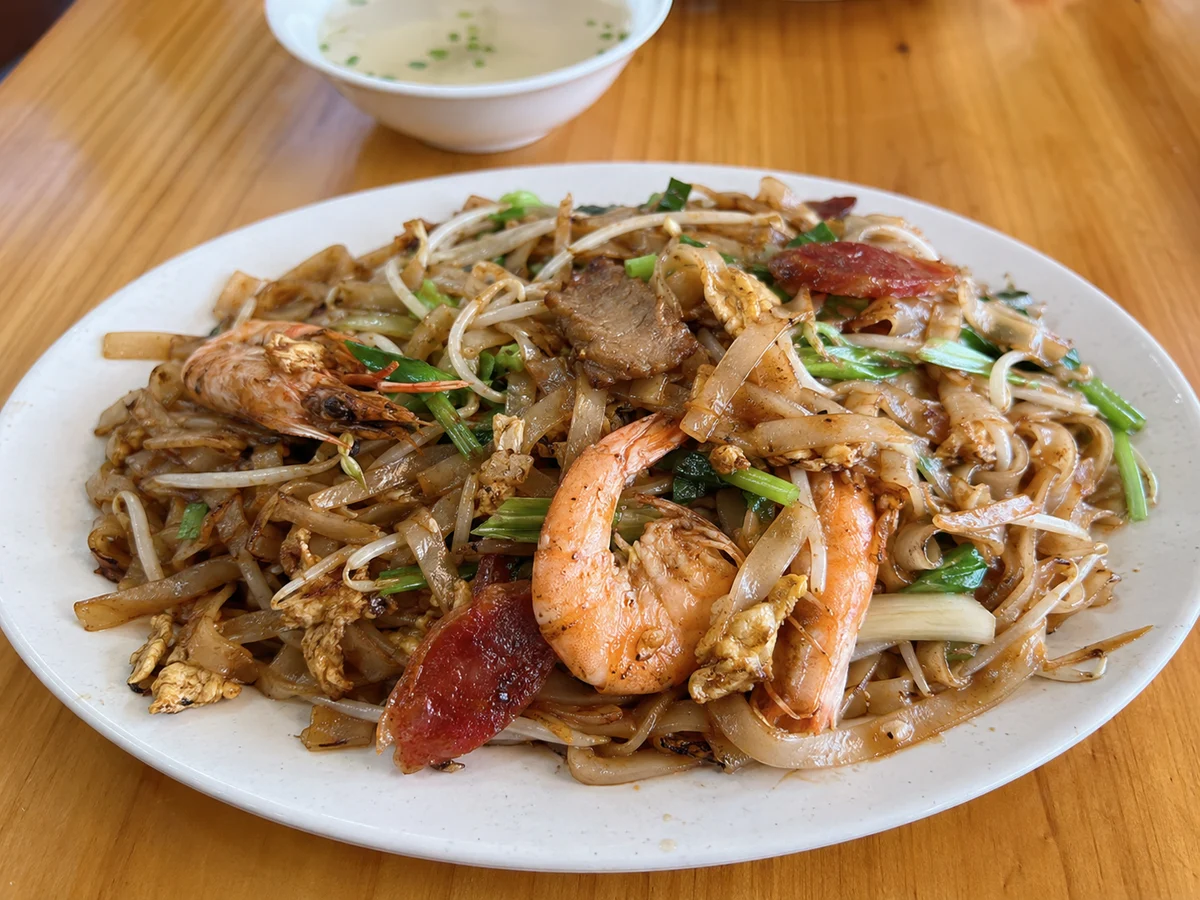
Meet Hainan’s home-style fried rice noodles
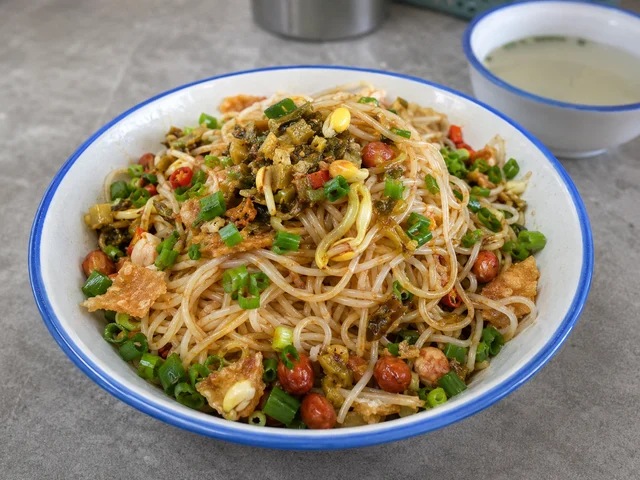
Hainan fried rice noodles are an everyday wok dish whose vegetables and protein can follow the market. Separate strands, light browning and a thin savory glaze define the plate.
Common ingredientsRice noodles, bean sprouts, vegetables, egg, soy sauce and optional shrimp or pork.
01
Choose the noodle form before the main topping
How to order it
Choose the noodle width and one main protein, then ask about egg, shellfish sauce, chilli and shared-wok cooking before the cook starts.
How to eat and pair it
Eat as soon as the plate leaves the wok, loosening the strands rather than compressing them. A cool vegetable, soup or plain drink gives more contrast than another fried starch.
Easy mix-ups
Misconception: This is Hainan’s version of pad thai. In practice: the seasoning, noodle texture and place in the island’s fen family follow a different food tradition.
Choose one main protein and ask whether the noodles are wide, fine or pre-seasoned
Menus may offer egg, pork, beef, chicken or seafood combinations. A “special” with every protein can overcrowd the wok and make doneness difficult. Ask which version is most typical and whether chilli is cooked in or served alongside. Shellfish, fish sauce and dried seafood can appear even when the plate is not labelled seafood. Rice-noodle type affects handling. Fine noodles brown quickly and break easily; thicker or wider forms require more heat and room. Fresh wet noodles and rehydrated dry noodles behave differently. A capable shop adjusts the wok instead of using oil to force every type apart. Taste before adding more soy or chilli.
02
How stir-frying changes a Hainan rice-noodle meal
Fresh rice noodles carry surface moisture, so the cook must vent steam before soy seasoning and oil make the strands heavy. Bean sprouts and greens enter on a short clock, while egg, pork or seafood is cooked in an order suited to the chosen topping.
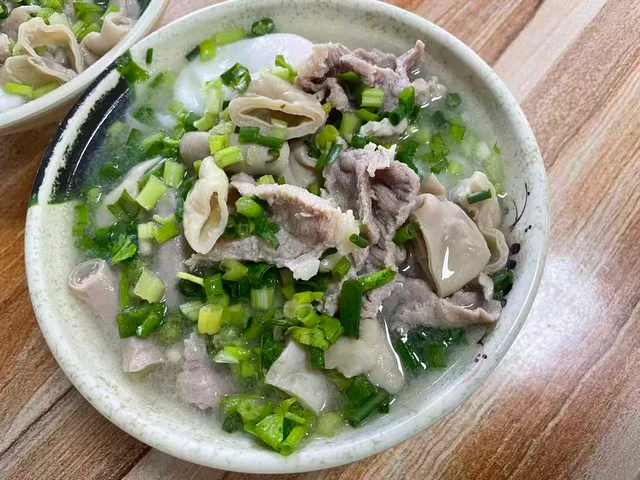
Within Hainan’s familiar fen group, this is the plate whose defining texture comes from direct wok heat. Hainan fen and Lingshui suanfen are dressed, Baoluo fen may use gravy or broth, and Hou’an fen is a pork-broth breakfast soup.
03
Separated strands, toasted edges and a thin glaze define wok aroma
Fresh rice noodles
Wide or medium local noodles are used according to stall and city; they must survive tossing without turning mushy.
Bean sprouts and greens
Crisp vegetables keep the plate from becoming uniformly soft.
Egg, meat or seafood
Toppings vary with market availability, so the dish is a format rather than a fixed recipe.
Seafood fried noodles
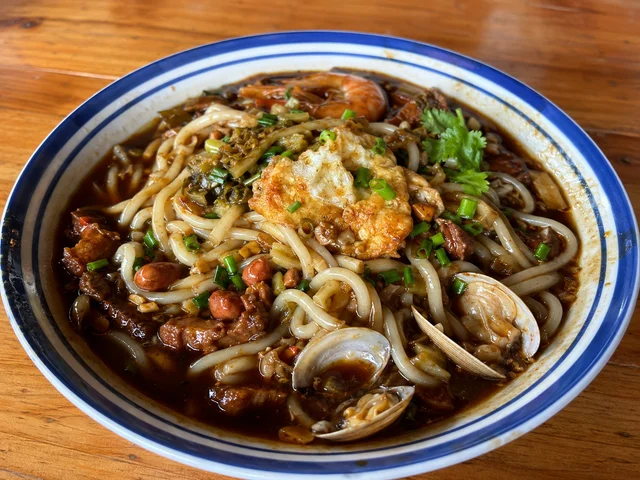
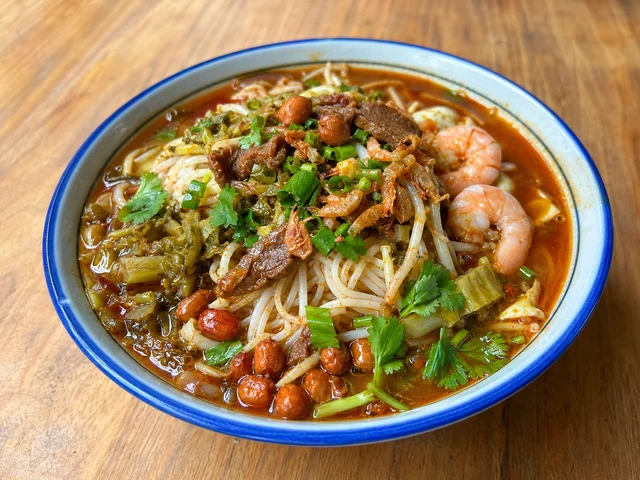
Shrimp, squid or shellfish connect the wok plate to coastal markets.
Egg and pork fried noodles
A common everyday version with bean sprouts, greens and simple soy seasoning.
- Separate noodles rather than a clumped mass
- Vegetables that retain some snap
- Aromatic browning without burnt bitterness
04
Managing moisture and ingredient order in one wok
The noodles and toppings are tossed over high heat until lightly charred, evenly seasoned and still pleasantly chewy.
The wok should separate and lightly toast the noodles without grinding them into oily fragments
Hainan fried rice noodles may use local rice noodles with egg, vegetables, meat or seafood and seasonings suited to the shop. The cook loosens the noodles, drives off excess moisture and tosses them with components added according to cooking time. Finished strands should remain identifiable with small browned edges and a light coating. A dense greasy mat or a plate of broken pieces points to crowding, wet noodles or excessive stirring. Wok hei is a fleeting roasted aroma from high heat and fast movement, not black soot, burnt soy or raw smoke. Bean sprouts and greens should retain some freshness, egg should be cooked and meat or seafood fully done. Sauce distributes color and savoriness but should not pool beneath the noodles.
An active single-portion wok gives better odds than a deep tray of finished noodles
Choose a counter cooking orders in manageable batches. Pre-fried noodles held under a lid steam themselves soft; repeated reheating dries proteins and makes oil more apparent. A clean hot wok, prepared mise en place and rapid plating matter more than a dramatic flame. If the same wok handles allergens, ask about cleaning between orders. Pair the plate with clear soup, pickled vegetables or fresh fruit rather than another fried starch. One portion can be a complete breakfast or casual meal. During a Hainan noodle comparison, use it to understand what direct wok heat does, while soup and mixed styles reveal other local techniques.
Vent steam, refrigerate promptly and reheat fast in a wide pan
A sealed hot box softens noodles and bean sprouts. Vent according to safe packaging practice and avoid leaving cooked rice noodles in a hot vehicle. At home, refrigerate promptly and reheat only one portion in a broad hot pan until meat and noodles are safely hot. Adding a splash of water can loosen clumps, but too much turns stir-fry into a wet braise.
Serve the wok plate immediately and use a second dish for freshness
Ask for the fried noodles after soup or cold dishes are already on the table, so they do not wait under a lid. A green vegetable, pickled cucumber or clear broth provides the moisture and acidity that should not be forced into the wok plate itself. When sharing, lift from different parts of the platter to distribute egg and protein instead of stripping the visible toppings first.
The final strands reveal whether the wok controlled water and oil
At the beginning, steam and fresh aromatics can make almost any plate appealing. Halfway through, inspect what has collected below. A small amount of seasoning is normal; a puddle of water means vegetables or wet noodles flooded the wok, while a heavy oil pool suggests lubrication replaced heat. The final strands should remain separate and flavorful without needing that liquid. Compare a simple egg-and-vegetable order with a meat or seafood version. The simple plate exposes noodle handling and wok aroma; the second tests whether added protein was cooked safely without releasing excess water. Ordering both with similar chilli makes the comparison about technique, not sauce. If reduced oil is requested, understand that the cook still needs enough to prevent sticking and carry heat. A thoughtful adjustment uses a clean hot wok and smaller batch. Simply steaming the noodles under a lid may reduce visible oil but produces a different, softer dish.
05
Where fried noodles sit on Hainan’s rice-noodle map
Fried rice noodles sit comfortably in Hainan’s market and home cooking because one wok can turn fresh noodles, a small amount of protein and crisp vegetables into a complete quick meal.
The dish also shows why the island’s noodle map cannot be reduced to soup versus dry bowls: direct heat creates toasted edges and wok aroma that assembled and broth-based fen do not pursue.
06
How to say Hainan Fried Rice Noodles—and what the name tells you
Pronounced hǎi nán chǎo fěn. Menus may call it Hainan chao fen, hǎinán chǎofěn, Hainan stir-fried rice noodles.
Sources