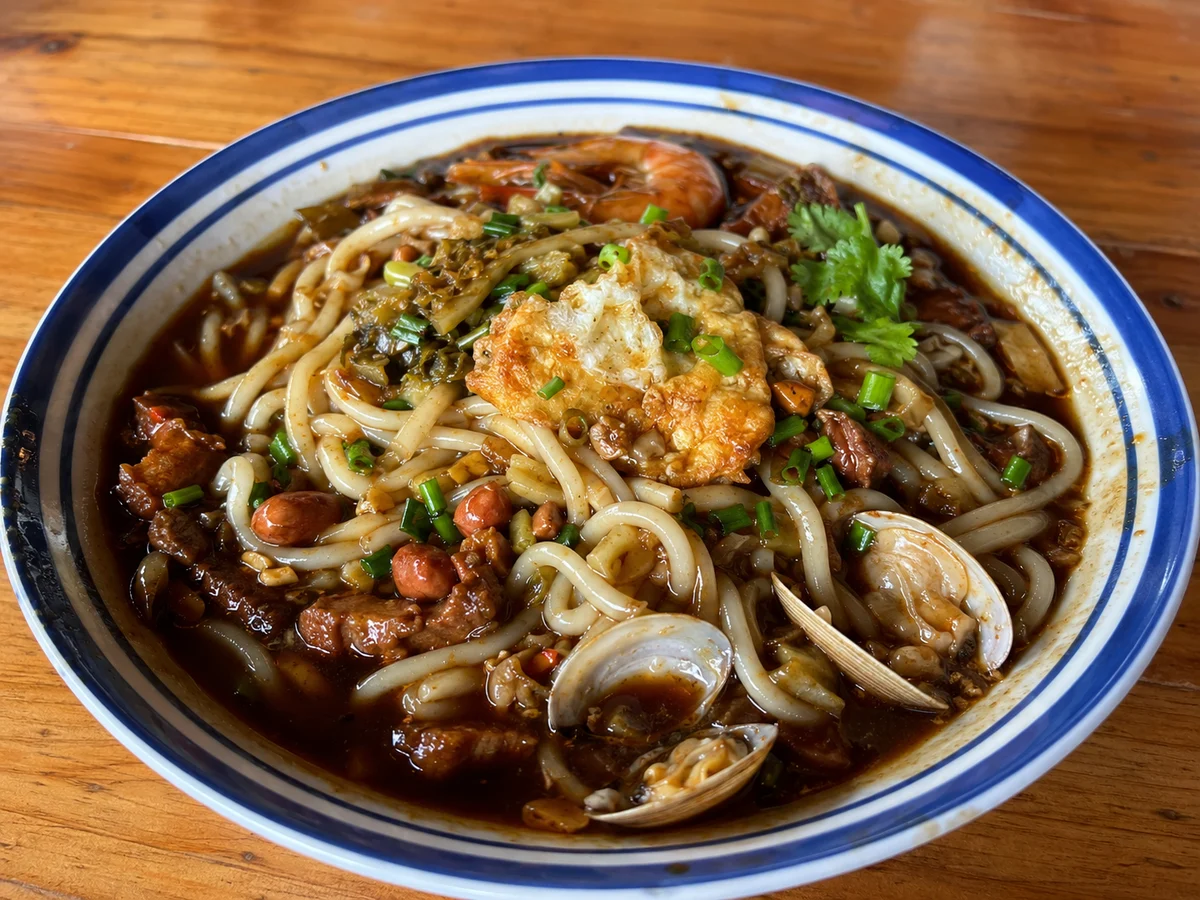
Meet Baoluo’s thick rice noodles from eastern Hainan
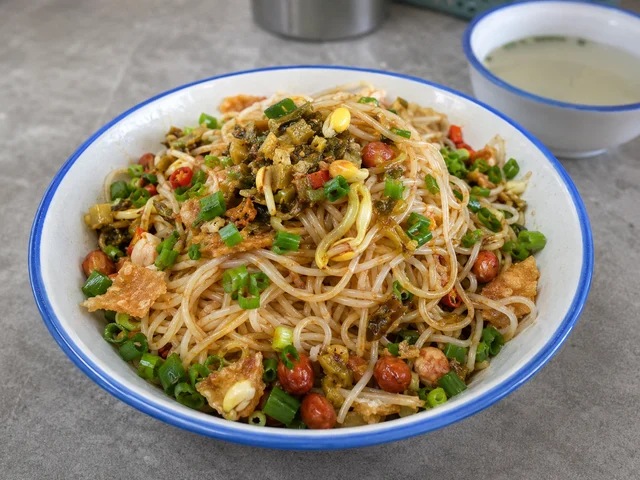
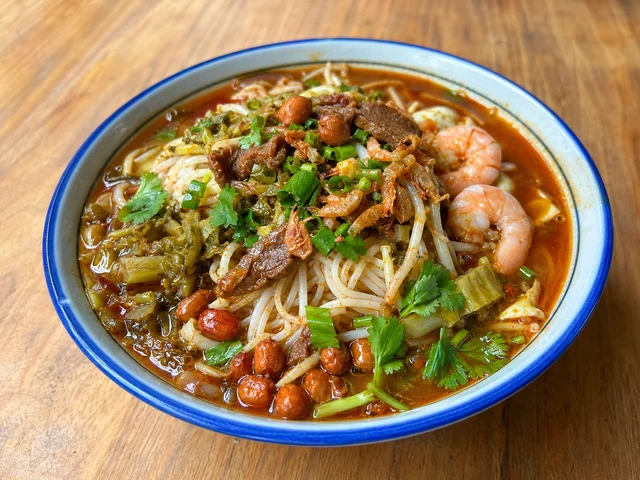
Baoluo rice noodles take their name from Baoluo Town in Wenchang. The noodles are broader and more substantial than fine Hainan fen, with a smooth surface and gentle bite. They may arrive in a fragrant soup or in a mixed bowl with a thick savory gravy, beef or pork, peanuts, bamboo shoots, pickles and herbs.
Common ingredientsThick rice noodles, pork-bone broth or braised gravy, shredded pork, beef jerky, bamboo shoots, pickled greens and peanuts.
01
Choose clear broth or thick gravy first
How to order it
Choose tāng, soup, for a lighter bowl or yān, mixed, for a more concentrated dressing. Ask whether the shop uses broad fresh noodles or a thinner factory-made substitute. Ask about the house meat, dried seafood and offal toppings rather than assuming one fixed set. Add chilli only after tasting the broth or gravy.
How to eat and pair it
Locals often identify a favorite shop by the balance of its broth or gravy and the texture of its noodles. The mixed bowl should be turned thoroughly so the gravy reaches the lower strands; the soup version is eaten promptly while the noodles still have a gentle bite. The bowl is filling but casual, and its Wenchang identity matters more than the broad English label “rice noodles.”
Easy mix-ups
Misconception: Baoluo fen is simply another name for Hainan fen. In practice: It is a Wenchang specialty with a different noodle gauge and its own soup and mixed presentations. Misconception: Only the soup version is traditional. In practice: Both soup and dressed forms are encountered; individual shops build their reputations around different balances.
Ask whether the house bowl is soup, mixed or sour-rich before choosing condiments
Baoluo fen can be confusing in translation because vendors and diners discuss different service styles under the name. Point to the desired bowl and ask whether it is qingtang, a clearer soup, or a thicker sauced version where those options exist. Confirm meat cut, peanuts and pickles. Do not add vinegar merely because another Hainan noodle was sour. A small bowl is enough for a first comparison. Lift strands early, taste broth alone and then combine with topping. Thicker noodles hold longer than very fine Hainan fen but still absorb salt and soften. If sharing, divide with broth and garnish rather than taking all noodles first.
The thick rice strand is only one part of a potentially complex bowl
Soy sauce may contain wheat, toppings may include peanut, sesame, shellfish or meat stock and shared noodle baskets create cross-contact. Ask about the complete version. Vegetarian diners need a separate broth, not only meat removed from the top. Pickled condiments can also contain fish or shrimp seasoning.
02
A thicker Wenchang noodle with two established serving routes
Baoluo fen comes from Baoluo Town in Wenchang and is distinguished first by its noodle: thicker and more resilient than fine Hainan fen. That extra body lets it work in two directions. A soup bowl pairs the noodles with a fragrant meat broth, while a mixed version uses a fuller braised gravy and layered toppings. The two forms are not signs that one shop is inauthentic; they are established branches of the same named local food.
For a first order, ask “soup or mixed?” before choosing meat or chilli. The answer matters more than a long topping list. Fine Hainan fen is normally organized around dressing that coats delicate noodles; Hou’an fen is organized around pork broth; Lingshui suanfen around sour sauce; and fried rice noodles around wok texture. Baoluo fen should retain a noticeable chew in either soup or gravy, so a bowl of very fine strands with a generic topping mix is unlikely to show what makes the Wenchang specialty distinct.
03
Thick noodles, broth and toppings must support one another
Baoluo noodles use a thicker rice strand whose chew must stand up to a seasoned broth or sauce
Associated with Baoluo in Wenchang, the dish commonly features rounder, thicker rice noodles than Hainan fen. Shops may serve them in a savory broth, a richer sweet-sour gravy or local house form, so ask which version is on the menu. The noodle should be the first clue: substantial, smooth and resilient enough to carry liquid without vanishing. Toppings can include beef or pork, peanuts, bamboo shoots, pickled vegetables, herbs and chilli. They vary and should be disclosed. The bowl works when the broth penetrates the noodle surface while the center retains rice chew. A sauce so thick it sits on top, or a thin soup with no connection to the strands, leaves the key ingredient stranded.
Good strands bend and rebound; good broth has depth beyond sugar, salt or starch
Rice noodles should have no chalky core, gummy exterior or storage sourness. The thicker diameter creates a deliberate bite, not toughness. Clear broth should smell cleanly of its meat or bones; rich gravy should remain fluid and balanced rather than sugary paste. Pickled bamboo brings a recognizable fermented sharpness but cannot justify any rotten odor. Peanuts and fried aromatics need fresh oil fragrance. Meat should be tender and proportionate, not token crumbs. A bowl can be rustic and strongly seasoned while remaining clean. Look for active noodle cooking, hot broth and covered garnishes rather than a large pre-mixed basin that continues thickening.
A plain strand test keeps a loaded bowl honest
Before mixing in peanuts, chilli or pickles, rinse one strand lightly in a spoonful of clear broth and taste it. The noodle should carry clean cooked-rice aroma, a smooth surface and a center that yields without chalk or glue. This small test distinguishes genuine thick-noodle character from a bowl whose excitement comes entirely from toppings. Then return to the complete seasoned bite and notice whether the strand remains present.
Clear soup and rich sauce reveal different strengths of the same thick strand
In a clear version, the noodle must carry meat-stock aroma without a heavy coating; its clean rice chew is exposed. In a rich version, the thicker strand resists sweet-sour gravy and pickled toppings. If both are available, share small bowls and keep protein choices similar. This shows how the noodle behaves rather than turning the comparison into beef versus pork. Check the last third of each bowl. Clear broth should not become bland water after noodles absorb salt, and rich sauce should not set into starch paste. A capable shop calibrates liquid for the serving time. Diners help by eating promptly and not leaving the bowl under a fan until its fat and starch congeal. Ask locals which style that particular counter is known for instead of demanding one universal Baoluo formula. Variation is informative when the shop states its version. The town association and substantial noodle remain anchors even as broth and garnish move.
Thicker rice noodles
Their width and softness give Baoluo fen a more substantial bite than fine Hainan fen.
Broth or gravy
Soup and mixed forms coexist; shop style matters more than a single universal formula.
Savory toppings
Beef, pork, bamboo shoots, peanuts and pickled vegetables are common but vary by vendor.
Baoluo soup noodles
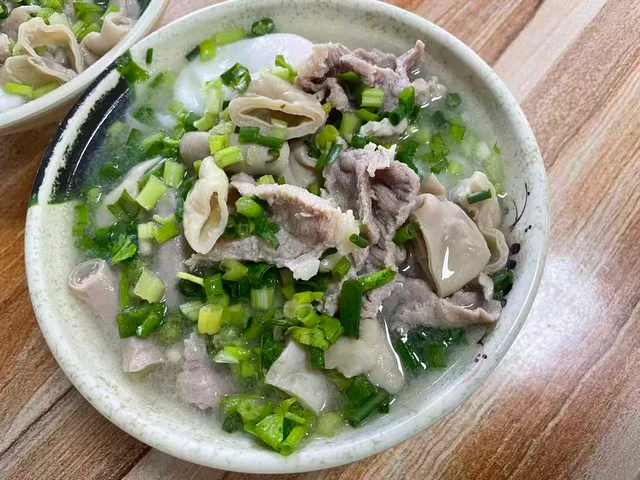
Noodles sit in a fragrant meat broth with toppings and herbs.
Mixed Baoluo noodles
A richer gravy clings to the strands, supported by peanuts, pickles and meat.
- Noodles visibly thicker than fine Hainan fen
- A broth or gravy with clean meat aroma
- Toppings that support rather than bury the rice-noodle texture
04
Noodle diameter controls cooking and absorption
The noodles are blanched to order, then paired with either fragrant broth or gravy and a generous set of savory toppings.
Compare the forms
Where Baoluo noodles fit among Hainan’s local noodle styles
Compare noodle thickness and wet-or-dry format before toppings. Acid, broth and handling—not the number of garnishes—separate these four local bowls.
| Style | Noodle and format | Main quality line |
|---|---|---|
| Baoluo | Thicker rice noodles; clear broth or thicker gravy | The noodle must hold its texture while broth or gravy remains distinct |
| Hainan rice noodles | Fine noodles; usually mixed with a light gravy | A thin coating and varied toppings without losing the rice noodle |
| Lingshui sour noodles | Fine noodles; sour mixed format | Bright acid first, then restrained sweetness, savor and crunch |
| Hou’an | Broth noodle | Pork-and-pepper broth leads while the noodle stays supportive |
05
From Baoluo in Wenchang to noodle shops across Hainan
Baoluo fen takes its name from Baoluo Town in Wenchang, where it is recognized as a local specialty and part of the city’s food heritage.
The identity travels with its place name: Hainan shops may serve it in broth or mixed with gravy, but the thicker noodle and Wenchang association distinguish it from fine Hainan fen.
06
How to say Baoluo Rice Noodles—and what the name tells you
Pronounced bào luó fěn. Menus may call it Baoluo fen, Wenchang rice noodles, bàoluó fěn, Hainan noodle soup.
Sources