Separate Hainan’s cold dessert from herbal soups with the same name
Hainan qingbuliang is an assembled cold dessert of cooked beans and grains, chewy starches or jellies, taro, fresh coconut and fruit, finished with coconut milk, coconut water, sweet syrup and often ice. Its name literally suggests something “clearing, supplementing and cooling,” but on Hainan it functions as night-market dessert, not a medical prescription. The same name also belongs to herbal soups and drinks in Guangdong, Hong Kong and Southeast Asia, so “Hainan coconut qingbuliang” is the clearest English description.
Common ingredientsCoconut milk, coconut water or another lightly sweet liquid, plus ice, red and mung beans, barley, taro, jelly, coconut flesh and seasonal fruit; combinations vary.
01
Build a qingbuliang with contrasting textures
How to order it
Choose a coconut-water or coconut-milk base rather than assuming every shop uses the same liquid. Ask which toppings are included and remove only ingredients you dislike; texture contrast is the point of the bowl. Confirm peanuts, dairy ice cream, condensed milk, quail egg and gelatin if allergies or dietary rules matter. Request less syrup or no condensed milk if you want the lighter Hainan profile. Eat soon after assembly, before melting ice dilutes the coconut and softens every texture into sameness.
How to eat and pair it
At Haikou night markets and specialist sweet shops, prepared ingredients sit in separate containers and are combined to order. The diner moves between beans, grain, jelly, fruit and coconut instead of blending the bowl into a drink. Coconut-milk versions are now the visual icon, while government and local-media sources also record coconut-water, sugar-water and smoothie forms. A popular military-doctor origin story circulates in Hainan promotional writing, but it is not secure documentary history and resembles broader southern Chinese medicinal-food narratives. The safe claim is that Hainan transformed the shared name into a distinctive tropical street dessert.
Easy mix-ups
Misconception: Qingbuliang is one fixed recipe. In practice: It is an assembled dessert family; bases and toppings vary by stall, city and era. Misconception: The name guarantees a medicinal health effect. In practice: Treat the Hainan version as a dessert. Historical naming stories and traditional-health claims should not be read as medical advice.
02
Judge the liquid base, temperature and texture contrasts
Coconut base
Coconut milk or water creates the island character; some older or lighter bowls use sweet brown-sugar water.
Cooked beans and grains
Mung bean, red bean, barley and similar ingredients should be cooked separately so each keeps its texture.
Fruit, jelly and taro
Watermelon, pineapple, coconut flesh, grass jelly, taro, tapioca pearls, macaroni or even quail egg may appear; there is no single mandatory set.
Ice and sweetness
Crushed ice cools and loosens the bowl. Syrup, condensed milk or ice cream may be added in modern versions, so sweetness and dairy content should be confirmed.
Coconut-milk qingbuliang
The now-iconic creamy Hainan bowl, rich with coconut flesh and mixed toppings.
Brown-sugar water style
A clearer, lighter sweet base that lets beans, grains and fruit remain distinct.
Coconut-water qingbuliang
A cleaner, more translucent island version that foregrounds fresh coconut and cooked toppings.
- Fresh coconut aroma without an artificial sunscreen note
- Beans and grains cooked through but not disintegrating
- Jellies, taro and fruit retaining separate textures
Why qingbuliang can look so different
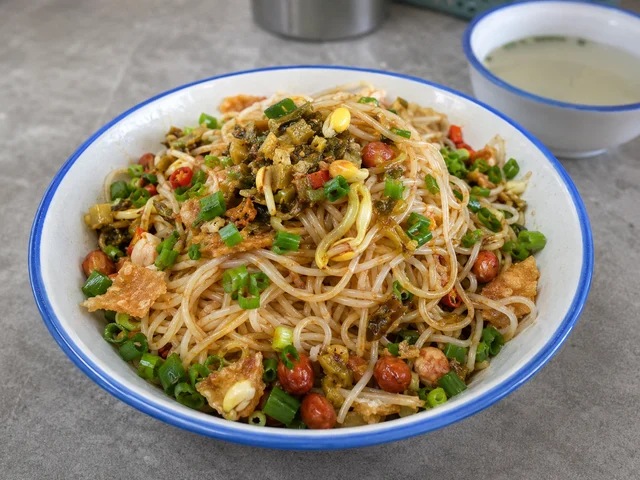
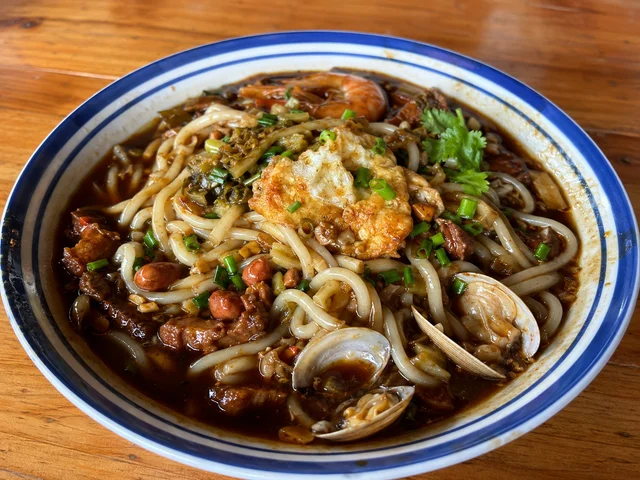
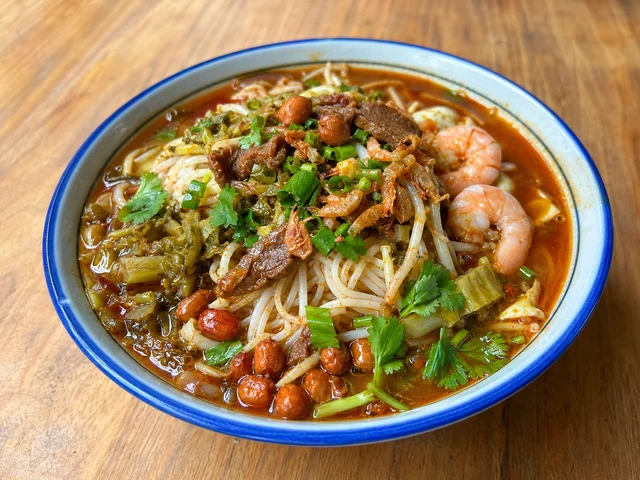
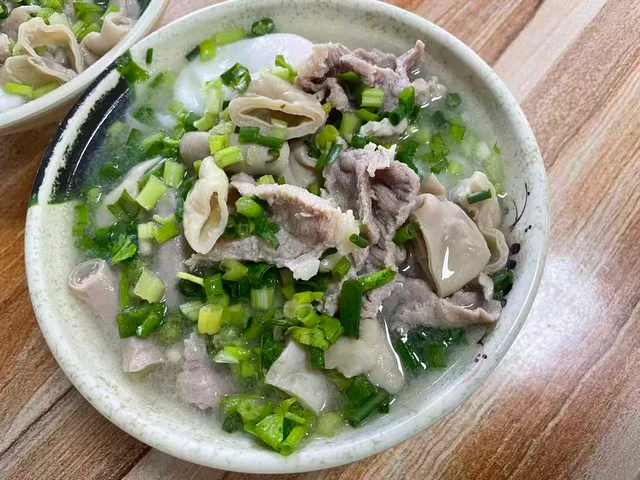
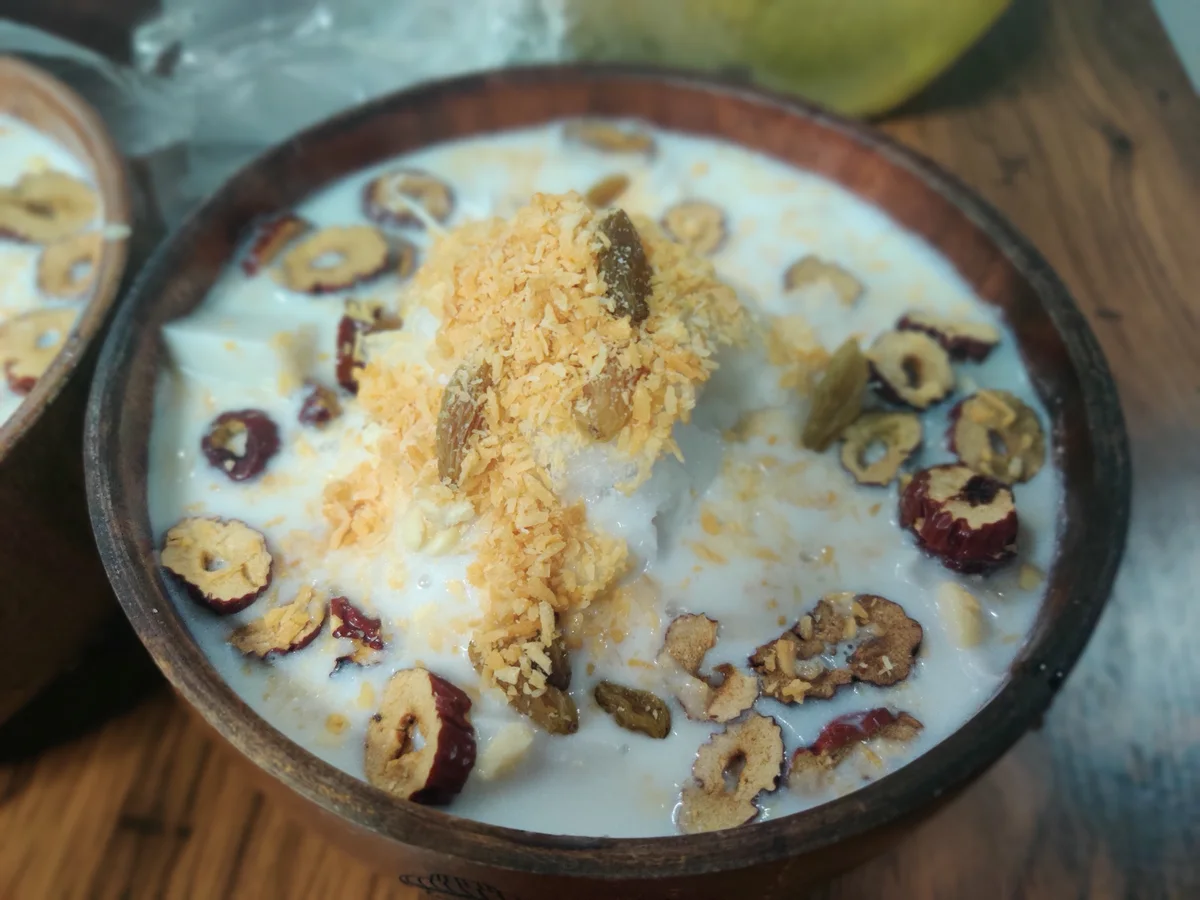
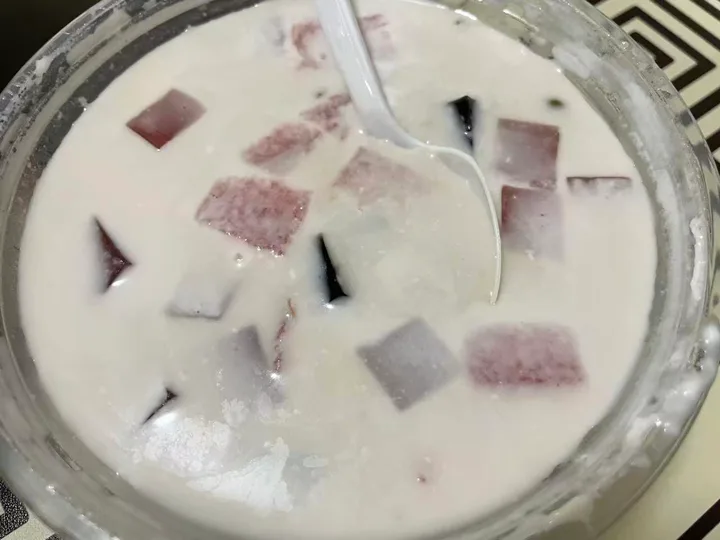
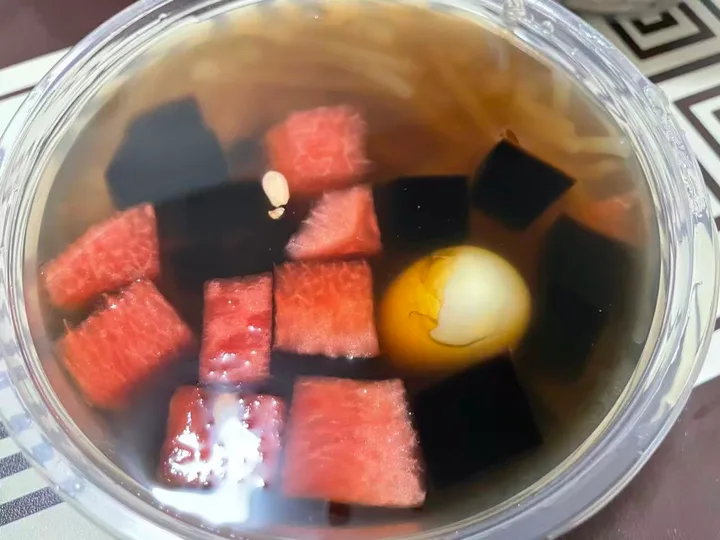
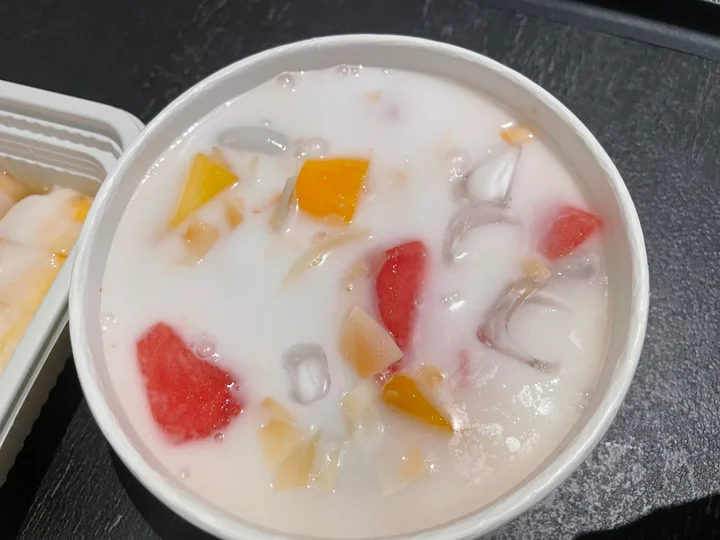
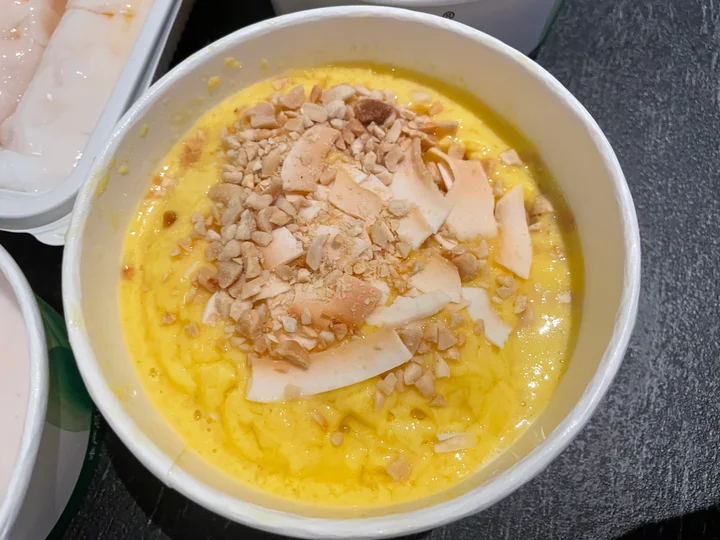
Qingbuliang has no single standard appearance. Coconut milk, coconut water or clear sweet liquid changes the base; fruit, beans, grains, jellies, ice and newer toppings change its color and texture. These four real bowls show why it is better to ask about the base and main additions than to order from one reference photo.
03
Prepare the base, cooked ingredients and fresh fruit separately
Cooked grains and beans, jellies and fresh fruit are assembled to order, then covered with the chosen chilled liquid and often ice.
04
How Hainan turned a shared name into a tropical cold dessert
Qingbuliang exists in several southern Chinese traditions, but Hainan developed a distinctive cold street-dessert form with coconut, beans, grains, fruit and jellies.
Evening stalls turn the dessert into personal assembly: customers choose components, and vendors add ice and coconut or syrup. Changing ingredients show the snack adapting without losing its cooling purpose.
05
How to say Qingbuliang—and what the name tells you
Pronounced qīng bǔ liáng.
Hainan qingbuliang is a chilled coconut dessert, distinct from savory Cantonese tonic soup
The shared name can confuse visitors. In Hainan, qingbuliang commonly arrives cold with coconut milk or coconut water, ice and a selection of beans, grains, fruit, jelly, nuts or dried ingredients. Cantonese culinary contexts may use the name for a very different herbal soup set. Look at the menu category and ask whether the order is sweet, iced and coconut-based.
No single topping list defines every Hainan stall. Common choices can include mung beans, red beans, barley-like grains, taro, watermelon, pineapple, raisins, peanuts, jelly or small pasta shapes. A good bowl organizes contrast instead of filling the cup with every available item. Ask whether toppings are fixed or selected and what costs extra.
Choose a few soft, chewy, crisp and fruity elements rather than chasing maximum quantity
Start with a coconut base and perhaps four to six toppings: one bean or grain, one chewy jelly, one fresh fruit and one nut or dried accent. Too many starches make the cup heavy; too many acidic fruits can clash with rich coconut milk. Sweetness may come from syrup as well as fruit, so request reduced syrup before assembly rather than trying to drain it afterward.
Stir enough to distribute cold coconut liquid but do not mash beans and jelly. Eat fruit and dairy-like coconut components promptly in tropical heat. Ice dilution changes the balance, so a cup intended for immediate eating may taste strong at first. Takeaway without enough cold control is a poor choice for a long excursion.
Fresh coconut aroma and well-managed chilled toppings matter more than a towering cup
Coconut milk should smell sweet and nutty, without sour fermentation or rancid fat. Beans and grains must be fully cooked yet hold shape; fruit should be fresh; jelly should be cleanly cut and springy. Shaved ice or water must come from a safe source. A bright display does not compensate for uncovered fruit sitting in heat or one spoon moving between allergen bins.
Choose stalls with chilled covered containers, frequent replenishment and clean scoops. Ask whether coconut base is made fresh, packaged or contains dairy creamer. Busy turnover helps but does not replace refrigeration. If a cup foams unexpectedly, smells sour or has slimy fruit, do not assume tropical fermentation is intended.
A refreshing cup can contain coconut, peanut, dairy, gluten and substantial sugar
Coconut is an allergen concern for some diners; peanuts, tree nuts, milk, condensed milk and shared scoops add others. Barley or pasta toppings can contain gluten, while jellies may use varied setting agents. Vegan diners should ask about dairy and honey. “Cooling” in a traditional descriptive sense does not mean medically low-calorie or suitable for unlimited consumption.
Order a small cup after a salty meal and treat it as dessert, not hydration. Refrigerate takeaway immediately and consume within the vendor’s safe guidance; ice melt and cut fruit shorten quality. Do not save a half-eaten communal cup overnight. Spoiled coconut cannot be repaired by adding more ice or syrup.
A smaller, colder cup often stays better than an overloaded one in tropical heat
Every extra topping increases assembly time and introduces another holding condition. Choose ingredients that are visibly chilled and turning over, especially cut fruit and cooked beans. A modest cup can be finished before ice disappears and coconut base warms. The largest size may spend the second half becoming dilute and microbiologically vulnerable.
For comparison, keep the coconut base constant and change only one or two toppings. This reveals whether a shop’s strength is fresh coconut, well-cooked beans, house jelly or fruit. Ordering every bin at once turns quality assessment into a contest of volume and makes allergen control nearly impossible.
If takeaway is necessary, ask for ice separately and use an insulated route. Do not assume a sealed cup is shelf-stable. Consume it as dessert soon after purchase, with plain water handling actual hydration.
Sources
Sources and further reading
- Ching bo leung: ingredients and Hainan street-dessert formHainan International Media Center ↗
- Hainan delicacies for hot weather: qingbuliang bases and toppingsHainan International Media Center ↗
- Coastal Hainan: qingbuliang and coconut milkPeople’s Government of Hainan Province ↗
- Haikou night-market qingbuliangPeople’s Government of Hainan Province ↗