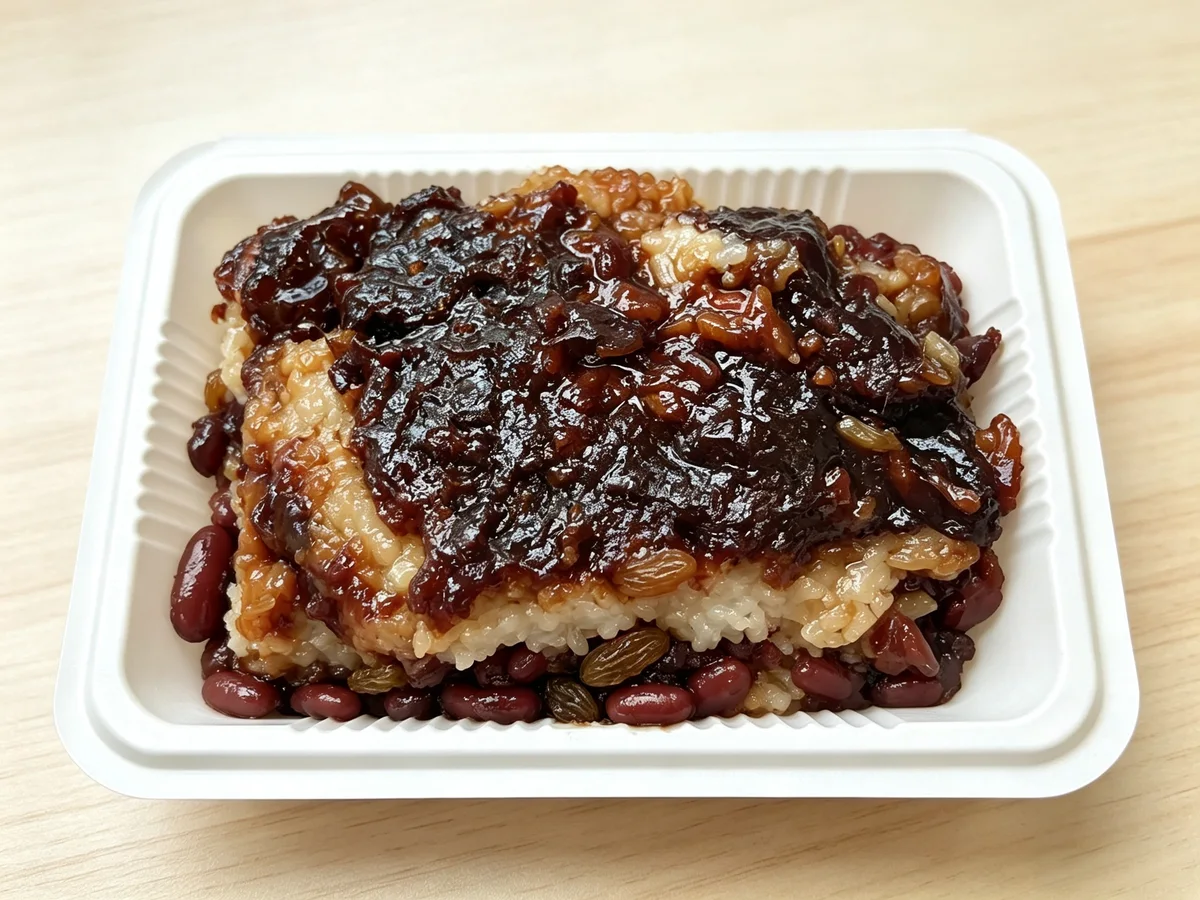
Meet Xi’an’s long-steamed sweet of glutinous rice, dates and beans
Zenggao is a Xi’an sweet made by layering glutinous rice with red dates and often beans, then steaming it slowly until the grains become glossy and the fruit melts into dark, fragrant bands. Its name comes from the zeng, the deep traditional steamer used for the long, gentle cooking.
Common ingredientsGlutinous rice, red dates and red or kidney beans.
01
Check the cut surface, ask the price and buy a small warm portion
How to order it
Ask for a mixed scoop that includes both pale rice and the dark date-rich layer. Choose a smaller portion first; dense glutinous rice is more filling than its appearance suggests. Check for date pits before eating quickly, especially when buying from a traditional stall. Eat it warm for softness or at room temperature for a firmer, more defined chew.
How to eat and pair it
Vendors uncover a large steamer or pan and cut down through visible layers of rice, beans and dates. A serving is pressed into a bowl or wrapped for takeaway. Because the fruit is distributed unevenly by design, one bite may be mostly fragrant rice and the next intensely sweet. The food belongs to Xi’an’s morning street rhythm: made in a large slow batch, then portioned quickly for individual customers.
Easy mix-ups
Misconception: Zenggao is the same as the small mirror cake called jinggao. In practice: Both are Xi’an sweets, but zenggao is a large slow-steamed layered dish of whole glutinous rice, dates and often beans; mirror cake is a small quick-steamed flour-based cake. Misconception: It is a baked cake with date filling. In practice: There is no pastry shell. Rice, fruit and beans are layered directly and cooked by prolonged steaming.
Zenggao is a substantial breakfast or snack, distinct from Xi’an’s smaller mirror cakes
Eat it warm with unsweetened tea or alongside a savory breakfast. One portion can replace a bowl of grain rather than functioning as a weightless dessert. Zenggao is often confused with jinggao, a smaller steamed rice cake associated with individual molds and assorted toppings. Names and local usage can vary, but the deep layered date-and-rice slab has a different structure and service rhythm. Ask to see the food instead of relying on an English label such as “sticky rice cake.”
02
Dense rice, dates and beans make the modest-looking portion a real meal
Glutinous rice packs substantial carbohydrate into a compact block, while dates and added sugar can raise sweetness further. Travelers sometimes buy a large slab because it looks like fruit, then discover it is difficult to finish. Share one cut, eat slowly and notice fullness before ordering more. Individual medical needs around blood sugar or digestion call for professional advice, not a claim that fruit makes unlimited portions healthy.
A savory drink or unsweetened tea offers more contrast than another sweet milk beverage. When combining zenggao with a Xi’an breakfast, choose soup or vegetables and avoid treating every famous snack as a compulsory full serving. Thoughtful portioning preserves curiosity and reduces the temptation to carry cooked rice unrefrigerated for the rest of the day.
03
The cut should reveal separate concentrations of rice, dates and beans
Glutinous rice
Long soaking and slow steaming allow the grains to become cohesive and tender without turning into a shapeless paste.
Red dates
Jujubes provide sweetness, color and fruit aroma; some stalls use pitted dates while others leave pieces that require care.
Beans
Kidney or red beans are common in layered versions, adding a softer earthy contrast, but formulas differ by vendor.
Steam
The dessert is cooked with moist heat for hours. It is not baked like a cake and needs no flaky crust.
Red-date zenggao
The simplest recognizable form emphasizes glutinous rice and generous layers of jujube.
Date-and-bean zenggao
Kidney or red beans add color, soft texture and an earthy note between the rice layers.
Modern fruit-rich versions
Some vendors add candied dates or other dried fruit, creating a sweeter profile than older restrained preparations.
- Glossy rice that remains visibly grained
- Date flavor distributed through several layers
- Beans fully tender rather than dry
04
Soaking, layering and long moist heat each have a role
Rice, dates and beans are layered in a traditional steamer and slowly cooked until soft, glossy and fragrant.
A cut face reveals whether rice, dates and beans steamed into layers or collapsed into paste
Traditional zenggao is built by arranging soaked glutinous rice with red dates and, in many versions, beans before a long steaming. The finished slab may not show geometric pastry layers, but a cut portion should reveal where fruit enriched the rice and where grains retained identity. Dates soften, release amber sweetness and can partly melt into surrounding rice. Beans should be fully tender. Dry white pockets point to uneven soaking or steam, while a homogeneous sugary mash loses the pleasure of finding different concentrations in one spoonful. Texture changes from top to bottom and between edge and center. Ask the vendor for a piece that includes both date-rich and rice-rich areas rather than only decorative fruit from the surface. Warm zenggao should be soft and cohesive enough to lift, not watery or gluey. As it cools, glutinous rice firms; this is normal within limits, but a hard refrigerated block is not the ideal reference. The aroma should be grain and cooked fruit, without artificial perfume overwhelming the dates.
Buy by portion, watch the cut and ask about pits before taking a large takeaway box
Street and market vendors may cut zenggao from a deep steamer and sell by weight. Confirm the price unit, request a modest portion and watch what is included before it is wrapped. A dramatic mound can contain dense rice, so visual size understates how filling it is. Ask whether the dates were pitted; even when a shop usually removes stones, chew carefully because fragments can remain. Children and older diners need small spoonfuls due to both sticky rice and possible pits.
Soaking, packing and long moist heat solve different parts of the texture
Glutinous rice and beans hydrate at different rates, while dates contribute both moisture and sugar. Cooks soak components, arrange them so steam can travel and manage a deep vessel over many hours. Insufficient hydration leaves hard rice centers or chalky beans; careless excess water creates loose porridge. The weight of the packed ingredients helps the cake cohere, but overcompression can prevent even circulation. This is patient steam cookery, not ordinary cooked rice with fruit stirred in afterward. The vessel named in zenggao is a zeng, traditionally a steaming container. Contemporary shops may use updated equipment while preserving the same moist-heat logic. Authenticity cannot be judged from an antique-looking pot alone. More useful signs are complete cooking, clean steamer aroma, active turnover and staff who protect the food from bare-hand contact and street dust. Long steaming also does not make a finished rice cake safe to hold indefinitely at warm room temperature.
05
Zenggao in Xi’an’s morning and street-food culture
Zenggao is a traditional sweet of Xi’an and central Shaanxi. Its name comes from the zeng, the steamer in which layers of glutinous rice and fruit are slowly cooked.
Red dates or jujubes are essential to its aroma and color; beans are common but recipes differ. It is sold as a breakfast or street snack rather than only as a festival cake.
06
How to say Zenggao—and what the name tells you
Pronounced zèng gāo. Menus may call it zeng gao, Xi’an steamed rice cake, zènggāo, Shaanxi date rice cake.
Sources