Hot-oil pouring is the final technique, not an oil bath
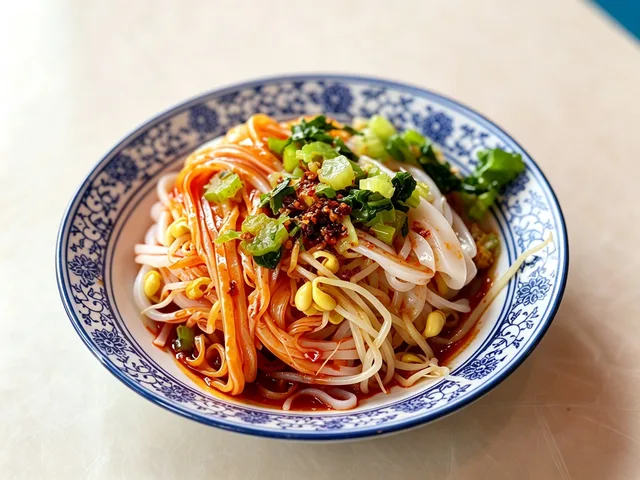
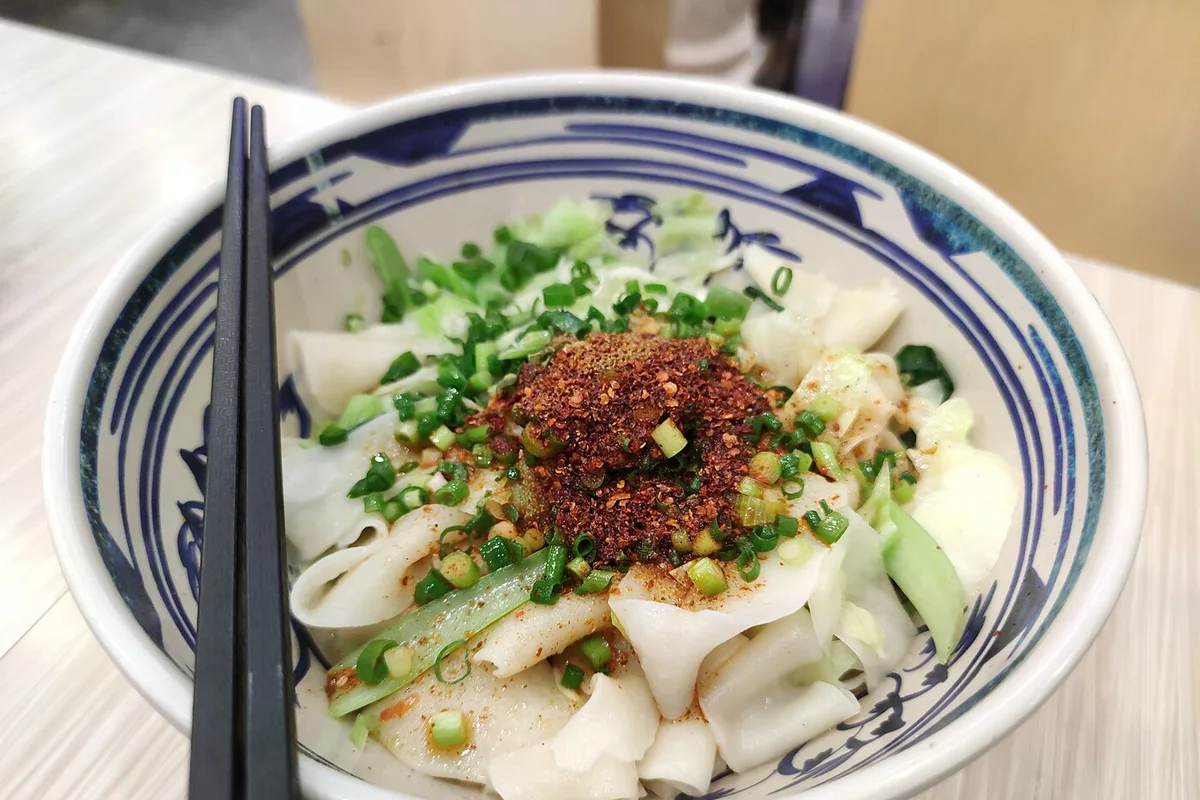
Youpo noodles are Shaanxi wheat noodles finished with a small but dramatic act: smoking-hot oil is poured over dry chilli, garlic and scallion directly in the bowl. The oil releases their aroma in seconds, after which vinegar and soy seasoning are mixed through the broad, chewy noodles.
Common ingredientsWheat noodles, chilli flakes, garlic, scallions, black vinegar, soy sauce and hot oil.
01
Choose noodle width and heat, then mix from the bottom immediately
How to order it
Choose the noodle width before toppings if the shop offers several handmade shapes. Ask for less chilli rather than less oil if you want lower heat; enough hot oil is still needed to bloom the aromatics. Mix from the bottom immediately so vinegar, soy and chilli oil coat every noodle. Add a cold vegetable or simple soup if the bowl is part of a larger meal.
How to eat and pair it
The bowl arrives moments after the oil hits the chilli, often still audibly sizzling. Diners mix vigorously, lifting noodles from the bottom where vinegar and soy seasoning collect. Greens or bean sprouts provide freshness beneath the noodles. The method is simple enough for a home kitchen, but timing matters: aromatics must be dry enough to bloom, oil hot enough to release fragrance and noodles ready at exactly the same moment.
Easy mix-ups
Misconception: Youpo noodles are simply noodles drenched in chilli oil. In practice: The essential technique is blooming dry chilli and aromatics with very hot oil; vinegar, garlic and noodle texture create the balance. Misconception: They must be painfully spicy. In practice: Chilli intensity varies. A well-made bowl can be aromatic and moderately hot rather than extreme.
02
Judge wheat aroma, oil temperature, vinegar and the mixed texture
Handmade wheat noodles
Broad, slightly irregular noodles provide enough surface to carry the aromatics while retaining a resilient bite.
Chilli flakes
The chilli must be fragrant and able to bloom in hot oil; quantity controls heat, but freshness controls aroma.
Hot oil
Oil is heated until it can release the fragrance of the dry toppings immediately. It should sizzle, not scorch them bitter.
Vinegar and garlic
Shaanxi vinegar supplies brightness and garlic supplies bite, preventing the oil from making the bowl feel flat or heavy.
Wide belt noodles
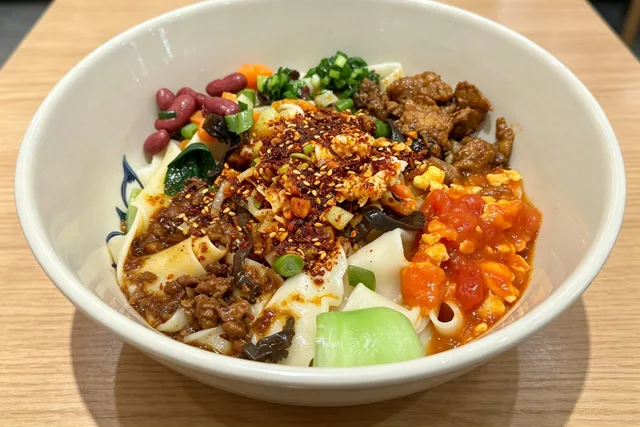
Broad hand-stretched pieces emphasize chew and make the oil-poured topping visually dramatic.
Narrower handmade noodles
Some shops use thinner strands for a faster, more evenly coated bowl while preserving the same finishing technique.
Vegetable or meat additions
Tomato, greens or small amounts of meat may make the bowl more substantial, but the oil-bloomed chilli remains the defining element.
- A fresh sizzle and toasted chilli aroma
- Noodles with a firm, elastic bite
- Oil coating the noodles rather than pooling excessively
Youpo noodles can be made at home
Youpo noodles do not depend on restaurant-only equipment. A home version can begin with hand-pulled dough or good broad wheat noodles; place garlic, scallion and chilli flakes over the cooked noodles, then pour over a small amount of properly heated oil so the aromatics release their fragrance. Vinegar and soy seasoning are mixed through before eating.
03
Noodles, aromatics and hot oil must be ready at the same moment
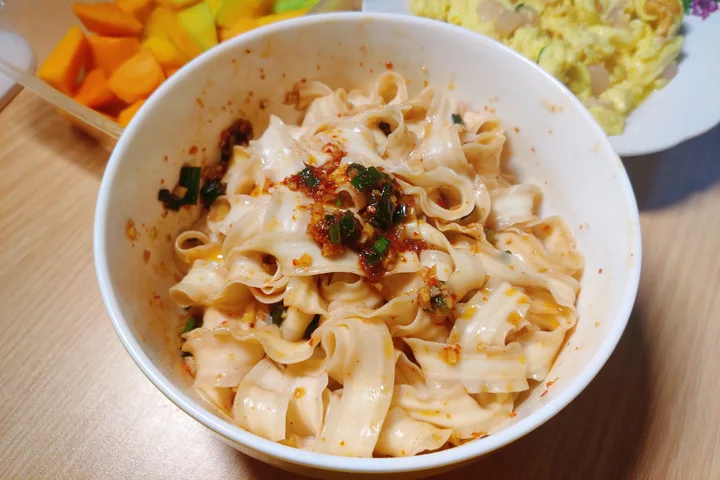
Boiled noodles are topped with dry aromatics and seasonings before smoking-hot oil is poured over them to release their fragrance.
04
Guanzhong wheat, aged vinegar and hot-oil finishing organize the bowl
Oil-splashed noodles are part of Shaanxi’s wheat-noodle tradition. Their defining technique is pouring very hot oil over dry chilli and aromatics on the cooked noodles.
The hot oil blooms the fragrance immediately; vinegar and soy-based seasoning are then mixed through the bowl. Noodle width and toppings vary by locality and cook.
05
How to say Youpo Noodles—and what the name tells you
Pronounced yóu pō miàn. Menus may call it you po mian, oil splashed noodles, oil poured noodles, yóupō miàn.
Yóu means oil, pō means to splash or pour, and miàn means wheat noodles. The verb points to the last-second technique that blooms the aromatics. It does not mean the noodles sit in a deep pool of oil, nor is it simply a spoonful of chilli oil made earlier and added cold.
Youpo and biangbiang often appear together because broad Shaanxi noodles are well suited to the finish, but the names describe different things. Biangbiang identifies a broad noodle form and its associated name culture; youpo identifies a finishing method that can be used on several hand-pulled shapes. A menu can therefore offer biangbiang noodles with another topping, or youpo noodles in a narrower form.
The oil pour is brief, but the noodle work begins much earlier
Youpo noodles use wheat dough rested and stretched into broad or medium-width strands, then boiled until supple and chewy. The surface must hold garlic, scallion, chilli flakes and other aromatics without becoming gummy. Uneven ribbons can be part of hand work, but thick centers should not remain raw while thin edges dissolve.
The defining moment comes after the noodles enter the bowl. Dry chilli, garlic and aromatics sit on top, and a small amount of very hot oil is poured directly over them. The sizzle releases fragrance and lightly cooks the raw aromatics. Oil that is not hot enough leaves dusty chilli and harsh garlic; excessive oil turns the bowl greasy and buries the wheat.
Soy-based seasoning and dark vinegar usually sit below or around the noodles, so the diner must mix from the bottom. The goal is a thin aromatic coating with sour, savory and chilli notes, not noodles swimming in oil. The pour should be performed safely away from faces and hands; splashing oil is craft failure, not theatre.
Youpo describes a finishing method that can overlap with broad Shaanxi noodles
Biang biang noodles describe a broad hand-stretched noodle tradition and its cultural name, while youpo mian emphasizes hot oil poured over chilli and aromatics. A bowl can be both broad biang-style noodles and oil-splashed in its seasoning, but the terms are not perfect synonyms. Other noodle widths can also receive the youpo treatment. Menus should name both noodle form and finishing style when relevant.
For a first order, ask about width, toppings, meat and spice level. A basic vegetarian-looking bowl may still use lard, meat stock or soy sauce containing wheat beyond the noodles. Chilli quantity can be reduced, but removing garlic, vinegar and the hot-oil step leaves little of the dish’s structure. Request moderate chilli while preserving the aromatic pour.
Mix immediately while the oil is fragrant and the noodles are hot. Lift long strands from the bottom until no dry chilli patch remains. Eat with a vegetable or a small cold dish for contrast; an additional heavy meat topping is optional. The bowl is already a substantial wheat meal, and the cleanest version often reveals dough quality best.
Listen for a clean sizzle, then judge chew rather than oil volume
Aromatic steam should rise when oil hits chilli and garlic, but the finished bowl should not smoke acridly. Burnt chilli tastes bitter and blackened garlic loses sweetness. Fresh rapeseed or another house oil contributes its own aroma; stale oil remains heavy on the palate. More oil does not create a more authentic bowl once every strand is coated.
Broad noodles cool and stick quickly, especially under a dry topping. Do not leave the bowl unmixed for photographs or wait for every shared dish to arrive. If sharing, mix first and divide with serving chopsticks. Takeaway traps steam and softens the chew, so eat at the shop when noodle texture matters.
Chilli flakes, sesame, soy and wheat are common considerations, and hot oil can carry cross-contact from a shared kitchen. Ask before ordering rather than trying to remove the topping after pouring. The simplest quality test remains the combined bite: wheat flavor, elastic noodle, vinegar lift, garlic and a fragrant chilli finish without a pool of oil left behind.
Three adjustable seasonings change the bowl in different ways
Less chilli reduces heat and toasted pepper aroma; less garlic removes raw pungency and part of the hot-oil fragrance; less vinegar makes the oil feel heavier. Ask for the specific change you need instead of saying “less flavor.” A thoughtful shop can moderate chilli while keeping garlic, scallion and vinegar clear enough for the method to remain recognizable.
Chilli flakes also differ in heat and coarseness. Fine powder burns quickly under very hot oil, while coarse flakes release aroma more slowly. The cook may layer both and pour oil over a compact mound so the noodle itself is not fried. Blackened spice across the whole bowl signals poor control, not extra wok hei.
At the table, vinegar can be added after mixing, but extra raw garlic is harder to distribute. Make one adjustment, lift several strands and taste again. The desired finish is lively and dry enough to cling, with no need to drink oil or leave a sludge of unhydrated chilli at the bottom. Eat promptly because the broad noodles continue absorbing the seasoned oil and steam as they sit. If sharing, divide the bowl only after a complete bottom-to-top toss; otherwise one diner receives dry noodles while another gets nearly all the chilli, vinegar and garlic. A small cold vegetable alongside provides contrast without diluting the bowl itself.
Sources
Sources and further reading
- Representative foods and snacks of ShaanxiPeople’s Government of Shaanxi Province ↗
- Shaanxi oil-splashed noodles: hand-pulled dough and hot-oil finishChina Employment, Ministry of Human Resources and Social Security ↗
- Shaanxi food customs: biangbiang and oil-splashed noodlesShaanxi Provincial Local Records Office ↗