First identify the local lineage of both bread and filling
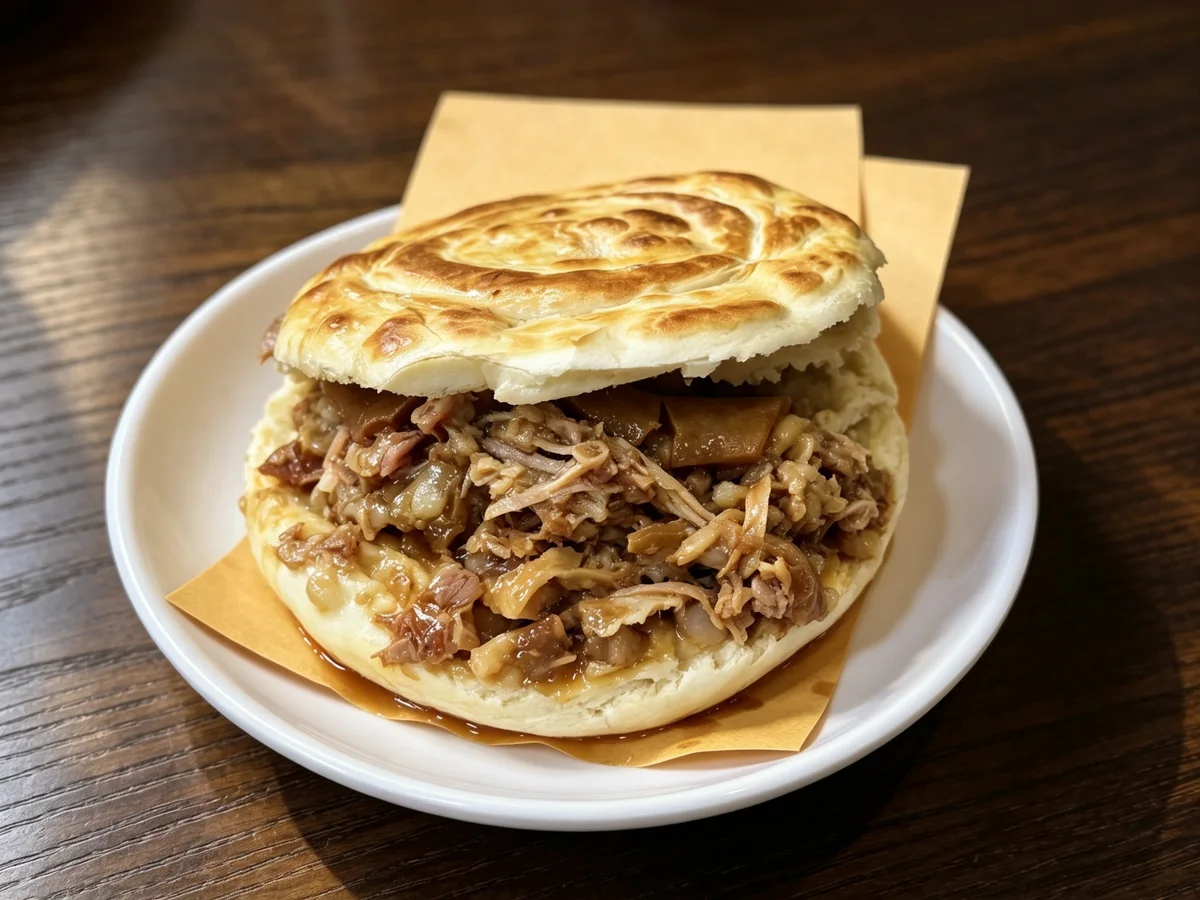
Roujiamo is Shaanxi’s great meat-and-bread snack: a round baked wheat flatbread is split and packed with finely chopped meat plus a measured spoonful of braising liquid. In Xi’an, the widely recognized lazhirou form uses pork slowly braised with soy and aromatics until the lean fibers and fat can be chopped together. The contrast should be immediate—dry crisp bread outside, layered wheat crumb within, and hot, deeply seasoned meat that moistens without destroying the crust.
Common ingredientsBaiji mo, Tongguan mo or another local wheat bread; long-braised lazhirou pork, or beef or lamb in established Muslim versions; aromatic braising liquor. Wheat is inherent, and meat type and utensil separation should be confirmed for religious diets.
01
Choose the meat and bread, then eat it hot
How to order it
Ask whether the filling is pork, beef or mutton rather than assuming every roujiamo is the same. Choose a shop that warms or bakes its bread to order. Eat it immediately while the crust is crisp and the meat is hot. If offered lean or fatty meat, a mixed portion usually gives the best balance. Order liangpi alongside it for the classic cool, vinegary contrast. Hold it upright and keep the paper wrapper around the lower half to catch juices.
How to eat and pair it
In Xi’an, roujiamo is ordinary fast food in the best sense: affordable, portable and specific about craft. The vendor opens a hot mo, chops meat rapidly on a block, mixes lean fibers with rich pieces and adds only enough stock to bind them. The name literally places meat inside mo, though a playful classical-language explanation is often used to show why the word order sounds inverted. The snack crosses communities, but its forms are not interchangeable: pork lazhirou and Hui Muslim cured-beef or mutton versions use different ingredients and culinary lineages.
Easy mix-ups
Misconception: Roujiamo is a Western hamburger copied in ancient China. In practice: “Chinese hamburger” is a modern comparison of form. Roujiamo belongs to Shaanxi bread-and-braise traditions and does not need a dubious oldest-hamburger claim. Misconception: Every authentic roujiamo contains pork. In practice: Xi’an also has established Hui Muslim beef and mutton forms; identify the shop and tradition before judging the filling.
02
The bread is not packaging and the meat should not become paste
Baijimo flatbread
Wheat dough is shaped and baked or griddled into a sturdy round with toasted surface and layered crumb.
Lazhirou pork
Pork, often with both lean and fatty sections, is slowly braised in an aromatic master stock before chopping.
Braising liquid
A small amount seasons and moistens the filling; too much makes the bread collapse.
Beef or mutton
Halal versions in Xi’an’s Hui Muslim food culture use beef or mutton and their own breads and seasonings.
Lazhirou roujiamo
The famous Xi’an form uses long-braised pork chopped with its concentrated juices and packed into baijimo.
Hui Muslim beef or mutton roujiamo
Halal shops use beef or mutton, often with a different bread and seasoning profile; this is a distinct local tradition rather than a pork substitution.
Tongguan roujiamo
Associated with Tongguan in eastern Shaanxi, this version is known for a very flaky, crisp, layered bread whose texture differs from Xi’an baijimo.
- Bread warmed to order with a dry, crisp surface
- Visible layered wheat crumb rather than a soft hamburger-bun texture
- Meat chopped into a mix of fibers and small rich pieces
Choose the cut of pork—and ask for it halved if you like
For many people, roujiamo tastes best with both lean and fatty braised pork: the fat is fragrant, juicy and soft enough to melt into the chopped meat. Most specialist shops offer a choice. The standard version usually contains both lean and fatty pieces; youzhi, often translated as “premium,” generally means more lean meat; and all-lean is available for diners who do not enjoy fat. You can also ask the shop to cut one roujiamo in half, which makes it easier to eat or share.
03
Bread, braised meat and juices meet in the final minute
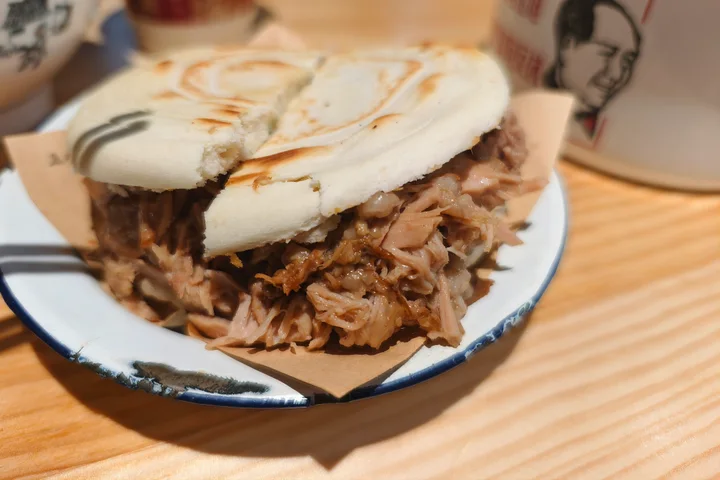
The chosen mo is shaped and baked or griddled according to its local style. Separately braised meat is chopped to order with a controlled spoonful of cooking liquor, then packed into the hot bread immediately so the crumb is scented but the crust does not collapse.
04
How Shaanxi wheat traditions and neighborhood variations meet in one sandwich
Roujiamo belongs to Shaanxi’s wheat-bread and braised-meat traditions, with especially visible lineages in Xi’an, Tongguan and Muslim food communities. Claims that it is the world’s first hamburger are promotional folklore rather than a documented ancestry chain.
“Chinese hamburger” helps visitors recognize the portable format but hides the local craft: the type of mo, the pork or halal meat lineage and the ratio of crust to braising liquor all matter. Xi’an diners often pair a lazhirou roujiamo with liangpi for hot-rich and cool-tangy contrast.
05
How to say Roujiamo—and what the name tells you
Pronounced ròu jiā mó. Menus may call it rou jia mo, Chinese hamburger, Xi’an pork sandwich.
Ròu is meat, jiā means to place or hold between, and mó is the bread. A popular explanation expands the phrase to ròu jiā yú mó—meat placed within the mo—but claims that the shorter name proves a special ancient inverted grammar are stronger than the linguistic evidence requires.
“Chinese hamburger” is a useful visual analogy for an English-speaking visitor, not an ancestry claim. It can hide the fact that baiji mo, flaky Tongguan mo and breads used with Muslim beef or lamb fillings have different construction and histories. Roujiamo, rou jia mo and lazhirou roujiamo are more precise menu and search terms.
Bread, braise and the final chop have to meet at the same moment
The familiar Xi’an pork version pairs a baked wheat bread often called baijimo with lazhi meat, pork slowly braised in a seasoned stock. The bread should have a dry, lightly crisp shell and a layered, chewy crumb sturdy enough to hold juices. It is split to form a pocket rather than sliced into two detached burger buns. If it is too soft, the filling turns it soggy; if it is thick and stale, even excellent meat tastes dry.
The braise uses time to soften pork while retaining enough structure for chopping. Lean and fatty pieces are combined on the block so each mouthful has fibers, richness and moisture. The cook may add a controlled spoonful of braising liquid, but the bread should not drip like a stew bowl. Chopping far in advance lets meat cool and lose aroma; chopping to order and filling warm bread protects the contrast that makes the format satisfying.
“Chinese hamburger” communicates meat inside bread, but it can also import the wrong expectations. There is no ground patty, lettuce-and-tomato stack or ketchup requirement. The defining decisions are local bread, long-braised meat, chopping and the amount of juice. Judge those before treating a large pile of green pepper or modern toppings as a sign of generosity.
Roujiamo names a family with distinct breads and fillings
Xi’an’s classic pork-and-baijimo form is only one important branch. In Hui Muslim neighborhoods, beef or lamb fillings follow halal practice and should not be described as pork substitutions from the same pot. Tongguan-style roujiamo is known for a different, flaky layered bread and often a crisper, more visibly laminated shell. Shops elsewhere may add green chilli, cilantro or egg. Naming the bread, meat and local style is more useful than declaring one photograph the universal standard.
For a first order, ask whether the filling is pork, beef or lamb, whether the bread is baijimo or a flaky Tongguan style and whether lean, fatty or mixed meat can be chosen. Mixed pork usually gives the clearest balance. “Extra juice” can improve a lean filling but quickly destroys a thin crisp shell, so taste the house ratio first. Roujiamo is best eaten immediately, still warm from the oven and chopping block.
A common Xi’an pairing is roujiamo with liangpi and a cold local drink. The sandwich brings heat and braised richness; liangpi contributes vinegar, chilli and cool slippery texture. One of each can be a substantial meal, so a solo diner need not order multiple breads simply because they look small at the counter. At a shared table, cut only if necessary: waiting while portions are divided lets steam soften the bread.
Use the full name when meat matters
腊汁肉夹馍 normally signals the pork-braise tradition; halal beef or lamb versions should be confirmed with the shop rather than inferred from the word rou.
Look for fresh bread turnover
A busy oven and bread reheated to order are stronger quality clues than an oversized mound of filling hiding a tired crust.
Expect spice to be optional
Chilli can accompany the sandwich, but the base flavor should come from wheat, braised meat and stock rather than mandatory heat.
Roujiamo travels poorly because trapped steam softens the crust while exposed chopped meat cools and dries. If takeaway is unavoidable, ask for the meat and bread separately when the shop permits, then reheat the bread in a dry pan or oven before filling it. A microwave may warm the center but usually makes a crisp baijimo leathery. This practical change does not recreate a fresh oven-and-block order, yet it preserves the bread-and-meat contrast better than leaving an assembled sandwich sealed for a long journey.
Sources
Sources and further reading
- Shaanxi gazetteer entry on lazhirou roujiamoShaanxi Provincial Local Records Office ↗
- Shaanxi Yearbook: regional foods including roujiamoShaanxi Provincial Local Records Office ↗
- Dining in Shaanxi: marinated meat in baked breadChina Daily Government Services ↗
- Xi’an cuisine and snacksChina Daily Government Services ↗