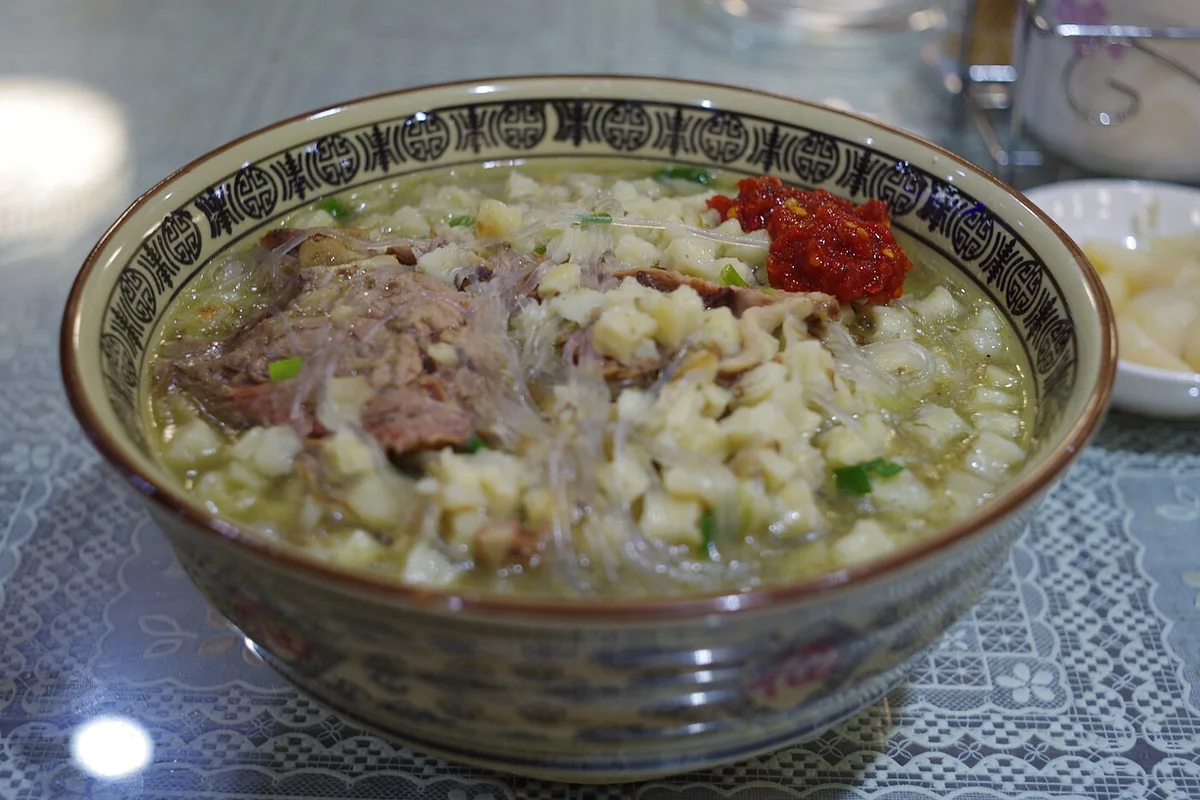
Breaking the bread determines the final texture
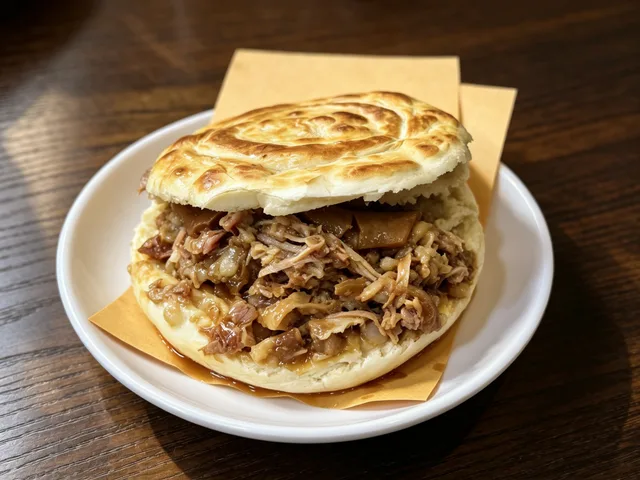
Yangrou paomo is a Xi’an meal of dense wheat bread, rich lamb or mutton broth, sliced meat and often glass noodles. Its most distinctive service begins before the kitchen cooks the final bowl: the diner patiently tears tuotuomo bread into very small pieces so broth can penetrate each one without dissolving it.
Common ingredientsDense tuotuomo wheat bread, lamb or beef broth and sliced meat, glass noodles or wood ear by shop, plus sweet pickled garlic and chilli paste.
01
Choose the meat and broth level, then break the bread correctly
How to order it
Choose lamb or beef and ask whether the shop offers ganpao, koutang or shuiweicheng—or simply describe whether you want a dry, little-broth or soupier bowl. Tear the bread into small, even pieces; large chunks stay hard in the center, while crumbs that are too fine can turn pasty. Return the torn bread to the kitchen unless the shop gives different instructions; the final cooking step is central to the classic service. Taste the broth before adding chilli paste, and eat sweet pickled garlic between spoonfuls rather than overwhelming the bowl. Order xiaochao paomo by name if you want the tangier, often spicier related dish rather than standard broth paomo. Look for a halal restaurant if that is important to you, and confirm its actual practice rather than assuming every beef-and-lamb shop is identical.
How to eat and pair it
A diner receives a bowl and one or two dense breads, tears them by hand and returns the bowl to the kitchen. The cook adds broth, meat and accompaniments and briefly cooks everything together. The tearing is part of the meal’s rhythm and gives the diner control over texture. Local terminology describes different balances: ganpao is relatively dry, koutang leaves a small amount of broth, and shuiweicheng surrounds the bread with more liquid. Names and execution can vary by shop, so the easiest approach is to describe the texture you want.
Easy mix-ups
Misconception: Paomo is bread dropped into soup at the table. In practice: In the classic service, the diner tears the bread first and the kitchen cooks those pieces briefly with broth and meat. Misconception: The bread should become completely soft like porridge. In practice: Tuotuomo is dense so it absorbs broth while retaining a resilient bite; careful tearing is crucial.
02
Good paomo is not the softest bread in the richest broth
Tuotuomo bread
This dense, lightly leavened or unleavened wheat bread is made to survive simmering. A fluffy bun would collapse into paste.
Lamb or mutton broth
Long cooking extracts body and aroma from meat and bones; careful skimming and spice produce richness without a greasy finish.
Cooked lamb
Tender slices are added to the finished bowl. Beef paomo is also common in Xi’an Muslim restaurants.
Condiments
Sweet pickled garlic and chilli paste provide sharp, sweet and hot contrasts, but they are accompaniments rather than ingredients to stir in automatically.
Lamb paomo
The namesake version uses lamb or mutton broth and meat, with a strong but carefully managed pastoral aroma.
Beef paomo
Widely available at Xi’an Muslim restaurants and prepared through the same bread-tearing and final-cooking logic.
Dry, little-broth and soupier styles
The proportion of broth changes the final texture from intensely coated bread to a more recognizable soup.
- Small, evenly torn bread pieces with irregular hand-torn surfaces
- Bread saturated through yet still pleasantly chewy, with neither a hard center nor a porridge-like finish
- Tender sliced meat and a broth with depth but no stale fat, harsh mutton odor or heavy salt
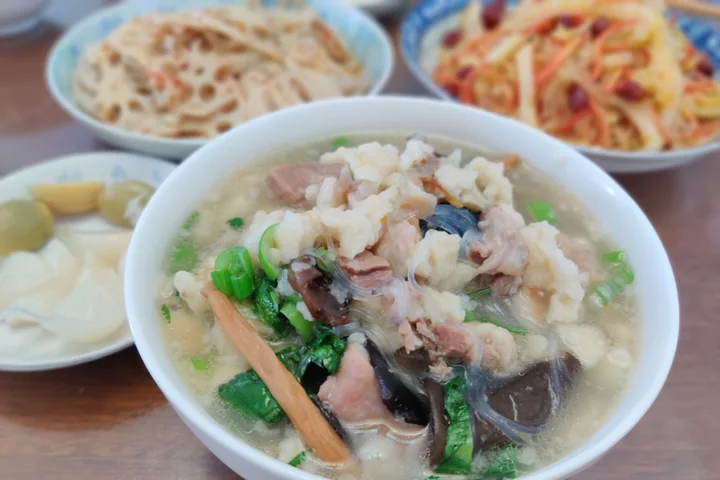
What arrives after the bread returns to the kitchen
After the diner tears the dense mo, the kitchen briefly cooks it with broth, sliced meat and the house accompaniments. This finished bowl shows the bread already softened in the soup, with lamb, glass noodles, wood-ear mushroom and fresh herbs; pickled garlic and cold side dishes sit alongside it.
03
Broth, dense bread and final reheating form three stages
The kitchen prepares and skims the meat broth while dense mo is baked to withstand simmering. Diners tear the bread into small even pieces and return the bowl; the cook then adds the chosen amount of broth, meat and accompaniments and cooks each serving briefly to order.
04
Xi’an Hui Muslim foodways and Guanzhong wheat meet in one bowl
Yangrou paomo is strongly associated with Xi’an and its Hui Muslim food culture. Beef versions are equally established in many specialist restaurants and are often grouped with lamb under niu-yangrou paomo; popular stories about an emperor softening hard bread in mutton soup are folklore rather than a secure invention record.
In the classic specialist service, diners tear dense tuotuomo into small, even pieces and return the bowl so the kitchen can cook the bread briefly with broth, meat and often glass noodles. Ganpao, koutang and shuiweicheng describe increasingly wet balances, while xiaochao paomo is a tangier, often spicier related preparation rather than merely another broth level.
05
How to say Yangrou Paomo—and what the name tells you
Pronounced yáng ròu pào mó. Menus may call it yang rou pao mo, lamb paomo, mutton paomo, Xi’an lamb soup.
Although pao can suggest soaking, classic specialist service is not a fluffy bun dropped into finished soup at the table. The diner tears dense mo into small pieces, returns the bowl and lets the kitchen cook those pieces briefly with broth, meat and other components.
Imperial hard-bread stories are folklore: Popular tales describe a ruler softening dry bread in mutton soup and later elevating the dish. They are useful cultural memory, but they do not securely document one inventor or every detail of modern paomo service.
The diner’s bread work determines the final texture
Yangrou paomo begins with a dense wheat bread often called tuotuomo, designed to be torn and cooked in broth without immediately collapsing. In a traditional service, the diner receives whole bread and breaks it into small, even pieces before returning the bowl to the kitchen. Large chunks remain hard in the center; crumbs disappear into paste. The task takes time because uniform pieces let broth penetrate while preserving a gentle chew.
The kitchen adds lamb or mutton broth, sliced meat, vermicelli and aromatics, then cooks the torn bread to the house’s preferred moisture level. Some bowls are relatively dry and concentrated; others retain more broth. The bread is not a soft bun dropped into finished soup, and the broth is not simply poured at the table. Cooking them together integrates wheat, rendered fat and stock.
Quality begins before the ritual. The broth should taste deeply of sheep meat without stale gaminess, while the bread must be dense enough to absorb it. Tender sliced meat, clear fat and bread pieces that remain individually legible form the core. A mountain of garnish cannot repair weak stock or careless tearing.
Xi’an Hui Muslim foodways shape the meat, shop and table
The dish is strongly associated with Xi’an’s Hui Muslim communities and halal beef-and-lamb cooking. Menus may offer yangrou paomo, beef paomo or the broader niuyangrou paomo category. Pork is not an interchangeable filling in a halal shop. Travelers who require halal practice should look for the shop’s certification and ask about the whole kitchen rather than inferring from one lamb dish.
First-time diners can ask staff how small to tear the bread and whether machine-cut pieces are available. Hand tearing is the more instructive experience, but accepting help is better than sending back large uneven blocks. Confirm portion size, meat choice and whether the bowl will be dry, soupy or stir-fried; xiaochao paomo is a tangier stir-fried relative, not merely the same soup with less liquid.
Pickled garlic, chilli paste and sometimes cilantro accompany the bowl. Taste the broth first, then use the condiments to cut richness rather than cover it. One bowl is usually a full meal. Eat the bread and meat together with a spoon, adding small bites of pickled garlic between mouthfuls, and expect the broth to grow thicker as the bread continues absorbing it.
Tear evenly, not performatively
Pea-size pieces are a common guide, but follow the shop. Consistency matters more than proving patience with microscopic crumbs.
Name beef or lamb clearly
English menus may shorten both to paomo. The Chinese dish name confirms which meat and broth you are ordering.
Expect a wait after returning the bowl
The kitchen still has to cook bread, broth and additions together; the diner’s tearing is not the final step.
The finished bowl reveals whether the tearing and kitchen timing agreed
After cooking, most bread pieces should be swollen but still separate, with broth reaching their centers. A mix of hard white cores and dissolved paste shows uneven tearing or rushed cooking. Meat should remain moist, vermicelli should not form a solid knot and the surface fat should smell clean. The bowl naturally thickens as it stands, so begin eating rather than waiting for every accompaniment to arrive.
Some shops mark the diner’s bowl or give a token before it goes to the kitchen. Follow that system and do not exchange bowls after tearing if portions or dietary needs differ. The personal work creates a customized texture, but the restaurant remains responsible for broth temperature, complete cooking and a clean return to the correct diner.
Sources
Sources and further reading
- Local food-safety standard: beef and lamb paomoShaanxi Provincial Health Commission ↗
- Beef and lamb paomo: preparation and established serving stylesShaanxi Provincial Office of Local Chronicles ↗
- Representative foods and snacks of ShaanxiPeople’s Government of Shaanxi Province ↗
- Xi’an paomo heritage practice and hand-torn breadPeople’s Government of Shaanxi Province ↗