
01
A family of peppery breakfast soups
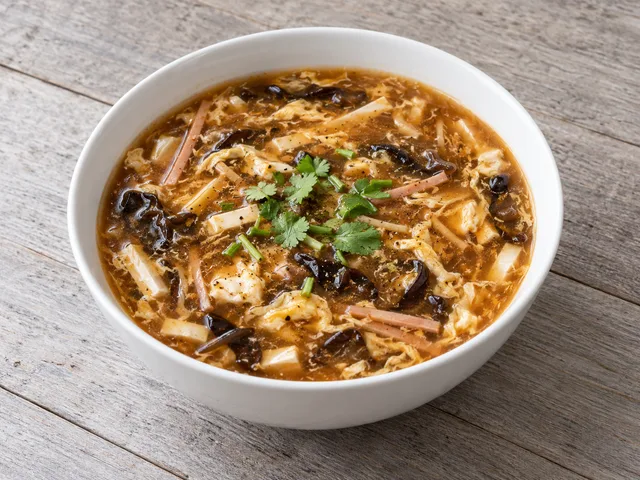
Hulatang is less a single recipe than a family of thick, peppery breakfast soups, and the two best-known members come from Henan and Xi’an.
What every hulatang shares is a meat broth thickened with starch until it coats a spoon, heavy pepper and a place at breakfast. The family began in Henan, where the best-known version, from Xiaoyao town in Xihua county, is on China’s national intangible heritage list: a soup of sliced beef or lamb, wheat gluten, glass noodles, wood ear and day-lily buds, hot with black pepper and finished with sesame oil and vinegar.
In Xi’an the word means something else. Meatball hulatang is a Hui Muslim breakfast and one of the most popular in the city: beef meatballs and large pieces of potato, cabbage, carrot and other vegetables in a thickened beef broth, numbing with Sichuan pepper, topped with a spoonful of chili oil and eaten with a dense flatbread torn into the bowl. Most English writing keeps the Chinese name, hulatang, or Xi’an meatball hulatang for this version; peppery meatball soup is the translation.
Sources [4]
Take it apart
What’s in a bowl of meatball hulatang
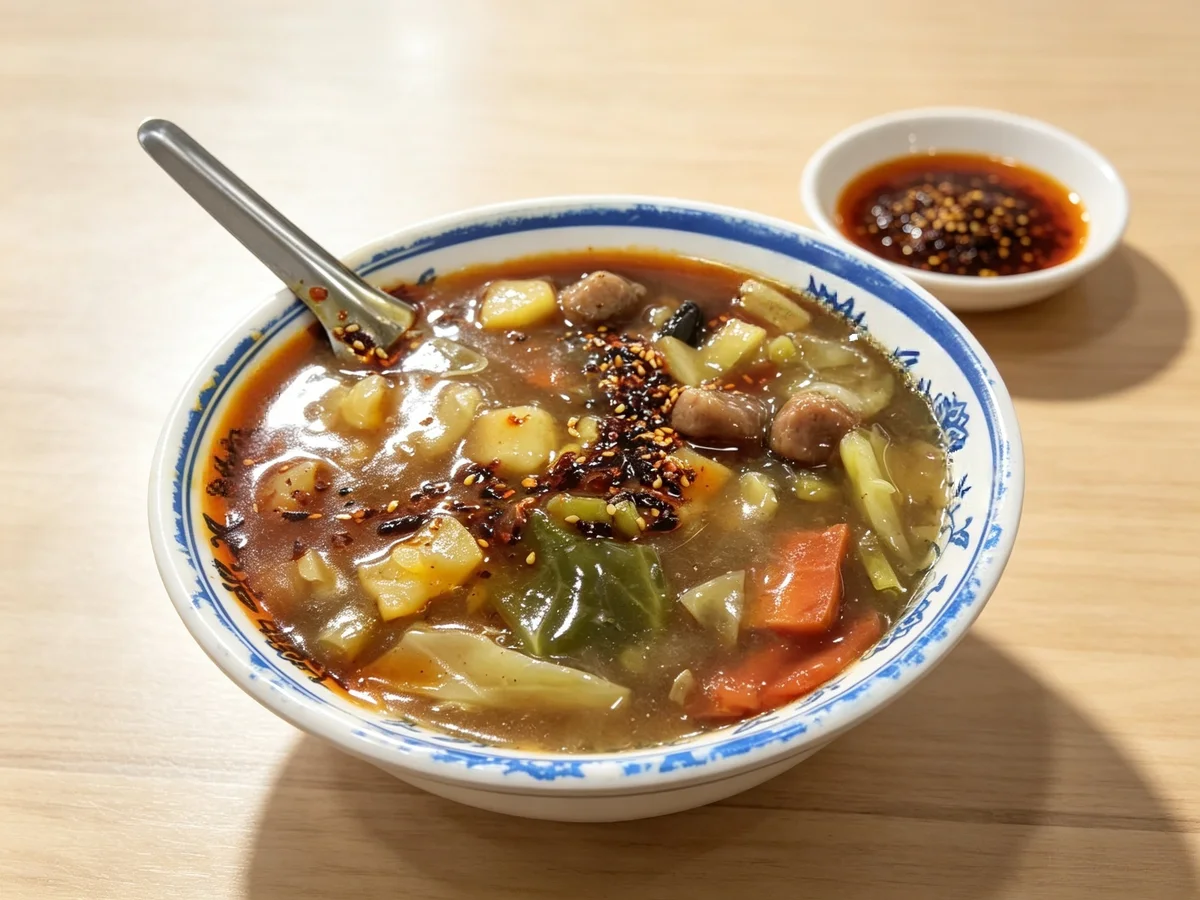
- Beef meatballs
Springy, the point of the Xi’an bowl
- Potato
In big chunks
- Cabbage
Big pieces of round cabbage
- Carrot
Cooked with the potato and cabbage
- Oil-poured chili
A spoonful added at the table
02
胡 or 糊: two ways to write the name
The two soups are pronounced the same way and often written differently.
In Henan the name is written 胡辣汤. 胡 was the old word for things that came from beyond China’s western frontier, as in 胡椒, pepper, and the 辣 in the name is pepper heat, not chili. Pepper came along the overland trade routes and was a luxury for centuries: when the Tang dynasty chief minister Yuan Zai was purged in 777, histories record that 800 shi of pepper were found in his house.
Xi’an shop signs usually write it 糊辣汤 instead, with 糊, meaning thick or pasty, which describes the soup rather than its spice; both are read hú. Menus and food writers use both, and many Xi’an breakfast shops now sell Henan-style hulatang with diced or sliced beef alongside the meatball version, sometimes from the same counter.
03
The beef meatballs
The meatballs are meant to be firm and springy, not soft.
Cooks season minced beef with salt, minced ginger or scallion-and-ginger water, ground Sichuan pepper and white pepper, sometimes a little soy and five-spice, and stir it hard in one direction until it turns sticky. Then they knead in potato starch, roughly one part starch to two or three parts beef, and slap the mixture against the bowl again and again. The starch and the slapping are what give the meatballs their bounce; you can taste the starch in them, and a good one is chewy rather than crumbly.
The meatballs are rolled by hand and dropped into boiling broth, where they cook in a few minutes, once they float. Shops season them differently, and the difference matters: in some, each meatball carries a burst of Sichuan pepper, so the soup tastes mild until you bite into one. Lamb meatballs exist, but beef is the norm.
Sources [7]
04
Broth, vegetables and the thickening
Three vegetables are almost always there: potato, cabbage and carrot.
The base is beef broth. Many shops soak beef bones for hours to draw out the blood, then simmer them for three or four hours with star anise, cinnamon, bay leaf and fennel seed. Some cooks instead use the rich broth left from cooking Xi’an’s cured beef, diluted with water, and call that version “red soup” and the bone-broth version “white soup”; most diners, though, use red and white simply to mean with or without chili oil.
Potato, cabbage and carrot are the core vegetables, cut or torn into big irregular pieces; cabbage is torn by hand rather than sliced. Green beans, cauliflower, zucchini, garlic sprouts or bamboo shoots join them by season and by shop. The potato and carrot go in first, the quicker vegetables and the meatballs last. Salt, white pepper, a spice blend and a large spoonful of ground Sichuan pepper are added near the end, and then the soup is thickened with potato starch mixed with water, poured slowly while the pot is stirred fast in one direction, and simmered a few minutes more so the starch cooks through.
05
The wooden ladle, and why you should not stir
Hulatang is a starch gel, and it can break.
Hulatang vendors in both Henan and Xi’an ladle the soup out with a wooden scoop, and cooks give two reasons: a metal ladle carries over other flavors, and it makes the thickened soup “leak” (泄), thinning and separating until it no longer holds the vegetables. The same thing happens in the bowl. Stir a bowl of hulatang and it turns watery, which is why Xi’an eaters spoon it up from the edge of the bowl inward and never mix it.
Locals judge a bowl by its thickness. It should be thick enough to hold the meatballs and vegetables together, but not a paste; a bowl that is gluey has usually sat too long or been thickened too much, and one that runs like water has leaked. The vegetables should still have their shape.
Sources [7]
06
The bread is part of the bowl
A bowl of hulatang is breakfast, and the bread is part of it.
The bread is tuotuo mo (饦饦馍), the same dense flatbread used for lamb paomo, made mostly from unleavened dough with a little leavened dough mixed in. You tear it into pieces in the bowl and the soup is ladled over it, and you eat your way in from the rim; unlike paomo, the bread is not cooked in the broth, it simply soaks. Then comes a spoonful of Xi’an chili oil (油泼辣子), which is fragrant rather than fierce, a few drops of sesame oil or Sichuan pepper oil, and sometimes chopped garlic sprouts. The heat in Xi’an hulatang is mostly the numbing of Sichuan pepper; the chili oil is added at the counter, so you can ask for less. Some people eat a raw clove of garlic between mouthfuls and add a cured beef sandwich (roujiamo) or a salted duck egg on the side.
Hulatang is sold from dawn and is usually gone by late morning. Some shops in the Muslim quarter open at three or four in the morning, and a few run through the night. A small bowl cost ¥7 to ¥8 between 2022 and 2024, and a large bowl with bread about ¥10 in 2025. Because it is a Hui dish, meatball hulatang in the Muslim quarter is halal and made with beef; ask outside it if that matters to you.
Yangrou paomo
The same tuotuo mo, torn small and cooked in lamb broth.
Read the paomo guide →Roujiamo
The cured meat sandwich most often eaten beside hulatang.
Read the roujiamo guide →Sources [9]
07
Xi’an meatball hulatang and Henan hulatang compared
They share a name and a thickened, peppery broth; almost everything else differs.
| Xi’an meatball hulatang | Henan hulatang (Xiaoyao style) | |
|---|---|---|
| Usually written | 糊辣汤 or 肉丸胡辣汤 | 胡辣汤 |
| Meat | Beef meatballs bound with potato starch | Sliced or diced beef or lamb |
| Other ingredients | Potato, cabbage and carrot, plus seasonal vegetables | Wheat gluten, glass noodles, wood ear, day-lily buds |
| Main heat | Sichuan pepper, plus chili oil on top | Black pepper and a blend of twenty or more spices |
| Finished with | Chili oil, sesame oil | Sesame oil and aged vinegar |
| Eaten with | Tuotuo mo torn into the bowl, roujiamo | Pan-fried buns, fried dough sticks, flatbreads |
08
Henan hulatang, where the soup began
In Henan hulatang is a provincial emblem, and two towns argue over it.
Xiaoyao hulatang is made on a stock of beef bones, mutton and crucian carp, seasoned with more than twenty spices, and filled with beef or mutton, hand-made wheat gluten, glass noodles and day-lily buds, then simmered gently and stirred with a wooden scoop. It went onto the national intangible heritage list in 2021, and close to 100,000 people in Xihua county make a living from it. The legend behind it credits an imperial cook who fled to Xiaoyao, set by the county gazetteer in the Ming Jiajing reign and by other tellings in the Song dynasty; neither can be checked. Its rival is Beiwudu town in Wuyang county, whose hulatang is gentler on spice and leans on the flavor of the meat broth.
Henan’s own origin story runs through the Ming court. It begins with a hangover soup from the Shaolin monastery and a digestive tea from Wudang at the end of the Northern Song; the grand secretary Yan Song presents a soup made from them to the Jiajing emperor, who wanted to live forever; and when the Qing armies take Beijing, a palace cook named Zhao Ji flees with the recipe to Xiaoyao, where it is renamed hulatang. Like the Xi’an migration story, it has no record behind it. The soup itself, in Henan, is plainer: a stock of lamb bones and spices, beef or lamb, day lily buds, wood ear, wheat gluten and thin starch noodles, thickened with wet starch, and the main branches are the Beiwudu, Xiaoyao and Xinyang styles.
Henan has its own way of taming the soup: a bowl of 两掺 (liǎngchān, “half and half”), hulatang mixed with soft tofu pudding (豆腐脑), which softens the pepper. Henan hulatang is traditionally finished with sesame oil and vinegar rather than chili oil, and eaten with pan-fried buns (水煎包) or fried dough (油馍头).
In Zhengzhou the best-known name is Fang Zhongshan (方中山), which has grown into a chain and sells its soup base abroad, as far as Chinese supermarkets in Oceania. The Hong Kong food writer Chua Lam, taken there for breakfast, found the soup less hot than he expected and so thick that it ran down the outside of the bowl and was left there. He described it as a hodgepodge of beef, peanuts, day-lily buds, wood ear and wheat gluten, cooked down and thickened with starch, with pepper and vinegar as the key seasonings and a dark red color, and with sheets or strands of starch noodles added, as they are to much of Zhengzhou’s food. Beside it came beef-filled pastries (牛肉盒子), scallion pancakes and meat or vegetable buns, and tofu pudding, which Zhengzhou, sitting between the salty north and the sweet south, sells both ways, to eat on its own or with the hulatang.
09
How hulatang reached Xi’an
The usual account is migration, but no early record describes it.
The common explanation is that Henan migrants brought hulatang west to Xi’an in the first half of the twentieth century, when the Longhai railway and famine drove large numbers of people from Henan into Shaanxi, and that Hui cooks in Xi’an remade it with hand-beaten beef meatballs, big vegetables, heavier thickening and Sichuan pepper. The migration itself is on record: the 1981 Shaanxi volume of the Chinese Cookbook (中国菜谱) notes that after the Longhai railway reached Xi’an in 1933, and above all once the war with Japan began, people from north China and the Yangtze–Huai region crowded into Guanzhong, and Shandong, Henan and Huaiyang restaurants opened one after another. No written record from the time documents the change, and the dish’s history in Xi’an rests mostly on memory. What is clear is that the two soups have grown into separate dishes, and people on each side still argue over which is the “real” hulatang.
Sources [1]
10
Four bowls with beef meatballs
For four bowls: 2 liters of beef broth, 300 g minced beef, about 120 g potato starch plus 3 tbsp for thickening, 2 potatoes, 2 carrots, a quarter of a cabbage, a handful of green beans, ginger, a scallion, salt, white pepper, ground Sichuan pepper, chili oil and flatbread.
- 1. Make the meatballs
Mix the beef with salt, a pinch each of white and Sichuan pepper and a few spoonfuls of scallion-ginger water, stir hard in one direction until sticky, then knead in the starch and slap the mixture against the bowl for a few minutes.
- 2. Cook the meatballs
Roll walnut-sized balls, drop them into the simmering broth and lift them out a few minutes after they float.
- 3. Add the vegetables
Simmer the potato and carrot chunks until nearly tender, then add the green beans, the hand-torn cabbage and the meatballs.
- 4. Season and thicken
Season with salt, white pepper and a generous spoonful of Sichuan pepper. Stir the pot in one direction while pouring in the starch mixed with an equal amount of water, a little at a time, until it bubbles thickly; simmer three minutes.
- 5. Serve
Tear flatbread into each bowl, ladle the soup over, and top with chili oil and a few drops of sesame oil.
Thicken just before serving; reheated hulatang tends to go gluey, and stirring it hard turns it thin.
11
Zenggao and biang biang noodles
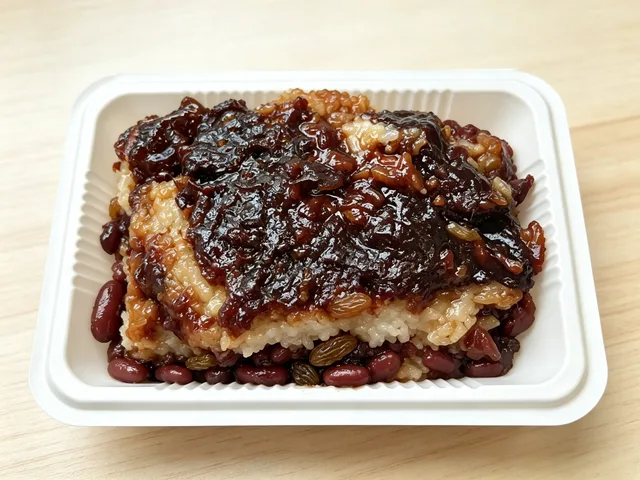
Zenggao
Steamed sticky rice with dates and beans, another Xi’an breakfast.
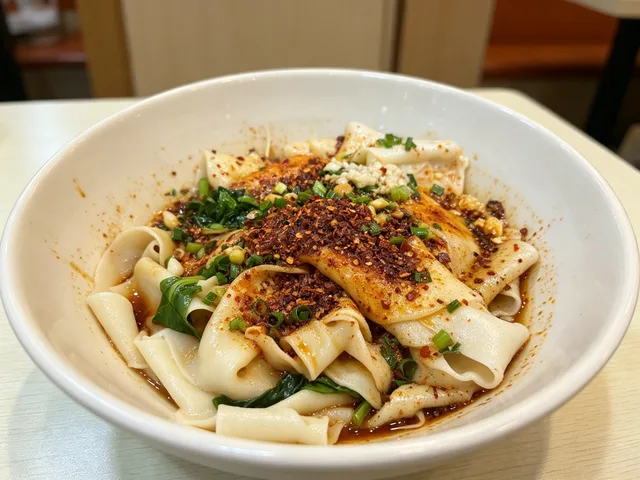
Read the zenggao guide →Biang biang noodles
Wide hand-pulled noodles under sizzling chili oil.
Read the biang biang guide →Chinese breakfasts
Hulatang and the morning foods of other Chinese cities.
See Chinese breakfasts →Shaanxi classics
- Yangrou Paomo
Bread in lamb soup · Breakfast or lunch
- Roujiamo
Filled flatbread · Quick meal, often with liangpi
- Liangpi
Cold-dressed noodle sheets · Lunch or snack, often with roujiamo
- Zenggao
Sticky-rice breakfast · Early breakfast
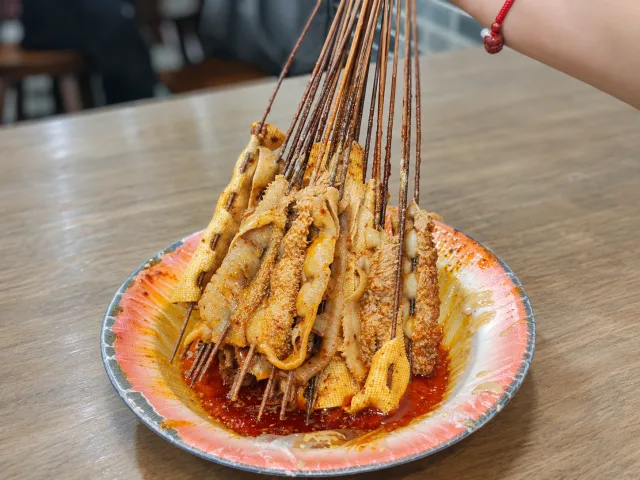
- Xi’an Sesame Tripe Skewers
Tripe skewers in sesame sauce · Night markets and barbecue shops
- Youpo Noodles
Wide noodles · Lunch or dinner
Soups and stews from other regions
FAQ
Questions about Xi’an Meatball Hulatang
What is hulatang?
A thick, peppery soup thickened with starch and eaten for breakfast. In Xi’an it is a Hui dish with beef meatballs and vegetables; in Henan, where it began, it has sliced meat, wheat gluten and glass noodles.
What are the ingredients of Xi’an meatball hulatang?
Beef meatballs bound with potato starch, potato, cabbage, carrot and seasonal vegetables in beef broth, seasoned with Sichuan pepper and white pepper, thickened with potato starch and topped with chili oil.
Is hulatang spicy?
It is peppery. Henan hulatang is hot with black pepper; Xi’an’s is numbing with Sichuan pepper, and the chili oil on top is optional.
Is Xi’an hulatang halal?
Meatball hulatang is a Hui Muslim breakfast made with beef, and shops in Xi’an’s Muslim quarter are halal. Outside the quarter, ask.
Sources
Sources and further reading
- 1 Chinese Cookbook: Shaanxi (中国菜谱·陕西), p. 2: the Longhai railway, wartime migration and the Shandong, Henan and Huaiyang restaurants that followed (in Chinese)Chinese Cookbook editorial group, China Financial and Economic Publishing House (1981)
- 2 Bu Bai Chi Manhua: Zhe Jiu Shi Da Zhonghua Meishi (不白吃漫画这就是大中华美食), chapter “Hulatang” (in Chinese)Wo Shi Bu Bai Chi (我是不白吃); Hunan Literature and Art Publishing House (2022)
- 3 Chua Lam (蔡澜), “Revisiting Zhengzhou, Part 2” (重访郑州(下)), in Chua Lam Lüxing Meishi Wenhua (蔡澜旅行美食文化), five-volume set (in Chinese)Qingdao Publishing House (2016; WeChat Read edition)
- 4 Pepper hot soup (肉丸胡辣汤/Meatball hulatang), Xi’an dininggovt.chinadaily.com.cn (China Daily for english.gov.cn) ↗
- 5 Snack-making techniques: Xiaoyao hulatang (national intangible cultural heritage, VIII-276, 2021) (in Chinese)China Intangible Cultural Heritage Network ↗
- 6 A bowl of hulatang: the Xiaoyao and Beiwudu schools and liangchan with tofu pudding (in Chinese)China News Service ↗
- 7 A Xi’an cooking teacher on meatballs, starch ratios, red and white soup and the wooden ladle (video, in Chinese)Pin Nuo Mei Shi (品诺美食开课啦), Bilibili ↗
- 8 Muslim-quarter meatball hulatang at home: the three vegetables and a big spoon of Sichuan pepper (video, in Chinese)Xiao Gao Jie (小高姐的魔法调料), Bilibili ↗
- 9 Breakfast in Xi’an: meatball hulatang with bread, then Henan-style diced beef hulatang (video, in Chinese)Jun Zai Xi’an (君在西安), Bilibili ↗
- 10 Four Xi’an meatball hulatang shops compared: meatballs, vegetables and how thick the soup should be (video, in Chinese)Hong Yun Da Shu (宏运大叔), Bilibili ↗
- 11 Henan hulatang in Xiaoyao and Beiwudu, and a bowl of liangchan (video, in Chinese)A Xing Tan Dian (阿星探店), Bilibili ↗
Last updated October 2026