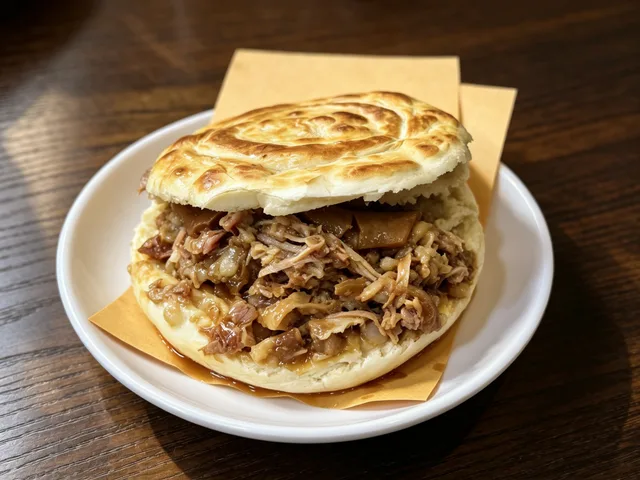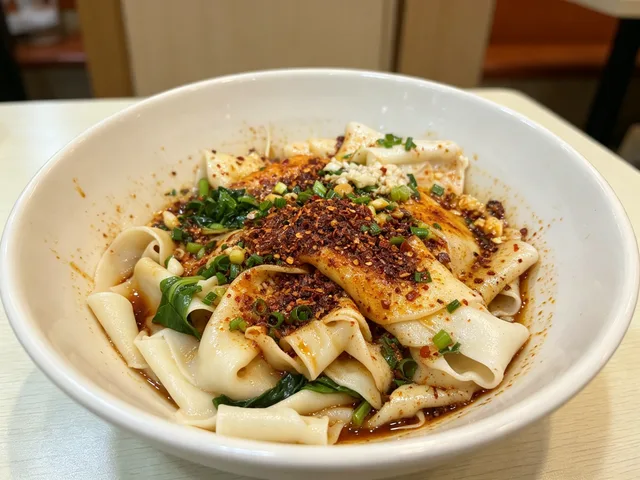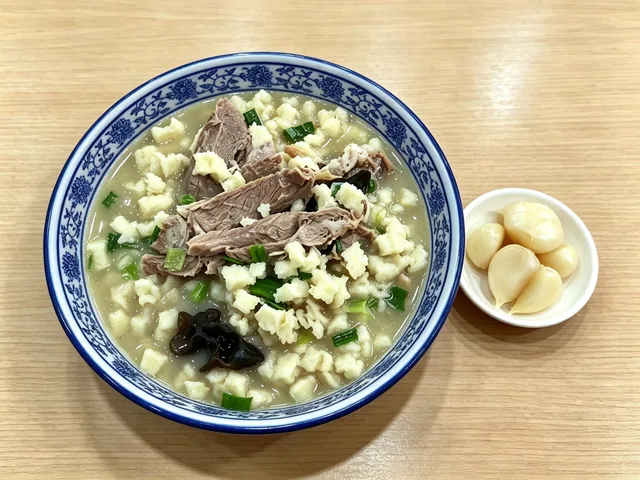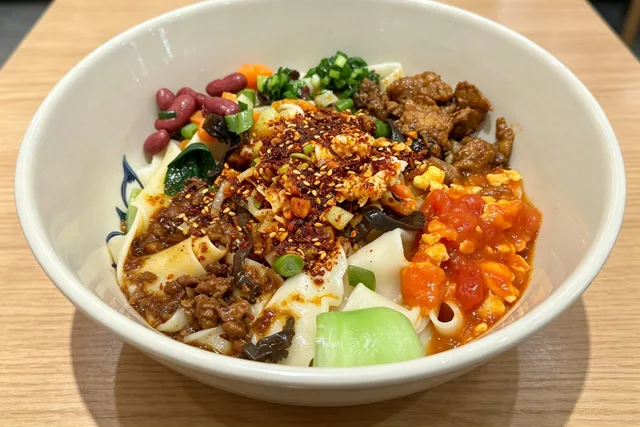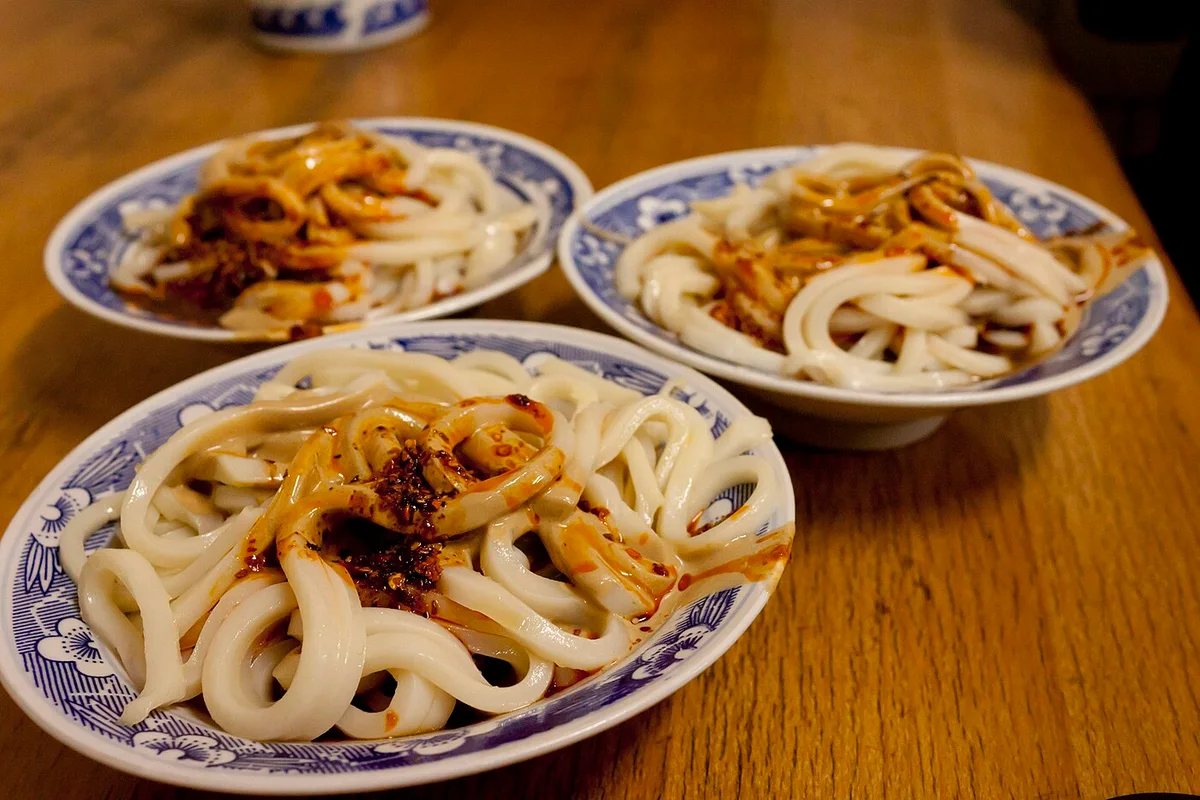
Liangpi is a family of foods, not one fixed recipe
Liangpi is a northwestern family of steamed starch sheets cut into ribbons and dressed with vinegar, garlic and chilli. The specific grain, process and local style determine the texture.
Common ingredientsRice batter for mipi; wheat flour or wheat-starch batter for mianpi and ganmianpi; plus vinegar, chilli oil, garlic water, vegetables and steamed gluten where used.
Compare
Rice liangpi vs wheat mianpi: what actually changes
Liangpi is the umbrella category. Shaanxi’s local standard distinguishes traditional rice skin, wheat mianpi and ganmianpi by grain and core process. Rice versus wheat is the first useful divide, but regional methods still change thickness, resilience and serving temperature.
Rice soaked and ground into a batter
Wheat flour; the dough may be washed to separate starch and gluten, or used without washing
Soak, grind and adjust the rice batter, then spread and steam it into sheets
Steam a dough-derived or mixed batter; ganmianpi adds its own settling, fermentation, cooking and shaping stages
Usually white to translucent, with thickness varying by place; Qinzhen is often thinner, while Hanzhong forms can be softer
Often cream, pale yellow or slightly translucent; steamed mianpi can be thin, while ganmianpi is usually denser
Generally smoother and softer, with a fine rice-batter feel; Qinzhen rice skin can still be thin and resilient
Generally springier and more elastic; ganmianpi is the densest and chewiest wheat branch
A clearer rice aroma
More evident wheat aroma and gluten structure
Qinzhen rice liangpi and Hanzhong hot rice skin
Steamed mianpi or niangpi, plus Baoji- and Qishan-associated ganmianpi
Cool or warm; Qinzhen rice skin can be boldly dressed with red chilli oil and vinegar
Usually cool-dressed with chilli oil, vinegar, garlic water and, in washed-dough versions, steamed gluten
Do not reduce rice skin to “thick, soft and mild,” or wheat skin to “thin and translucent.” Qinzhen rice skin is known for a thin, smooth but resilient sheet with vivid chilli dressing; Hanzhong rice skin more often foregrounds softness and warm service; ganmianpi builds a dense wheat chew. Seasoning intensity alone does not separate rice from wheat.
For smooth softness and rice aroma
Choose rice skin, then ask whether the shop serves thinner, more resilient Qinzhen style or softer Hanzhong style that may arrive warm.
For spring and a clearer chew
Choose wheat mianpi. Washed-dough versions often include porous steamed gluten that carries vinegar, garlic water and chilli oil.
For the firmest bite
Choose ganmianpi. It belongs to the wheat family but follows a distinct process; it is not ordinary mianpi made thicker.
For a soft warm serving
Look for Hanzhong hot rice skin and confirm the shop’s serving temperature and dressing.
01
Start by asking which kind of liangpi the shop makes
How to order it
First choose rice skin or wheat mianpi. If you want the densest chew, ask for ganmianpi within the wheat family; then ask which named local style the shop serves. Mix from the bottom so vinegar, garlic water, aromatic seasoning and chilli reach every ribbon. Pair it with roujiamo for the classic contrast of tangy starch ribbons and hot savory bread. Specify less chilli if needed, but keep enough vinegar and garlic to preserve the bowl’s structure. For celiac disease or a wheat allergy, ask about the base, added mianjin, wheat-containing seasonings and shared steam trays, boards and utensils; “rice liangpi” alone is not a safety guarantee. Eat soon after mixing, before the ribbons swell or clump and the vegetables and gluten lose their texture.
How to eat and pair it
Liangpi is commonly prepared as large steamed sheets, then cut and seasoned to order. A good vendor works quickly so the ribbons remain separate and the sauce tastes freshly mixed. Xi’an diners may pair it with roujiamo and a soft drink, while Qinzhen, Baoji and Hanzhong maintain distinct rice, wheat and rolled traditions. Hanzhong rice liangpi can be served warm, which shows why “cool” is a category association rather than a temperature command. The map also follows grain geography: wheat traditions are especially visible across central and western Shaanxi, while rice-based forms are important in the south.
Easy mix-ups
Misconception: Every liangpi bowl should be judged by one texture or serving temperature. In practice: first identify the named style, then judge whether its sheets are freshly made, properly cooked and well dressed.
02
Judge the specific style before using four shared quality signals
Steamed gluten
When wheat dough is washed, the remaining gluten can be steamed, cubed and added back for a porous, sauce-absorbing contrast.
Vinegar and chilli oil
Acidity and toasted chilli fragrance should wake up the cool noodles; neither needs to overwhelm the grain flavor.
Cucumber or bean sprouts
Fresh vegetables add crunch and moisture, with combinations changing by shop and season.
Qinzhen rice liangpi
A rice-based specialty known for thin, fine, smooth yet resilient sheets and a vivid dressing of chilli oil, vinegar and aromatics.
Hanzhong hot rice liangpi
A southern Shaanxi rice-based form that is generally softer and may be served warm. Its texture and temperature differ from Qinzhen rice skin.
Mianpi with gluten
Wheat sheets may be made from starch washed out of dough, with the separated gluten steamed and returned as porous sauce-absorbing cubes.
- Ribbons that match the named style: Qinzhen can be thin and resilient, Hanzhong rice skin softer, wheat mianpi springier and ganmianpi denser
- No raw-starch taste, powdery center, widespread tearing or gluey clumping
- Sauce coating the ribbons without excessive liquid, dead acidity or stale chilli oil
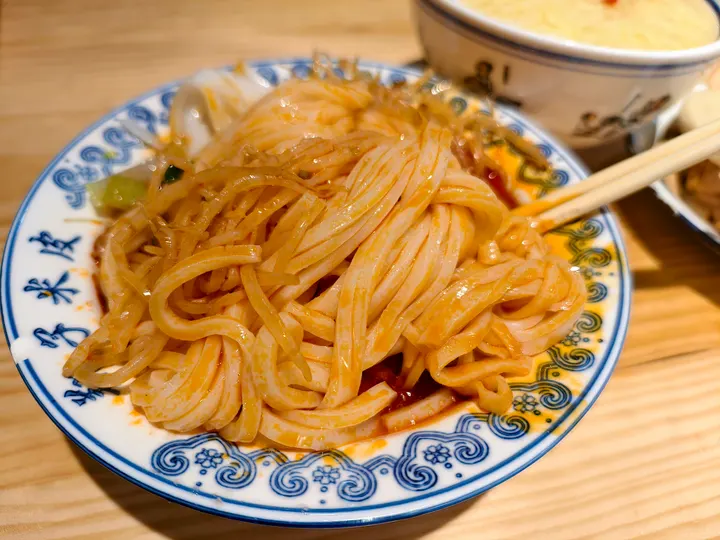
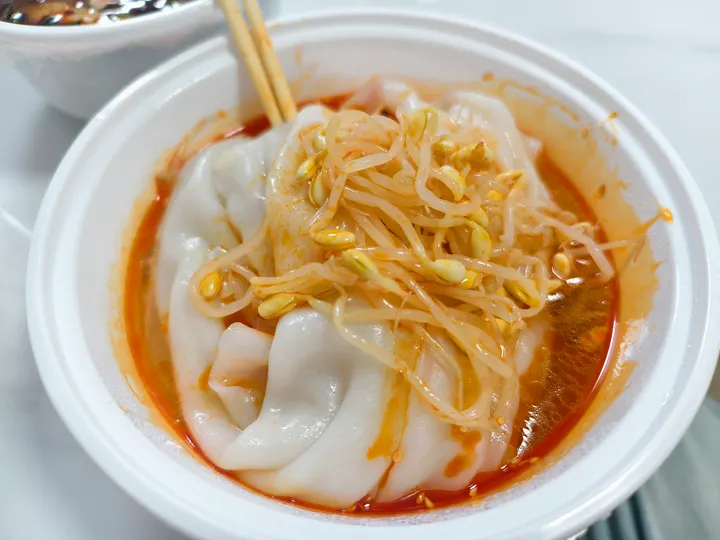
Liangpi and hot rice pi, side by side
The familiar cold-dressed bowl is only one form in the wider liangpi family. Hot rice pi uses a rice-based sheet and arrives warm, often softer and broader. Shops and cities vary, so ask about the grain, thickness, serving temperature and seasoning instead of expecting every liangpi to match one translucent, springy model.
03
Rice sheets, wheat liangpi and rolled dough sheets create different textures
Rice styles begin with soaked grain ground into batter, while wheat styles may use washed dough and settled starch or an unwashed flour slurry. Steaming, cooling and cutting must produce intact sheets with the texture promised by the named local style; washed-dough versions also yield porous gluten.
04
Guanzhong wheat and southern Shaanxi rice form one liangpi map
Shaanxi’s liangpi map follows grain and locality: wheat traditions are especially visible across Guanzhong and the province’s west, while rice-based forms are important around Qinzhen and Hanzhong. Naming the town or style tells diners more than treating every bowl as one cold-noodle recipe.
05
How to say Liangpi—and what the name tells you
Pronounced liáng pí. Menus may call it liang pi, cold skin noodles, Shaanxi cold noodles, Qinzhen rice liangpi.
The “skin” is a thin sheet formed from steamed rice or wheat-starch batter, not animal skin. Calling it a noodle helps readers recognize the cut ribbons, but ordinary wheat noodles boiled and chilled are made by a different process.
The character liáng describes the category’s familiar cool service, not an absolute temperature rule. Hanzhong hot rice liangpi is a coherent local form, and Shaanxi diners eat liangpi throughout the year rather than only in summer.
Imperial origin stories are cultural memory, not a fixed invention date: Stories about villagers creating a rice- or wheat-skin food during a Qin-era drought are widely repeated. They can be introduced as folklore, but they do not securely identify one inventor or prove an exact date for the whole liangpi family.
The bowl works when slippery sheets, porous gluten and sharp seasoning stay distinct
Good sheets lift in long ribbons and yield with a clean, resilient bite. Thick sheets can be satisfying when evenly steamed; thin sheets should remain intact rather than dissolving. A chalky center signals under-steaming, while brittle edges and cracks suggest drying. The sauce should cling in a light film and collect in folds without turning the entire bowl into red oil.
Mix from the bottom immediately because vinegar, salt and garlic liquid settle beneath the ribbons. Lift rather than mash so mianjin keeps its pores and cucumber keeps its crunch. Ask for chilli adjustment before service, but remember that vinegar, garlic and sesame also define the bowl. Removing every strong seasoning leaves plain starch sheets rather than a clear introduction to liangpi.
For a classic Xi’an snack meal, pair liangpi with roujiamo: one is cool, sour and slippery, the other hot, wheaty and rich. Portions can be substantial, so a solo diner may not need two full bowls. Sesame, peanuts, soy and wheat are common concerns, and a rice liangpi sign does not establish a dedicated gluten-free kitchen. Confirm the batter and every sauce separately.
Look for freshly cut edges
Sheets held too long become dry, stuck together or ragged; busy specialist turnover protects elasticity.
Use chilli oil as aroma, not camouflage
Toasted fragrance should support vinegar and starch flavor rather than hide stale sheets under heat.
Freshness is measured in elasticity, not refrigerator coldness
Liangpi sheets are usually made in batches, cooled, peeled and cut for service. They need protection from drying but should not sit waterlogged. A specialist counter with steady turnover is more promising than a display of pre-dressed bowls: once vinegar and salt touch the sheets, they continue releasing moisture and losing definition. Ask for sauce at service and eat before cucumber wilts and mianjin becomes uniformly saturated.
Takeaway can work when sheets, vegetables and sauce are packed separately. Mix only when ready to eat, and avoid refrigerating the assembled bowl until the ribbons harden and stick. If leftovers must be chilled for safety, expect texture loss rather than trying to restore them with extra oil. Freshly steamed and properly cooled sheets remain the reference.
FAQ
Quick answers to common searches
What is liangpi made from?
Liangpi is made by steaming a rice batter, wheat-starch batter or flour slurry into thin sheets, then cutting the sheets into ribbons and dressing them with vinegar, garlic, chilli oil and vegetables.
Is liangpi made from rice or wheat?
It can be either. Qinzhen and some Hanzhong styles are rice-based, while mianpi and ganmianpi are wheat-based. Liangpi is a family of starch-sheet foods rather than one fixed recipe.
Is liangpi gluten-free?
Not automatically. Many liangpi styles are made from wheat and may include steamed wheat gluten. Even rice-based versions can share equipment or sauces with wheat, so anyone avoiding gluten should confirm the ingredients and cross-contact.
Why is liangpi called cold skin noodles?
The English name describes thin steamed starch sheets that resemble a skin and are cut like noodles. Most versions are cooled before dressing, although some Hanzhong rice-skin traditions are served warm.
Sources
Sources and further reading
- Local food standard: the history and main categories of Shaanxi liangpiShaanxi Provincial Health Commission ↗
- Characteristic foods and snacks of ShaanxiShaanxi Provincial Government ↗
- Four representative forms of Shaanxi liangpi and niangpiShaanxi Provincial Archives ↗
- Food-safety standard for Shaanxi liangpiShaanxi Provincial Health Commission ↗