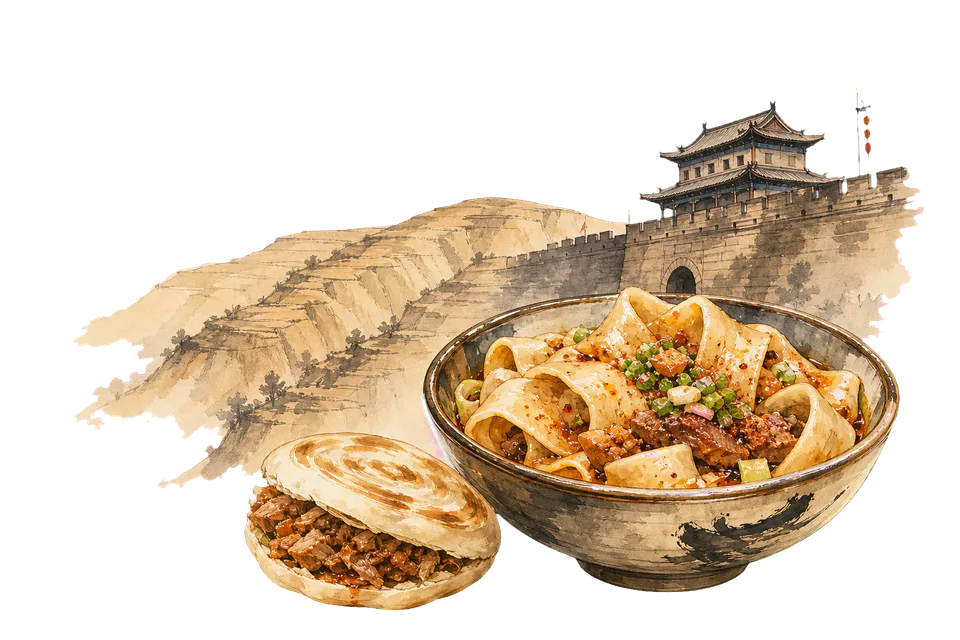
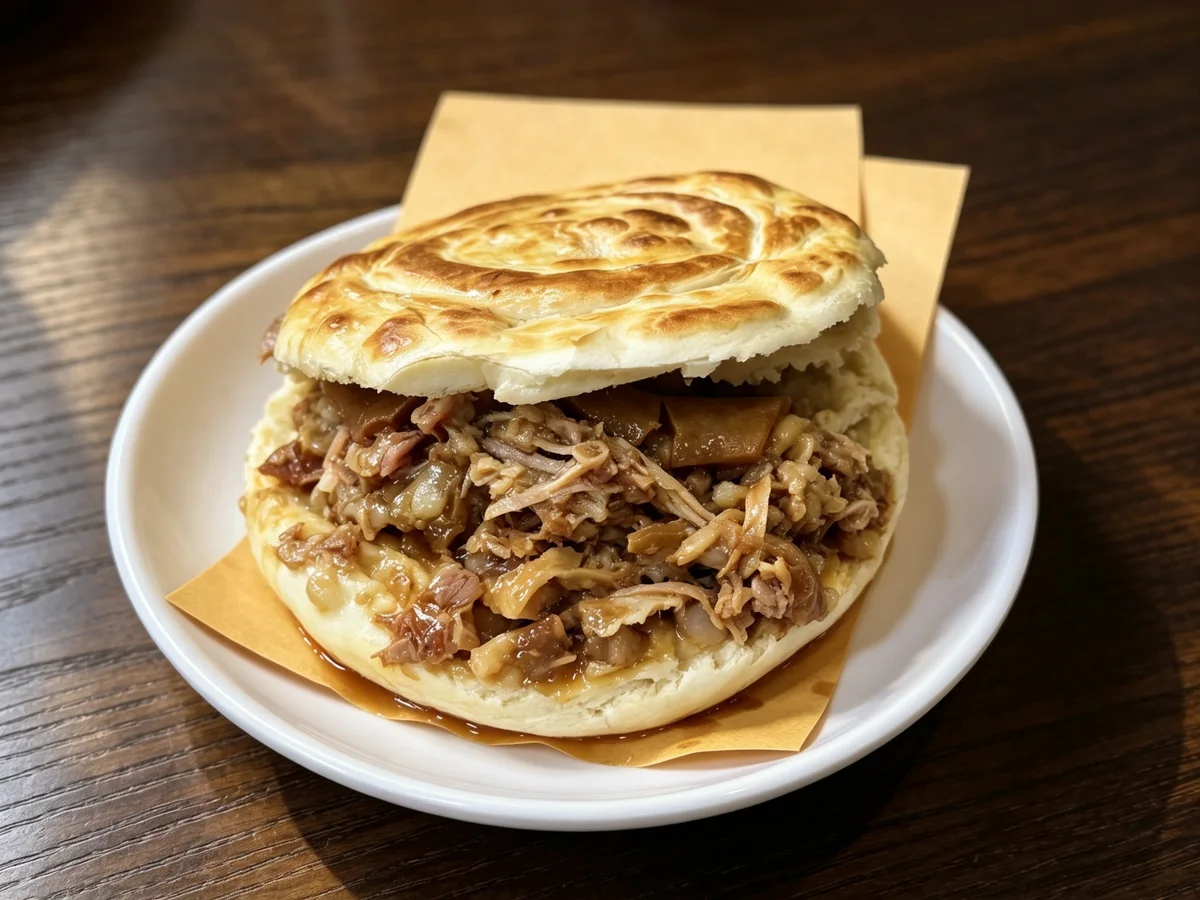
Roujiamo
A family of Shaanxi meat-filled breads, best known through Xi’an baiji mo with chopped lazhirou pork and the flaky Tongguan and Muslim beef-or-lamb branches.
Regional food guide
Wheat, lamb and the bold flavors of the northwest
Shaanxi food is built around wheat: broad hand-pulled noodles, flatbreads and dumplings. Vinegar, chilli oil and slow-cooked lamb give the region its hearty, unmistakable character.
Start with the classics
Open the region through its most useful dishes first, then read the deeper story behind the flavors below.
A family of Shaanxi meat-filled breads, best known through Xi’an baiji mo with chopped lazhirou pork and the flaky Tongguan and Muslim beef-or-lamb branches.
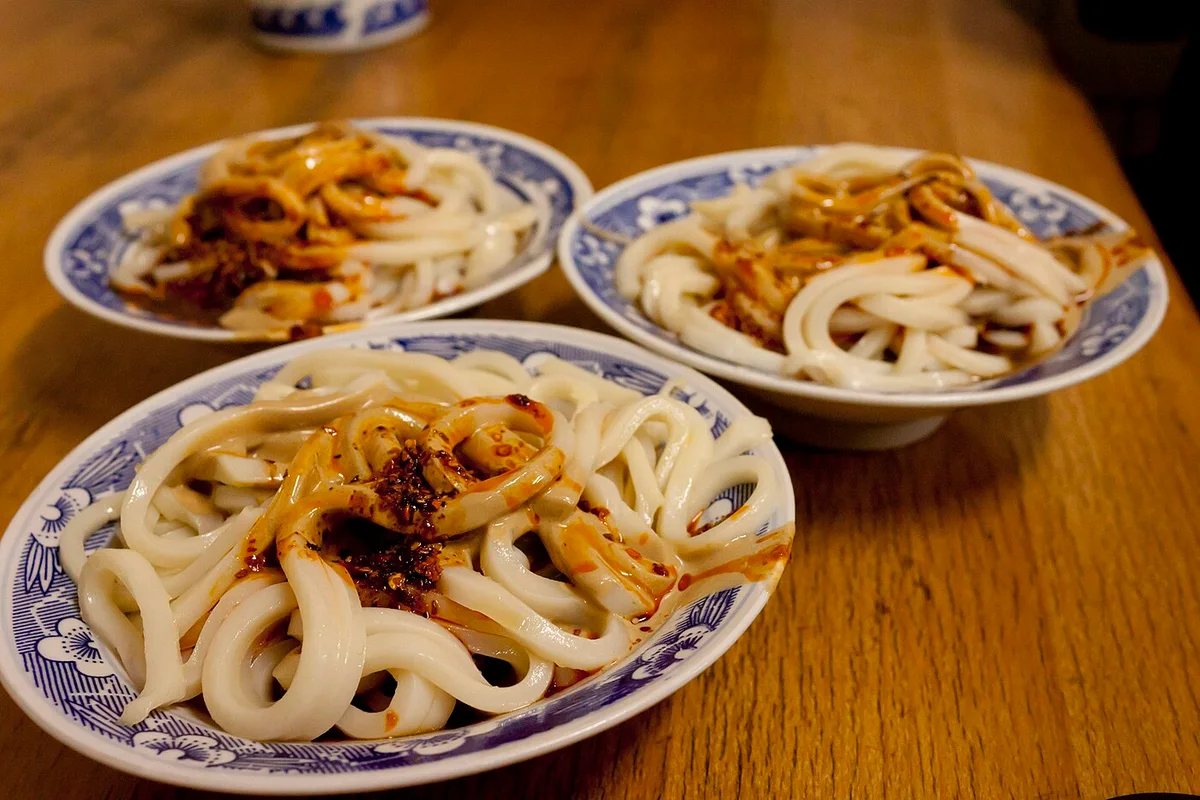
A Shaanxi family of rice skin, wheat mianpi and firmer ganmianpi, cut into ribbons and seasoned with vinegar, garlic and chilli.
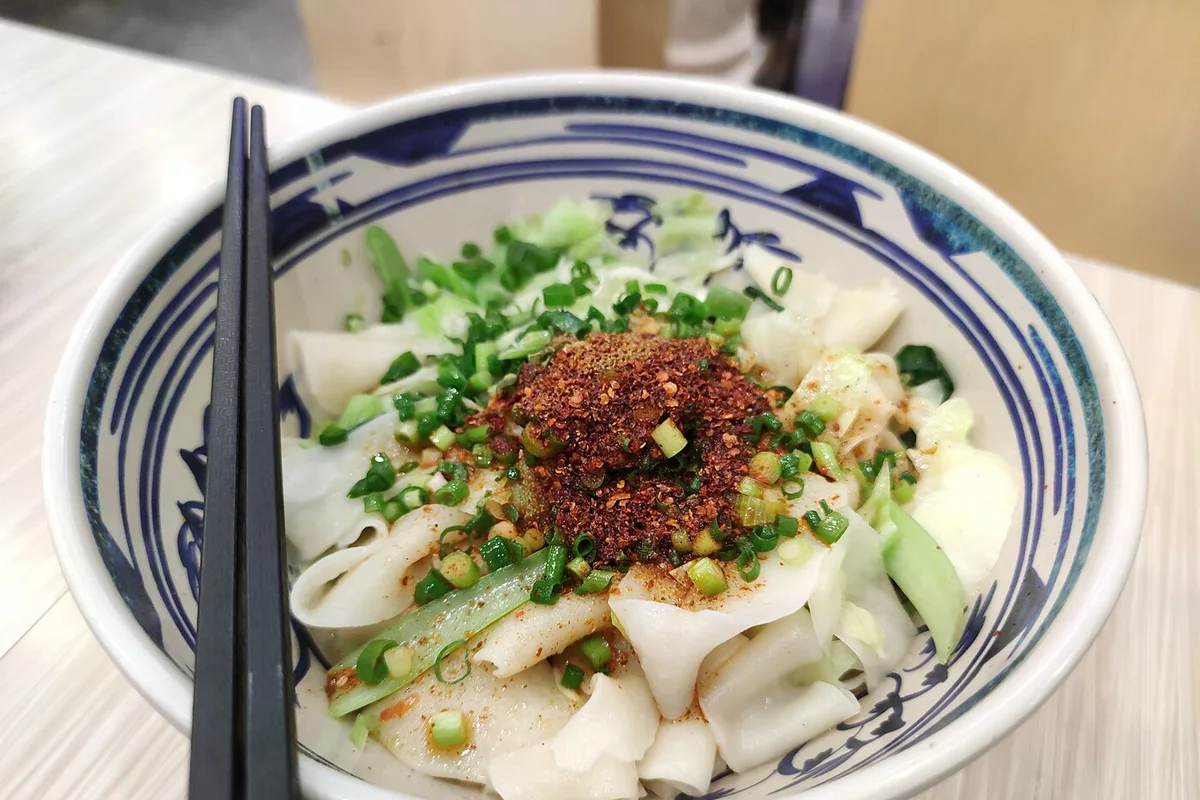
Handmade noodles topped with chilli, garlic and scallions, then awakened by a splash of sizzling oil.
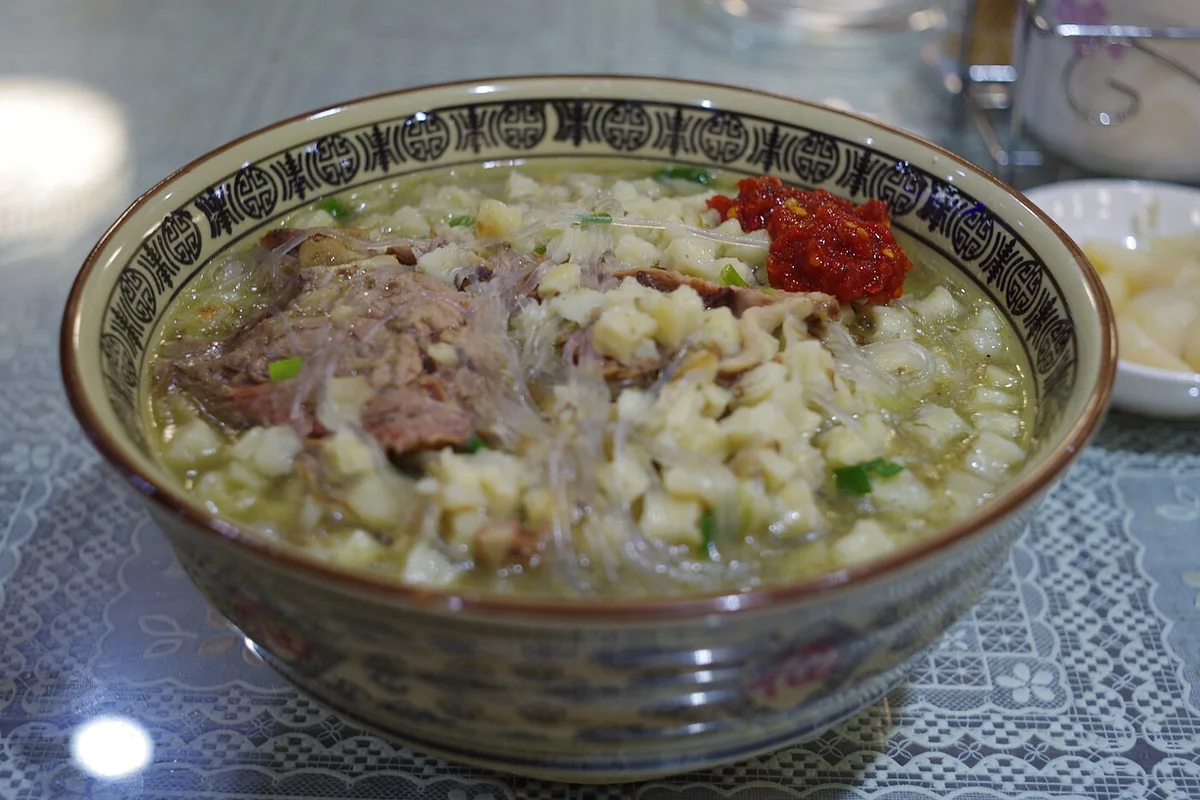
A Xi’an beef-or-lamb meal in which diners hand-tear dense mo before the kitchen cooks it briefly with broth and meat.
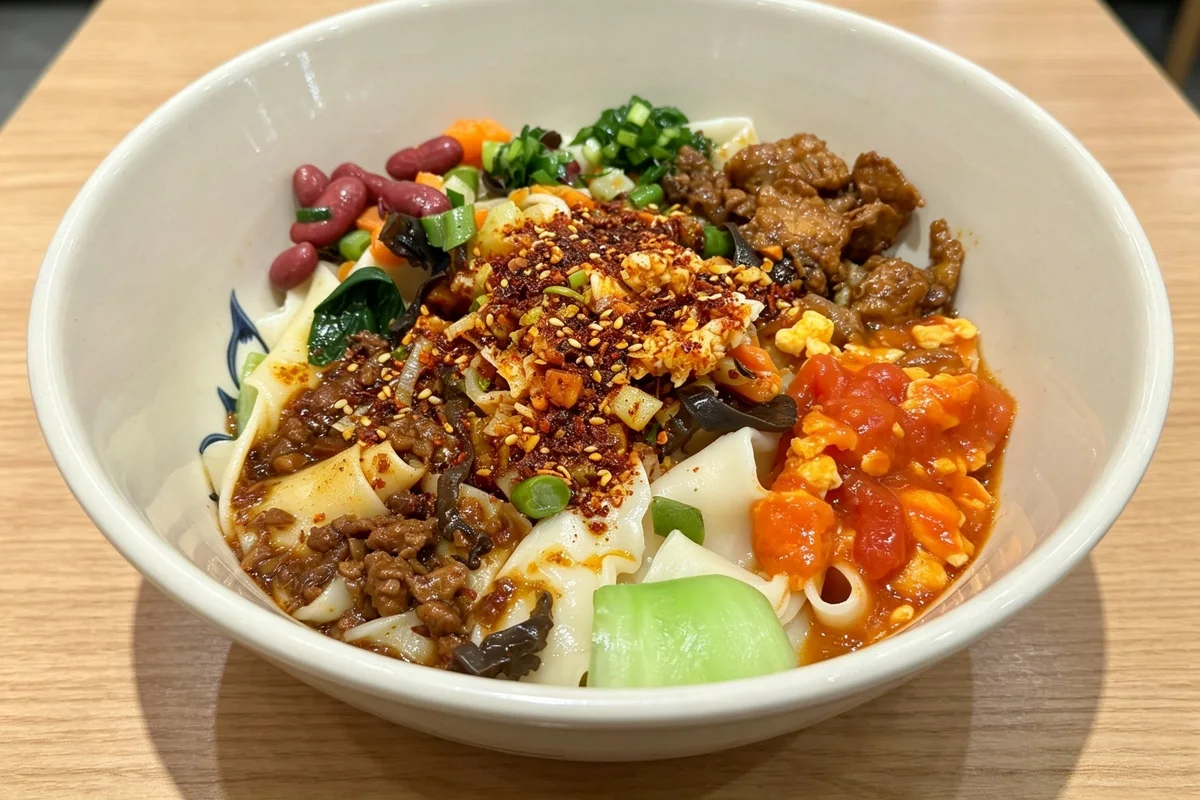
Broad Shaanxi wheat ribbons, stretched and slapped by hand, then brightened with vinegar, garlic, chilli and sizzling hot oil.
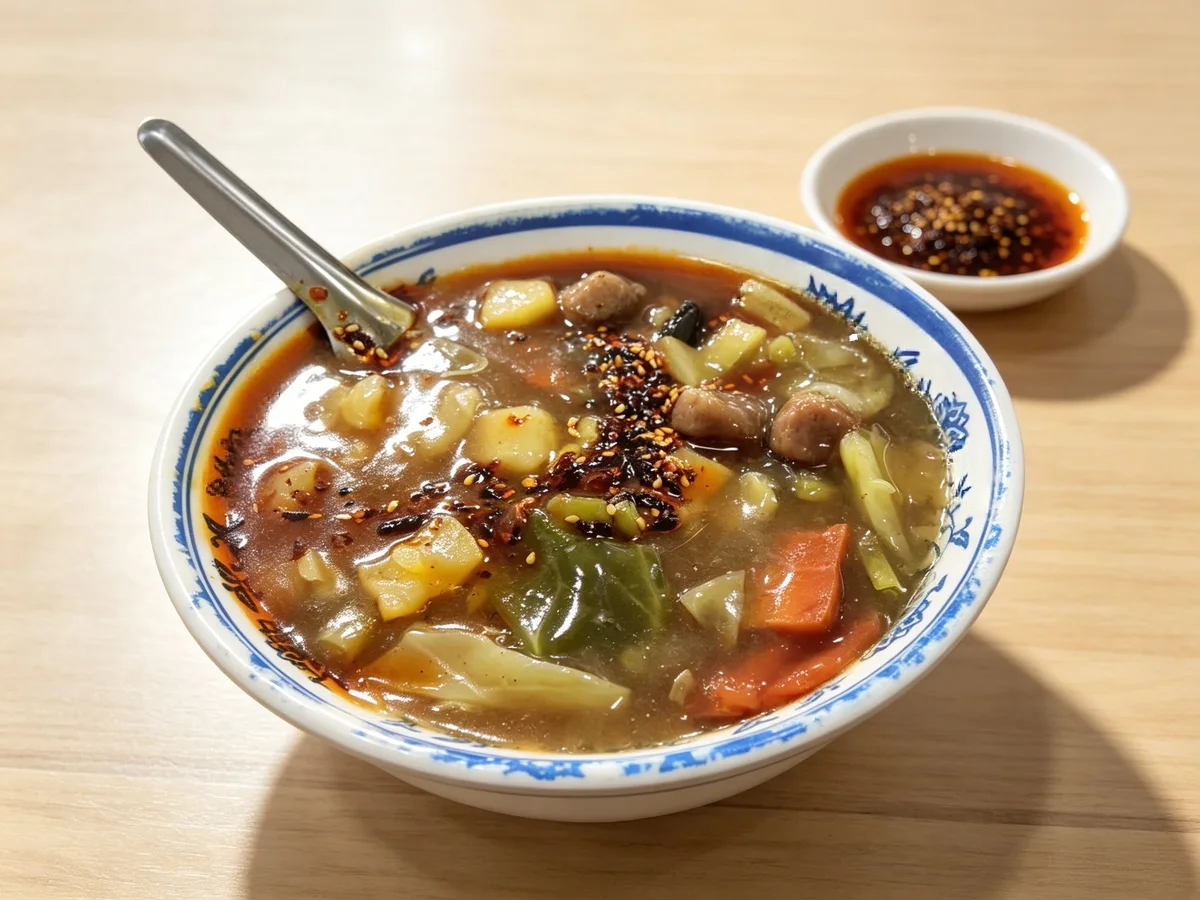
Xi’an’s thick, peppery breakfast soup with halal beef or lamb meatballs and vegetables.
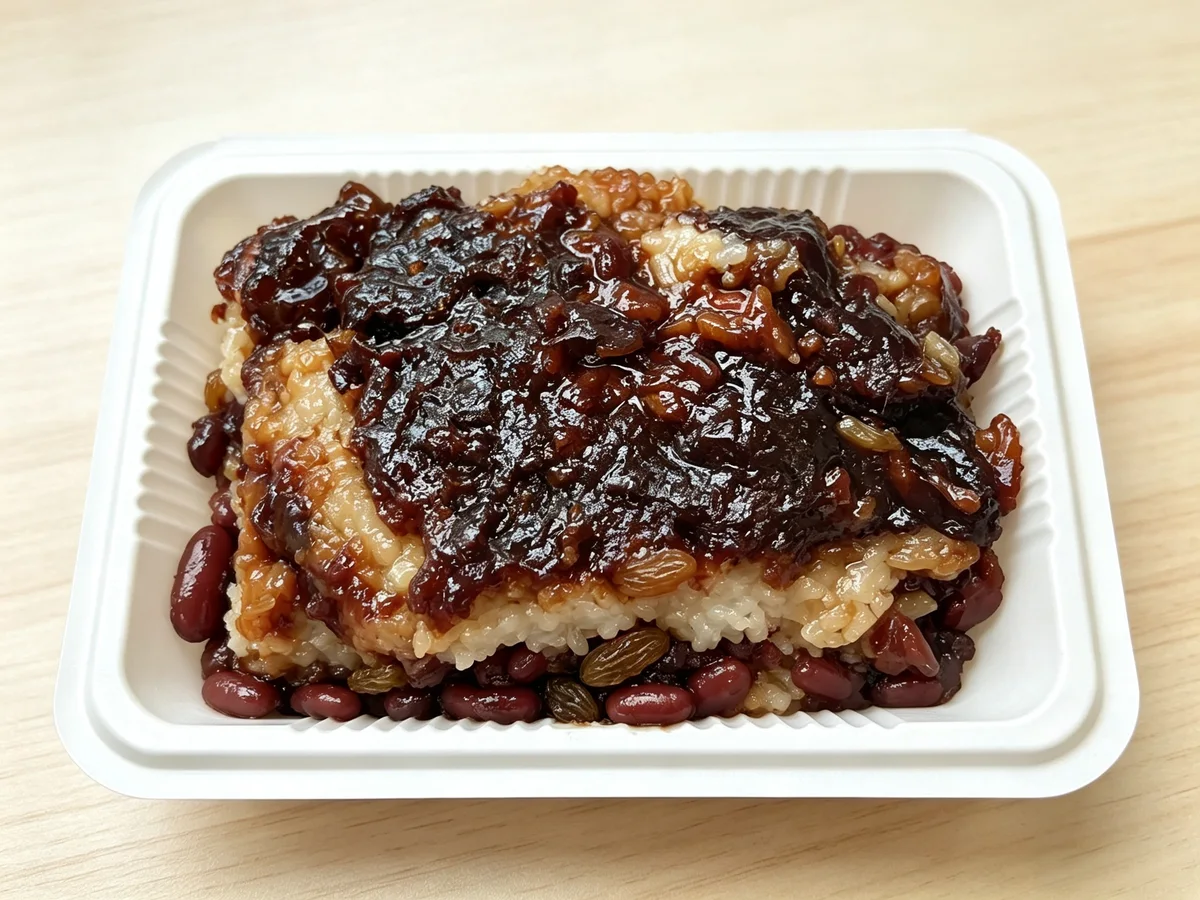
A Xi’an steamed sticky-rice cake layered with red dates and beans.
01
Shaanxi sits in north-central China, where the Guanzhong plain meets the Loess Plateau and old routes once moved armies, merchants, grain and ideas westward. Xi’an, remembered as Chang’an, was an imperial capital and Silk Road starting point, but the food belongs as much to the wheat country around the city as to its monuments.
That history gives Shaanxi cooking a carved, practical force. Flour becomes broad biang biang noodles, torn bread in lamb broth, crisp flatbreads and cool starch sheets; vinegar, hot oil, cumin and Hui Muslim foodways keep the region hearty, sour, aromatic and deeply tied to the road.
02
Broad noodles, torn bread, flatbread sandwiches, steamed cakes and starch skins are not one carb-heavy blur. Their shapes determine broth, sauce, chew and meal size.
Shaanxi food is a wheat-first cuisine shaped by the Guanzhong plain, Xi’an’s long urban history and the movement of people along northwestern routes. It is not only noodles, although noodles are everywhere. Flatbreads, hand-pulled dough, torn bread in broth, cold starch sheets, dumplings and filled pastries all show how many forms wheat can take.
The flavor vocabulary is direct and memorable: mature vinegar, chilli oil poured hot over aromatics, slow-cooked lamb or beef, garlic, cumin, sesame, fermented sauces and clear broths. Many dishes are built for appetite and texture. Biang biang noodles are broad and elastic; liangpi is cool and slippery; roujiamo contrasts crisp bread with braised meat; paomo asks the diner to tear bread before the kitchen finishes the bowl.
Xi’an’s Hui Muslim food culture is especially important to how many visitors experience Shaanxi. Lamb, beef, flatbreads, soups and halal restaurants are part of the city’s everyday landscape. At the same time, Shaanxi extends beyond Xi’an: sour noodles, steamed sweets, local breads and county snacks give the province a much wider range than the most photographed street-food streets suggest.
03
Shaanxi meals often start from wheat and then add brightness through vinegar, chilli oil, garlic and broth. The food can be hearty without being heavy: a cold bowl of liangpi, a hot roujiamo, a sour noodle soup and a sweet zenggao all use different temperatures and textures to keep the table moving.
Noodles, breads and dumplings are not side dishes; they often define the meal and determine how sauce, broth or meat is eaten.
Sourness is common in noodles, soups and dipping sauces, making rich lamb or chilli oil feel cleaner.
In paomo, diners tear dense bread by hand before the kitchen adds broth and meat, so texture becomes part of the meal’s ritual.
Roujiamo, liangpi and hulatang can be quick foods, but they also express serious regional technique and habit.
04
Shaanxi breakfast is warming, wheat-heavy and practical. Hulatang, oil tea, beef pancakes, tofu pudding and flatbreads give people something substantial before work. Many morning shops are highly specialized: one counter may focus on soup, another on breads, another on soy or tofu, so eating breakfast locally often means following a neighborhood routine rather than reading a long menu.
05
06
Shaanxi’s strength is the transformation of wheat, but a first meal still needs selection. Pair one bread-centered food with one noodle or starch-sheet dish, then use broth, pickles, vegetables or a small sweet to change temperature and density.
Roujiamo shows how baiji mo, braised meat and cooking liquor meet. A crisp-hot bread with juicy filling is more revealing than an oversized sandwich drowning in broth.
Biangbiang emphasizes width and chew; youpo emphasizes the hot-oil finish; liangpi is cool and slippery. They are distinct foods, not interchangeable names.
Hand-tearing dense bread and waiting for the kitchen to finish the bowl is part of the experience. Order it when you have appetite and time, not as a small soup beside several mains.
Xi’an’s Hui foodways are central to beef, lamb, breads and soups. If religious compliance matters, ask the restaurant directly rather than inferring it from one meat-free dish.
07
Noodles are central, but flatbreads, soups, lamb dishes, cold starch sheets, dumplings and sweets are equally important.
The convenient format is similar, but the bread, braising traditions and local pairings come from Shaanxi’s own wheat culture.
Shaanxi overlaps with neighboring regions but has distinct vinegar-forward, wheat-based and Xi’an Hui Muslim traditions.
Sources
We use these references to check regional context, food terms and dining customs. Individual restaurants and households still vary.
Keep exploring
Move from this guide into a different flavor world, with a quick visual hint before you open the next region.