Beijing Roast Duck
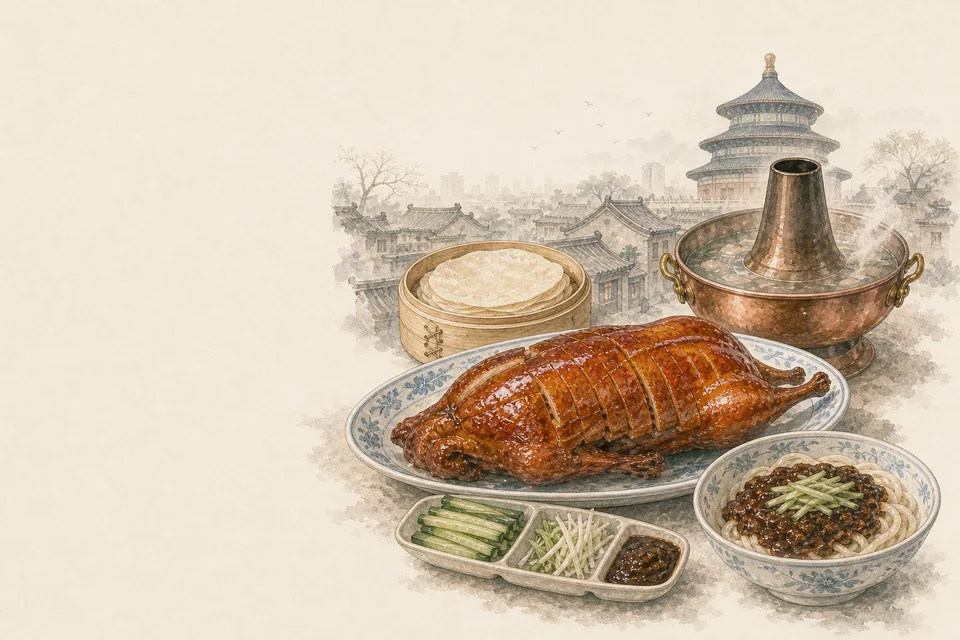
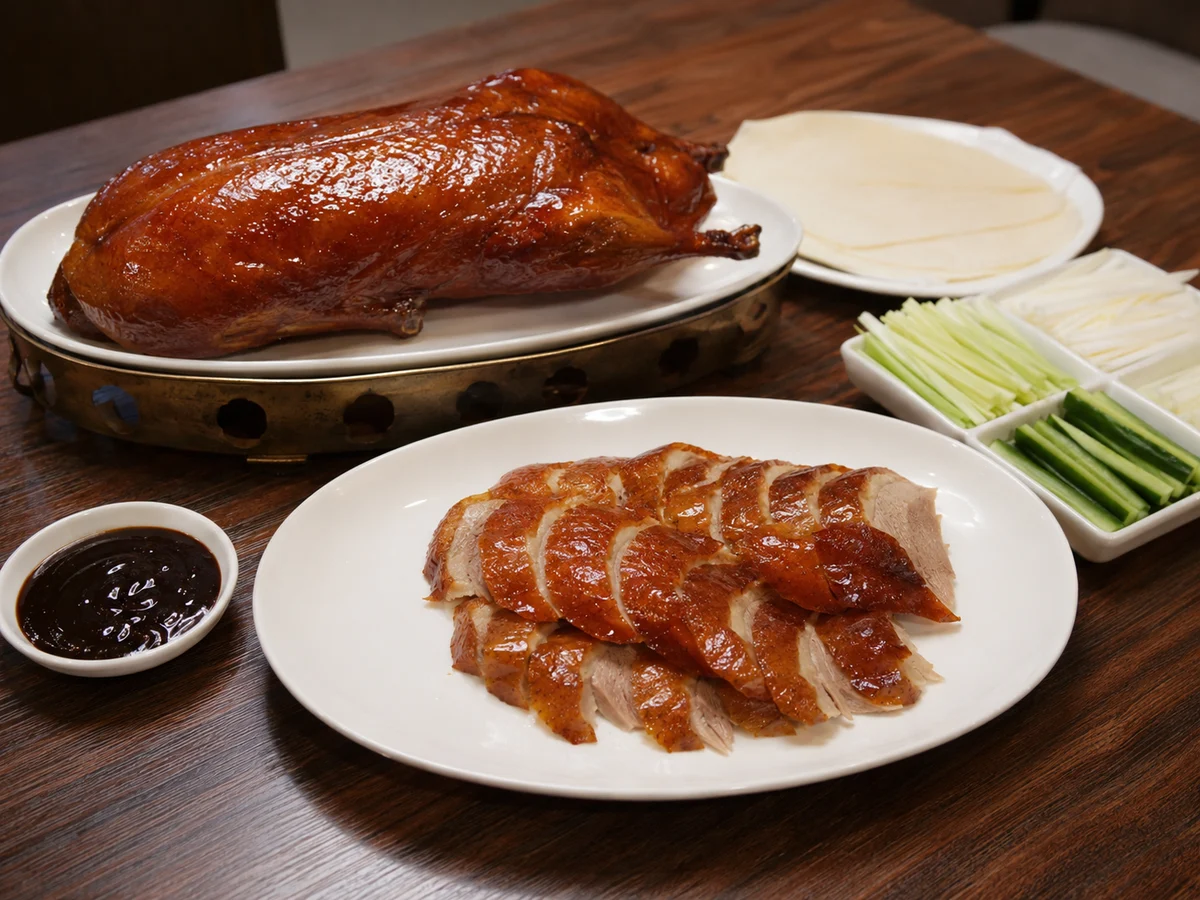
Beijing’s whole roast-duck tradition: skin separated, scalded, glazed and thoroughly dried before hanging- or closed-oven roasting and tableside carving.
Regional food guide
Roasting, quick cooking and old-capital snacks
Beijing is China’s capital and an old imperial city, so its food blends courtly roast duck, northern wheat staples, Muslim mutton traditions, Shandong technique and practical hutong snacks.
Start with the classics
Open the region through its most useful dishes first, then read the deeper story behind the flavors below.
Beijing’s whole roast-duck tradition: skin separated, scalded, glazed and thoroughly dried before hanging- or closed-oven roasting and tableside carving.
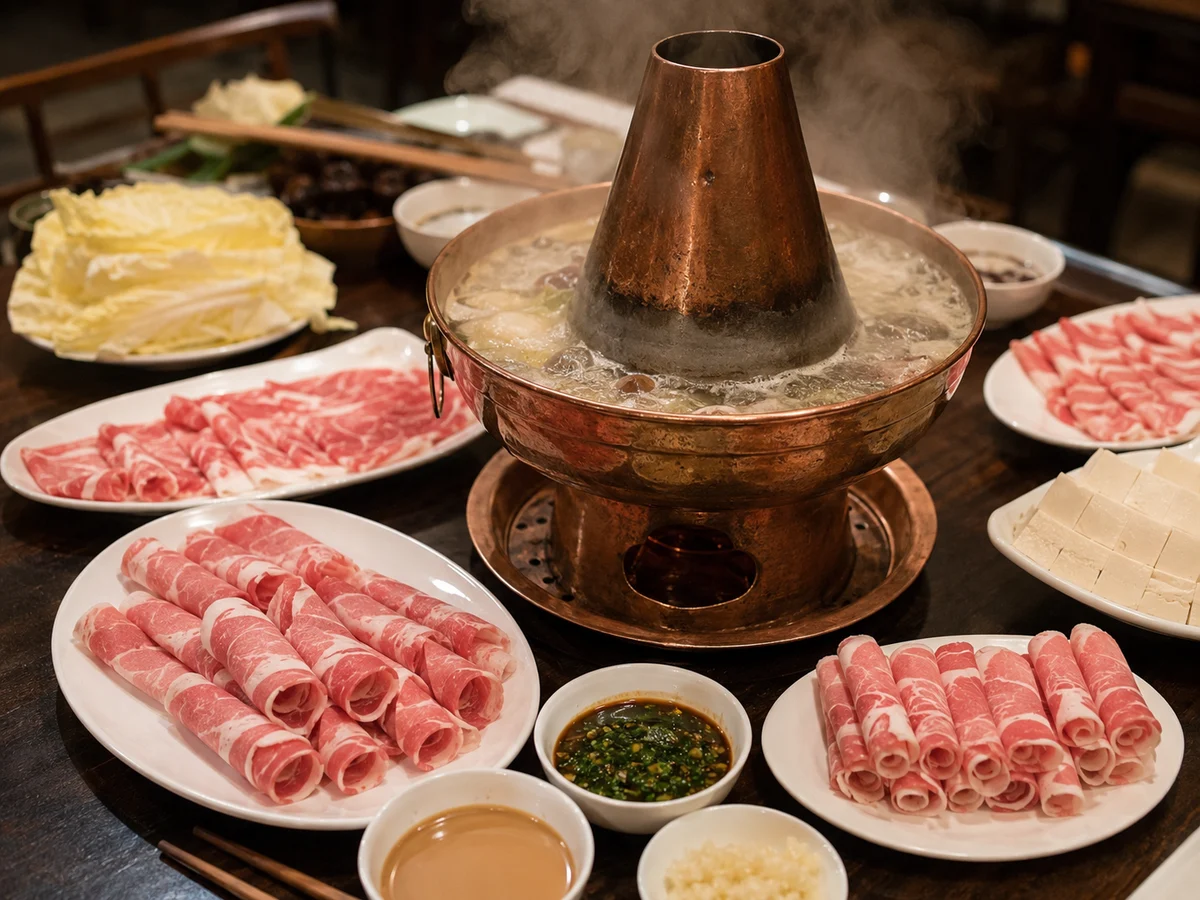
Beijing’s clear-water sheep hot pot, comparing thin-cut mutton sections before vegetables and seasoning each cooked slice in a personal sesame dip.
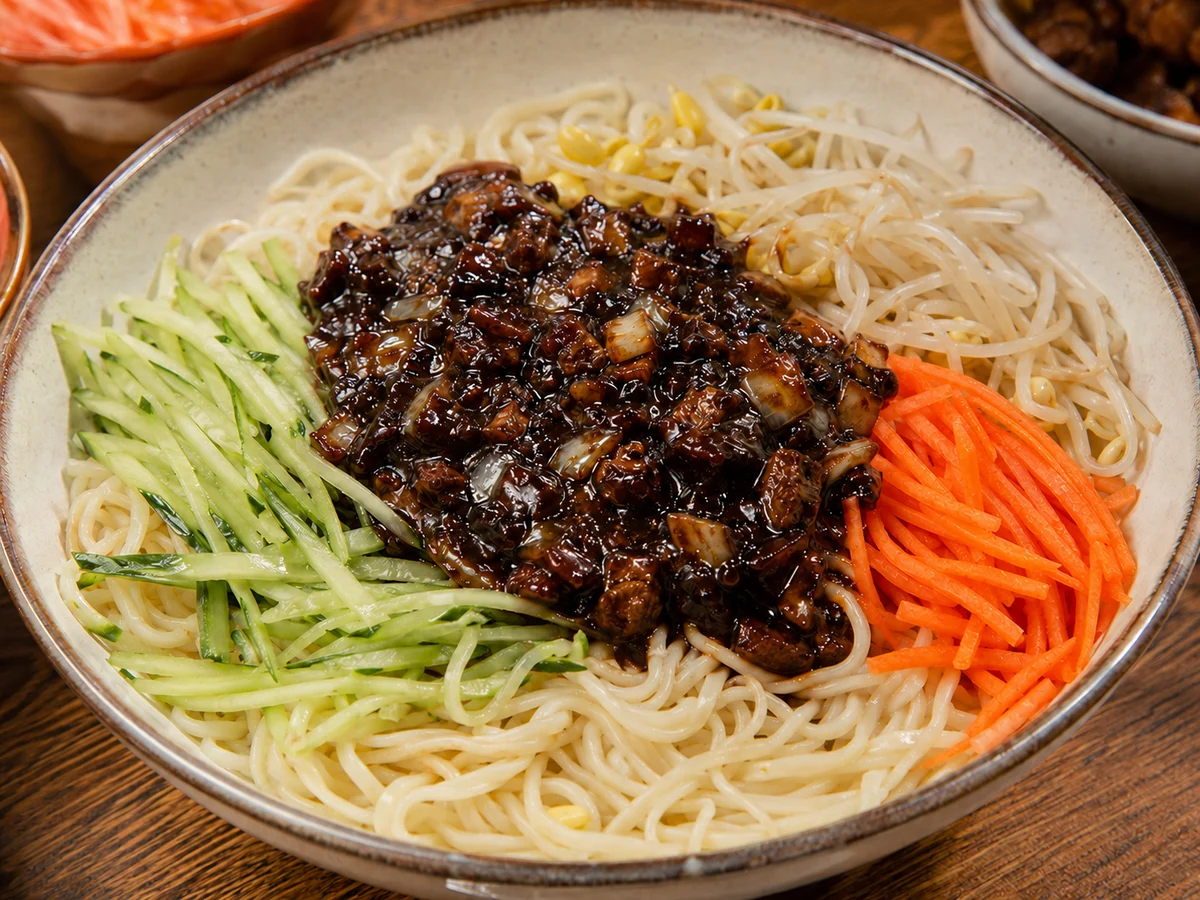
Resilient wheat noodles mixed with a small amount of pork-and-fermented-paste sauce and seasonal vegetable cai ma.
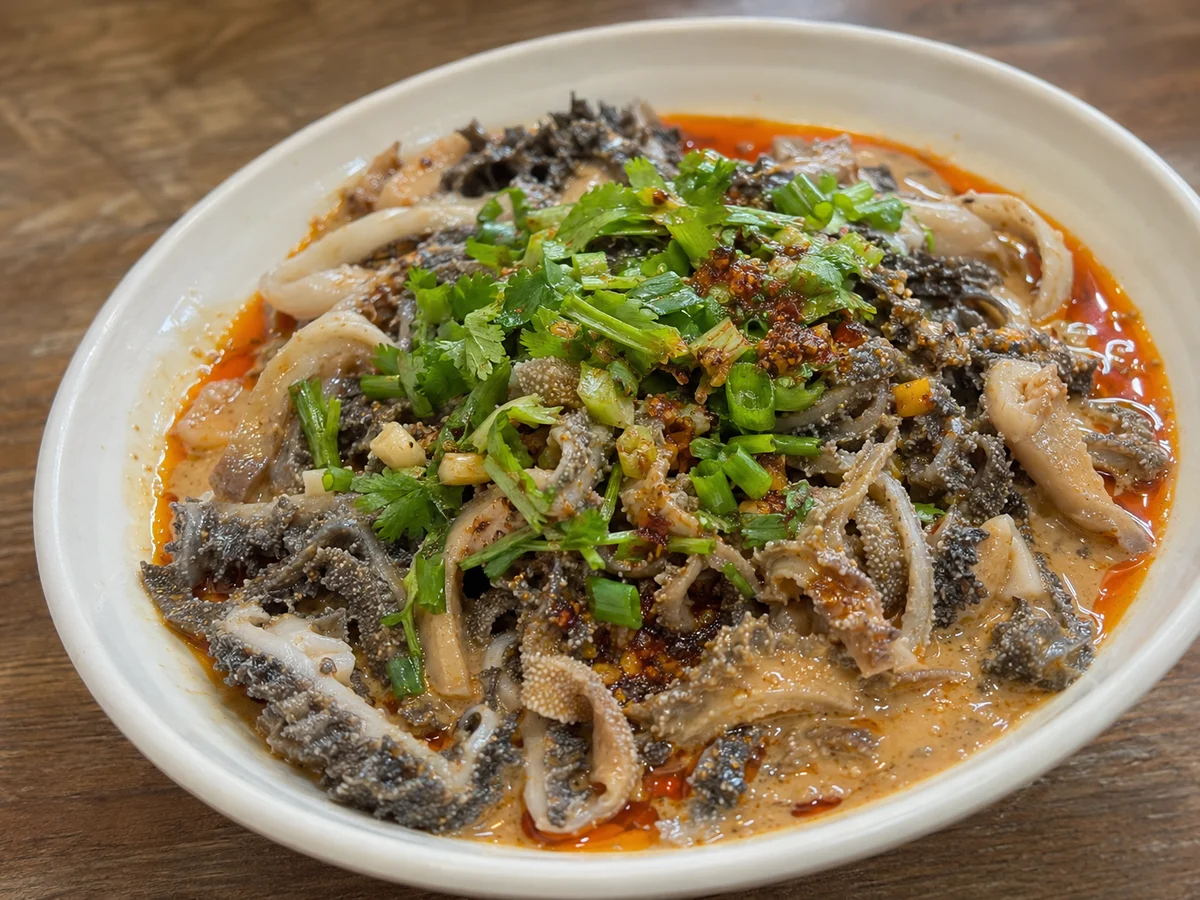
A Beijing Hui-associated specialist snack of individually named beef or lamb stomach cuts, evenly sliced, safely quick-blanched and eaten immediately with sesame dip.
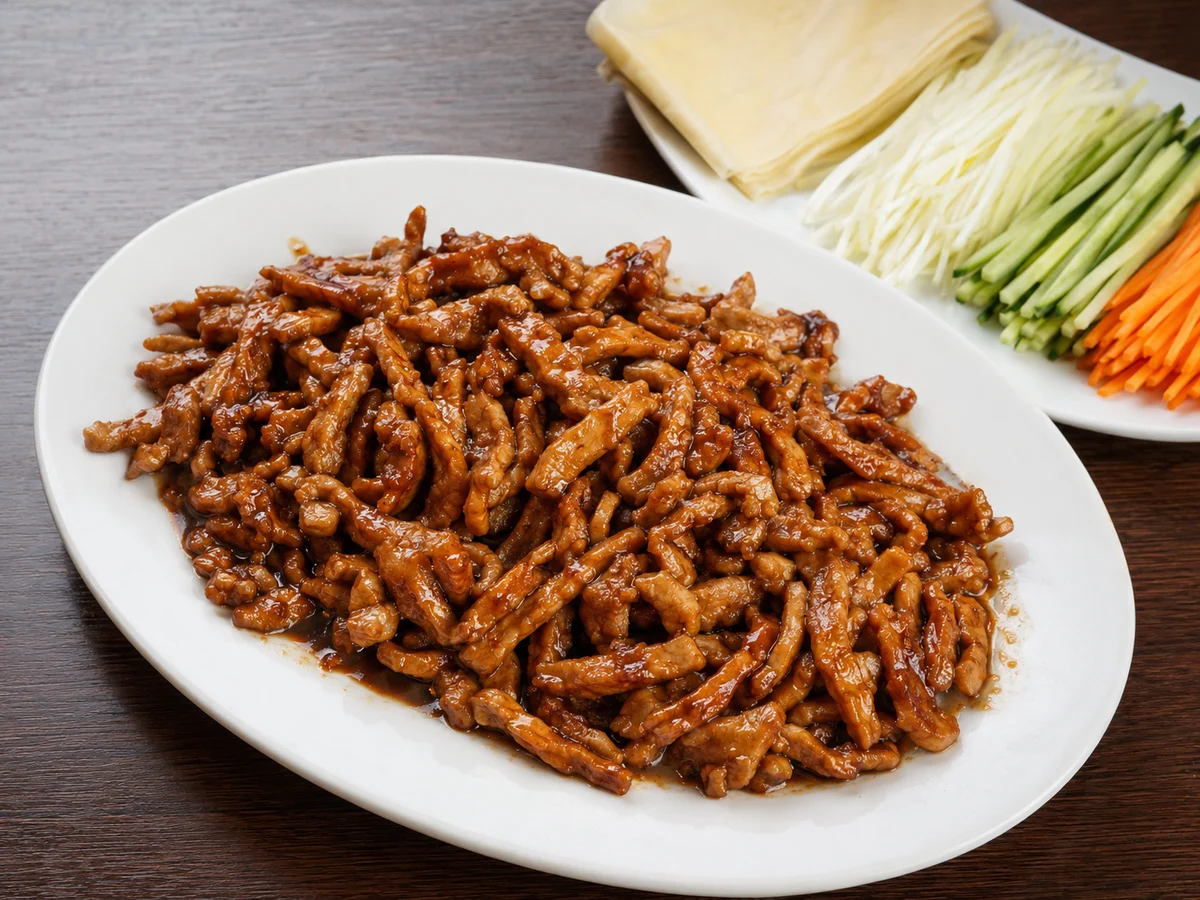
Tender pork slivers glazed with sweet flour sauce and wrapped with raw scallion in tofu skin or pancakes.
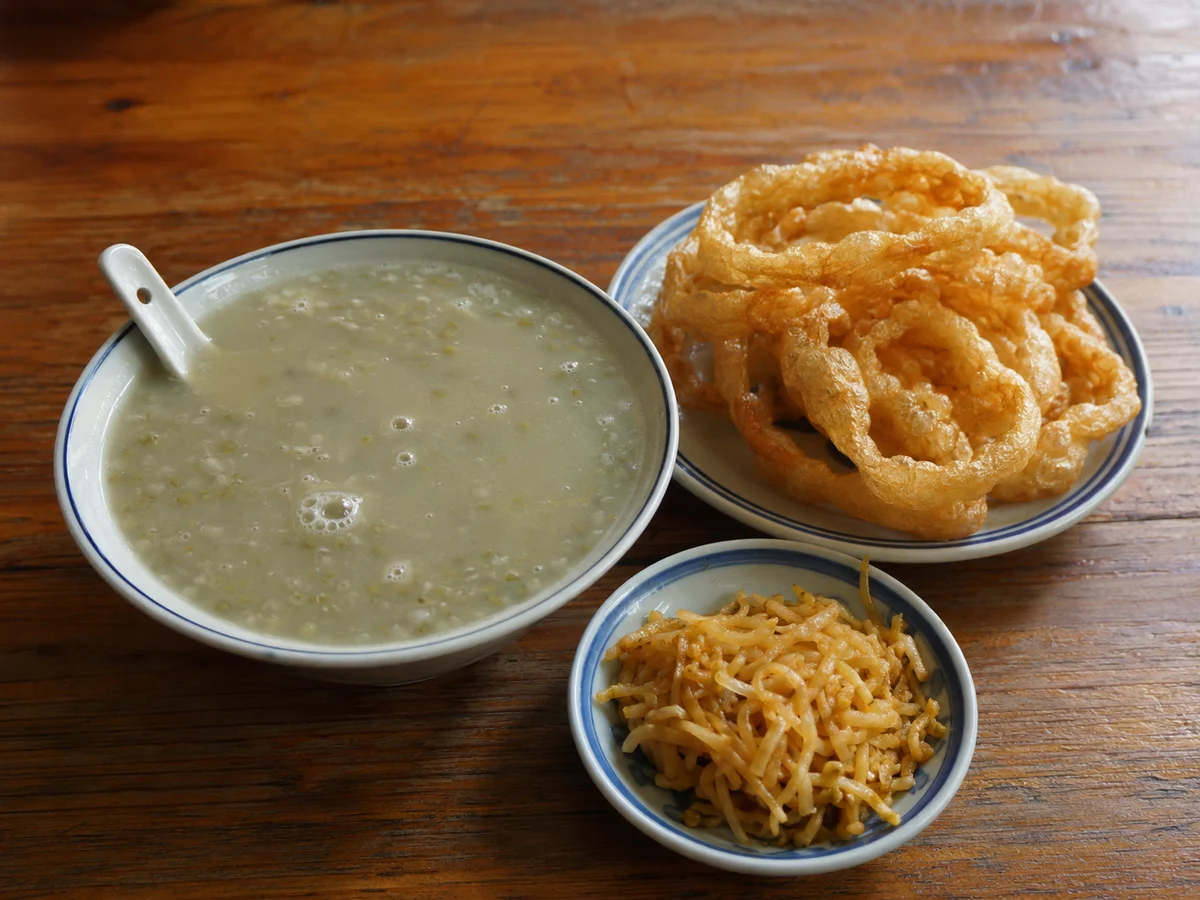
Tart fermented mung-bean liquid paired with brittle fried wheat rings and sharp pickles.
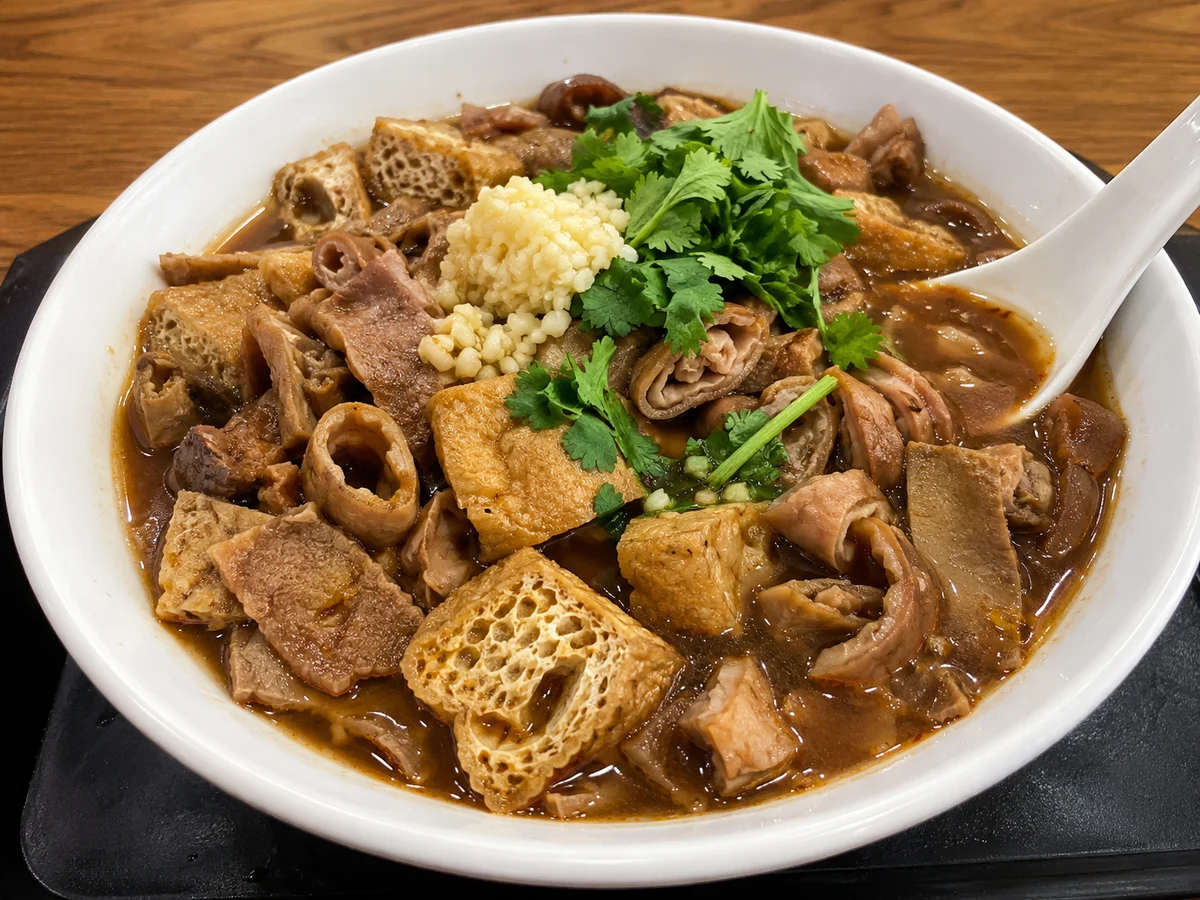
Wheat breads simmered with pork intestine, lung and fried tofu in a dark aromatic broth.
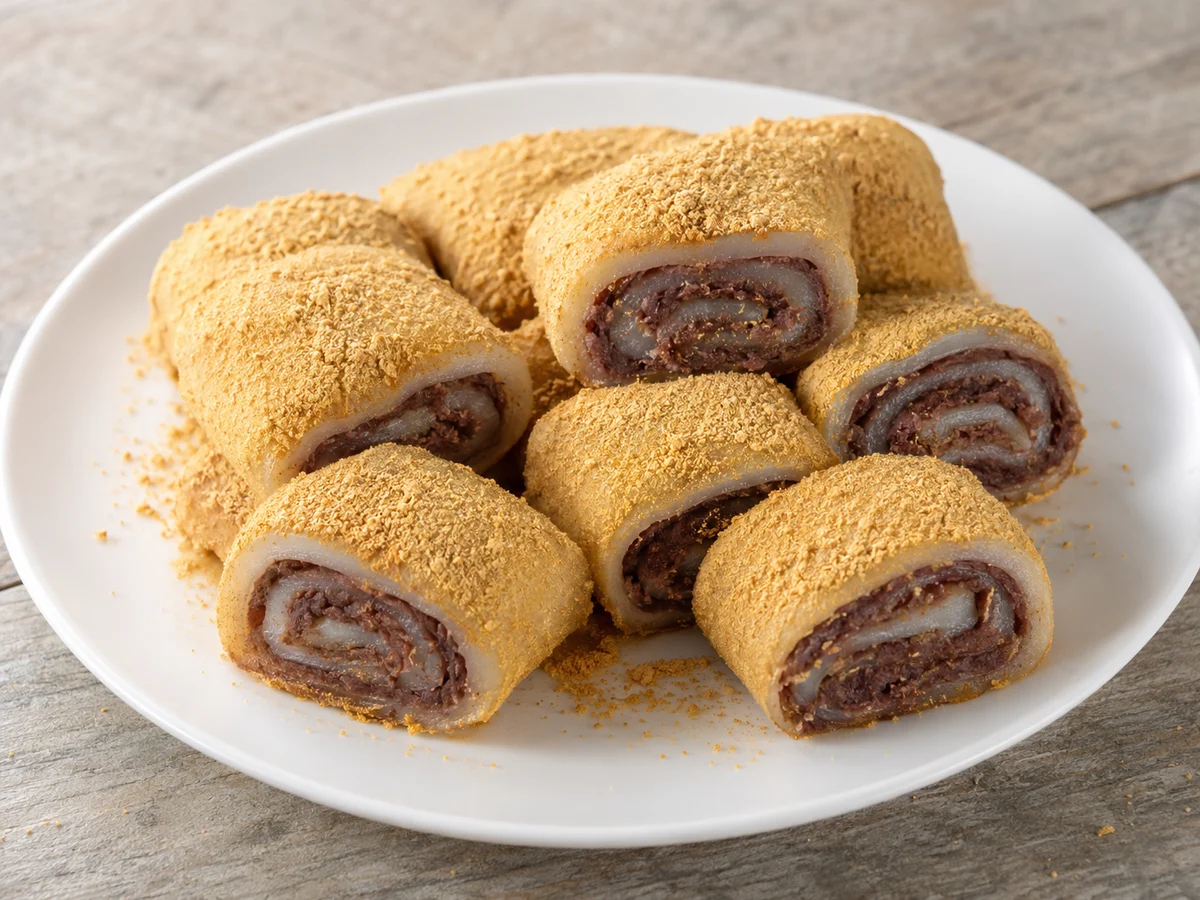
A soft glutinous-rice roll filled with red bean paste and coated generously in roasted soybean flour.
01
Beijing is China’s capital: a northern political and cultural center layered with imperial palaces, hutong lanes, temple fairs, universities, migrant neighborhoods and the scale of a modern megacity. It is not a single-province cuisine so much as a city table shaped by power, ceremony, winter and movement.
Centuries of cooks and communities made that table broad. Shandong technique, Manchu and imperial kitchens, Mongol and Hui mutton traditions, wheat-based northern staples and street-market economy all meet here, which is why Beijing can move from polished roast duck to copper-pot mutton, fermented douzhir and offal-rich snacks without feeling contradictory.
02
Beijing food grew through overlapping court, Hui Muslim, Shandong and neighborhood traditions. Roast craft, mutton butchery, wheat foods and fermented snacks belong to that urban history rather than to one visitor itinerary.
Beijing cuisine is a city synthesis. Shandong cooks helped shape restaurant technique; imperial and official kitchens prized presentation; Hui and other northern communities strengthened the city’s mutton culture; street vendors turned grain, offal and fermentation into quick foods.
Its signature verbs are useful: roast duck, swish mutton, quick-blanch tripe, fry bean paste for noodles, braise offal with wheat bread. Texture and timing are often more revealing than heavy seasoning.
The city also rewards adventurous eaters. Douzhir is tart and fermented, luzhu is rich with pork offal, and baodu depends on precise seconds in boiling water. Sweets such as ludagun soften that savory picture.
03
Beijing cooking often builds on wheat, scallion, garlic, sesame paste, fermented flour or bean sauces, vinegar, lamb and pork. Roasting, quick blanching and long braising create distinct textures across the same meal.
Noodles, pancakes, shaobing and huoshao carry sauces, meat and soups.
Copper-pot swishing and halal snack traditions reflect northern ethnic and religious histories.
Duck carving, tripe blanching and mutton swishing all depend on seconds and texture.
Douzhir and strong bean pastes show an older city palate beyond roast duck.
04
Old Beijing breakfast can be savory, fermented and filling: douzhir with crisp jiaoquan, shaobing, tofu pudding, wheat noodles and offal-based snacks. Many famous foods belong to specialist shops rather than one universal breakfast menu.
05
Roasting, mutton slicing, quick blanching and wheat-dough work developed through different kitchens and communities.
Roast duck depends on skin preparation, controlled drying, oven management and carving as a continuous specialist craft. Copper-pot mutton makes butchery and thin slicing equally visible: the clear broth leaves little room to hide weak meat or careless knife work. Quick-blanched tripe belongs to another narrow trade in which cleaned stomach cuts, exact slicing and seconds of heat determine the final spring.
Beijing’s wheat foods add a less ceremonial group of skills. Noodle making, sauce frying, bread production and pastry work connect household meals, neighborhood counters and older restaurant trades. These techniques do not form one flavor profile, but together they show how a large capital absorbed labor and knowledge from court, Hui Muslim, Shandong and migrant food communities.
06
The city’s landmark dishes sit beside compact breakfasts, noodle lunches, winter tables and portable sweets.
Cold winters help explain the social appeal of a steaming copper pot, dense wheat staples and substantial offal bowls, while fermented drinks and fried rings belong to a much smaller morning scale. Zhajiang noodles operate as an ordinary individual meal even though roast duck is designed around shared carving and service. The contrast is part of Beijing food culture, not a hierarchy between famous and everyday food.
Markets, work schedules, redevelopment and long-lived specialist shops have all changed where these foods are encountered. Hutong geography remains culturally important, but no single old-city route can represent how the wider municipality eats today. What persists is a network of techniques, ingredient trades and recognizable meal settings that continue to adapt to a changing capital.
07
Everyday noodles, halal mutton, offal snacks, fermentation and sweets are equally important.
Many dishes grew through markets, migrant communities and specialist neighborhood shops.
It is a tart fermented liquid made from mung-bean starch production, with a very different aroma and taste.
Sources
We use these references to check regional context, food terms and dining customs. Individual restaurants and households still vary.
Keep exploring
Move from this guide into a different flavor world, with a quick visual hint before you open the next region.