
01
Two strips fried as one
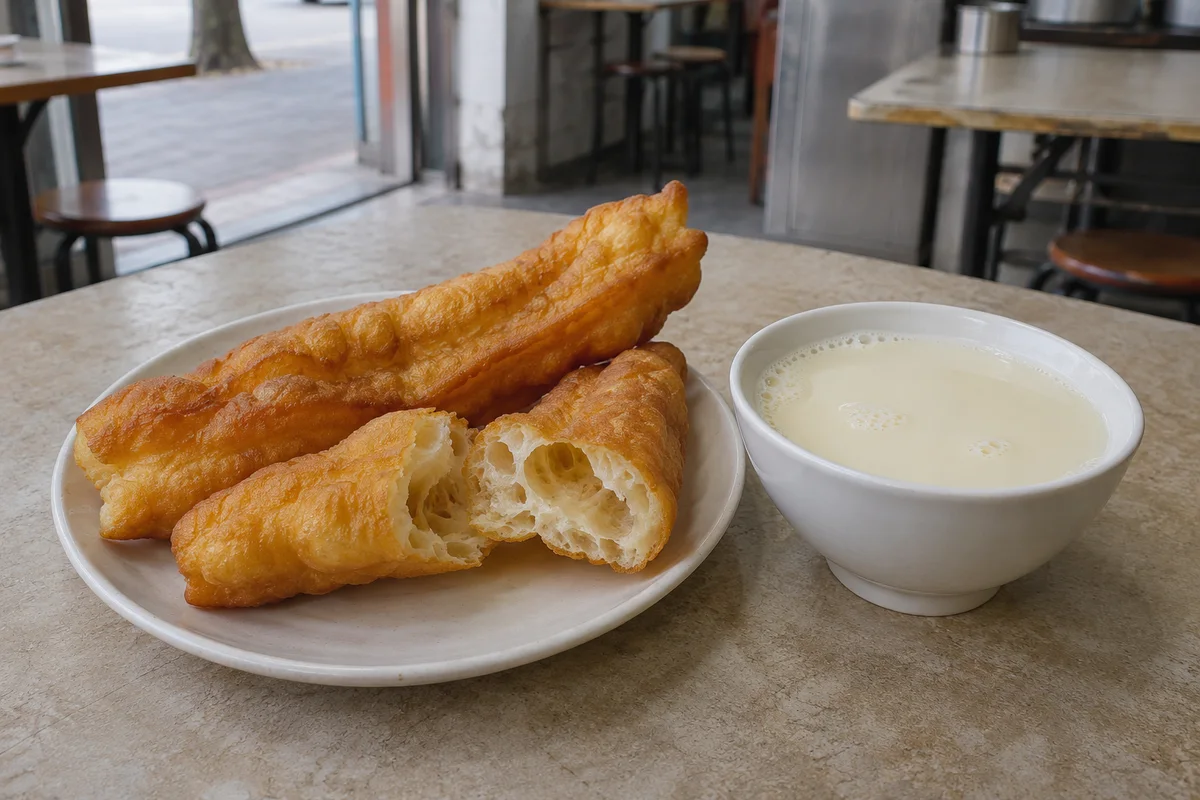
A youtiao is two thin strips of leavened wheat dough, pressed together lengthwise, stretched and dropped into hot oil, where they swell into one crisp, hollow stick.
The dough is wheat flour, water and salt with a leavening agent. It is kneaded, folded and rested for hours until it is soft and stretchy, then pressed into a long band and cut into narrow strips. One strip is laid on top of another and the pair is pressed down the middle with a thin stick or the back of a knife. The fryer lifts the pair by both ends, stretches it and lays it in the oil, turning it with long chopsticks until it puffs and turns golden. Shanghai’s 1983 trade manual pulls each pair to about 40 centimetres before frying; Tianjin’s, from 1987, to about a third of a metre.
The pairing is functional. In hot oil the outer surface of the dough sets almost at once and stops expanding. Where the two strips touch, the dough stays soft and keeps swelling outward, so a joined pair rises far more than a single strip would. The gas comes from the leavening, which releases carbon dioxide and, in some recipes, ammonia, most of which leaves with the steam. A good youtiao is crisp outside and open and chewy inside, and it still tears lengthwise into its two halves.
Youtiao is breakfast food, fried in street woks and small shops and eaten hot. It is rarely eaten alone: it is dipped in soy milk, folded into flatbread, pressed inside sticky rice, rolled in a rice-noodle sheet, or chopped into congee and salty soy milk.
02
Alum, soda and aluminium-free youtiao
For most of the twentieth century youtiao were leavened with alum and soda. Since 2014 China has capped the aluminium that alum leaves behind.
In the classic method, alum (potassium aluminium sulfate), an alkali and salt are dissolved in water and worked into the dough. The 1983 Shanghai volume of the trade series Chinese Snacks (中国小吃) uses 65 grams of alum, 70 grams of alkali and 60 grams of salt for 2.5 kilograms of flour, rests the dough for three hours, kneads it again and rests the strips for four more. Tianjin’s 1987 volume uses 100 grams of alum and 50 grams of alkali for 5 kilograms of flour. Not every kitchen did it that way: the 1985 Guangdong volume raises its youtiao with a piece of old yeast dough, baking soda, ammonium bicarbonate, baking powder and a gram of alkali, and no alum at all.
The concern is aluminium. In May 2014 China’s health commission and four other agencies banned potassium and ammonium aluminium sulfate from wheat-flour products from July 1 that year, but exempted fried flour products, batters and coatings, which covers youtiao. Instead the food-additive standard GB 2760-2014 caps aluminium in fried flour foods at 100 milligrams per kilogram, dry weight.
Many shops now advertise “alum-free youtiao” (无矾油条, wúfán yóutiáo), and the label does not always match the test. When the Shanghai Consumer Council tested 29 youtiao samples from 25 brands in late 2017, including KFC, McDonald’s and Yonghe King, 11 shops called theirs alum-free, and those held about as much aluminium as the rest. One chain’s sample had 9.73 mg/kg, far under the limit, which it blamed on flour or water. The phrase still sells: in 2025 a Beijing restaurant chain charged 39 yuan for a half-metre handmade youtiao made without alum, and in 2026 a Hangzhou breakfast shop put “alum-free youtiao” into its name.
03
Youtiao, guozi, yau ja gwai: the names
Youtiao, “oil strip,” is the standard Mandarin name. Older and local names are still heard.
The word youtiao was in use by the early twentieth century: in Liu E’s novel The Travels of Lao Can, written between 1903 and 1907, the hero buys a few youtiao for a snack in a Shandong town. A Mandarin textbook printed in 1910 for Cantonese speakers in Guangdong lists 油炸鬼 as the Cantonese word and 油條 as the Mandarin one. Shanghai newspapers of the 1890s wrote the name 油炸檜, using the hui of Qin Hui.
In Tianjin and Beijing the stick is guozi (馃子, often written 果子). Tianjin’s 1987 snack manual calls its standard version bangchui guozi, “mallet guozi,” and the essayist Zhu Ziqing, writing in Beijing in 1946, glossed guozi as “a crisp, thin youtiao.” In Taiwan, Taiwanese speakers say iû-tsia̍h-kué (油炸粿), Mandarin speakers 油條.
| Name | Where | Note |
|---|---|---|
| 油条 yóutiáo | Standard Mandarin, mainland menus | “Oil strip” |
| 油炸鬼 yau ja gwai | Guangzhou and Hong Kong (Cantonese) | “Oil-fried devil”; rolled in a rice-noodle sheet it becomes zhaleung (炸两) |
| 油炸桧 / 油炸檜 | Old Shanghai papers; also used in Guangdong | “Oil-fried Hui,” after Qin Hui |
| 馃子 / 果子 guǒzi | Tianjin and Beijing | The guozi in jianbing guozi |
| 油炸粿 iû-tsia̍h-kué | Taiwan (Taiwanese) | Mandarin speakers in Taiwan write 油條 |
04
Records from the 1840s on
Fried dough is older than the word youtiao, but the first clear description of the paired stick dates from the 1840s.
The earliest detailed account is in Changtan Conglu (常谈丛录), a notebook by Li Yuanfu of Jinxi in Jiangxi, with a preface dated 1848. Market sellers, he wrote, mixed flour with water and cut it into strips as thick as a finger, stacked two and pulled them out to almost a chi, then fried them in hot oil until they swelled to the size of a child’s arm: pale gold, still a joined pair, and easy to tear in two. One cost two cash. Everyone called it youzhagui, “oil-fried devil.” Li thought gui (鬼, ghost) was a slip for guo (果), a word for fried pastries, and wanted the ominous name corrected.
The essayist Zhou Zuoren quoted Li in 1936 and pushed the trail back. A dictionary of common sayings that he cited connects the word with the “oil-fried guduor” (油炸骨朵儿) that a character sends out for in a Yuan dynasty play. Zhou guessed that fried snacks of the hanju (寒具) kind might be related, but admitted that no description earlier than the Yuan could be pinned on this one.
By the late Qing the stick was everyday food from the street to the top of officialdom. Shanghai court reports of the 1890s mention noodle shops that also sold flatbread and youzhahui, and the Qing Bai Lei Chao tells of Sun Jianai, the Guangxu-era head of the Imperial University in Beijing, who disliked rice days. On one he sent a servant out for youzhahui, split off half a stick, soaked it in a little egg soup, ate it and put down his chopsticks: that was enough, he said, and he ate that way at every meal.
05
The Qin Hui legend
The best-known story about youtiao is a legend: that it began as dough figures of the chancellor Qin Hui, fried in oil.
Qin Hui (秦桧) was the Southern Song chancellor blamed for the death of the general Yue Fei in the twelfth century. In the usual telling, people in Lin’an, today’s Hangzhou, were so angry that a street vendor shaped dough into Qin and his wife and fried them, and the name 油炸桧, “oil-fried Hui,” slid into 油炸鬼, “oil-fried devil.” The figures were later simplified into two strips joined in the middle. The vendor, the place and the wife change from version to version, and nothing ties the story to the Song itself.
In print the legend is late. The Qing Bai Lei Chao, published in 1917, describes the stick as about a chi long, two strips of beaten dough twisted together like rope, and says it was first made in human shape, arms above and legs below, “because the Song people hated Qin Hui for betraying the country, so they made his likeness to punish it.” In December 1911 a Shanghai newspaper humorist, proposing a black flatbread named after the Qing loyalist general Zhang Xun so that people could chew him in anger, cited youzhahui as the precedent. In 1925 Hu Hanmin told a meeting in Guangzhou that the Cantonese hated Qin Hui so much that they likened him to youtiao.
Not everyone bought it. Zhou Zuoren thought the link far-fetched and the urge to fry an enemy in effigy nothing to be proud of, and Li Yuanfu had explained the name in 1848 without mentioning Qin Hui at all. The legend lasts because it explains two things at once: the hui-or-devil name, and the two strips stuck together.
06
How soy milk is made, and why it must boil
Soy milk is soaked soybeans ground with water, strained and boiled. The boiling matters: undercooked soy milk can make you ill.
Dried yellow soybeans are soaked until they swell (Tianjin’s 1987 manual allows about five hours in summer, seven in spring and autumn and ten in winter), then ground with water on a stone mill. The slurry is poured into a cloth hung by its four corners, shaken and squeezed. The pulp is washed twice more to draw off a second and a third milk, which go back in as grinding water. In a shop the milk is boiled in a big pot and kept hot over a low flame; 5 kilograms of beans make about 120 bowls.
Shops grade the milk’s strength in degrees. Shanghai’s 1983 manual asks for at least 6 degrees at 20°C and stirs in a spoonful of oil residue to break the foam. In 1996 a Shanghai standard for new breakfast outlets set the minimum at 5 degrees, the level kept by Lu Yuan Zhai (録源斋), founded in 1882 and long the city’s most famous soy milk shop.
Heated soy milk foams up at about 80°C, well before it is cooked: saponins in the beans make it froth as if boiling. At that point it still carries trypsin inhibitors, lipoxygenase and lectins, and drinking it can cause nausea, vomiting, stomach pain and diarrhoea within minutes to an hour. The fix is to keep heating through the foam, simmer gently for at least five more minutes until the foam dies down, and bring it back to the boil. The Shanghai manual gave the same warning in 1983: raw soy milk causes diarrhoea, so it must be boiled.
07
Sweet, plain or salty
How soy milk is seasoned depends on the city, and in Shanghai on what you ask for.
Shanghai shops have always sold three kinds: plain, salty and sweet. Under the old fixed prices they cost 3, 4 and 5 fen a bowl. Tianjin’s 1987 manual simply leaves salt or sugar to the customer.
Salty soy milk (咸豆浆, xián dòujiāng) is the one that surprises visitors. The 1983 Shanghai recipe puts chopped youtiao, minced zhacai pickle, tiny dried shrimp, scallion and a spoonful of seasoning made from soy sauce, salt, sugar and vinegar into an empty bowl, pours boiling soy milk over it and finishes with a few drops of chili oil. Shanghai’s official food guide adds seaweed. Lu Yuan Zhai made its salty milk with zhacai, dried shrimp, youtiao and chili oil.
The vinegar does the work. Hot soy milk poured onto it sets into soft, loose curds, so the bowl is half soup and half tofu pudding, with the youtiao going soft in it. Taiwan’s version is close to Shanghai’s: scallion, dried shrimp, chopped preserved radish, soy sauce and vinegar in the bowl, hot soy milk on top. In Kaohsiung a well-known shop adds shallots, sesame oil and chili oil. Taiwan imports about 97 percent of the soybeans it uses, more than half of them from the United States.
08
Shanghai: the Four Heavenly Kings
In Shanghai, youtiao is one of breakfast’s “Four Heavenly Kings” (四大金刚): dabing flatbread, youtiao, cifantuan sticky rice and soy milk.
The combination is older than its nickname. The city’s earliest recorded flatbread shop, Xinglong Ji, opened in 1912 at 108 Nanmatou Street selling dabing and youtiao, and by the 1930s Shanghai’s breakfast trade rested on youtiao, flatbread and steamed buns. In 1936 a Shanghai paper described queues at flatbread shops between six and eight every morning, with housewives buying dabing, youtiao and soy milk for the family. The name Four Heavenly Kings, borrowed from the Buddhist guardian gods, seems to have caught on only after the early 1980s.
Each king meets the youtiao somewhere. Dabing, baked in a clay or metal oven, comes savory or sweet; the savory one is preferred for folding round a youtiao because the sweet one’s syrup leaks. Cifantuan is steamed glutinous rice pressed round a hot youtiao in a damp cloth: the 1983 manual uses 150 grams of rice, seven parts glutinous to three of ordinary, and 10 grams of sugar per ball, while today’s fillings also run to pickles and pork floss. Salty soy milk has youtiao chopped into it.
For decades prices were fixed and watched to the fen. A youtiao cost 4 fen, plus half a liang of grain coupons when flour was short, and in 1976 a savory dabing, a youtiao and a bowl of plain soy milk came to 1 jiao, a tenth of a yuan. In 1995 the Taiwanese chain Yonghe King opened in Shanghai and charged 2 yuan for a youtiao, five times the going rate. In May 2026 the fashion house Givenchy ran a breakfast pop-up with three Shanghai shops: on Changle Road a youtiao in a logo-printed bag cost 3 yuan and a cup of soy milk 8, and a club on Huaihai Road served all four kings as a 38-yuan set.
09
Taiwan: Yonghe soy milk and shaobing youtiao
Taiwan’s soy milk breakfast was built by mainland migrants after 1949, and its home is Yonghe, across the river from Taipei.
The fried stick reached Taiwan earlier, as iû-tsia̍h-kué. Under Japanese rule Taiwanese ate it with almond tea and Japanese residents with miso soup, and a 1941 account describes almond tea and fried dough sold at Shilin market at dawn. After 1949 about 1.2 million people arrived from the mainland, and the northern breakfast of soy milk, shaobing and youtiao came with them.
In 1955 Wang Junjie from Hebei and Li Yunzeng from Shandong, with partners, set up a cart at the Yonghe end of the Zhongzheng Bridge selling soy milk, shaobing and youtiao. It traded as Donghai (東海) and later became World Soymilk King (世界豆漿大王). In the 1960s and early 1970s, when Taiwan’s Little League teams played in the United States and the games were broadcast in the middle of the night, fans crossed the bridge for soy milk afterward, and “Yonghe soy milk” (永和豆漿) became the generic name for the style.
The Taiwanese order is shaobing youtiao (燒餅油條): a youtiao inside a flaky flatbread, often with a fried egg, plus soy milk. It is cheap. A 2016 guide put a bowl of soy milk at rarely more than NT$30, and in 2026 Yongxin Soy Milk on Zhulin Road in Yonghe charged NT$55 for shaobing youtiao with egg, NT$30 for salty soy milk and NT$25 for a bowl of hot plain soy milk.
10
Guangdong and Hong Kong: congee and zhaleung
In the Cantonese south, yau ja gwai goes with rice, in congee and in rice-noodle rolls.
Guangdong’s 1985 snack manual describes its youtiao as crisp but slightly chewy, with a strong smell of oil, and it is most often torn or chopped into congee. The boat congee (艇仔粥) of Wu Zhanji in Guangzhou, recorded in 1959, takes its name from the small boats that sold it on the waterways of Lychee Bay in the west of the city: rice congee ladled over raw fish, squid, jellyfish and shrimp, topped with chopped youtiao, fried peanuts and crushed fried rice vermicelli.
Zhaleung (炸两, “fried two”) rolls a youtiao in a freshly steamed rice-noodle sheet and cuts it into sections. The usual story dates it to 1940, when Japanese-occupied Guangzhou was short of food and a teahouse called Jiaohe Xianguan (嚼荷仙馆) wrapped leftover youtiao in rice-noodle sheets so that diners got two things for one price. It spread to Hong Kong, where it is a dim sum standard.
11
Tianjin and Beijing: guozi
In the north the stick is called guozi, and it usually ends up inside something else.
Tianjin’s bangchui guozi follows the alum-and-soda method on a big scale. The 1987 manual kneads 5 kilograms of flour, pinches and slaps it every half hour for an hour and a half, rests it, punches it smooth, pats it into a slab, cuts and stretches strips, pairs them, pulls each pair to a third of a metre, and fries it until it turns a deep reddish brown, flipping it as soon as it floats. It is best eaten hot. Its most famous job is inside jianbing guozi, folded into a mung-bean crepe.
In Beijing, Zhu Ziqing wrote in 1946 that while away in the southwest during the war he had kept thinking of horseshoe flatbread with guozi: a thin, slightly chewy flatbread from a hanging oven wrapped round a crisp, thin youtiao, sold from baskets in the lanes at dawn. With firewood expensive, sellers had switched to the thicker sesame-paste shaobing. In 2025 a Beijing restaurant chain sold a 6-yuan portion of ordinary youtiao alongside its 39-yuan half-metre one.
12
How to order and eat it
Youtiao is best within minutes of leaving the wok, so buy it where it is fried.
Tear the stick into pieces and dip them in sweet or plain soy milk, or drop them into salty soy milk or congee. Breakfast shops fry in batches through the morning; in Shanghai the advice is to go before nine.
Shanghai
Ask for xian jiang (salty), tian jiang (sweet) or dan jiang (plain). Have a savory dabing folded round a youtiao, or cifantuan with one pressed inside.
Hangzhou
Flatbread shops wrap a youtiao inside a sesame shaobing. In October 2026 one on Xinshi Street gave a 2.5-yuan youtiao free with each 3-yuan flatbread.
Taiwan
Order shaobing youtiao, with egg if you like, and xian doujiang; the vinegar sets it in the bowl.
Guangdong and Hong Kong
Ask for yau ja gwai with congee, or zhaleung at dim sum.
Tianjin and Beijing
Ask for guozi. At a jianbing stall, “guozi de” gets you the stick inside.
13
Making youtiao and salty soy milk at home
The 1985 Guangdong recipe suits a home kitchen: it is written for 500 grams of flour and uses no alum.
Ammonium bicarbonate is sold as baker’s ammonia; most of the ammonia it gives off leaves with the frying steam. The old dough is a piece of risen yeast dough. Oil “at seven-tenths heat” in Chinese recipes means hot but well short of smoking. The salty soy milk follows the 1983 Shanghai recipe, scaled to one bowl.
Youtiao: 500 g plain flour; 325 g water; 35 g old (risen yeast) dough; 2 g baking soda; 2 g ammonium bicarbonate; 2 g baking powder; 1 g food-grade alkali (sodium carbonate), halved; 12.5 g salt; peanut oil for deep-frying. Salty soy milk, one bowl: 7–8 g chopped youtiao; 5 g minced zhacai; 1 g tiny dried shrimp; scallion; about 20 g seasoning of soy sauce, salt and sugar boiled with water, with vinegar added; hot soy milk; chili oil.
- 1. Mix
Dissolve the baking soda, ammonium bicarbonate, half the alkali and the salt in the water. Add the flour, the old dough and the baking powder and mix to a soft dough.
- 2. Rest and fold
Rest the dough for 1½ hours. Every 30 minutes fold it over on itself and sprinkle it with the remaining alkali dissolved in a little water, two or three times in all. Fold one time fewer and rest it less if the dough is slack; one time more and longer if it is very elastic.
- 3. Cut
When the dough is springy, press it into a band about 13 cm wide and 7 mm thick, dust it with flour and cut it crosswise into strips about 7 mm wide.
- 4. Pair
Turn one strip over onto the next and press lightly along the middle with the back of a knife so the two stick together.
- 5. Fry
Heat the oil over a medium flame. Pick up a pair by both ends, stretch it and lay it in the oil. Fry until pale gold, turn it, and fry until golden all over.
- 6. Soy milk
Soak dried soybeans for 5 to 10 hours depending on the season, grind with water and strain through a cloth. Heat it through the first foam, simmer for at least five more minutes, and bring it back to the boil.
- 7. Salty bowl
Put the chopped youtiao, zhacai, dried shrimp, scallion and seasoning in a bowl, pour in boiling soy milk, and finish with a few drops of chili oil. Wait a moment for it to set into curds.
14
More breakfasts
Other pages on the atlas.
Jianbing guozi
Tianjin’s mung-bean crepe folded round a guozi or a crisp.
Read about jianbing →Hutang rice noodles
Wuhan’s peppery fish soup, eaten with youtiao.
Read about hutang rice noodles →Congee
Cantonese rice porridge and what goes in it.
Read about congee →Cantonese yum cha
Zhaleung, cheung fun and the rest of dim sum.
Read about yum cha →Across China classics
- Jiaozi
Boiled, steamed or pan-fried dumplings · Everyday meals; New Year’s Eve in the north
- Chow Mein
Fried wheat noodles · Lunch, late-night meals, takeaway
- Hot and Sour Soup
Thickened soup · With dumplings, at banquets
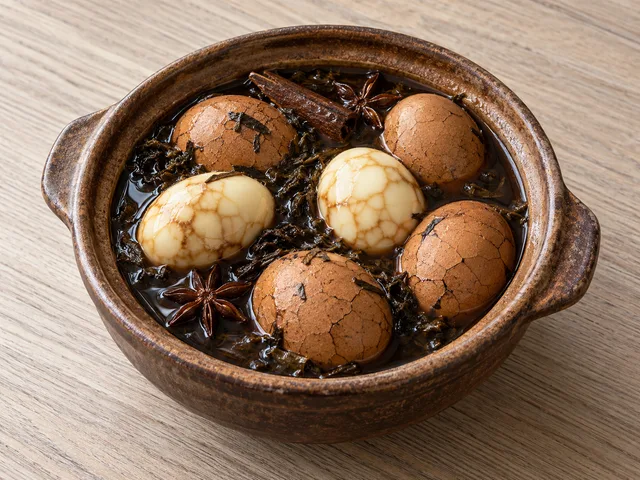
- Tea Eggs
Tea-marbled boiled eggs · Breakfast and snacks
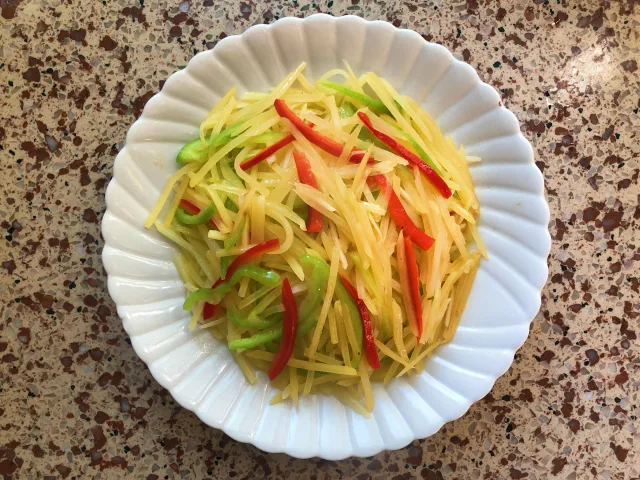
- Stir-Fried Shredded Potatoes
Stir-fried vegetable side dish · Everyday meals with rice
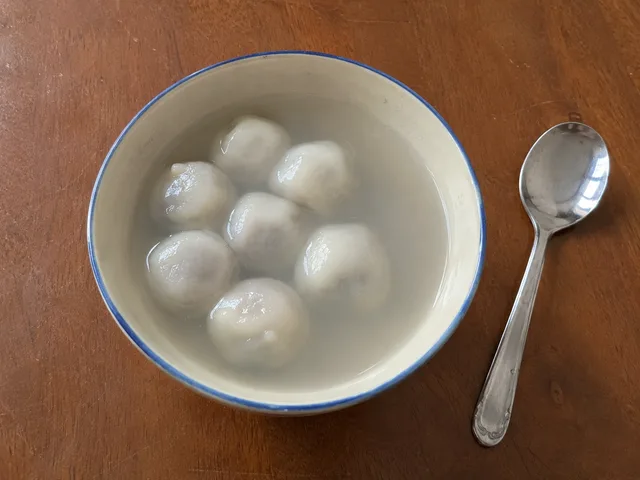
- Tangyuan
Glutinous rice balls in soup · Winter Solstice, Lantern Festival
FAQ
Questions about Youtiao and Soy Milk
What is youtiao called in English?
Chinese fried dough, Chinese cruller, Chinese doughnut or fried breadstick; in Cantonese it is yau ja gwai. It is salted, not sweet.
Why is youtiao made from two strips?
In hot oil the outside of the dough sets quickly. The soft seam between the two strips keeps expanding, so a pair puffs into a light, hollow stick where a single strip would stay denser.
Does youtiao contain alum?
Traditional recipes use alum and soda. China caps the aluminium left in fried flour foods at 100 mg/kg, and many shops sell “alum-free” youtiao made with baking soda, ammonium bicarbonate or yeast.
Why is youtiao called “oil-fried devil”?
The Cantonese yau ja gwai means oil-fried devil. Legend says it was once 油炸桧, “oil-fried Qin Hui,” after the Song chancellor; an 1848 writer thought gui came from guo, a word for fried pastry.
Why does salty soy milk look curdled?
Vinegar in the bowl sets the hot soy milk into soft curds. That is intended; the bowl is part soup, part tofu pudding.
Is soy milk safe if it foams?
Not yet. Soy milk foams at about 80°C before it is cooked. Keep heating through the foam, simmer at least five more minutes and bring it back to the boil.
Is youtiao vegetarian?
The dough is flour, water, salt and leavening fried in vegetable oil. Salty soy milk usually contains dried shrimp, and congee toppings may include meat or fish.
Sources
Sources and further reading
- 1 Zhou Zuoren, “More on youzhagui” (再談油炸鬼), quoting Li Yuanfu’s Changtan Conglu (preface 1848) and Sun Bolong’s Tongsu Changyan Shuzheng (in Chinese)Wikisource; essay dated July 1936, collected in Guadou Ji ↗
- 2 Xu Ke, Qing Bai Lei Chao (清稗類鈔), food section: “Youzhuo hui” (油灼檜); also “Sun Wenzheng ate little” (孫文正少食) (in Chinese)Wikisource; first published 1917 ↗
- 3 Shenbao, May 11, 1894: a noodle shop off Ziyang Lane selling flatbread and youzhahui (in Chinese)Wikisource ↗
- 4 Shenbao, December 6, 1911: “How to deal with Zhang Xun,” item five, on youzhahui (in Chinese)Wikisource ↗
- 5 Kong Zanting, Guanhua Jiangyi (官話講義), Cantonese-to-Mandarin word list (in Chinese)Guangdong Public Mandarin Institute (1910), Wikisource ↗
- 6 Hu Hanmin, speech at the Canton–Hong Kong Strike Committee reception, Guangzhou (August 16, 1925) (in Chinese)Gongren zhi Lu, special issue no. 53, Wikisource ↗
- 7 Liu E, The Travels of Lao Can (老殘遊記), chapter 6 (in Chinese)Wikisource ↗
- 8 Zhu Ziqing, “Notes on coming back” (回來雜記), written October 28, 1946 (in Chinese)Ta Kung Pao literary supplement (November 10, 1946), Wikisource ↗
- 9 Notice on aluminum-containing food additives use adjustment (May 14, 2014)National Health and Family Planning Commission ↗
- 10 Global Taste in Shanghai: Classic local breakfast staplesShanghai Municipal People’s Government (May 15, 2026) ↗
- 11 Meng Yan, “Why youtiao must be fried in pairs” (“油条必须两根一起炸”引发科普大讨论) (in Chinese)People’s Digest (人民文摘), People’s Daily group (August 2013) ↗
- 12 Wang Xinyue, “Taoyuan Juancun: aluminium found in its youtiao, possibly from flour or water” (桃园眷村:油条产品检出铝残留属实) (in Chinese)The Paper (December 6, 2017) ↗
- 13 Yuan Nianqi, “Steaming hot Four Heavenly Kings” (热气腾腾的“四大金刚”,是上海人味蕾深处的烟火记忆) (in Chinese)Dang’an Chunqiu, Shanghai Municipal Archives account on The Paper (February 1, 2024) ↗
- 14 Xue Qingxin, “An underrated drink you should have more often” (一种被低估了很多年的饮品,真的建议你经常喝): raw soy milk and the false boil (in Chinese)Kepu China, via China News Service (July 1, 2026) ↗
- 15 Sun Jiahui, “Twice as Nice”: zhaleung and the oil-fried devilThe World of Chinese (April 11, 2018) ↗
- 16 Zhou Mo, “Youtiao for 3 yuan: Givenchy sells cheap breakfast on Shanghai streets” (油条只需3元一根) (in Chinese)Hongcan, via The Paper (May 28, 2026) ↗
- 17 “39 yuan a stick: a ‘youtiao assassin’ in Beijing?” (39元一根!在北京吃到“油条刺客”?) (in Chinese)Beijing Traffic Radio, via Guangming Online (October 31, 2025) ↗
- 18 Chinese Snacks: Shanghai (中国小吃·上海风味), p. 52: youtiao (in Chinese)China Financial and Economic Publishing House (1983), indexed by laocp.tech ↗
- 19 Chinese Snacks: Shanghai (中国小吃·上海风味), p. 176: salty soy milk (in Chinese)China Financial and Economic Publishing House (1983), indexed by laocp.tech ↗
- 20 Chinese Snacks: Shanghai (中国小吃·上海风味), p. 145: cifan (in Chinese)China Financial and Economic Publishing House (1983), indexed by laocp.tech ↗
- 21 Chinese Snacks: Guangdong (中国小吃·广东风味), p. 12: youtiao (in Chinese)China Financial and Economic Publishing House (1985), indexed by laocp.tech ↗
- 22 Chinese Snacks: Tianjin (中国小吃·天津风味), p. 68: bangchui guozi (in Chinese)Tianjin Catering Company (ed.), China Financial and Economic Publishing House (1987), indexed by laocp.tech ↗
- 23 Chinese Snacks: Tianjin (中国小吃·天津风味), p. 111: soy milk (in Chinese)Tianjin Catering Company (ed.), China Financial and Economic Publishing House (1987), indexed by laocp.tech ↗
- 24 Famous Chinese Dishes, vol. 5: Guangdong (中国名菜谱·第五辑), p. 114: Wu Zhanji’s boat congee (in Chinese)Light Industry Press (1959), indexed by laocp.tech ↗
- 25 Tsao Ming-tsung, “Shaobing youtiao is more than breakfast” (燒餅油條不只是早餐 台灣庶民飲食的歷史縮影), from Shuo Bu Jin de Taiwan Wei (in Chinese)FoodNEXT (September 11, 2025) ↗
- 26 Pei Wei, “The mainland flavors of Zhonghe and Yonghe” (裴社長小吃手記46/我在中永和嘗到新北市的外省味) (in Chinese)Mirror Media (May 2026) ↗
- 27 Steven Crook, “Taiwan’s Soy Story: American Soy and Taiwanese Cuisine”Taiwan Business Topics, AmCham Taiwan (January 29, 2016) ↗
- 28 Tang Chenchen, “Nine breakfast shops in 200 metres: buy-one-get-one on Xinshi Street” (200米就有9家店卖早点) (in Chinese)Dushi Kuaibao, via Hangzhou News (October 9, 2026) ↗
Last updated November 2026