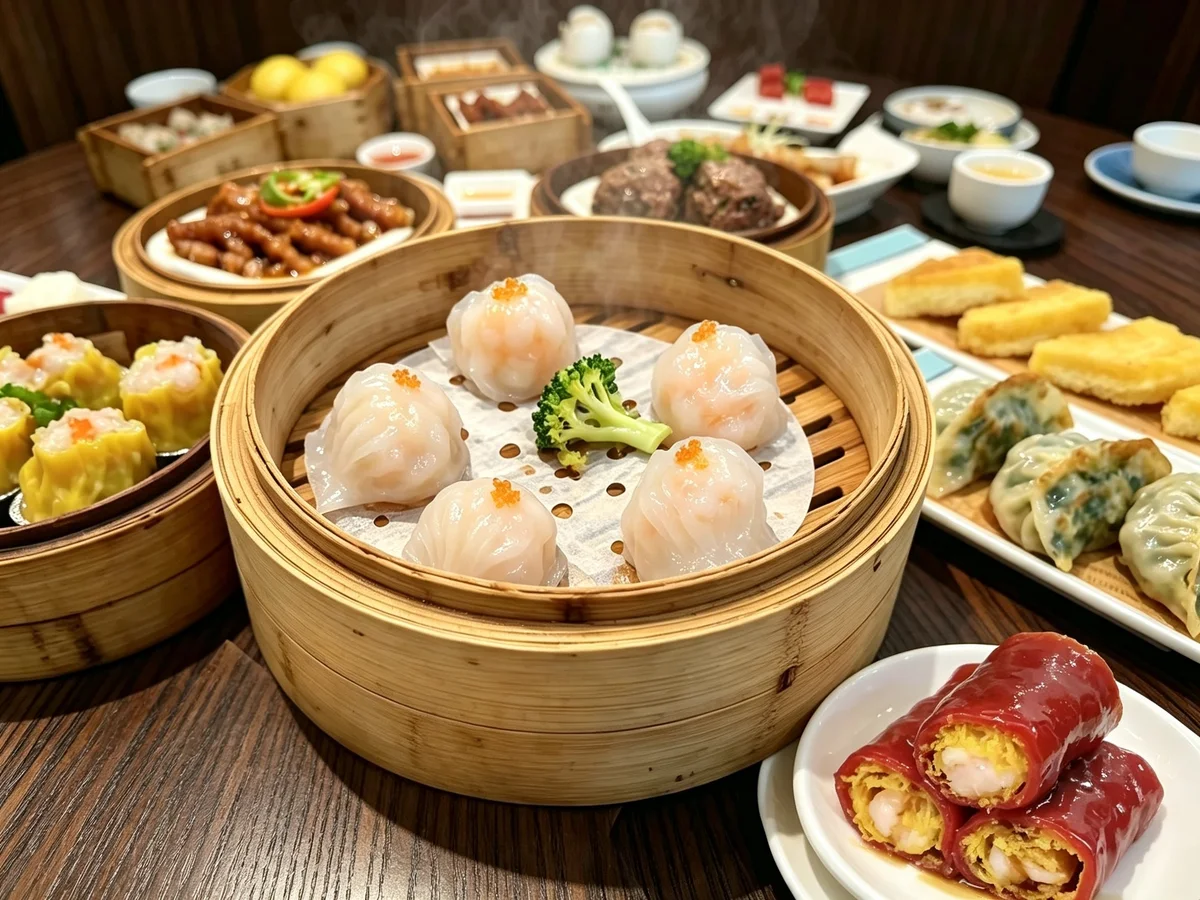
Meet the many crafts gathered under Cantonese dim sum
Cantonese dim sum is a broad craft tradition encompassing translucent starch wrappers, fermented buns, steamed rice sheets, fried shells, laminated pastries, braises and congee. This page follows those foods through technique and regional tea-house history; the separate yum-cha guide handles terminology, ordering and dietary planning.
Common ingredientsTea and a changing selection of dishes using rice batter, wheat and starch wrappers, shrimp, pork, beef, dried seafood, vegetables, eggs and pastry fats. Allergens and animal ingredients must be checked item by item.
01
Wrappers, doughs, batters and fillings define the repertoire
Dim sum is a technique collection, not a dumpling collection
Steamed starch wrappers, fermented buns, rice rolls, fried taro shells, laminated pastry, braises and congee ask for different skills. A balanced table makes those differences visible.
Tea
Pu’er, tieguanyin, jasmine and other teas vary by restaurant. A tea charge normally corresponds to actual tea service, not merely a seat.
Steamed wrappers
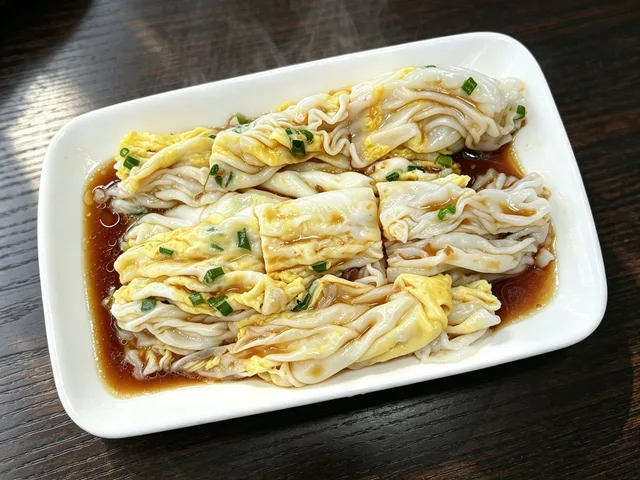
Har gow and rice noodle rolls depend on thin, resilient skins and accurate steaming; clouded, torn or leathery wrappers signal poor timing.
Fillings
Shrimp, pork, beef, char siu, mushrooms and vegetables are common. Small portions concentrate technique rather than imply that every dish is light.
Pastry and frying fats
Lard is traditional in some doughs and fillings. Vegetarian-looking pieces may also contain dried seafood, oyster sauce or meat stock.
Traditional tea house
Tea, familiar handmade dim sum and a bustling shared dining room define the experience. Trolleys survive in some restaurants.
Order-sheet service
Diners mark quantities on a list and dishes arrive fresh from the kitchen. This is now common and often improves temperature and timing.
Contemporary dim sum
Chefs may use seasonal ingredients, playful shapes or luxury fillings while retaining specialist wrapper, steaming and pastry techniques.
- Tea served as part of the meal, not an afterthought
- Small dishes sized for sharing
- Steamed items arriving hot with delicate wrappers
02
One dim-sum menu depends on several specialist stations
Different specialists form wrappers, fillings, fermented doughs and pastries, then steam, bake, fry or braise each item to its own timing. Tea service and staggered ordering keep delicate steamed dishes hot and fried or baked pieces crisp.
Wheat dough, wheat starch and rice batter need different handling
A char siu bun depends on fermentation, har gow on an elastic translucent starch skin and cheung fun on a thin steamed rice sheet. One generic wrapper method cannot produce all three.
03
From Guangzhou tea houses to shared meals in Hong Kong and Macao
Guangzhou morning-tea culture, Hong Kong and Macao tea houses, and overseas Cantonese communities share a recognizable repertoire without following one compulsory menu. Restaurants preserve different house specialties, service hours and production systems, so regional continuity is better traced through technique, vocabulary and tea-house institutions than through a fixed beginner checklist.
Tea houses historically connected small specialist foods with public sociability: families, colleagues and friends could stay over tea while kitchens dispatched many preparations from separate stations. Trolleys, paper slips and digital menus are later service choices; they do not define the food category or rank one city’s tradition above another.
04
How to say Cantonese Yum Cha—and what the name tells you
Pronounced guǎng shì zǎo chá. Menus may call it Cantonese dim sum, yum cha, yam cha, dim sum brunch.
FAQ
Quick answers to common searches
What is Cantonese yum cha?
Yum cha is a Cantonese tea-house meal built around tea, conversation and several rounds of shared dim sum. It is a dining format, not one fixed breakfast set.
Are dim sum and yum cha the same thing?
They are closely related but not identical. Dim sum names the small steamed, baked, fried or braised foods, while yum cha describes the broader activity of drinking tea and sharing those foods.
Is yum cha only served in the morning?
Morning and lunchtime are traditional and common, but many modern tea houses serve some dim sum throughout the day. Check the restaurant's actual service hours and menu availability.
Sources
Sources and further reading
- How to enjoy dim sum in Hong KongHong Kong Tourism Board ↗
- 6 must-order dim sum for beginnersHong Kong Tourism Board ↗
- Chinese dim sum and dishesMacao Government Tourism Office ↗
- Guangzhou regulation protects morning-tea culture and traditional on-site productionGuangzhou Municipal Culture, Radio, Television and Tourism Bureau ↗