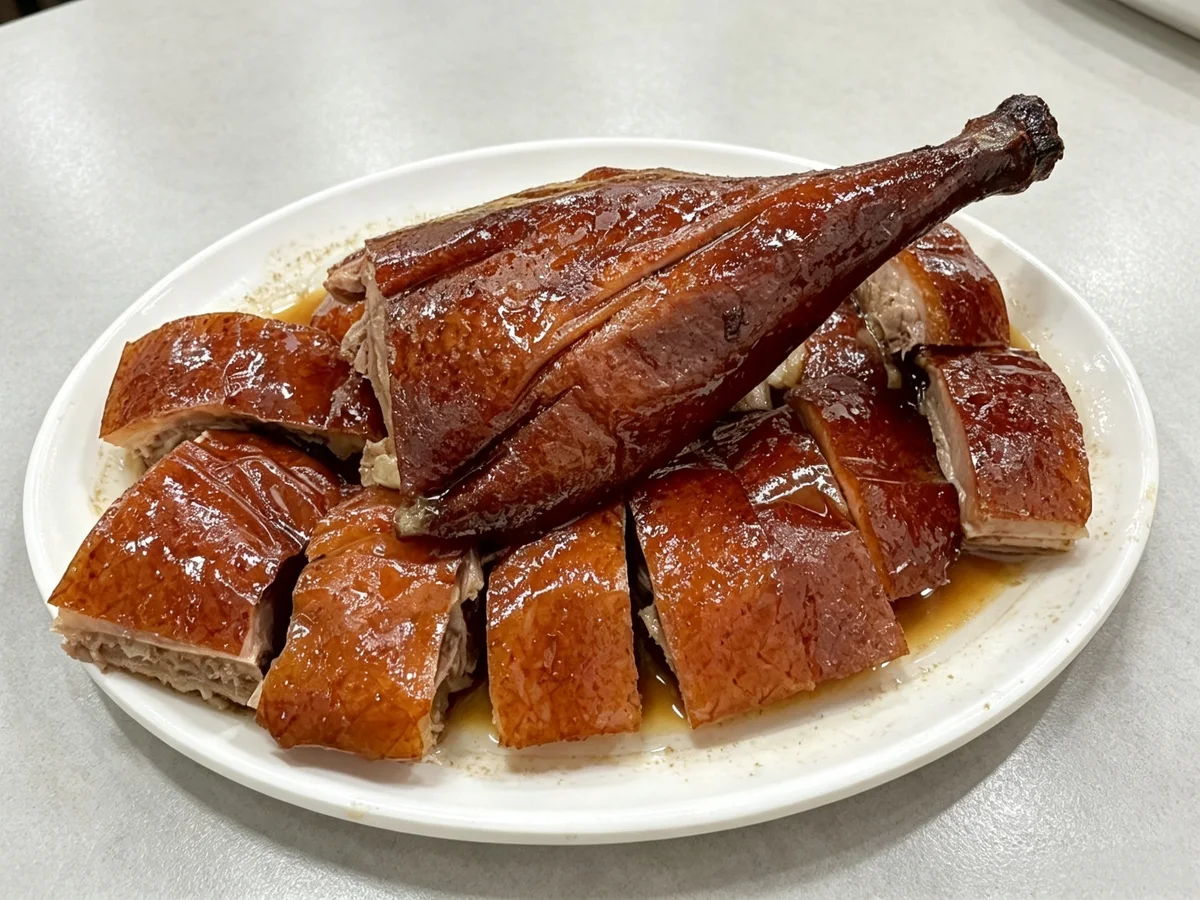
Place roast goose within the Cantonese siu-mei counter
Cantonese roast goose belongs to the siu mei tradition of meats seasoned, air-dried and roasted in specialist ovens. A well-made bird has lacquered, brittle skin, a thin layer of rendered fat and deeply flavored meat. It is chopped bone-in and served plain, over rice or noodles, often with plum sauce used as a small accent.
Common ingredientsWhole goose, an internal soy, wine and aromatic seasoning, a maltose-vinegar skin wash, plus optional plum sauce.
01
Order the right cut and portion for the table
How to order it
For two diners, a quarter goose with rice or noodles is often more practical than ordering a whole bird; shops may also sell a standard portion or roast-goose rice plate. Ask whether you prefer upper or lower quarter; breast and leg offer different fat and texture, and shop terminology or cutting can vary. Eat the skin promptly before steam from the hot meat softens it. Taste one piece without sauce first, then use plum sauce sparingly and watch for small chopped bones. A charcoal oven can add character, but fresh chopping, even rendering and juicy meat are more useful quality tests than the fuel label alone.
How to eat and pair it
Specialist siu mei shops display bronzed birds in the window and chop portions to order with a heavy cleaver. Diners may receive goose over rice with greens, alongside lai fun noodles, or as one platter in a larger meal. A small amount of goose drippings can season the rice or noodles. Sham Tseng in Hong Kong’s New Territories is an important roast-goose destination, but it should be understood as one celebrated local lineage and restaurant cluster—not the proven sole birthplace of every Cantonese roast goose. Guangzhou, Hong Kong and neighboring communities maintain their own birds, marinades, ovens and sauces.
Easy mix-ups
Misconception: Roast goose and Peking duck are interchangeable. In practice: They use different birds, seasoning, roasting traditions and service. Cantonese roast goose is normally chopped bone-in and eaten as siu mei. Misconception: Roast duck is simply another name for roast goose overseas. In practice: Duck may be prepared with related Cantonese techniques, but its size, meat, fat and cost differ. If a restaurant serves duck, the menu name should say roast duck.
Upper and lower quarters offer different ratios
Upper portions tend to include more breast and rib meat; lower portions bring leg, thigh and richer irregular cuts. Ask which suits the table rather than treating every quarter as interchangeable.
Turnover and chopping matter more than display color
Choose a counter that roasts and chops steadily, protects cooked birds and can identify goose versus duck. A deep lacquer under warm lights does not prove crisp skin or fresh meat.
02
A good roast goose must pass four tests
Bone-in chopping is part of siu-mei service
Decisive cleaver work produces manageable pieces while retaining skin and juice. Excess bone splinters or crushed skin point to careless resting or chopping.
Rendered fat should connect skin and meat
A thin layer carries aroma and moisture; a thick white pad feels waxy, while completely dry lean meat suggests the roast continued after the skin was ready.
Goose
Its dark, rich meat and substantial fat distinguish it from roast duck. Bird size and breed influence both texture and roasting time.
Internal marinade
Soy, fermented seasonings, sugar, rice wine, aromatics and spices may season the cavity. Keeping that liquid away from the exterior helps the skin dry rather than steam.
Maltose and vinegar wash
After tightening or scalding the skin, a thin exterior coating supports browning. Thorough air-drying matters as much as the wash itself.
Plum sauce
The sweet-tart condiment is optional and applied lightly; it should not hide the roast aroma.
Guangzhou siu mei tradition
Roast-goose shops season the cavity, prepare and dry the skin, roast the whole bird and chop it bone-in for rice, noodles or a shared plate.
Hong Kong siu mei shop
Goose is roasted in a specialist oven, chopped to order and served over rice, with noodles or as a shared platter.
Sham Tseng roast goose
The New Territories neighborhood is especially associated with charcoal-roasted goose and multigenerational specialist restaurants.
- Even mahogany skin with a dry, crisp surface rather than a thick hard shell
- Rendered fat rather than a waxy white layer or stale greasy taste
- Moist meat extending beyond only the leg, with roast and cavity-seasoning aromas still distinct
03
From cavity seasoning and air-drying to roasting and chopping
The cavity is seasoned while the outside is tightened, coated and kept dry. After thorough air-drying, the whole goose is hung in a specialist oven so the skin browns as the fat renders and the meat cooks through; it is rested briefly, then chopped bone-in to order.
Cavity and exterior have different seasoning jobs
Savory liquid and aromatics season from within while the outer skin stays dry enough to lacquer. Heavy sweet sauce painted onto wet skin cannot replace that division of labor.
Roasting, resting and chopping must connect
The oven renders and colors the bird, a short rest settles juices and prompt chopping protects crispness. Long display breaks the chain even when the original roast was skilled.
04
Guangzhou roast-meat shops and Hong Kong specialists shaped the everyday dish
Roast goose is a major item in the Cantonese siu mei, or roast-meat, tradition. Recipes differ among Guangzhou, Hong Kong and other parts of Guangdong; Sham Tseng is a celebrated local lineage, not the proven sole birthplace of the whole category.
Cavity seasoning, skin preparation, air-drying and controlled roasting work together to create crisp skin, rendered fat and juicy meat. It is commonly chopped bone-in and served with plum sauce or the shop’s own dipping sauce.
05
How to say Roast Goose—and what the name tells you
Pronounced shāo é. Menus may call it Cantonese roast goose, siu ngo, shao e, Guangdong roast goose.
The Cantonese word siu places the bird in the siu mei roast-meat system. It signals a whole bird seasoned inside, dried outside, roasted and chopped bone-in for rice, noodles or a shared plate.
Roast duck can be related without being sold as goose
Cantonese roast duck uses similar shop equipment and seasoning logic but has different meat, fat and price. A menu should identify the bird accurately rather than relying on generic siu mei wording.
Plum sauce is an accompaniment, not proof of authenticity
A light dip can sharpen rich meat. It cannot rescue rancid fat, rubbery skin or a plate whose actual bird is unclear.
How to order from a Cantonese siu-mei counter
At a dedicated siu-mei shop, roast goose may be sold as a rice plate, a standard portion, a quarter, half or whole bird. A rice plate is useful for one person; a quarter lets a small table compare skin, breast, leg and bone-side meat. Some shops distinguish upper and lower quarters, with the leg-side portion usually richer and more irregular around the bones. Ask what the shop means before paying because cutting conventions and bird size change the actual amount of meat.
Timing matters as much as portion. A bird hanging in the window may be freshly roasted or may have been held through a quiet period. Busy turnover, chopping to order and warm meat under crisp skin are better clues than a dark lacquered color. If the restaurant offers goose drippings over rice or lai fun noodles, use them sparingly at first: they should extend the roast aroma, not conceal stale fat or oversalted meat.
Expect bones
Cantonese roast goose is normally chopped bone-in with a heavy cleaver. Eat carefully and do not mistake this service style for poor butchery.
Plum sauce is optional support
Taste one skin-and-meat piece plain before dipping. The acidic sweetness should cut richness, not become the dominant flavor.
Goose and duck must be named honestly
Roast duck can use related siu-mei techniques, but its meat, fat and price differ. A menu should not substitute one name for the other.
FAQ
Quick answers to common searches
What is Cantonese roast goose?
Cantonese roast goose is a siu mei whole-bird preparation using cavity seasoning, skin treatment, air-drying and roasting to produce lacquered crisp skin, rendered fat and juicy dark meat.
How is roast goose different from roast duck?
The techniques overlap, but goose normally has darker meat, a stronger flavor and a richer layer of fat. The bird, price and bone-in portions are different, so goose and duck are not interchangeable dishes.
Is Cantonese roast goose the same as Peking duck?
No. Cantonese roast goose emphasizes cavity seasoning and bone-in chopping, often with plum sauce. Peking duck follows a different skin-separation, roasting, carving, pancake and sweet-bean-sauce service system.
How much roast goose should a first-time diner order?
One diner can begin with roast-goose rice or noodles. A small group can ask about a regular portion or quarter bird, confirming the actual size and whether it comes from the breast-back or leg side before paying.
Sources
Sources and further reading
- Yat Lok Restaurant and the classic roast-goose serviceHong Kong Tourism Board ↗
- Yue Kee Roast Goose Restaurant and Sham Tseng traditionHong Kong Tourism Board ↗
- Kam’s Roast GooseHong Kong Tourism Board ↗
- Guangzhou roast goose: bird selection and roasting processPeople’s Government of Guangzhou Municipality ↗
- Guangzhou intangible heritage: Cantonese siu mei craftGuangzhou Municipal Culture, Radio, Television and Tourism Bureau ↗