Start by separating three common changfen settings
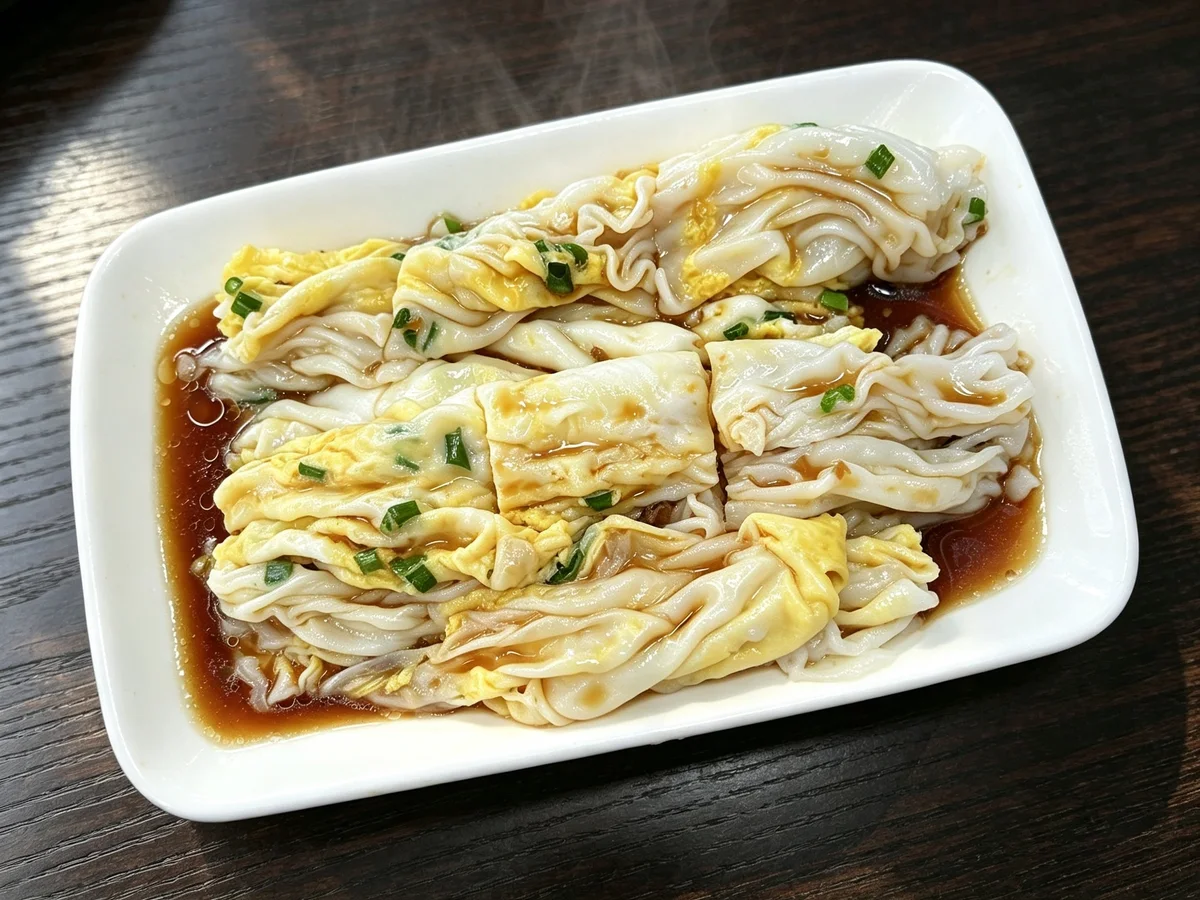
Cantonese rice noodle rolls are thin sheets of rice batter steamed, folded or rolled and dressed with a light seasoned soy sauce. In Guangzhou they are called chángfěn in Mandarin and cheung fun in Cantonese; la chang, or “pulled roll,” is another common local menu term. The dish ranges from plain rice sheets to breakfast rolls steamed with beef, pork or egg and refined dim-sum rolls wrapped around shrimp or char siu. The name refers to an intestine-like shape, not an animal ingredient.
Common ingredientsRice batter adjusted with water and sometimes additional starch, seasoned soy sauce and optional fillings such as egg, beef, pork, shrimp or char siu. Rice-based does not guarantee gluten-free sauce or preparation.
01
How to order and eat your first plate
How to order it
For a first breakfast, order one plain or egg roll and one beef or shrimp roll to compare the sheet with and without a prominent filling. Ask whether the shop makes cloth-pulled bula changfen or tray/steamer-drawer rolls if you want to understand the local technique. Eat within minutes; the sheet firms and sticks as it cools. Use the house soy dressing before reaching for chilli sauce. Confirm fillings and sauces for allergies—shrimp, oyster sauce, peanuts or meat stock may not be obvious from the English name.
How to eat and pair it
At a neighborhood Guangzhou breakfast shop, batter is spread only after an order arrives, steamed rapidly, scraped into loose folds and eaten almost immediately. Bula changfen uses cloth stretched over the steamer; drawer and tray systems use metal surfaces and are now widespread. Neither vessel alone guarantees quality. In a tea house, smoother filled rolls are cut into sharing portions among several dim sum dishes. Guangzhou’s municipal heritage list recognizes the craft of Cantonese cloth-pulled rice rolls, but “Cantonese rice noodle roll” is a broader food category, not the protected recipe of one shop.
Easy mix-ups
Misconception: The name means the dish contains intestine. In practice: The Chinese name refers to the rolled shape; standard versions are rice sheets with optional fillings. Misconception: Rice noodle rolls are the same as fried spring rolls. In practice: They are soft steamed rice sheets, not crisp wheat wrappers.
02
Thinness, glide and resilience must stay in balance
Rice batter
Rice is soaked and ground or a prepared rice-flour blend is used. Shops tune starch and water so the sheet is thin, smooth and resilient rather than sticky or rubbery.
Fillings
Egg, minced pork, sliced beef, shrimp, char siu and greens are common, but plain rolls are equally established.
Seasoned soy sauce
A light sweet-savory sauce supplies moisture and salt without hiding rice aroma. The stronger gravy, peanut and preserved-radish combinations of many Chaoshan rolls belong to another local style.
Steam and oil
A thin film of oil helps release the sheet; strong steam sets it quickly before filling overcooks.
Guangzhou breakfast changfen
Thin batter is steamed to order with egg, beef, pork or greens, folded loosely and dressed with light seasoned soy.
Bula changfen
Batter steams on cloth and the set sheet is pulled free. The recognized Guangzhou craft prizes a very thin, soft sheet and precise heat control.
Dim sum cheung fun
Smooth sheets wrap shrimp, beef or char siu and are cut into sharing portions, often with a more polished presentation.
- Thin, glossy sheets with soft flowing folds
- A tender surface with enough resilience to lift without turning rubbery
- Fresh rice aroma rather than only sauce or oil
03
How rice batter becomes one tender noodle sheet
Batter is spread in a thin even layer on steaming cloth or a lightly oiled metal tray, fillings are portioned for their cooking time, and strong steam sets both quickly. The sheet is scraped, folded or rolled at once and dressed only after steaming so it remains silky rather than waterlogged.
04
From Guangzhou neighborhood breakfast to tea-house dim sum
Rice noodle rolls belong to Guangdong’s rice-food culture and appear prominently in Guangzhou breakfast shops and Cantonese tea houses. Recognized cloth-pulled craft is one Guangzhou lineage within a broader category that also includes tray-steamed and distinct Chaoshan versions.
Freshness and texture lead the Guangzhou bowl, while Chaoshan cities may use fuller fillings, preserved radish, peanut or local gravies. The dish should be identified by city and service context rather than flattened into one universal dim-sum roll.
05
How to say Rice Noodle Rolls—and what the name tells you
Pronounced cháng fěn.
Cháng or cheung means intestine, while fěn or fun names a broad category of rice-based starch foods. The smooth sheet is steamed and folded into a long form that suggested the name. It may be plain or filled with egg, beef, pork, shrimp or char siu; the menu term alone does not identify the filling.
La chang is a common Guangzhou menu name for pulled rice rolls. Bula changfen more specifically points to the cloth-pulled method, while metal-tray and drawer steamers form another established production route. Changfen and cheung fun indicate Mandarin and Cantonese readings of the same written name, not automatically two different dishes; city and shop style provide the real distinction.
A thin rice sheet depends on batter, steam and one confident scrape
Guangzhou-style changfen starts from a fluid rice batter spread in a very thin layer on cloth or a metal tray. Strong steam sets it quickly into a glossy sheet that is tender but coherent. The cook adds egg, beef, pork, shrimp or a simple plain filling, then lifts and folds the sheet with a scraper. Batter that is too thick becomes gummy; weak steam leaves a chalky surface; rough scraping tears the roll into fragments before sauce reaches it.
Cloth-pulled rice rolls and drawer-steamed tray rolls use different equipment and can produce slightly different surfaces, yet both depend on speed and fresh service. A specialist breakfast shop may make each plate to order in less time than a tea house needs to deliver a basket. That informality is not lesser craft. The sheet begins losing its best slippery elasticity as it cools, so turnover and the distance from steamer to table are central quality signals.
The sauce is usually light enough to run around the rolls rather than glaze them like a stir-fry. Soy-based seasoning may include sweetness, aromatics or stock, depending on the shop. Pouring an entire bowl of dark sauce over delicate sheets can make every filling taste identical. Start with the house amount, then add chilli sauce only after tasting the rice, filling and soy together.
Breakfast changfen, dim-sum cheung fun and Chaoshan rolls overlap without being identical
At a Guangzhou neighborhood shop, changfen is often a quick breakfast plate made in shallow drawers with egg or minced meat and eaten soon after steaming. In a Cantonese tea house, cheung fun may arrive as neatly cut rolls around whole shrimp, beef or crisp fried dough, with a more formal presentation. The Mandarin name changfen and Cantonese-derived English spelling cheung fun refer to the same broad category, but setting and technique shape what appears on the plate.
Chaoshan-style rice rolls can use a wider range of fillings and a thicker savory sauce, sometimes with preserved vegetables, seafood or regional garnishes. They should be named as a local branch rather than used to define every Cantonese roll. Likewise, Vietnamese bánh cuốn and other Asian steamed rice sheets share useful comparisons but belong to their own cuisines. A bilingual menu is most helpful when it names region, filling and sauce instead of translating everything as “rice noodle.”
For a first order, choose egg, beef or shrimp and ask whether cilantro or scallion can be omitted before steaming. Fried-dough-stick rolls offer a deliberate soft-crisp contrast but soften quickly. Rice batter may be gluten-free by ingredient, yet soy sauce, fillings and shared equipment can contain wheat. Shrimp, oyster sauce, egg and meat stock are other common concerns, so dietary needs should be stated before the batter enters the tray.
Eat with chopsticks and a spoon
Chopsticks lift the soft roll while a spoon catches sauce and torn edges; stabbing pieces makes the sheet collapse unnecessarily.
Plain rolls are a serious test
Without a rich filling, the rice aroma, thinness, steam control and sauce balance become especially easy to judge.
Do not wait for the rest of the table
Rice rolls are a hot, immediate food. Sharing is welcome, but preserving them untouched for a group photograph sacrifices their defining texture.
Sources
Sources and further reading
- Rice noodle rolls: Guangzhou technique, texture and comparison with Chaoshan stylesGuangzhou Municipal Cyberspace Administration ↗
- Cantonese cloth-pulled rice-roll craft added to Guangzhou intangible heritage listPeople’s Government of Guangzhou Municipality ↗
- Rice noodle rollPeople’s Government of Liwan District, Guangzhou ↗
- How to enjoy dim sum in Hong KongHong Kong Tourism Board ↗