
Separate item from meal
Use tea, rounds and portion size to distinguish yum cha
Dim sum names the small foods; yum cha describes the broader tea-house meal. The examples below show how wrappers, techniques and staged ordering fit into that system.
01
Start here: dim sum is the food; yum cha is the meal
Dim sum can be bought outside a tea house, while yum cha includes tea, sharing and repeated ordering.
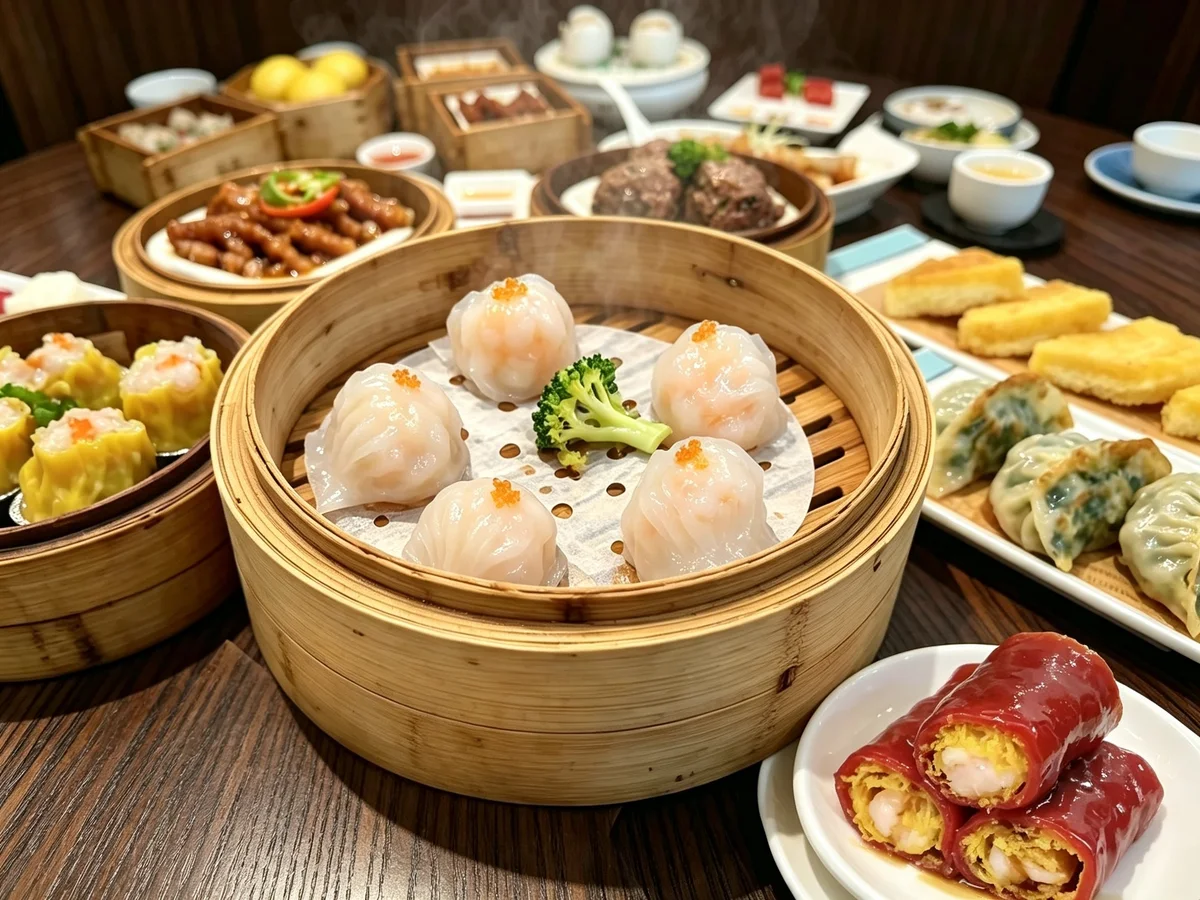
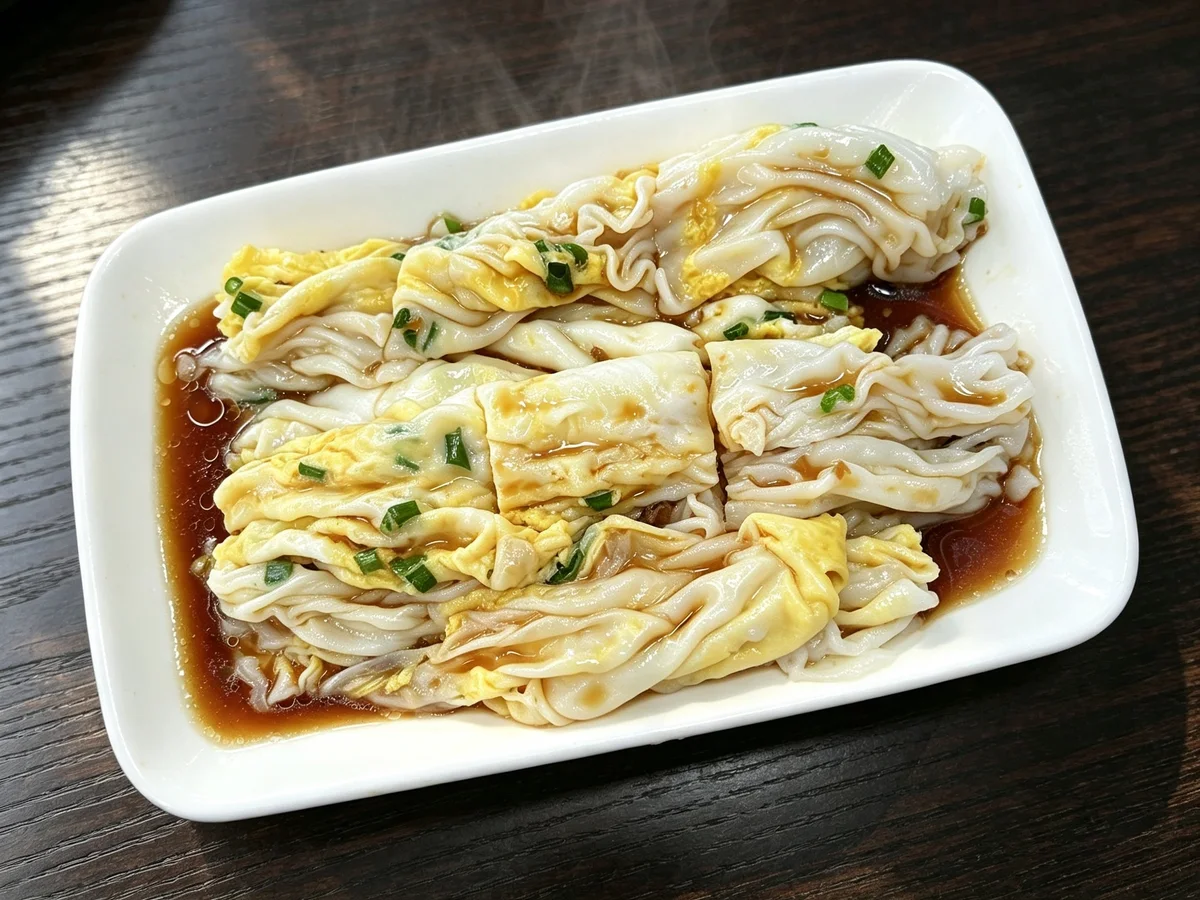
Cantonese dim sum extends far beyond dumplings. Har gow and siu mai are filled steamed items; rice noodle rolls begin as steamed rice batter; char siu bao depends on leavened dough; turnip cake sets grated radish with starch; chicken feet and ribs are steamed small plates; egg tarts belong to baking.
Yat jung leung gin, “one cup and two pieces,” describes an older everyday ideal but is not a compulsory modern set. Yum cha may be a short breakfast for two or a family lunch. Tea throughout the meal, shared food and hot dishes arriving in rounds matter more than a fixed number.
03
Build contrast in the first round, then add from real appetite
The main failure is not ordering too little; it is crowding the table with steam-sensitive food.
Four people can begin with four or five orders: choose har gow or siu mai, add a steamed item with a different wrapper and filling, one rice roll or pan-fried turnip cake and a vegetable. After seeing the portions, add a bun, pastry or fried item, then finish with an egg tart or dessert only if wanted.
Two people should begin around three orders rather than applying “three baskets per person.” Ask how many pieces arrive. If four diners face three pieces, divide when sensible, accept that not everyone must taste it, or reorder after deciding it is worth repeating.
Eat foods most vulnerable to cooling and steam first: rice rolls, har gow, thin-skinned or soup-filled items and fresh fried pastries. Let hot liquid fillings cool safely before biting. Reordering later protects quality better than letting a second basket wait.
04
Ask about tea charges and refills before choosing the tea
Tea sets the pace, but it does not need to become an etiquette examination.
Pu’er, jasmine, shoumei and tieguanyin are common possibilities, depending on the house. Ask whether tea is charged by pot, person or seat, and whether the table can choose more than one. Caffeine-sensitive diners and tables with children should ask for an appropriate option.
Refill before tea becomes too concentrated and offer nearby diners more when convenient. Lid positions and finger taps vary by restaurant and family and are not required performances. Asking for hot water and saying thank you is sufficient; freshly steamed and fried food should still be eaten promptly.
05
Carts, paper slips and QR codes are production systems
A cart does not prove tradition or quality; the relevant question is how long the food has waited.
Carts let diners see food immediately, but some baskets may cool while circulating. Paper or digital ordering can support made-to-order cooking, though it may take longer. Ask what the dish is, how it is priced and whether it is fresh from the kitchen before accepting it.
Judge each target: har gow wrappers should be thin and resilient, rice rolls smooth and intact, ribs cooked without drying, pan-fried cakes freshly browned, fried food free of stale oil and buns warm without wet dough. Cute shapes do not replace temperature and technique.
06
Vegetarian and allergy questions must cover wrapper, filling, sauce and equipment
Small portions and pale colors do not mean simple ingredients in a kitchen rich in shrimp, pork, wheat and egg.
Har gow contains shellfish; siu mai and char siu bao often contain pork; pastry may use lard or butter; rice-roll sauce and small braises can use oyster sauce, dried shrimp or stock. A vegetable name may still hide egg, seasoning powder or animal fat.
Wheat, shrimp, egg, soy, sesame, peanuts and nuts can appear in wrappers, fillings, sauces and desserts, with shared steamers, tongs, fryers and benches. State a serious allergy before ordering and change dishes if the restaurant cannot control cross-contact.
Compare
Har gow vs siu mai: telling the two apart
Har gow and siu mai are two of the most-ordered—and most-confused—baskets at yum cha. The quickest tell is the wrapper and the top: har gow is a translucent, sealed crescent; siu mai is a yellow, open-topped cup.
蝦餃 (hā gáau)
燒賣 (sīu máai)
Translucent wheat-starch skin with many pleats
Thin yellow wheat wrapper, open at the top
Sealed crescent with clear pleats
Open-topped cup, often garnished with roe or a pea
Mostly whole or chopped shrimp
Mostly pork, often with shrimp or mushroom
Slippery, springy skin around sweet, juicy shrimp
Firmer, meatier and savory
A thin skin that holds without tearing; sweet, resilient shrimp
Juicy, well-seasoned pork that is not dry
Both belong to the specialist crafts of Cantonese dim sum—part of a tea-centered social meal rather than a stand-alone “dumpling.” To see where they fit at the table, read the Cantonese dim sum and yum cha guide.
For sweet shrimp and a slippery, springy bite
Order har gow. Check that the skin is thin and translucent and holds the shrimp without tearing.
For a meatier, savory dumpling
Order siu mai. It is pork-forward, often with shrimp or mushroom, and firmer in the bite.
For a first dim sum order
Get both, then add a rice roll and something fresh or steamed rather than three similar pork baskets.
Eat them hot
Both are steamed to order and are best straight from the basket; a good har gow skin is thin but not broken.
Quick-reference tool
A first yum cha order in two rounds
The sequence protects steamed wrappers and leaves room to learn what the table actually likes.
| Round | Order | Reason |
|---|---|---|
| On sitting down | Confirm the tea charge and choose one tea the table will drink | Clarifies per-person or per-pot pricing and refill practice |
| First steamed order | Two steamed items with different wrappers and fillings | Har gow and siu mai are one option, after checking shrimp, pork and piece count |
| First contrast | Rice noodle rolls or pan-seared cake, plus a green vegetable | Adds soft rice, a browned surface and freshness |
| Second round | A bun, baked pastry or one fried item | Adds dough or crispness only after appetite is visible |
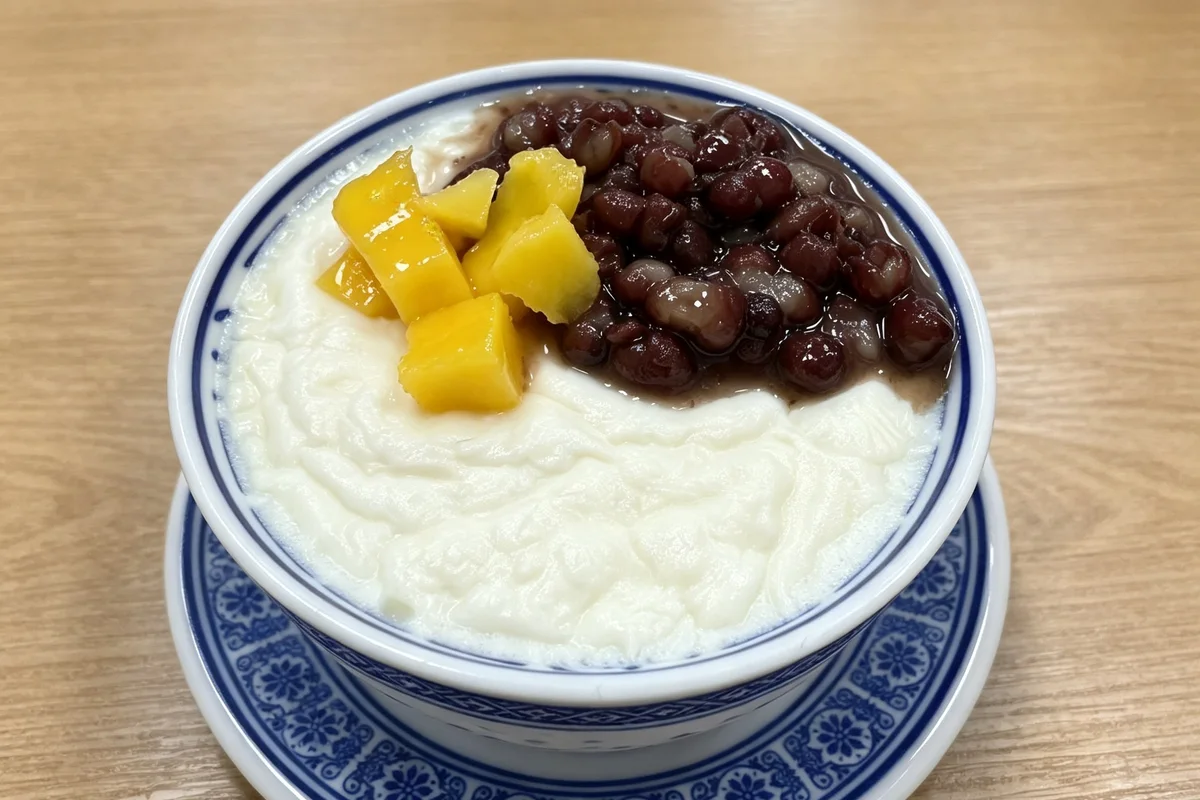
| Finish | Repeat a genuine favorite or choose one sweet | Avoids stacking custard buns, egg tarts and sweet soup together |
Confirm the piece count in each round and eat temperature-sensitive food first. Dim sum names the foods; yum cha is the tea, sharing and staged ordering that make the meal.
Field method
Apply the method when the table has dietary restrictions
This example combines portion control, serving temperature and ingredient verification instead of repeating another list of famous baskets.
Worked example
Worked example: four first-time diners; one avoids pork and one has a shrimp allergy
The table wants steamed, rice-based and browned textures, but har gow and siu mai cannot be treated as universally shareable.
- Step 1 · State both restrictions first
Before ordering, explain the pork restriction and shrimp allergy, then ask about sauces, fillings, steamers and shared tongs.
- Step 2 · Build a safe first round
Ask for two steamed items that meet the restrictions by design, then add a shrimp-free rice roll or pan-seared cake and a green vegetable.
- Step 3 · Separate or remove the high-risk item
If others still want har gow, use a separate order and utensils; when severe allergy cross-contact cannot be controlled, omit it for the whole table.
- Step 4 · Continue from the actual portions
Only after the first dishes arrive should the table add a bun or pastry, then finish with one sweet whose ingredients have been checked.
The restrictions shape the shared order from the start instead of being managed by picking filling out of a common basket.
FAQ
Frequently asked questions
Are dim sum and yum cha the same thing?
They are related but not identical. Dim sum names the foods; yum cha is the meal of tea, shared dim sum and conversation.
How much should a first table order?
Four diners can begin with four or five structurally different orders; two can start around three, then add after seeing piece count and size.
Must I find a tea house with carts?
No. Carts, paper slips and QR codes are service methods. Temperature, turnover, wrapper quality and doneness matter more.
Is yum cha only breakfast?
Morning and lunchtime are common, but modern tea houses may serve dim sum all day. Check the restaurant’s actual hours.
Is a vegetable dim sum automatically vegan?
No. Egg, dried shrimp, oyster sauce, seasoning powder, animal fat and shared equipment all need confirmation.
Sources
Sources and further reading
These sources support the food names, regional context, techniques and dining practices used in this guide. Individual restaurants, households and cities still vary.
- Dim Sum or Yum Cha?Hong Kong Tourism Board ↗
- Hong Kong Dim Sum Traditions and Tea HousesHong Kong Tourism Board ↗
- Guangzhou Tea-House Culture and “One Pot, Two Pieces”Guangzhou Municipal Culture, Radio, Television and Tourism Bureau ↗
- The Heritage of Cantonese Dim Sum and Tea HousesGuangzhou Municipal Commerce Bureau ↗