
01
Rice balls in their own soup
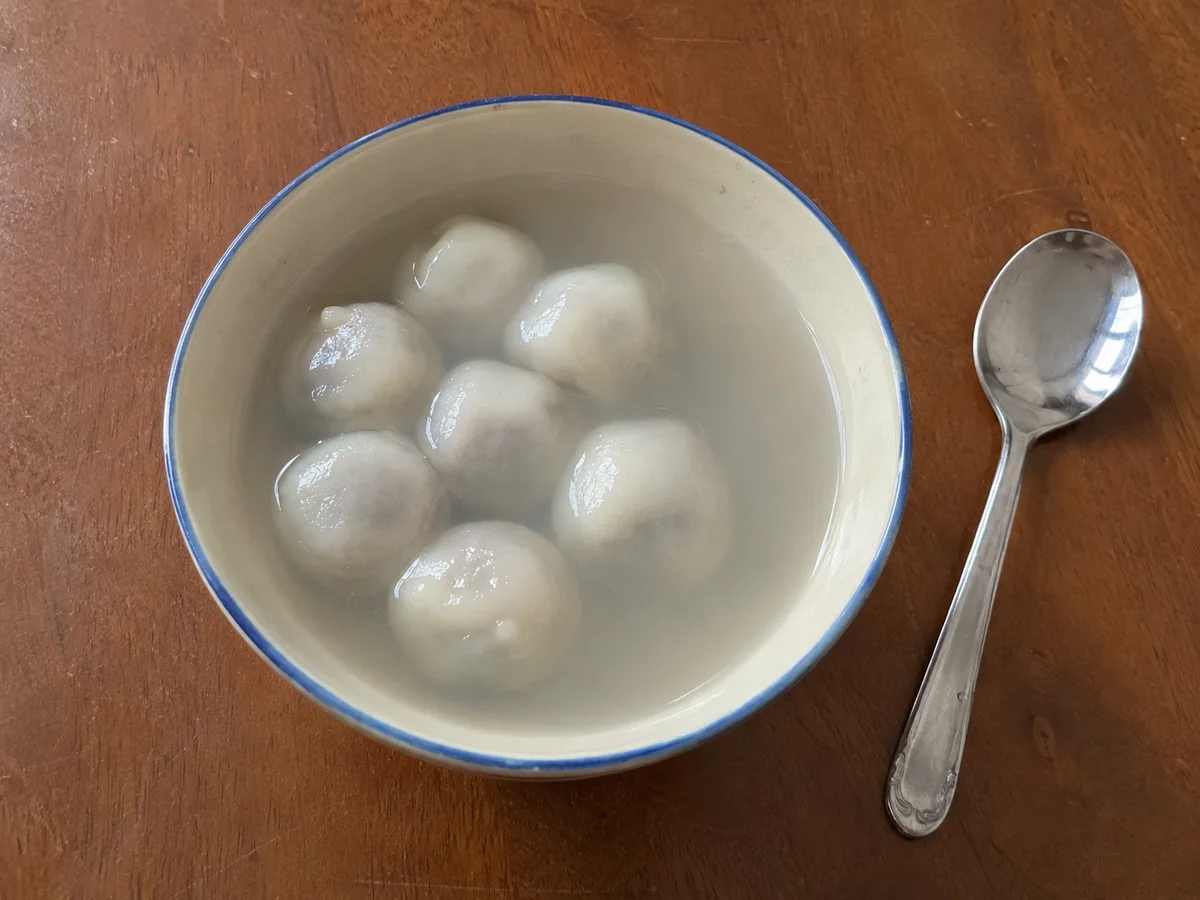
Tangyuan are boiled balls of glutinous rice dough, and the name says how they are served: 汤 is soup, 圆 is round.
The dough is glutinous rice flour and water, kneaded until soft. The flour preferred for it is water-milled, 水磨粉: the rice is soaked until soft, ground on a stone mill together with its water, and the resulting milk is hung in a cloth bag for days to drain. A Shanghai family of ten once milled ten to fifteen kilos of it every Spring Festival. Water-milled flour is wetter and harder to knead than dry-milled flour, and gives a thin, smooth skin. Most people now buy their flour ready-made.
A piece of dough is pressed into a cup with the fingers, filled, closed and rolled round, much as a jiaozi is wrapped but without a rolling pin. The balls sink when they go into the pot and rise when they are cooked, which is why they were once called “floating round balls,” 浮圆子. Their roundness stands for 团圆, a family gathered together, and that is why they belong to the festivals when families gather.
Sweet fillings are the rule across China: black sesame above all, then red bean paste, peanut, five-nut, osmanthus and hawthorn, and now chocolate. Shanghai, the Fujian and Guangdong coast and Taiwan also eat savory tangyuan, filled with pork or cooked in a meaty broth.
02
Tangyuan or yuanxiao: wrapped or rolled
Northerners say yuanxiao, southerners say tangyuan, and the two are made by opposite methods.
A yuanxiao starts from the filling. A firm, sticky sweet filling, often sesame or peanut with sugar, is set and cut into cubes. The cubes are dipped in water and tossed in a wide, shallow basket of dry glutinous rice flour, 笸箩; each pass picks up a thin coat, and the maker keeps sprinkling water and adding flour until the cubes have grown into snow-white balls. At Beijing’s Daoxiangcun a chef shakes a bamboo sieve to do it. In Tianjin, food shops still set a round, shallow metal drum outside their doors before the festival to roll them quickly, and factories do it by machine.
A tangyuan starts from the dough, with a soft filling pressed inside. The difference shows in the bowl. Yuanxiao have more flour and less filling, a firmer, chewier bite, and need longer in the pot; their loose coating clouds the water milky white. Tangyuan are softer and silkier and leave the water clear. Yuanxiao are almost always sweet and appear mainly around the Lantern Festival, while tangyuan can be sweet or savory and are sold all year. Because their filling holds more water, fresh tangyuan do not keep and are best eaten the day they are made.
In Beijing the two now sit side by side. For the 2026 Lantern Festival, Daoxiangcun sold four classic yuanxiao, refined black sesame, five-nut, osmanthus-hawthorn and chocolate, beside several kinds of tangyuan, and planned to make about 21 million yuanxiao for the season.
| Yuanxiao 元宵 | Tangyuan 汤圆 | |
|---|---|---|
| Usual name in | The north: Beijing, Tianjin | The south: Ningbo, Shanghai, Chengdu, Guangdong, Taiwan |
| How it is made | Cubes of firm filling rolled in dry flour, with water | Soft dough wrapped around a filling |
| Fillings | Sweet: sesame, peanut, five-nut, hawthorn, bean paste | Sweet or savory: sesame and pork fat, bean paste, pork, crab |
| Texture | Firmer, chewier | Softer, smoother |
| In the pot | Longer; the water turns milky | Shorter; the water stays clear |
| When | Mainly the Lantern Festival | All year; the Solstice and the Lantern Festival |
03
From Song “floating balls” to a Ming name
Rice balls have been a Lantern Festival food for at least nine hundred years.
Meng Yuanlao’s Dongjing Menghua Lu, a memoir of the Northern Song capital Kaifeng with a preface dated 1147, describes the lantern nights of the first month: on the sixteenth, while carriages and singers filled the streets, hawkers sold paper plum blossoms, moth ornaments and 科頭圓子, a kind of rice ball. In Hangzhou, the Southern Song capital, Zhou Mi’s Wulin Jiushi lists the foods in fashion at the Lantern Festival, and the first is 乳糖圓子, rice balls with milk sugar.
The statesman Zhou Bida (1126–1204) found the dish so unsung that he gave a poem a long title: “Boiling floating rice balls on Yuanxiao night; our forebears seem never to have written about them, so I made four rhymes at the table.” It opens on the meaning the dish still carries, a night when everything is round and reunited, and pictures the balls as stars glittering in dark clouds and pearls floating in murky water.
The rolling method and the name yuanxiao appear clearly in the late Ming. Liu Ruoyu, a eunuch who served at the Ming court, recorded that from the ninth day of the first month Beijing ate yuanxiao, made of fine glutinous rice flour around a filling of walnut and white sugar, “sprinkled with water and rolled, the size of a walnut,” and added: 即江南所稱湯圓者, “what Jiangnan calls tangyuan.” The name comes from the festival, the night of the fifteenth, 元宵, when they are eaten.
That line undercuts a popular story. Yuan Shikai, president of the early Republic, is said to have heard a street seller crying “yuan-xiao,” which sounds like 袁消, “Yuan eliminated,” and to have ordered the balls called tangyuan instead. The story cannot be verified, and the southern name was already in writing nearly three centuries before him.
04
Ningbo: black sesame and raw pork fat
The most famous sweet tangyuan come from Ningbo, filled with 黑洋酥, black sesame worked into pork fat.
The filling uses leaf fat cut raw from a freshly slaughtered pig, not rendered lard, which would taste of meat. Shiny new black sesame is toasted and crushed, and the fat, sesame and soft white sugar are worked together by hand, palms oiled with sesame oil, pinched and kneaded rather than stirred, until the fat softens into the paste. In the pot the sugar and fat melt, and the filling runs out black and glossy when the ball is bitten.
Ningbo’s best-known shop is Gangyagou, 缸鸭狗. In 1926 Jiang Dingfa, known by his childhood name Jiang A’gou, set up a stall at the city’s Chenghuang Temple; said in Ningbo dialect, “Jiang A’gou” sounds like gang ya gou, “vat, duck, dog,” and the odd name stuck. Its best sellers are still black sesame and red bean paste. Since 2020 it has sold frozen tangyuan abroad, about two million a year, to supermarkets in Australia, the United States, New Zealand and Canada, frozen fast enough that the center reaches −18°C within thirty minutes and the skins do not crack.
Ningbo shops elsewhere keep the style. In Shanghai, an old Ningbo tangyuan shop in Yu Garden mixes three flours, raw white glutinous flour, a yellower and more fragrant one and a scalded cooked flour, with sesame oil. In Taipei, Jiu Ru Shang Hao insists on water-milled flour for its Ningbo-style tangyuan. Ningbo also makes small unfilled balls, 宁波小汤圆, for plainer bowls.
05
Shanghai: pork, shepherd’s purse and crab
In Shanghai a box of tangyuan is as likely to be savory as sweet.
Savory tangyuan are filled much like a wonton: plain pork, pork with shepherd’s purse, 荠菜鲜肉, shredded radish or shiitake, and at the luxurious end crab roe, or shrimp with crab. Yangzhou in Jiangsu makes pork with shepherd’s purse too, and Shanghai’s Meixin is known for crab roe. Bitten open, a pork tangyuan releases a mouthful of hot meat juice.
Before the Lantern Festival of 2023 the queue at Wangjiasha on Nanjing West Road was for five handmade kinds: crab roe, shrimp and crab, shepherd’s purse and pork, salted egg yolk with pork floss, and black sesame, four savory to one sweet. One customer from Yangpu bought two boxes of black sesame, one of shrimp and crab and one of shepherd’s purse and pork, because sweet alone is too rich. At Shengxing, which began on Shunchang Road, the makers started at half past five in the morning and wrapped until their fingers cramped, and the rice flour was milled fresh every day.
Savory is still a local taste. Online that season, sweet tangyuan outsold savory ones 39.8 to 1 by value, and more than seven in ten buyers born after 2000 preferred sweet. Shanghai custom also gives the balls a date of their own: 上灯圆子落灯面, rice balls on the day the lanterns go up for the festival, noodles on the day they come down.
06
Chengdu: shoulder poles, sesame paste and Lai Tangyuan
In Chengdu tangyuan were street food long before they were a brand.
Fu Chongju’s Chengdu Tonglan, a guide to the city published in 1909, lists tangyuan among the ordinary foods of its streets. They were sold only in the morning and evening, by hawkers with shoulder poles, in three fillings: brown sugar, washed red bean paste and white sugar. Three cost five copper wen; sesame paste on the side cost two wen more. The sellers of 醪糟, fermented rice, cooked tangyuan in it as well, and the restaurant lists in the same book include tangyuan in chicken fat and deep-fried tangyuan.
The name everyone in Chengdu knows is Lai Tangyuan, 赖汤圆, which goes back to the late Qing and is now one of nine old brands kept together by the Chengdu Catering Company, beside Long wontons and Zhong dumplings. Its rice balls are prized for clinging neither to the chopsticks, nor to the bowl, nor to the teeth. The company now also sells panda-shaped tangyuan, fillings flavored like Sichuan hot pot and sugar-free ones.
07
The Winter Solstice and the Lantern Festival
Tangyuan mark the two great nights of the Chinese winter.
The Winter Solstice, 冬至, falls around December 21 and was once treated as almost as important as the New Year: 冬至大如年. On that day the north eats jiaozi and the south eats tangyuan, for the sake of their round, reunited meaning.
Taiwan keeps the custom closely. Families used to grind glutinous rice and prepare the seasonings on the eve of the solstice and make tangyuan together; a Qing-era gazetteer describes rice balls offered to the gods and ancestors and then eaten by the household. Three bowls still go on the ancestral altar. A folk belief holds that eating tangyuan adds a year to your age. People try to eat at least one red ball and one white, red for gold and white for silver, and always an even number, since an odd one is said to bring a lonely year.
The Lantern Festival, the fifteenth of the first month, is the first full moon of the year and closes the New Year season. The north eats yuanxiao that night. Many southern families start earlier, with tangyuan on the morning of New Year’s Day, place them among the offerings through the first month and eat them again at the festival.
08
Savory rice balls on the southern coast
From Fujian to Guangdong, tangyuan also go into broth.
In winter, pockets of the Pearl River Delta make savory tangyuan, and Taishan, the old heartland of Cantonese emigration, is the most famous for them. The balls are usually plain and unfilled, cooked separately and added at the end to a soup of chicken, pork, dried shrimp, dried scallop, shiitake, fish balls, napa cabbage, daikon and Chinese sausage, finished with green garlic and a little sesame oil. Unfilled balls for the soup are sold frozen, about a third the size of homemade ones.
Taiwan’s savory tangyuan are filled with ground pork, celery, shiitake, shallot and dried shrimp; Jiangsu and Zhejiang fillings taste more plainly of pork. A Fujian-style bowl can hold sweet peanut balls and savory pork ones together. Further inland, Xingyi in Guizhou fills tangyuan with chicken and serves them in chicken soup, and Chaozhou in Guangdong makes 鸭母捻, “mother duck” balls, filled with mung bean, red bean, taro or sesame sugar.
09
Little balls in fermented rice
The other classic bowl uses tiny unfilled balls and sweet fermented rice.
Jiuniang yuanzi, 酒酿圆子, is the Jiangnan version. Warm water is kneaded into the flour, the dough is rolled into ropes and cut, and each piece is rolled into a solid ball the size of a marble, kept under a damp cloth on cold days so it does not crack. The balls are boiled until they float, given a splash of cold water and brought back to the boil; then the fermented rice goes in with sugar, and osmanthus syrup finishes the bowl. In Shanghai, families once rolled the same little balls at home on the solstice and called them 冬至圆. The fermented rice is cooked glutinous rice mixed with a starter, 酒曲, and left covered to ferment; it has many names, 醪糟 in Sichuan, 甜酒, 浆板 or 江米酒 elsewhere.
In Taiwan, tangyuan in fermented rice soup with egg is the most popular winter bowl. Badong Rice Ball in Taipei ferments its own rice for about ten days and stirs in eggs from native hens.
10
Frozen bags, queues and prices
Most tangyuan eaten in China now come out of a freezer, and the frozen-food industry began with them.
In the winter of 1989 Chen Zemin of Zhengzhou saw people in Harbin keeping jiaozi frozen outdoors and reasoned that tangyuan could be frozen too. His first frozen tangyuan date from 1990. He sold them to traders at 2.5 yuan a jin, half a kilo, carried them to the markets at Xidan and Chongwenmen in Beijing, and built the Sanquan company on them; Synear, 思念, now the other giant, was founded a few years later.
Freshly rolled yuanxiao still draw queues. At Jinfang’s Cizhuankou shop in Beijing in 2026 the line formed at opening time and regulars bought three or four jin at once, and Daoxiangcun’s stall at the Longfusi New Year fair sold about 1,200 jin in a single day, February 28. The fillings keep multiplying, from durian with at least 48 percent fruit to skins of millet, sorghum and purple sweet potato.
| What | Price, place and year |
|---|---|
| Assorted yuanxiao, loose, Jinfang 锦芳 | 36–40 yuan for a bag of 30 (Beijing, 2026) |
| Synear frozen tangyuan, Wumei supermarket | 7.99 yuan a bag, flash sale (Beijing, 2026) |
| Sanquan frozen tangyuan, Xinshijie | 10.9 yuan a bag, down from 12.9 (Beijing, 2026) |
| Milk and red bean tangyuan, Xinshijie | 15.9 yuan a bag, down from 18.8 (Beijing, 2026) |
| Sanquan’s first frozen tangyuan | 2.5 yuan a jin to traders (early 1990s) |
| Street tangyuan from a shoulder pole | Three for 5 wen, sesame paste 2 wen more (Chengdu, 1909) |
11
Cooking and eating them
Drop them into boiling water straight from the freezer, then slow the pot down with cold water.
Frozen tangyuan go into boiling water without thawing. Stir once at once so they do not stick to the bottom. Each time the water returns to a full boil, add half a cup of cold water; after two or three rounds the balls float and the filling inside has melted smooth. Yuanxiao need longer than tangyuan, and their water turns thick and milky. Serve them in a little of the hot cooking water, or in fermented rice soup.
Eat them hot. As yuanxiao cool the skin hardens and becomes harder to digest. They are more filling than they look: eight sesame yuanxiao carry about as many calories as a bowl of rice, and six is a sensible limit for an adult at one meal. Glutinous rice is sticky, so children and older people should take small bites and be watched. Tangyuan and yuanxiao can also be steamed, deep-fried, baked or coated in pulled caramel, 拔丝, and homemade ones keep best frozen in portions.
12
Black sesame tangyuan at home
Chill the filling first: it is much easier to wrap.
This makes about 12 tangyuan, enough for four, adapted from The Woks of Life. The traditional fat is raw pork leaf fat; softened butter is easier to find and works well. Use caster sugar, which melts smooth, and toasted black sesame. The filling makes more than you need, and the rest keeps a month or two in the refrigerator.
Makes about 12: 2 oz (about 55 g) toasted black sesame seeds; 3 oz (about 85 g) caster sugar; 6 tablespoons (about 85 g) softened butter or pork leaf fat; 1 cup glutinous rice flour, plus a little for dusting; ½ cup (120 ml) warm water.
- 1. Grind the filling
To toast raw sesame, stir it in a dry wok over medium-low heat for 7–8 minutes until fragrant, then cool. Grind it fine, stir in the sugar, add the butter and pulse in 10-second bursts until combined.
- 2. Chill
Refrigerate the filling for about 30 minutes, then roll marble-sized balls of 4–5 g. They should be firm but still workable.
- 3. Make the dough
Stir the warm water slowly into the flour; the dough should not be wet. Boil a walnut-sized piece until it floats, then knead it back into the dough until smooth and soft. Keep covered with a damp towel.
- 4. Wrap
Divide into 12 pieces of about 18 g. Flatten each to a 5 cm (2 inch) round, set a ball of filling in the middle, close the dough over it and roll smooth between your palms.
- 5. Cook
Bring a medium pot of water to the boil, add the tangyuan and stir at once. Each time it returns to the boil, add ½ cup cold water; do this three times. Serve in a little of the hot cooking water.
Sources [21]
13
More festival sweets
Other dishes on the atlas.
Chinese desserts for beginners
Nian gao, zongzi, mooncakes and the other sweets of the festival year.
Read the desserts guide →Qingtuan
Green glutinous rice dumplings for Qingming.
Read about qingtuan →Tangyou guozi
Chengdu’s fried glutinous rice balls glazed in sugar.
Read about tangyou guozi →Jiaozi
What the north eats at the Winter Solstice.
Read about jiaozi →Across China classics
- Jiaozi
Boiled, steamed or pan-fried dumplings · Everyday meals; New Year’s Eve in the north
- Chow Mein
Fried wheat noodles · Lunch, late-night meals, takeaway
- Hot and Sour Soup
Thickened soup · With dumplings, at banquets
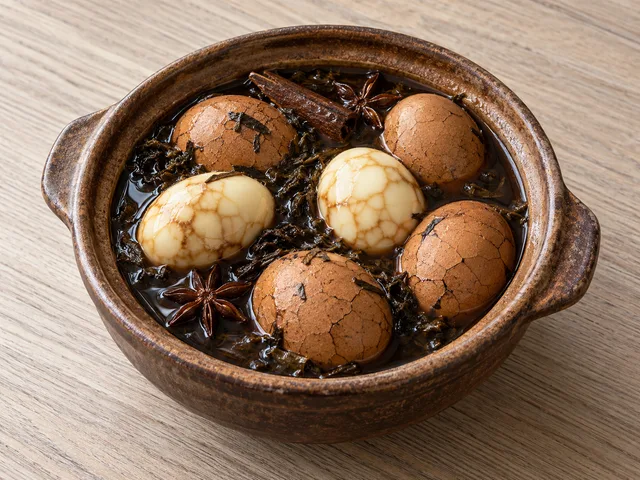
- Tea Eggs
Tea-marbled boiled eggs · Breakfast and snacks
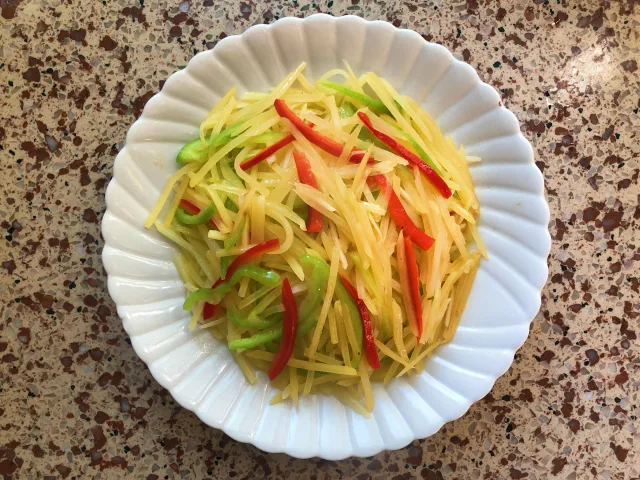
- Stir-Fried Shredded Potatoes
Stir-fried vegetable side dish · Everyday meals with rice
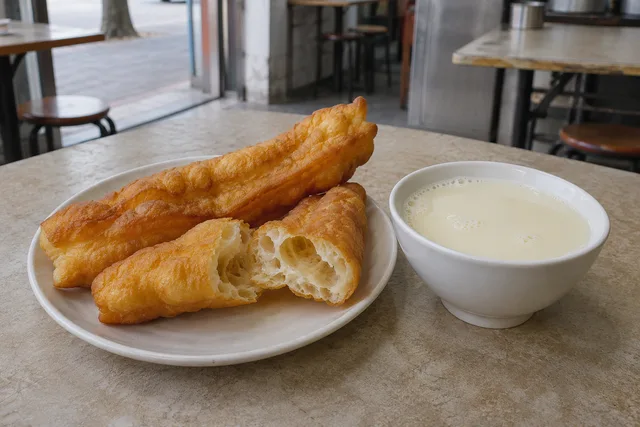
- Youtiao and Soy Milk
Fried dough sticks and soy milk · Breakfast
Sweets from other regions
FAQ
Questions about Tangyuan
What is the difference between tangyuan and yuanxiao?
Tangyuan are wrapped: a soft filling is pressed into a ball of wet glutinous rice dough. Yuanxiao are rolled: cubes of firm filling are dipped in water and tumbled in dry rice flour until coated. Yuanxiao are firmer and cloud the cooking water; tangyuan are softer and can be savory.
What do tangyuan taste like?
The skin is soft, smooth and chewy, loosely like Japanese mochi but boiled. Sweet ones taste of their filling, most often black sesame, which melts in the pot.
When do people eat tangyuan?
At the Lantern Festival, the fifteenth day of the first lunar month, and in much of the south and Taiwan at the Winter Solstice around December 21. Some southern families also eat them on the morning of New Year’s Day.
Are tangyuan always sweet?
No. Shanghai sells pork, shepherd’s purse and crab tangyuan; the Pearl River Delta puts plain balls in a savory soup; Taiwan fills them with pork, shiitake and dried shrimp.
Are tangyuan vegetarian?
Not always. Classic Ningbo black sesame filling is bound with pork fat, and savory ones contain meat. Bean paste and peanut kinds are often meat-free; check the label.
How do I cook frozen tangyuan?
Put them into boiling water without thawing and stir. Add half a cup of cold water each time it boils again, two or three times, until they float. Eat them hot.
Sources
Sources and further reading
- 1 Meng Yuanlao, Dongjing Menghua Lu (東京夢華錄), juan 6: “The sixteenth day” (十六日) (in Chinese)Song dynasty, preface dated 1147; Wikisource ↗
- 2 Zhou Mi, Wulin Jiushi (武林舊事), juan 2: “The Lantern Festival” (元夕) (in Chinese)Song–Yuan, Wikisource ↗
- 3 Zhou Bida, “Boiling floating rice balls on Yuanxiao night” (元宵煮浮圓子前輩似未曾賦此坐間成四韻), in Song Shi Chao (宋詩鈔), juan 59 (in Chinese)Siku Quanshu edition, Wikisource ↗
- 4 Liu Ruoyu, Ming Gong Shi (明宮史), juan 4, on food at the Ming court in the first month (drawn from his Zhuozhong Zhi 酌中志) (in Chinese)Late Ming; Siku Quanshu edition, Wikisource ↗
- 5 Fu Chongju, Chengdu Tonglan (成都通览) (1909), “Ordinary foods of Chengdu’s streets” and restaurant lists (in Chinese)Wikisource ↗
- 6 Zhou Runjian, “Yuanxiao are rolled, tangyuan are wrapped” (节令之美|讲给你:元宵是“滚”出来的,汤圆是“包”出来的) (in Chinese)Xinhua (February 24, 2024) ↗
- 7 “How to eat yuanxiao and tangyuan at the Lantern Festival” (元宵佳节,元宵、汤圆如何吃?) (in Chinese)China Food News, via Xinhua (February 12, 2025) ↗
- 8 Deng Zhangyu, “It’s lantern festival — time to have a ball”China Daily (March 3, 2026) ↗
- 9 “The south wraps, the north rolls: in Shanghai the New Year ends with yuanxiao” (南方“包”北方“滚”,上海人家吃完元宵才算过完年) (in Chinese)The Paper, Paike channel (February 11, 2017) ↗
- 10 Guo Tie, “Yuanxiao and tangyuan sales climb” (元宵汤圆销量冲高,花式造型、健康食材受追捧) (in Chinese)The Beijing News (March 1, 2026) ↗
- 11 “China’s time-honored brands rewrite recipes for success”Xinhua, via China Daily’s Shopping in China (April 1, 2025) ↗
- 12 Zhou Runjian, “Winter Solstice at 11:27 on the 22nd” (节令之美·冬至丨22日11时27分冬至:“数九”声中盼春归) (in Chinese)Xinhua (December 20, 2023) ↗
- 13 “Little rice balls in fermented rice” (【宁品读】酒酿小圆子) (in Chinese)Changning District government account, Shanghai, on The Paper (December 24, 2022) ↗
- 14 Zhang Yuyun, “Tangyuan take the lead as the Lantern Festival nears” (元宵临近汤圆成主角:老字号师傅每天包到手指抽筋), with a note on Changning’s lantern customs (in Chinese)Xinmin Evening News, Shanghai News page (February 4, 2023) ↗
- 15 Duan Qionglei and Li Jiewei, “Ningbo’s century-old Gangyagou exports two million tangyuan a year” (宁波百年老字号“缸鸭狗”:每年出口200万个“糯叽叽”汤圆) (in Chinese)Chao News (May 1, 2026) ↗
- 16 Lei Yanpeng, “One little tangyuan made Henan’s richest man” (一颗小汤圆卖出河南首富) (in Chinese)Shijie, via 36Kr (February 26, 2021) ↗
- 17 Keoni Everington, “14 Taiwanese do’s and don’ts for Dongzhi”Taiwan News (December 21, 2023) ↗
- 18 Chen Wanyu, “Handmade Tangyuan: Every One a Treasure unto Its Own”Taiwan Scene (December 16, 2019) ↗
- 19 “Cantonese Salty Rice Balls (咸丸)”Chinese Cooking Demystified (December 20, 2023) ↗
- 20 Jeremiah Jenne, “Lantern Festival, Xi Jinping, and Yuan Shikai’s Sticky Balls”RADII (March 2, 2018) ↗
- 21 Judy Leung, “Tang Yuan (Sweet Rice Balls with Black Sesame Filling)”The Woks of Life (updated November 3, 2023) ↗
Last updated November 2026